


You wipe the counter again. Fines stuck to the dosing cup. A halo of grounds around the portafilter. That is why people search anti static espresso grinder and mess control — not for a physics lecture, but for a cleaner station they can keep on a weekday.
This Meraki guide is a mess/cleanliness practical: reducing grinder mess with anti-static design versus RDT and habits, a light cleaning schedule, and a step workflow that cuts counter spray. Soft-link Meraki’s how to reduce coffee grinder static for electrification detail and careful RDT boundaries. Soft-link the low-retention home workflow lane when leftovers — not spray — own the morning. Do not treat this as a rewrite of the product-ish espresso machine with grinder hub, an integrated-grinder checklist, a 45-settings dial-in, a TIMEMORE® collaboration explainer, or a grind-by-weight daily setup.

Mess control shows up as grounds that stay in the intended path — not as a voltage chart on the counter.
What “anti static espresso grinder and mess control” really means for home buyers
Mess control here means less cling, less spray, and a counter you can wipe in seconds — not a lab certificate that static is “zero.”
Search often returns RDT tips, Reddit static threads, Amazon “anti-static” listings, or deep-clean encyclopedias. Clean-counter buyers need a narrower question: will design plus habits keep grounds in the cup and basket instead of on the stone?
Static cling is charge that makes fines stick to plastic, metal, and each other. Anti-static design (ionizers, coated paths, geometry that dumps charge, or “anti-static dosing” language) aims to reduce that cling at the hardware level. Habits — cup alignment, waiting for the grind cycle to finish, dry brushing, careful RDT when the maker allows it — finish what hardware starts. Research in Matter links roast, grind, and bean moisture to charge and clumping; that supports careful moisture tactics in principle, not a free pass to soak a mill. Category literacy from the Specialty Coffee Association and CoffeeGeek’s guides still beats a badge with no wipe plan.
Treat the keyword as a station-cleanliness brief. Retention leftovers are a cousin — soft-link Meraki’s why low retention matters and the home workflow page; leftover math is not this page’s job.
Who this page is for (and who should skip it)
This page is for clean-counter users — home baristas who already grind espresso and care about spray rings, sticky cups, and how long wipe-down takes after each dose.
Skip Meraki’s static reduction guide for the full electrification + RDT essay. Skip low-retention why it matters and the home workflow page when leftovers own the morning. Skip an integrated-grinder checklist, 45 grind settings dial-in, TIMEMORE® collaboration explainer, and grind-by-weight daily setup. Soft-link chute cleaning and hopper care for deep cleans. Stay here for: design vs RDT/habits, a cleaning schedule, and fewer counter sprays.
Why this is mess/cleanliness (not another static-science or retention rewrite)
Forums already trade RDT drops and anti-static-gun experiments. Meraki’s live static guide owns charge mechanisms and careful RDT; retention pages own leftovers; product hubs own all-in-one shopping.
The unique job here is mess/cleanliness practicality: a counter contract, a spray-cutting workflow, voltage-free targets, a light cleaning schedule, and a stop rule. Disclosure: Meraki publishes this guide and sells the Meraki Espresso Machine. Live framing (2026-10-26/27): TIMEMORE® co-developed burrs, grind-by-weight onto dual scales near ±0.2 g, 45 settings, dual boilers, guided grind → brew → steam. Meraki’s static guide also frames anti-static dosing with a controlled collection path — soft-link it; invent no static-voltage charts or competitor mess scoreboards.
Tools and settings to prepare first
You do not need an ion gun or a lab meter. You need alignment, a dry brush, and honest notes about where grounds land.
Mess-control kit (weekday version)
| Tool | Why it cuts mess | Leave alone at first |
|---|---|---|
| Dosing cup or locked portafilter under the chute | Catches the stream before the counter does | Grinding into open air “just this once” |
| Soft brush / barista cleaning brush | Clears cling without water on electronics | Wet rags on burrs or motors |
| Scale (built-in or tray) | Shows whether spray stole dose weight | Changing cups mid-test |
| Dry microfiber for the counter | One wipe after the dose, not a scrub ritual | Polishing during the grind cycle |
| Notebook or phone note | Separates static spray from oil cake / retention | Memory-only “it was messier today” |
| Manual + maker rules for RDT | Moisture on beans is not moisture on the mill | Spraying hoppers “because Reddit said so” |
On a guided station like Meraki’s, warm up, center the catch, and let grind-by-weight stop so you are not yanking mid-stream. Re-check TIMEMORE® co-developed burrs, 45 settings, and dual scales near ±0.2 g on the product page the week you buy. Follow the manual plus ordinary appliance literacy (UL, CPSC) — no household anti-static sprays on food-contact parts, and no DIY grounding theater.
Step-by-step workflow
Run one dose cleanly. Change one habit later. The goal is less counter spray, not a new hobby.
- Dry the path you can reach. Quick brush of chute lip, dosing cup, and basket — oils plus fines amplify cling even when charge is low. Deep teardowns belong on Meraki’s chute cleaning page.
- Center the catch. Seat the dosing cup or portafilter so the stream cannot skim the rim onto stone.
- Load a weighed single dose when you can. Hopper surfing invites uneven feed and surprise spray; single-dose habits make mess diagnosis fairer.
- Start the grind and wait. Do not pull the cup early. Finish the cycle so the last fines are not flung by a half-removed vessel.
- Transfer with a short path. Cup → basket (or direct into portafilter if that is your station), then one brush of the rim — not a full wipe of the kitchen.
- Note the mess in three words. Example: rim spray / cup cling / counter halo. That vocabulary beats “static is bad.”
- Only then consider RDT — if the maker allows it. A few drops on a weighed single dose, beans swirled, never water on burrs or hopper. Full boundaries: Meraki’s static guide. If anti-static dosing already keeps the counter clean, skip moisture theater.
- Wipe once, then brew. If the wipe takes longer than the dose, the station — not the recipe — still owns the morning.
If grounds stay in the cup and the counter needs only a flick, mess control is working. If the cup is clean but the chute still coughs stale dust into dose two, you have wandered into retention — soft-link the low-retention workflow lane instead of adding more RDT.
Targets and ranges that keep you out of rabbit holes
Mess control fails when the target becomes “prove static with a meter.” Use behavioral targets. We will not publish invented static-voltage charts for Meraki or competitors. NIST is a reminder that a “zero static” claim without a defined method is marketing language.
| Target type | Useful home range (behavioral) | Rabbit hole to avoid |
|---|---|---|
| Counter wipe | One dry pass after the dose | Scrubbing mid-grind “to be thorough” |
| Cup / basket cling | Most grounds release with a tap or short brush | Declaring failure over a few rim fines |
| Dose honesty | Landed weight near intended dose | Blaming static for every missing 0.3 g without checking spills |
| RDT use | Only when maker allows; single dose; minimal moisture | Misting hoppers or burrs |
| Cleaning cadence | Light daily brush; deeper chute/hopper on a schedule | Daily full teardown “because static” |
| Hardware vs habit | Try alignment + wait-for-cycle before buying gadgets | Anti-static guns as the first move |
| Stop rule | Two clean mornings, then drink | Endless moisture experiments after the counter is already fine |
Clumps can still hurt puck distribution — WDT after the grind fixes distribution, not counter spray. Keep those jobs separate. Brewing context: NCA. Press context, not voltage tables: Barista Magazine.
Common mistakes and quick fixes
Most “impossible static” mornings are station mistakes, not cursed beans.
| Mistake | What it looks like | Quick fix |
|---|---|---|
| Pulling the cup early | Fines fountain onto the counter | Wait for the cycle / weight stop |
| Off-center catch | Rim spray ring every morning | Re-seat cup or portafilter under the chute |
| Wet-cleaning the mill | Water near burrs or electronics | Dry brush only; follow the manual |
| RDT on a full hopper | Uneven moisture, warranty risk | Single weighed dose only, if allowed |
| Treating anti-static as never-clean | Oil cake returns; mess + retention | Light daily brush; schedule chute/hopper care |
| Confusing spray with leftovers | Clean counter, weird shot two | Soft-link retention workflow |
| Household anti-static spray | Food-contact contamination | Never; use maker-safe methods only |
| Changing grind to “fix mess” | Recipe noise, still sticky cups | Fix alignment first; adjust grind for taste later |
How to taste and decide what to change next
Taste is still the decision engine when clumps survive into the puck. The counter is the mess engine. Keep them from fighting each other.
Use this mess-led decision tree after one careful dose:
- Counter halo, cup mostly empty → alignment, wait-for-cycle, anti-static path design. Re-try before RDT.
- Cup walls furry with cling, counter OK → anti-static claim + dry brush; RDT only if allowed and still needed.
- Dose weight short, grounds on stone → you spilled; fix catch geometry before blaming roast.
- Counter clean, shot one flat vs shot two → likely retention / stale exchange — leave this page for the retention / workflow lane.
- Clumpy puck, channeling, counter fine → distribution after the grind (WDT), not more counter theater.
Change one lever per morning. If the wipe is already a one-second flick, stop optimizing mess and dial taste.
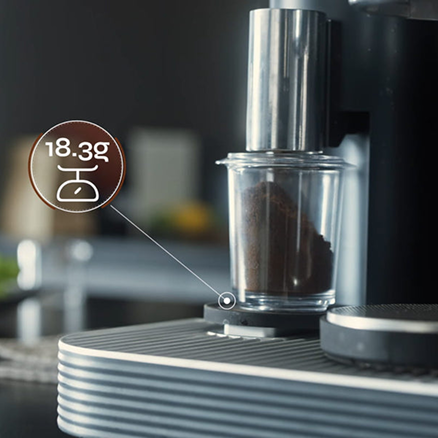
Weighed dosing makes spray visible as missing grams — useful for mess diagnosis, not a license to invent voltage tables.
A one-week practice or habit plan
A week beats a weekend of gadget shopping.
| Day | Habit focus | Success looks like |
|---|---|---|
| Mon | Center catch + wait for grind finish | Smaller spray ring than last week |
| Tue | Dry brush before first dose | Less oil-amplified cling |
| Wed | Note three-word mess vocabulary | You can describe the problem without “static!” only |
| Thu | Single-dose if you usually hopper-feed | Fairer mess comparison |
| Fri | RDT trial only if still messy and maker allows | Clear yes/no — not permanent theater |
| Sat | Light chute lip clean; skim chute guide if dust returns | Schedule, not panic teardown |
| Sun | Drink; no new tools | Counter contract met or one lever named for next week |
If Fridays stay filthy after alignment and brushing, hardware path design deserves a harder look on the espresso machine with grinder page — still without inventing competitor voltage rankings.
When to stop tweaking and just drink
Stop when two weekday mornings need only a short brush and one wipe — and the cup tastes like the beans you bought. Mess control is a hygiene contract, not a purity contest.
Keep tweaking only if spray still steals dose weight, wipe-down steals your leave-for-work buffer, or cling forces a redistribution circus every shot. Do not mist after the counter is calm, and do not deep-clean daily out of forum fear — use Meraki’s chute and hopper guides on a sane cadence. Support: support, +1 833 854 9555 (Mon–Fri, 9 AM–5 PM EST), plus shipping, refund, and warranty.
How to stop coffee grinder static?
Start with dry habits, then design — RDT last.
Align the catch, wait for the grind to finish, brush dry, and prefer anti-static dosing paths when shopping. Add minimal RDT on a single dose only if the manufacturer allows it and the counter is still messy.
Search often jumps straight to water drops. Useful order: (1) dry-brush oil-amplified cling, (2) stop early-cup and off-center spray, (3) verify anti-static path language live, (4) RDT only inside maker rules, (5) never wet the mill or use household anti-static chemicals on food-contact parts. Meraki’s static guide owns electrification depth; this page owns the mess workflow. Matter supports moisture’s role in charge — as principle, not permission to wet electronics.
How do you adjust an espresso grinder?
Change grind for taste and flow — not to “fix” static mess.
Dial finer if shots gush and taste thin; coarser if they choke and taste harsh — after dose and distribution are honest. Mess control is alignment and charge; grind steps are recipe.
Keep this soft: grind adjustment belongs with your setting range (Meraki lists 45 settings — re-check live) and dial-in guides, not counter wipes. If spray made doses inconsistent, fix catch and anti-static path first; then trust a grind click. Soft-skip full 45-settings and grind-by-weight setup pages. Context: espresso vs coffee grinder.
Conclusion
Clean-counter espresso is anti-static design plus habits, not a voltage trophy. Use Meraki’s static reduction guide for charge science and careful RDT; use the low-retention workflow lane when leftovers — not spray — tax the morning; use this page for mess/cleanliness — alignment, wait-for-cycle, light cleaning schedule, and a stop rule. Prefer hardware that keeps grounds in the path, then keep the brush ritual you will actually repeat.
When you want that pairing in one guided station, review the espresso machine with grinder page and the Meraki Espresso Machine — then verify anti-static dosing language, TIMEMORE® co-developed burrs, grind-by-weight onto dual scales near ±0.2 g, and 45 settings the week you buy. Questions: support or +1 833 854 9555 (Mon–Fri, 9 AM–5 PM EST).
FAQ
Is an anti-static espresso grinder completely mess-free? No. Anti-static design reduces cling and spray; it does not erase oils, bad alignment, or early cup pulls. You still want a dry brush habit and a sane chute/hopper schedule. Treat “mess-free” listing language as a direction, not a forever promise — then verify on your counter for a week.
Does RDT replace an anti-static grinder? No. RDT is a habit that can lower charge on a single dose when the maker allows it. Anti-static hardware aims to reduce cling without moisture theater. Many clean-counter users need less RDT after alignment and a better path — not more water. Never spray burrs or hoppers; see Meraki’s static guide for boundaries.
How is mess control different from low retention? Static mess is cling and spray on cups and counters. Retention is coffee left in the grind path that contaminates the next dose. You can have a clean counter and a stale first shot — or a messy counter and an honest path. Soft-link Meraki’s retention / workflow pages for leftovers; stay here for wipe-down and spray.
How can I deep clean my coffee grinder without overdoing it? Use a light daily dry brush at the chute lip and cup, then deeper chute and hopper cleans on a schedule — not a daily teardown “because static.” Meraki’s chute cleaning and hopper care pages own maintenance depth. Follow the manual; keep water away from electronics.
Where should I start if my counter looks like a cocoa bomb every morning? Center the catch, wait for the grind to finish, dry-brush, and note where grounds land for two days before buying gadgets or adding RDT. If spray continues after those habits, evaluate anti-static dosing path claims on the listing. If the counter is clean but shot one tastes like leftovers, switch to the retention workflow lane. Meraki support: +1 833 854 9555 (Mon–Fri, 9 AM–5 PM EST).


