


You answer a message halfway through making coffee and return wondering whether you checked the dose or only meant to. A printable espresso workflow checklist gives you a visible place to confirm progress. It should help you return to the task, not turn breakfast into an administrative exercise.
The card below is a reminder for a routine you already know. Adapt it to your machine's instructions and chosen drink. It does not replace learning the technique, understanding the controls, or responding appropriately to a fault.
Keep the checklist separate from the brewing lesson
A checklist reminds you to confirm important actions; a tutorial explains how to perform them. Mixing those purposes creates a card that is too long to scan but still too short to teach the task properly. Decide which familiar steps you tend to miss before adding more detail.
NASA's historical Flight Cognition Laboratory overview describes normal checklists as checks on essential steps within a phase of work. That is a useful design distinction, not evidence that an aviation checklist improves espresso or validates this card.
For the underlying preparation sequence, use the separate espresso workflow guide. Keep your card focused on confirmation points within the routine you choose. It should not reproduce explanations of tamping, milk texturing, or cleaning chemistry. If you cannot complete a line without learning a new skill, use the appropriate instructions first and return to the reminder once the action is understood.
Write each line so you can tell whether it is complete
Replace vague labels such as prepare properly with a state you can actually check. Recipe selected is more useful than think about coffee. Cup positioned is different from cup available, so choose wording that matches the moment you want to confirm.
The UK Health and Safety Executive's procedure-design guidance emphasizes fitting detail to the user and task, involving users, and walking through the actual operation. Those are general workplace principles. Here, use them to test whether your own reminder matches what happens at the counter, not to claim industrial safety certification.
Give each line one main check rather than hiding unrelated actions inside it. Where several checks belong together, name the phase clearly. Mark a line only after confirming it, rather than ticking the whole card at the end from memory. If a step cannot be verified afterwards, consider where its reminder needs to appear so it is consulted at the relevant moment.

Name the recipe instead of printing universal numbers
Keep the recipe you intend to repeat in a separate, clearly identified note or machine setting. The checklist should confirm that you selected it, rather than prescribe one dose, yield, or time for every coffee. This separates remembering an action from deciding a recipe.
The Specialty Coffee Association's espresso survey discussion documents variation in preparation practices. It is a historical survey, not a mandatory recipe for your equipment. Use the reminder to identify your own intended target, not to turn a survey average into a rule.
For a milk drink, retain an explicitly conditional line rather than making milk handling part of every espresso. If you change beans or the intended drink, check that the selected recipe note still applies. Keep tasting observations outside the completion boxes: a drink can follow the selected sequence and still need recipe adjustment later. A checked card reports process confirmation, not a promise that the cup tastes exactly as intended.
Printable espresso workflow checklist: morning confirmation card
Use with the appliance instructions and a recipe you already know. Check each box only after confirming the item. Mark a conditional milk item N/A for a drink without milk; do not leave its meaning uncertain.
If interrupted, make the situation safe before attending elsewhere. On return, confirm the last completed item and the current equipment state before continuing. Stop if an unexpected condition remains unresolved.
- Intended drink and recipe selected.
- Machine readiness confirmed as directed by its instructions.
- Water supply checked as directed.
- Clean preparation tools and suitable cup ready.
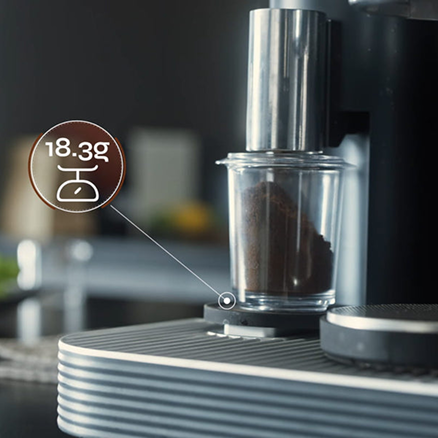
- Prepared coffee dose checked against the selected recipe.
- Cup positioned before brewing.
- Beverage yield monitored for the selected recipe.
- If used: milk preparation completed as directed.
- If used: steam-wand care completed as directed.
- Finished drink moved to its serving position.
- Required after-use care completed; station left ready for its next use.
Clear old marks before the next session. This card confirms a known routine; it is not a recipe, fault-diagnosis tool, or substitute for the manufacturer's instructions.
How should you resume after an interruption?
Confirm your place; do not blindly repeat actions.
Once the situation is safe, compare the last marked item with the equipment's current state, then decide which unfinished action comes next rather than relying on memory alone.
NASA's Aviation Safety Reporting System discussion of interruptions describes marking a place in a checklist as a reminder of suspended work. That aviation example supports the idea of a visible location cue; it does not supply a coffee-machine restart procedure.
At home, a mark is useful only if it still describes the situation. If you stopped during brewing or milk preparation, follow the equipment instructions and assess the actual state instead of simply reading the next line. Repeating a completed check is not the same as repeating a physical action: you should not automatically grind another dose or start another extraction. Keep the card out of handling paths, and do not write on it while managing hot equipment.
Make the printed card readable without color cues
Use plain text, visible boxes, and enough separation to find the next line. A card that requires tiny type to fit everything needs editing, not just a smaller font. Put it where it is readable without leaning over hot equipment.
The W3C's guidance on use of color explains why information should not depend on color alone. Although that guidance concerns web content, the principle is useful for a reminder that may be printed in black and white. Use words and marks to distinguish completed, unfinished, and not-applicable items.
This page's print styles isolate the confirmation card from the longer article. Open your browser's print preview and check paper size, scale, and margins before printing. If the text is clipped or too small, adjust the settings rather than accepting an unreadable copy. Keep any reusable cover away from heat and follow its cleaning instructions. A protective sleeve should not create glare that makes the card harder to consult.
Keep the version that resolves your actual omissions
Try the reminder during a familiar routine and note which lines you can confirm naturally. Look for an item that arrives too late, combines several unrelated checks, or does not apply to your drink. Revise the wording instead of adding explanations indiscriminately.
Keep only one current card at the station. If you change equipment or substantially change the routine, compare the card against the applicable instructions again. An old list can look authoritative while describing a different setup. For a Meraki-specific instruction you cannot establish, ask Meraki support rather than inserting a guessed setting or care step.
Keep using the card if it makes a missed confirmation or your stopping point easier to identify without distracting you from preparation. If it adds friction but resolves no recurring omission, shorten it to the relevant checkpoints. The right outcome is a usable reminder for your morning, not a perfect score or a longer list. Do not judge it by how many boxes you can fill.
Considering the equipment behind your routine? Explore the Meraki espresso machine and build your reminder around the instructions for the setup you choose.
FAQ
Should a guest use my checklist without a demonstration?
No. A short reminder assumes the reader already understands the equipment and the actions behind each line. Show a guest the routine, the applicable instructions, and what to do if something seems wrong before expecting them to use the card. If a line still needs an explanation, revise it or keep that task under your supervision. A completed checklist does not prove competence, and it should not encourage someone to operate hot equipment they do not know how to use.
Does every cup need its own paper checklist?
Not necessarily. Decide whether you need a reminder for each drink or a record of a particular session. A reusable card can support ordinary mornings if you clear its marks before starting again. A separate paper copy is useful when you want to keep a record of what was checked, but that record is not a substitute for tasting notes or equipment care records. Avoid generating paperwork merely to make a familiar routine appear more formal.
Can a checklist prove that a machine fault was my mistake?
No. It records what you believe you checked, not a technical diagnosis of the machine or a determination of responsibility. If you contact support, describe the observed behavior, relevant settings, and any warning messages accurately. A checklist may help reconstruct the sequence, but do not alter equipment or recreate an unsafe situation to complete missing entries. Follow the manufacturer's troubleshooting instructions and applicable support process rather than treating a checked box as evidence that equipment must be fault-free.


