


You are packing for several weeks away, and the coffee machine is still set up for tomorrow's latte. Should you empty the tank, remove the filter, or just switch it off? Espresso machine vacation preparation starts by separating ordinary cleanup from the storage instructions for your exact equipment.
Use this framework to plan before departure, not as a universal draining procedure. The machine, any water-treatment cartridge, and the place where you leave them can have different requirements. Resolve unclear instructions while you still have time to ask for help.
Match espresso machine vacation preparation to the actual absence
Establish whether the machine will remain unused throughout the trip, whether somebody else will use it, and whether it stays in its normal kitchen location. Those conditions determine which questions to ask. Several weeks at home is not automatically the same situation as moving equipment into storage.
NSF's kitchen-appliance guidance emphasizes following manufacturer cleaning directions. Apply that principle before borrowing a holiday procedure from a forum. Similar-looking coffee machines can require different care, so another owner's instructions do not establish yours.
Find the applicable sections on shutdown, extended non-use, removable parts, and water treatment. Record the exact model and planned period away when contacting support. Do not invent a day-count threshold for special care if the instructions do not provide one. If the environment or duration falls outside the documented conditions, obtain guidance before treating routine shutdown as a complete storage plan. This article concerns preparation at home, not packing or shipping.
Finish applicable care before the final packing rush
Schedule the required after-use care early enough to complete it properly before leaving. Keep it separate from any additional long-term storage instruction. A vacation is not, by itself, a reason to improvise a new chemical treatment or shorten the rinse steps of an existing one.
Use the espresso-machine cleaning guide for the broader care topic, with the equipment instructions controlling the actual procedure. Here, the extra planning issue is leaving time for permitted removable items and the surrounding work area to finish drying.
The EPA's moisture-control guidance emphasizes addressing wet areas and sources of moisture. For your kitchen, check that cleanup has not left a damp cloth, a wet accessory mat, or an unnoticed spill around the station. This is not an instruction to dry the machine's internal water circuit. Follow the manufacturer's requirements for that system separately rather than assuming external dryness proves internal preparation is complete.

Does emptying the tank establish that the machine is drained?
No; it does not confirm the internal water state.
Removing water from an accessible reservoir only addresses that reservoir; preparation of the internal system requires the exact manufacturer's instructions, not an assumption based on an empty tank.
Look for a documented extended-non-use procedure and distinguish it from routine filling or tank cleaning. If you cannot find one, ask whether any internal preparation is needed for your planned absence and who is authorized to perform it. Do not copy a boiler-draining sequence from a different model.
Do not run a pump without water, open the casing, loosen a connection, or operate hot components as an improvised way to empty the system. An instruction to remove a user-removable reservoir is not authorization to service internal components. For Meraki-specific questions, use Meraki support and describe the model, expected absence, and intended location. Keep any written response with the relevant instructions so the departure plan rests on documented guidance.
Check the water cartridge's non-use instructions separately
A filter cartridge can have its own requirements that are not answered by switching off the espresso machine. Identify the exact cartridge and check what its maker says about extended non-use, removal, storage, and subsequent replacement. Do not assume all media can be dried or kept wet in the same way.
NSF's filter guidance explains that service cycles vary by product and may be defined by time or treated volume. For a trip, record the cartridge's installation date and the applicable interval rather than assuming the calendar stops when the machine is unused.
Resolve any gap with the cartridge maker or machine support before departure. A filter that fits a housing is not automatically interchangeable with another, and a general water-filter article is not a storage protocol. Do not refrigerate, soak, disinfect, or dry a used cartridge based on a different product's advice. Keep its instructions with your absence note so the condition you leave it in is deliberate and understood.
Plan the remaining coffee instead of leaving it by default
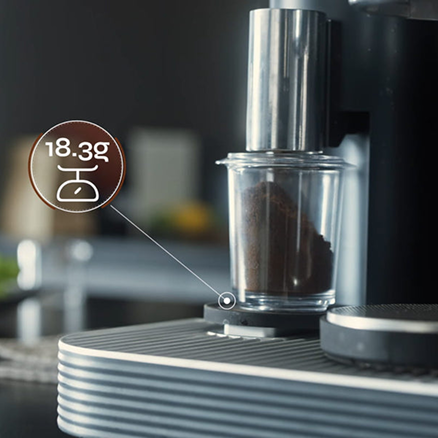
Decide what to do with opened beans before your last session. Follow the grinder instructions for any permitted removal of coffee; do not run the grinder empty or disassemble it merely to clear every trace. Store remaining beans according to their packaging and an appropriate storage method.
The National Coffee Association's storage guidance identifies air, moisture, heat, and light as factors to manage. Use that to assess where an opened bag will remain while you are away. An espresso hopper should not be assumed to provide the same storage conditions as a suitable coffee container.
Record the bag identity and opening date if you want to decide later whether to use it again. Avoid preparing a large supply of ground coffee for the return simply because it feels convenient. Detailed freezing and bean-storage methods are separate topics; the departure decision is whether the remaining coffee has an intentional storage plan. You need not consume it all or buy a new accessory just to finish packing.
Confirm shutdown rather than relying on an idle-looking screen
Follow the documented shutdown and power-disconnection instructions for the equipment. Check the intended state directly rather than assuming a dark display or a quiet machine means every relevant function is off. Do not substitute a general smart-plug routine for the appliance's instructions.
The US Department of Energy's standby-power overview explains that some devices consume power while appearing off. That general distinction is useful when checking an absence plan. It does not establish Meraki's standby consumption, identify its modes, or predict a saving from your trip.
If your equipment has an automatic start setting, confirm its documented behavior during non-use and disable it where the instructions require. Do not assume a remotely displayed status is equivalent to physical disconnection. Complete permitted disconnection with dry hands and safe access, after the prescribed shutdown. Keep other household systems outside this coffee-machine decision; a vacation plan for one appliance is not a reason to disconnect refrigeration, alarms, or equipment that needs continuous power.
Leave a short record of what you actually did
Keep a departure note with the absence dates, relevant model instructions, completed care, and the state of any removed part or cartridge. Describe actions completed, not intentions. If someone else may visit the kitchen, make it clear whether the machine is available for use.
Use five fields: absence dates; exact model and instruction reference; care completed; reservoir and cartridge actions; remaining questions and support response. Write not confirmed where guidance is missing. Do not mark internal preparation complete if you only emptied a removable container. Date the manufacturer's response and record the model it covered so the note remains traceable.
Leave the machine only when the planned conditions match the applicable instructions and unresolved equipment questions have been addressed. If you cannot establish the required preparation, obtain guidance rather than inventing a protective procedure. Keep restart instructions available, but do not perform a speculative restart cycle before you leave. The useful decision is a documented, model-appropriate departure state, not the most elaborate checklist or a promise that one shutdown method covers every absence.
Planning a home setup around your travel schedule? Explore the Meraki espresso machine and confirm the extended-non-use guidance for your intended conditions.
FAQ
What if someone will use the machine while I am away?
Then it is not an uninterrupted period of non-use. Agree on who may operate the machine and make the applicable operating and care instructions available to that person. Do not leave it partly prepared for storage while expecting a visitor to know how to reverse those steps. Confirm whether any removed accessory or disconnected supply needs attention before use. If the person cannot follow the equipment's instructions, choose a different coffee arrangement rather than relying on a short handwritten note.
Should I seal the machine in a plastic bag to keep dust out?
Do not improvise a sealed cover around equipment that is warm, damp, or still connected for operation. Use only a covering arrangement compatible with the manufacturer's storage instructions, and consider whether it makes inspection harder. Dust protection and moisture management are different questions; sealing everything away does not establish that the equipment is ready for storage. If a cover is permitted, apply it only under the specified conditions and keep a clear reminder that it must be removed before use.
Does following a general vacation checklist guarantee warranty coverage?
No. A general article cannot establish how a particular warranty applies to your equipment, storage conditions, or a later problem. Keep the applicable warranty and care documents, and ask the manufacturer about any uncertain requirement before departure. Save useful written guidance with the exact model information so you can refer to it later. Do not assume that an online checklist adds coverage or overrides exclusions, and do not perform an unsupported procedure simply because it sounds protective.


