


You return to the coffee corner and find a pitcher beside the sink. Was it washed, left to dry, or abandoned after the last latte? An espresso station reset routine should remove that uncertainty. A tidy-looking counter is not enough if you cannot tell which items are ready to use.
Use the reset as an after-session handoff: complete the applicable care, distinguish anything still drying, and make unfinished work explicit. It is not a faster substitute for the machine's cleaning instructions or an equipment reset procedure.
Define the espresso station reset routine's endpoint
The endpoint is a station whose state you can understand, whether you are its next user or someone else is. Required after-use care has been completed or clearly identified as outstanding. Tools waiting for an approved drying step are not confused with items ready for storage or reuse.
The Health and Safety Executive's procedure-design guidance emphasizes matching instructions to the task and user rather than assuming one format fits all. Apply that general design principle to a household handoff. It does not certify this routine or establish how your espresso machine should be cleaned.
The separate daily espresso-machine cleanup guide covers cleaning tasks. Here, the question is what state you leave after following the applicable instructions. Do not add an extra flush or chemical treatment to make the word reset feel meaningful. The handoff should reveal completed care, not create a second, competing maintenance routine.
Use three plain states for ordinary accessories
Give household users a shared meaning for ready, drying, and still to do. These are your own organizing terms, not manufacturer status codes or assurances of safety. Agree on what each means before relying on an item's position as a signal.
Keep the system simple enough that it remains accurate during an ordinary morning. A clean accessory placed in the used-item area can create as much uncertainty as a used one returned to storage. Avoid assigning a state based only on how an item looks.
| State | Meaning | Next action |
|---|---|---|
| Ready | Applicable care and preparation for reuse are complete. | Use according to its instructions. |
| Drying | Cleaning is complete; the specified drying step remains. | Allow that step to finish before storage or reuse as directed. |
| Still to do | Required care is unfinished or its completion is unknown. | Complete or confirm it before treating the item as ready. |
A suspected fault is outside these ordinary housekeeping states. Keep affected equipment out of use and seek appropriate help; do not mark a faulty item drying merely because it is wet. The distinction should make uncertainty visible, not disguise it.

Let drying remain visible instead of hiding it in storage
An item can be cleaned without being ready for enclosed storage. Follow its own drying instructions and leave it in a suitable place while that step finishes. Do not accelerate the handoff by wiping with whatever cloth happens to be nearby.
NSF's kitchen-item cleaning guidance includes drying steps and checks for dishwasher suitability that differ by item. Its examples concern particular household tools, not Meraki accessories. The useful point is to preserve the complete care sequence for the item you actually own.
Choose a drying location that does not overlap the area for items awaiting washing. Make the eventual storage step somebody's responsibility rather than leaving it indefinitely ambiguous. If the next user needs an item before it is ready, follow its permitted reuse instructions instead of assuming visible droplets are the only criterion. You do not need to hide every drying accessory to achieve a reset; an accurate state is more useful than an empty counter.
Include the cleaning cloth in the handoff
The cloth used during cleanup also has a state. A folded cloth is not necessarily a clean one, and placing it beside ready tools can imply that it is available for another task. Decide where used cloths go and how clean replacements are identified.
NSF's household study and cleaning advice identifies sponges and dish rags as items that can accumulate contamination during cleaning. That supports treating cloth care as part of the routine, without adopting every general household cleaning method for an espresso-machine cloth.
Follow the cloth's laundering instructions and the appliance's care requirements. Do not assume a quick rinse returns a used cloth to its clean state, or use one cloth indiscriminately for unrelated surfaces. Keep the handoff factual: used cloth moved for appropriate care, clean replacement available if needed. A particular color can aid identification, but everyone must understand the assignment. If the cloth's status is unknown, do not infer cleanliness from its location or a fresh-looking fold.
Do not let ready become an allergen-free claim
Ready for an ordinary household routine does not establish suitability for someone with a food allergy. If ingredients or accessories are shared, communicate what was used and which care process was completed. Do not turn a reset label into a stronger assurance than the evidence supports.
An FDA study of wiping and cleaning methods found that allergen removal and transfer depend on factors including the cloth, surface, and residue. Its findings concerned tested retail-food conditions. They do not validate a household espresso routine or justify calling a wiped tool allergen-free.
For this handoff, record relevant ingredient contact when someone needs that information, and avoid guessing that a particular cleaning shortcut resolves it. Use appropriate food-allergy guidance and equipment-specific instructions rather than improvising a chemical treatment. If you cannot establish suitability, say so before another person uses the item. Honest limits are part of an understandable reset; a reassuring word on a card is not a substitute for them.
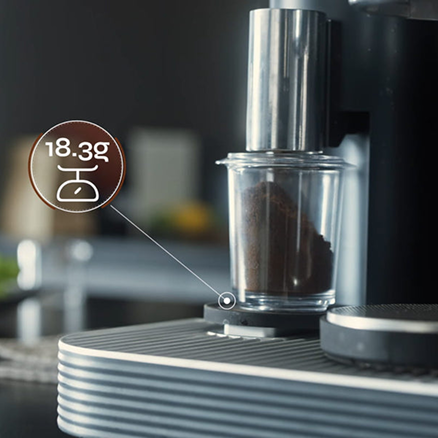
Give spent grounds an actual destination
Moving grounds from the preparation area into another container does not necessarily finish the waste task. Decide where that container is emptied and who handles it. Keep its contents separate from tools that have completed their care process.
The EPA's home-composting guide includes coffee grounds among suitable inputs for relevant composting systems and distinguishes home treatment from collection programs. Check the requirements of the route you actually use. Do not assume every local collection service accepts every material left in the coffee-station waste.
At the handoff, distinguish collected for disposal from disposal completed. You do not need to empty every household bin after every cup, but you do need an agreed endpoint for this session's required waste handling. Follow the container's cleaning instructions separately. Avoid making composting a reason to leave wet residue indefinitely at the station. The purpose here is a completed or explicitly assigned waste task, not a new composting project or an environmental claim about your machine.
Use a short check, not a two-minute cleaning deadline
A brief final check can help you identify what remains, but its duration is not the required duration of cleaning, drying, or a machine program. If you use two minutes as a personal reminder to review the station, treat it as a planning cue rather than a guaranteed completion time.
Ask three questions: which items are available for reuse, which are still drying, and which tasks remain unresolved? Confirm the actual state rather than marking everything complete from intention. For a machine-specific question, use Meraki support instead of inventing a care step or shortening one to fit the timer.
A useful handoff might read: pitcher drying in the agreed area; used cloth awaiting laundering; grounds container still to empty, accepted by Alex. These are example notes, not care instructions. If everyone already recognizes the states, a consistent arrangement may be enough. Otherwise, name the unfinished task and confirm who will finish it. Leave a truthful handoff, even when the station is not ready yet.
Considering equipment for your shared home routine? Explore the Meraki espresso machine and plan its after-use care alongside the preparation workflow.
FAQ
Does station reset mean resetting the machine's software?
No. Here, reset means leaving the physical coffee station in an understandable after-use state. It does not mean restoring factory settings, clearing saved recipes, recalibrating sensors, or power-cycling the appliance. Those are separate equipment procedures with their own instructions and reasons for use. Do not perform them merely because a household checklist says reset. If a machine is unresponsive or behaves unexpectedly, follow its troubleshooting guidance and obtain appropriate support rather than treating housekeeping as a technical remedy.
Can I leave the reset for someone else when I am late?
Only through an explicit arrangement with someone who understands the applicable tasks. Identify what remains and confirm that the person has accepted it; a used pitcher left beside the sink is not a clear request. Do not defer time-sensitive care simply because another person might eventually notice. If assistance is unavailable, follow the necessary after-use instructions yourself and allow the time they require. Shared household work can be practical, but responsibility should not disappear when the drink is finished.
Should I buy duplicate accessories so drying never delays another drink?
Consider that only if a specific required item repeatedly creates a real bottleneck after proper care. An extra compatible accessory may help, but it also adds cleaning, drying, and storage work. Try understanding the actual turnaround before buying a matching set of everything. Keep used and ready items distinguishable even when duplicates look identical. Additional equipment does not shorten a required cleaning process or make a part ready before its instructions allow reuse; it simply gives you another item to manage.


