


Weekday milk drinks fail two ways: you hover and still scorch the cup, or you buy a jug frother that heats foam but never matches espresso steam. Searching automatic milk temperature control vs hand frothing mostly surfaces Nespresso Aeroccino debates, handheld whisk roundups, and “frother vs steamer” videos — useful for jug gadgets, wrong for choosing an espresso steam wand with Auto Temp Stop against learning hand cues.
This Meraki comparison owns the skill vs automation lane for busy households: when auto milk temperature / steam stop wins on Tuesday mornings, when hand frothing is enough, and how to decide in ten minutes. Soft-link the live espresso machine with milk temperature sensor for what a sensor is. Soft-name Milk Temperature Sensor Workflow for Home Espresso heavily for Auto Temp Stop habits. Soft-name Powerful Steam Wand Technique, Dry Steam Espresso for Home Microfoam, Latte Art Practice Plan, Cappuccino on a Grinder-Equipped Dual Boiler, and Flat White Steam Targets for technique and drink recipes — this page is the buyer comparison.
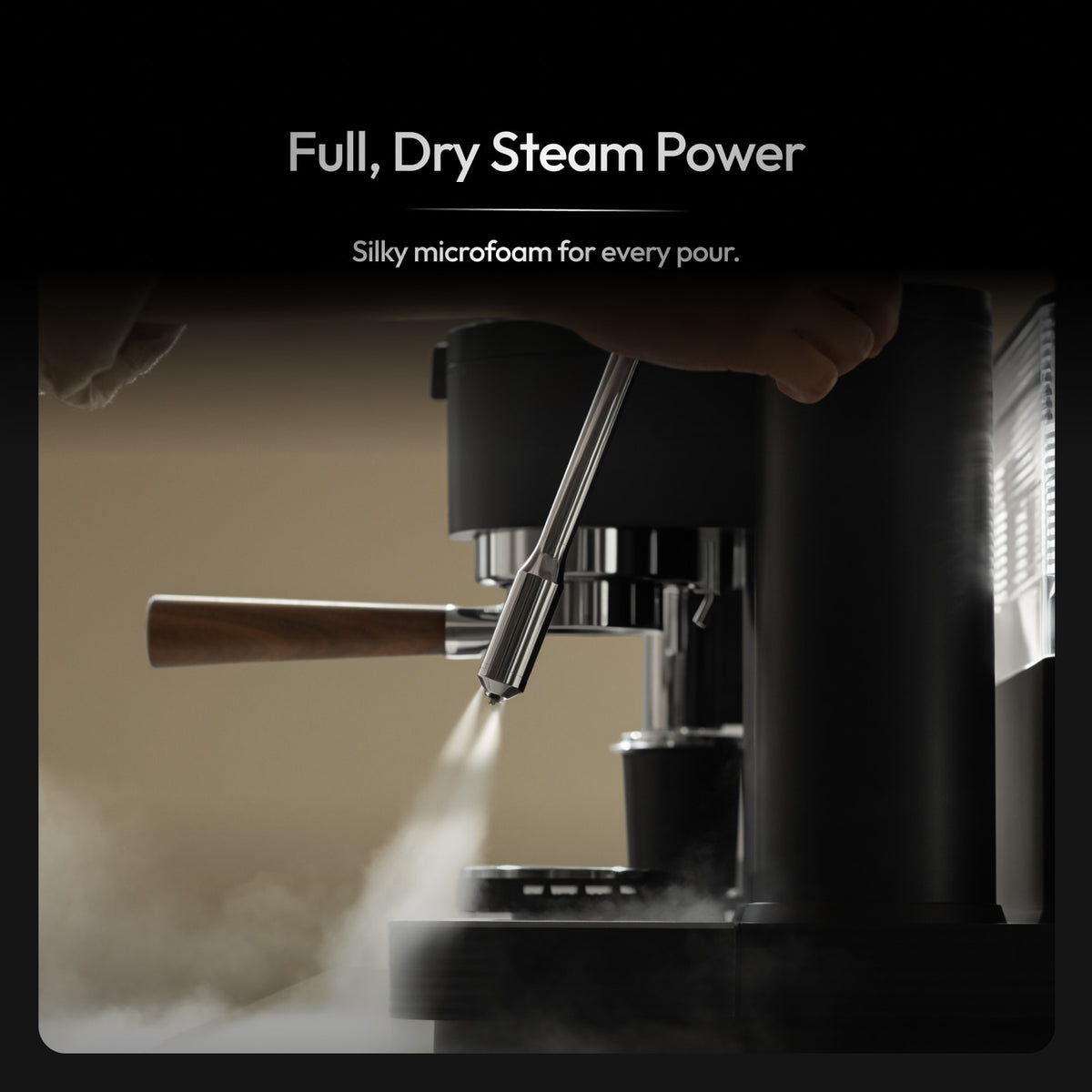
Auto milk temperature control on an espresso steam wand is a stop cue — not a jug frother that whisks milk in a separate appliance.
What “automatic milk temperature control vs hand frothing” really means for home buyers
“Automatic milk temperature control vs hand frothing,” for home espresso shoppers, means choosing a steam-wand stop (sensor / Auto Temp Stop) against learning pitcher cues by hand — not picking a battery whisk over an Aeroccino.
SERP for this phrase is noisy. Organic results and related searches lean into handheld frothers, electric jug frothers, Nespresso milk systems, and “frother vs steamer” explainers. Those tools agitate milk in a cup or jug; many do not heat, and almost none replace a steam wand that textures while espresso is ready on a dual-boiler machine. An espresso machine with automatic steam stop or a temperature sensing steam wand sits in a different product class: steam from the machine, texture from tip position, endpoint from a preferred-temperature stop (or from your hand if you override).
Treat the keyword as a morning reliability decision. Café literacy from the Specialty Coffee Association still treats milk texture and temperature as craft you can taste. Automation here is an endpoint helper — not a promise that foam quality appears without stretch and roll. Soft-link how to steam and texture milk for first stretch literacy; keep recipe and practice pages soft-named elsewhere.
Who this page is for (and who should skip it)
This page is for busy households shopping or upgrading home espresso — parents splitting morning lattes, couples with different heat preferences, and anyone asking whether Auto Temp Stop is worth learning less hand feel, or whether hand frothing is “good enough” without another gadget.
Skip sensor how-it-works — soft-link the live milk temperature sensor guide. Skip Auto Temp Stop weekday rituals — soft-name Milk Temperature Sensor Workflow for Home Espresso. Skip scorch safety, dry-steam physics, latte-art calendars, and drink ratios — soft-name Powerful Steam Wand Technique, Dry Steam Espresso for Home Microfoam, Latte Art Practice Plan, Cappuccino on a Grinder-Equipped Dual Boiler, and Flat White Steam Targets. Skip thermometer literacy — milk thermometers. Come here for: auto temp stop or hand frothing skill for our mornings?
Why this is skill vs automation (not another frother roundup)
Google’s results mostly answer jug frother shopping. Meraki already publishes a sensor feature page and a sensor-workflow essay; soft-name the workflow draft so we do not rebuild stretch → roll → trust-the-stop here.
The unique job is skill vs automation for busy households: decision criteria, side-by-side weekday workflows, when Meraki’s Auto Temp Stop path fits, and when hand skill or a simpler frother is enough — without fake “always better” copy. Disclosure: Meraki publishes this guide and sells the Meraki Espresso Machine. Live product framing (2026-10-26/27 snapshot) includes dual boilers, Powerful Dry Steam. Auto Temp Stop toward a preferred milk temperature, a milk sensor in the measured path with grind and brew scales, and a dedicated steam boiler listed at 550 ml (vendor claim — re-check the live product page). We will not invent Meraki factory °C/°F defaults, tip-hole counts, steam PSI, or a ranked frother leaderboard.
Decision criteria that change the outcome
Busy mornings do not care which method “wins” on a café scorecard. They care which method survives school runs, shared kitchens, and guests who want “hotter” without cooking the milk.
Use criteria that change the cup and the calendar:
- Who steams on weekdays. One dialed-in adult can thrive on hand cues. Two or three adults with different heat habits benefit from a shared preferred-temperature stop.
- How many milk drinks before work. One latte can tolerate a short learning curve. Three drinks in fifteen minutes punish hovering and scorch.
- Texture ambition. Glossy microfoam for pouring wants a steam wand either way; a handheld whisk that only aerates cold milk is a different drink (FDA safe food handling still applies — keep cold milk cold until you heat it on purpose).
- Override appetite. Auto Temp Stop helps when you will trust it. If you abort every stop “for foam,” you bought a sensor and kept hand chaos.
- Counter and cleanup budget. A wand lives on the machine; jug frothers add a second appliance and a second wash cycle.
- Willingness to practice. Hand frothing skill is free once you own a wand — but free is not free if mornings become experiments.
If criterion 3 says you only need warm foam for cocoa and never pour art, a simple frother can be enough without an espresso steam debate. Soft-name drink essays when you already chose espresso milk drinks and need ratios or targets.
Side-by-side feature and workflow comparison
Both paths can make sweet milk. They fail differently under time pressure.
| Dimension | Auto milk temp / steam stop (wand + sensor) | Hand frothing skill (wand, no stop trust) | Standalone jug / handheld frother (SERP noise) |
|---|---|---|---|
| Heat source | Machine steam wand | Machine steam wand | Jug heater, or none (cold whisk) |
| Texture job | Your stretch → roll; stop ends heat | Your stretch → roll → hand heat cue | Whisk agitation; often coarser foam |
| Endpoint | Preferred-temperature Auto Temp Stop (vendor claim framing) | Pitcher feel, sound, optional thermometer | Timer, preset buttons, or guess |
| Busy-morning strength | Shared heat habit across adults | Expert adult consistency | Parallel heating while pods/drip brew |
| Busy-morning failure | Hovering past / aborting the stop | Scorch or underheat under rush | Foam that does not pour like café microfoam |
A practical auto-temp weekday loop (habit depth lives on soft-named Milk Temperature Sensor Workflow): warm, purge, fill a matched pitcher, confirm preferred temperature on your unit, stretch briefly, roll, let Auto Temp Stop finish, wipe and purge (steam wand hygiene).
A practical hand-frothing weekday loop: same station and purge discipline, stretch → roll, stop by pitcher feel (cool → warm → “hot enough” before cooked aroma), optional clip-on check while learning (milk thermometers), wipe and purge. Soft-name Powerful Steam Wand Technique when steam is strong enough to scorch if you linger.
Neither loop invents Meraki setpoints. Confirm Auto Temp Stop behavior on your screen and the product page.
Milk drinks, noise, and heat-up: daily-life differences
Daily life differences show up before taste: warm-up time, and whether brew and milk can overlap.
Dual boilers exist so brew and steam are not a single-boiler tug-of-war. Meraki FAQ framing often cites about 3–4 minutes warm-up — re-check live — so espresso and milk readiness can overlap once warm. A jug frother can run beside a capsule machine; it still does not teach steam-wand microfoam. Soft-name Cappuccino on a Grinder-Equipped Dual Boiler and Flat White Steam Targets when ratios and foam height matter after you choose a path.
Auto Temp Stop does not make steam quieter; it shortens the endpoint decision. Hand frothing adds cognitive load — texture and heat — which multi-adult kitchens feel first. Foam-on-drip belongs in frother SERP guides; espresso milk drinks belong in wand-endpoint comparisons.
Space, maintenance, and learning curve
Counter space favors one wand machine over machine + jug frother + handheld charger. Match pitcher volume to the drink — soft-link milk pitcher sizes.
Maintenance is wand hygiene either way: purge, wipe, deep-clean (steam wand hygiene). Jug frothers add a second wash cycle. Auto Temp Stop removes endpoint anxiety, not cleaning.
Learning curve:
- Auto temp: stretch/roll once, then practice trusting the stop for a week. Soft-name the sensor workflow essay.
- Hand: stretch/roll and heat judgment; fade the thermometer. Soft-name Latte Art Practice Plan only if pour practice is the goal.
- Frother: button literacy; lower microfoam ceiling.
CoffeeGeek and SCA research beat forum tips that skip purge or invent universal degrees.
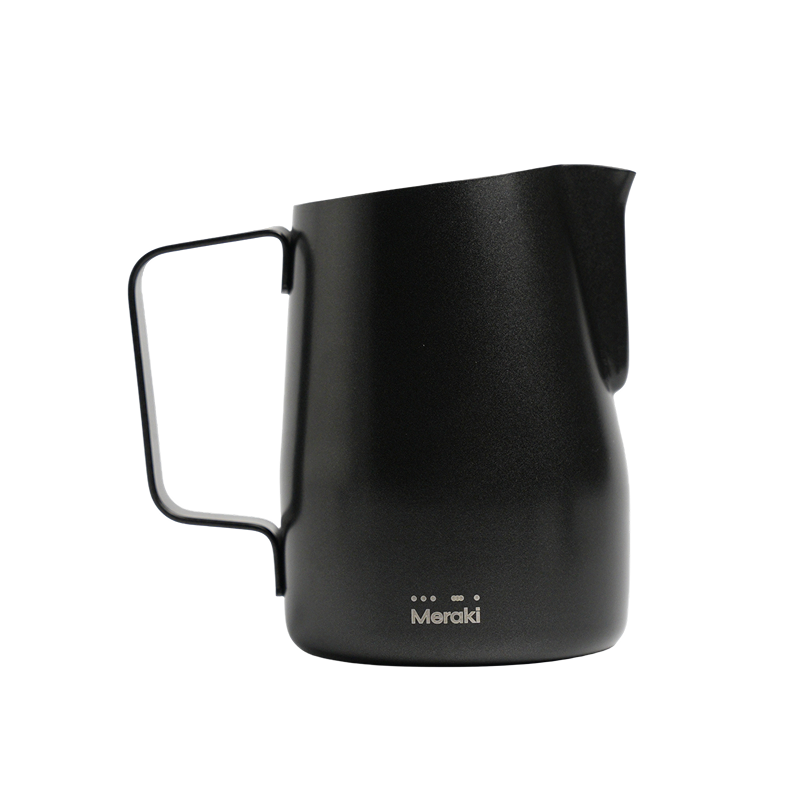
Hand frothing still needs a matched pitcher and stretch/roll — Auto Temp Stop only changes how you end the heat, not whether texture practice exists.
When Meraki is the better fit
Meraki fits when the household already wants espresso + steamed milk on one guided dual-boiler station, and the weekday pain is endpoint consistency more than missing frother buttons.
Honest fit signals:
- Two or more adults steam milk drinks before work and argue about “too hot / too cool.”
- You want brew and steam ready together (dual boilers; Meraki lists a 550 ml steam boiler as a vendor claim).
- You will use Auto Temp Stop as a shared preferred-temperature habit — not as a badge you override every cup.
- You still accept that stretch and roll are human jobs (soft-name dry-steam and powerful-wand essays for texture and scorch boundaries).
- You prefer one appliance footprint over machine + jug frother.
Meraki’s measured path (grind scale, brew scale, milk sensor) is for repeatability — not AI that tastes milk. Barista Magazine’s Meraki × TIMEMORE test drive is machine context, not a frother bake-off. Soft-name Milk Temperature Sensor Workflow once you buy — this page only decides whether auto temp stop fits.
When the alternative is enough
Hand frothing skill is enough when one person already steams cleanly by feel, mornings are not multi-drink stampedes, and buying decisions should not pay for a stop you will ignore.
A simpler frother is enough for drip, instant, or capsules with warm foam on top — or when nobody wants latte art / espresso milk drinks and counter space favors a small jug tool.
Hand skill without Auto Temp Stop is also enough if you enjoy the craft. Soft-name Latte Art Practice Plan when craft is the hobby. Do not force Meraki into kitchens that only need a whisk.
A practical choose-in-10-minutes checklist
Use this once, then stop researching frother listicles for an espresso problem.
- Write the weekday drink. Espresso milk drink, or foam-on-drip/cocoa? If the second, shop frothers; stop here.
- Count steamers. One skilled adult → hand path can win. Two+ with different heat tastes → auto temp stop earns its keep.
- Count drinks before leaving. One → either path. Three in a rush → prefer a trusted stop.
- Check override honesty. Will you let a stop finish? If no, hand skill matches your behavior better.
- Check counter reality. One wand station, or room for jug frother + machine?
- Name the next soft-link. Sensor literacy → live milk temperature sensor page. Weekday stop habits → soft-name Milk Temperature Sensor Workflow. Texture only → how to steam and texture milk.
If steps 1–3 point at espresso milk drinks for a busy multi-adult kitchen, Auto Temp Stop on a dual-boiler wand is the coherent bet — texture still practiced. If steps point at foam-on-drip, buy the frother.
What temperature should milk be when frothing?
Sweet-milk neighborhood, not a universal law.
Aim for a preferred stop that tastes sweet — often roughly mid-50s to mid-60s °C / about 130–150 °F as a starting-point habit band, not a Meraki factory default.
Café literacy (aboutcoffee.org brewing; SCA research) treats that band as a common sweet-milk neighborhood. Cooler can taste thin; much hotter often tastes cooked. Soft-link the milk temperature sensor page and soft-name Milk Temperature Sensor Workflow for preferred-temperature stop on your machine. No invented Meraki factory tables — confirm the UI on the live product page. Keep cold milk cold until steaming (CDC food-safety prevention).
Is a handheld milk frother worth it?
Yes — for foam-on-drip, not espresso microfoam.
A handheld frother is worth it when you want cheap aeration for cocoa, matcha, or drip coffee and do not need steam-wand gloss for pouring.
It is usually not the answer to automatic milk temperature control vs hand frothing on an espresso machine. Many handhelds do not heat; texture is often large-bubbled versus stretch-and-roll microfoam. Soft-name drink essays after you already own a wand. Capsules plus a frother that already make everyone happy do not need this comparison.
Conclusion
For busy households making espresso milk drinks, automatic milk temperature control wins when shared preferred-temperature stops beat morning hovering; hand frothing wins when one skilled adult already ends heat cleanly and will not use a stop. Jug and handheld frothers answer a different search — foam without a steam wand — and should not decide an espresso purchase.
If your checklist points at a dual-boiler wand with Auto Temp Stop, review the Meraki Espresso Machine, then soft-name Milk Temperature Sensor Workflow for the weekday trust habit. For shipping, returns, and support after purchase, see Meraki’s shipping policy, refund policy, and support.
FAQ
Does Auto Temp Stop replace learning to texture milk? No. Auto Temp Stop ends heat at a preferred temperature; stretch and roll still create microfoam. Soft-name Milk Temperature Sensor Workflow for Home Espresso for stop trust, and soft-link how to steam and texture milk for first texture literacy. Buying a sensor without tip practice only automates scorch timing.
Is a steam wand better than a frother for lattes? For espresso-based lattes and pourable microfoam, a steam wand is usually the right tool; jug and handheld frothers excel at convenience foam on drip or cocoa. Compare jobs, not marketing labels. Soft-name Flat White Steam Targets and Cappuccino on a Grinder-Equipped Dual Boiler when drink texture targets matter after you choose a wand.
Can I use hand frothing on a machine that has Auto Temp Stop? Yes — override or steam by feel when you have a named reason (learning day, sensor unavailable, tasting experiment). Soft-name the sensor workflow essay for override rules so “just two more seconds” does not become daily chaos.
What pitcher size should busy households start with? Start with a pitcher matched to today’s drink volume with stretch room — not a café pitcher half empty under a strong tip. Soft-link milk pitcher sizes for latte art. Meraki gift framing has included a practical home pitcher size with some kits — confirm current kit contents live; do not assume forever.
Does Meraki invent a single correct milk temperature for every drink? No. Live framing emphasizes Auto Temp Stop toward a preferred milk temperature and a milk sensor in the measured path. Treat mid-50s–mid-60s °C / ~130–150 °F only as a starting-point habit band, confirm your unit, and soft-link the milk temperature sensor guide for concept literacy.


