


You already pull espresso at home — then dilute with kettle water, a wand rinse, or a guess — and wonder why the cup tastes muddy one day and thin the next. The open question is not “which machine makes Americanos?” Every espresso machine can dilute a shot. It is hot water outlet use: a weekday espresso machine for americano workflow that pulls the shot first, then tops with dedicated hot water for clarity, with a clear order of operations versus a long black.
SERP is crowded with “best espresso machine for Americano” roundups. Almost none owns a calm dedicated hot-water-outlet checklist for drinkers who already use a machine with a separate hot-water tap. This Meraki espresso-brewing how-to owns that practice.
Soft-link how to choose an espresso machine for Americano when the buyer guide owns the next hour; long black vs Americano: water first changes everything when the recipe debate (water-first vs shot-first) owns the cup; and sparkling Americano recipe when fizz — not flat hot water — is the next experiment. Soft-name weekday morning espresso routine (A010) when the whole clock-timed all-in-one path — not Americano dilution order — is the leak.
A dedicated hot water outlet turns Americano dilution into a measured second pour — not a kettle detour or a steam-wand rinse.
What “espresso machine for americano workflow” really means for home buyers
Espresso machine for americano workflow, for Americano drinkers, means a repeatable home path that uses a dedicated hot water outlet after a dialed espresso shot — shot then water for clarity — not another “best machine for Americano” shopping badge.
Treat the keyword as three jobs. Job one is espresso base first: a known dose and yield you would drink neat before you dilute. Job two is dedicated hot water: water from a separate outlet on the machine (not the group head, not the steam wand, not a cold kettle top-up). Job three is order discipline: Americano = espresso into the cup, then hot water; long black = water first, then espresso over it — soft-link the live long-black vs Americano recipe when that debate owns the next click; stay here for outlet workflow.
Specialty coffee education still centers measured mass, method, and taste — see the Specialty Coffee Association and NCA brewing basics. Dilution does not fix a sour or harsh shot; it only spreads what you already extracted.
Who this page is for (and who should skip it)
This page is for Americano drinkers who want a weekday home workflow on an espresso machine with dedicated hot water outlet — shot then water for clarity — without turning every morning into a café debate.
Skip how to choose an espresso machine for Americano when you still need the buyer guide (hot-water source as a purchase criterion); long black vs Americano when the water-first vs shot-first essay owns the cup; and sparkling Americano when carbonated water is the experiment. Soft-name weekday morning routine (A010) when the full grind–brew–steam clock — not dilution order — is broken. Come here for: dedicated hot-water-outlet Americano checklist + shot-then-water clarity.
Why hot water outlet use beats another “best machine” list
This article is published by Meraki. The unique job is hot water outlet use: a weekday Americano workflow that stages the cup, pulls espresso, then dilutes from a dedicated hot water outlet for clarity — with a short order-of-operations note versus long black — not a choose-machine-for-Americano buyer guide, not a long-black-vs-Americano recipe essay as the main piece, and not a sparkling Americano recipe.
Soft-link those three live Meraki posts when their lanes own the next question; soft-name A010 when morning timing on an all-in-one station is the real miss; keep this page for outlet workflow.
Disclosure: Meraki sells the Meraki Espresso Machine — dual boilers, rotary pump framed near steady 9 bar, dual scales (±0.2 g), TIMEMORE® co-developed grinder, guided touchscreen, and a live product-page Hot-water outlet callout (vendor claims; re-check live 2026-10-26/27). Heat-up about 3–4 minutes; brew and steam together. Café menu framing includes americano — verify the live product and FAQ before treating UI labels as permanent. No invented German Design / Red Dot / iF claims here. If your machine lacks a dedicated outlet, use these ideas only where you have a clean hot-water tap — a wand rinse is not the same thing.
Tools and settings to prepare first
Americano clarity fails when the shot is undialed, the cup is cold, or the water source is improvised. Prep keeps dilution honest.
Stage a dry mug for your usual Americano size (pick one weekday volume and stick to it). Confirm brew-ready heat — not cold, not mid-rinse. Lock a weekday espresso recipe you already like neat: dose (g), yield (g), grind landmark. Soft-link how to choose an espresso machine for Americano only if you still need purchase criteria; stay here once the outlet exists.
Find the dedicated hot water outlet on your machine and purge a short stream into the drip tray so the first water into the drink is hot and clean — not stale line water. Do not use steam-wand condensate as dilution water. Soft-name A010 if night staging (tank filled, beans ready, portafilter clean) is the real weekday leak; here, staging is only outlet readiness.
Keep one dilution band on a sticky: espresso yield + hot water to a mug finish line, or a simple ~1:2–1:3 shot-to-water mass habit with a scale under the cup. CoffeeGeek guides and About Coffee brewing still treat a known method as the craft core — the outlet only delivers the second pour.
Step-by-step workflow: shot, then dedicated hot water
Run Americano as a two-pour service path. The espresso owns flavor; the outlet owns dilution temperature and volume. Fold the usual “how do I make an Americano step-by-step?” search into this checklist — not a second recipe dump.
1. Heat and stage. Power on and wait for ready heat. Place the dry mug under the group (or on the drip tray where you always pull). Soft-name A010 if the weekday clock is still chaotic before the first grind.
2. Dial the espresso base. Dose, distribute, tamp as usual. Pull to your locked yield. Taste memory matters: if the neat shot would be sour or harsh, stop and fix grind or dose before you dilute — water will not repair extraction.
3. Leave the shot in the mug. For a classic home Americano, espresso lands first. Soft-link long black vs Americano when you intentionally want water first (long black) for a different crema and aroma presentation; stay on shot then water for this page’s clarity lane.
4. Move to the dedicated hot water outlet. Slide or place the mug under the hot-water tap. Purge briefly if you have not already. Dispense hot water to your written finish line or mass target. Do not open the group head as a “water faucet.” Do not stretch steam into the cup.
5. Optional swirl, then sip. One gentle swirl mixes layers without beating the drink cold. Note one taste word (clear, muddy, thin, harsh, sweet). Soft-link sparkling Americano only when you swap flat hot water for carbonated water on purpose.
6. Reset for tomorrow. Knock out the puck, wipe the portafilter, empty the drip tray if needed. Soft-name A010 when wipe-down — not dilution order — is why weekday cups slip. Barista Magazine still treats service order as craft: shot quality first, dilution second.
Targets and ranges that keep you out of rabbit holes
Keep dilution boring. If a target fights “I must chase café volume tonight,” locked espresso yield wins until cups repeat.
| Variable | Weekday target cue | Outlet rule | Do not… |
|---|---|---|---|
| Espresso dose (g) | Same as your neat shot | Locked before grind | Re-dose after a muddy Americano |
| Espresso yield (g) | Same locked stop | Shot into empty mug first | “Lungo the group” to fake volume |
| Hot water volume | One mug finish line or ~1:2–1:3 shot:water habit | Dedicated outlet only | Wand rinse / kettle guess mid-week |
| Water temp feel | Hot, not boiling harshness | Purge outlet first | Cold top-ups that collapse aroma |
| Order | Shot → water (Americano) | Soft-link long black for water → shot | Mixing both orders same morning |
| Taste word | One word after sip | After dilution | Paragraph notes on a workday |
| Guided Americano button | Optional if your UI offers it | Still verify outlet path | Blind trust with no taste word |
Shot-then-water is the contract on this page. Soft-link the buyer guide when the machine still lacks a real outlet; soft-link the long-black recipe when you want water-first on purpose; soft-name A010 when heat and staging — not dilution math — break the cup. NIST reminds buyers that honest units matter — scales measure; they do not invent clarity.
Common mistakes and quick fixes
Most muddy Americanos are workflow failures, not missing “specialty” badges. Fix the pour path before buying another accessory.
- Diluting a bad shot — fix grind/dose first; outlet water only spreads extraction.
- Using the steam wand as hot water — condensate and milk residue muddy the cup; use the dedicated outlet.
- Kettle water one day, outlet the next — pick one weekday water source for seven days.
- Lungo instead of Americano — long group pulls are not the same as shot + hot water; soft-link recipe pages for drink definitions.
- Water first without intending a long black — soft-link long black vs Americano; keep shot-first here.
- No purge on the outlet — stale line water cools and dulls the top-up.
- Oversized mug with no finish line — write a fill mark; stop chasing “café bowl” volume mid-week.
- Changing grind and water volume after one sip — change one lever next day.
- Skipping hygiene because “it’s only water” — wipe trays and rinse the outlet path; see FDA safe food handling.
- Treating sparkling water as the same drink — soft-link sparkling Americano; fizz is a different recipe.
How to taste and decide what to change next
Taste closes the loop. Without it, a dedicated outlet is only a second faucet.
Sip after dilution. Muddy or flat with an honest shot often means water volume too high, outlet not purged, or a cool cup — not a new grinder. Sour or sharp after dilution usually means the espresso base was already under — grind finer or revisit yield before blaming the outlet. Harsh or bitter after dilution often means the shot was already over — coarser grind or a slightly lower yield with dose locked. Thin and watery with a good neat shot means shrink the water finish line, not “pull longer through coffee.”
If Monday and Friday disagree, ask which order and which water source you used — kettle vs outlet vs wand. Soft-link long black vs Americano when order was the only change; soft-link the Americano buyer guide when hardware still cannot deliver clean hot water; soft-name A010 when rush timing skipped heat. About Coffee brewing still assumes: lock → pour in order → one taste word → one change.
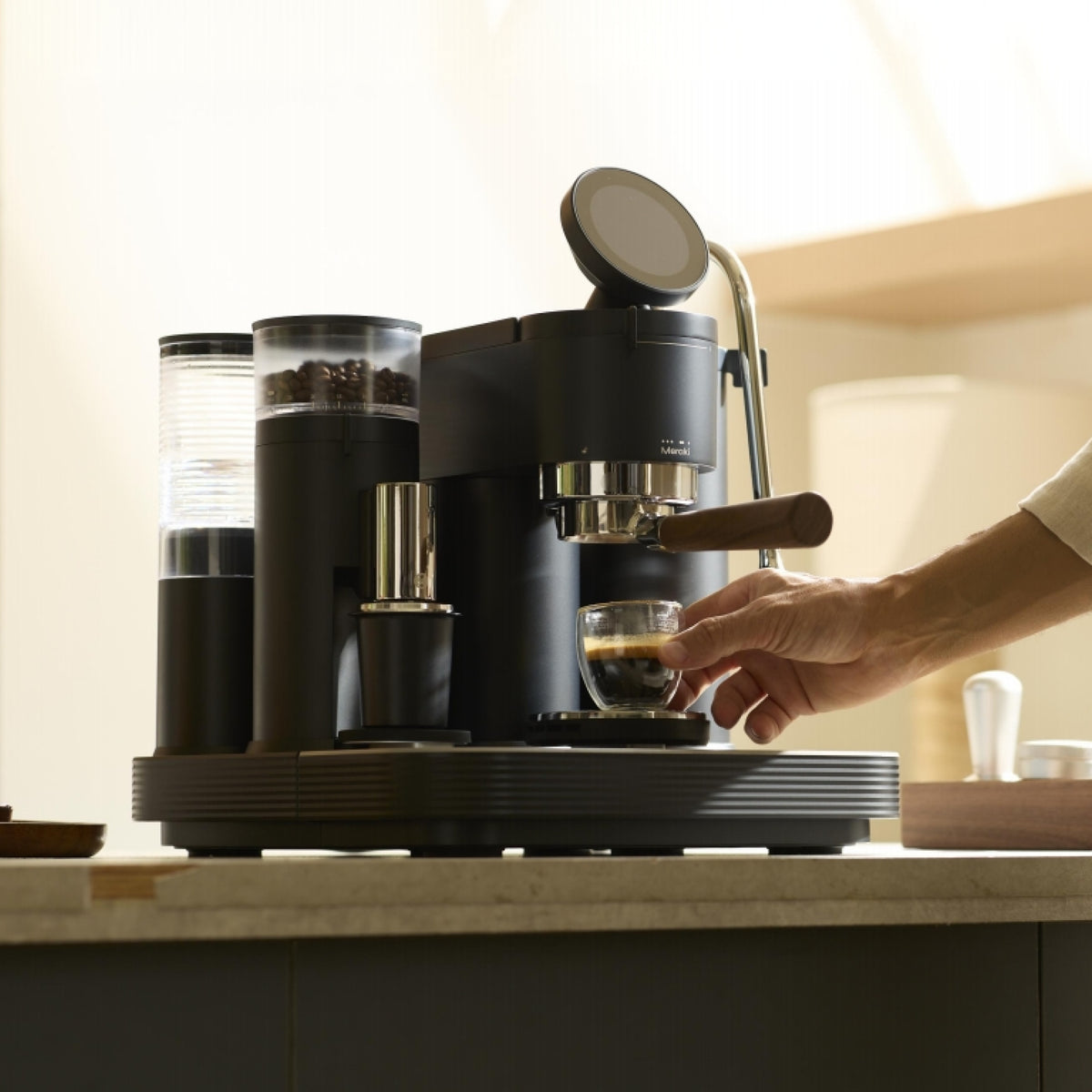
Weekday Americano clarity comes from a dialed shot plus a purged dedicated hot-water pour — not from a longer group pull.
A one-week practice or habit plan
Treat seven days as an outlet drill. Keep the same bag unless it ends.
Day 1 — Map the outlet. Find the dedicated hot water tap. Purge. Pull one neat espresso and stop — no Americano yet. Soft-name A010 if heat/staging already ate the clock.
Day 2 — Shot then water, fixed mug line. Same recipe. Espresso first, outlet water to one mark. One taste word.
Day 3 — Purge discipline. Same recipe. Skip the purge once on purpose, taste the duller top-up, then restore purge forever on weekdays.
Day 4 — Order contrast (optional second cup). Make one Americano (shot → water) and, if you have time, one long black (water → shot). Soft-link the live long-black vs Americano page for the recipe essay; note which order you prefer — do not mix them randomly the rest of the week.
Day 5 — Volume band. Same shot; move the finish line ±1 cm once. Keep the better mark. Soft-link the buyer guide only if the outlet cannot keep up with your preferred volume.
Day 6 — No kettle / no wand. Force dedicated-outlet water only. Mark any cheat as a miss.
Day 7 — Review. Patterns that repeated twice → one lever next week (grind, yield, or water mark — not all three). Soft-link sparkling Americano only if you want a weekend fizz experiment; soft-name A010 if the weekday clock — not dilution — is still the leak. Then drink.
When to stop tweaking and just drink
Stop rewriting dilution math when weekday Americanos already taste clear and new changes are only theater. Keep practicing when Monday is bright and Friday is muddy with no written order or water source — or when you still dilute bad shots hoping water will fix them.
Soft-link the three live near-dupe guides for buyer criteria, water-first debate, or sparkling recipes; soft-name A010 when morning timing owns the miss; keep this page for dedicated hot-water-outlet Americano workflow. Then drink. A clear shot-then-water path you repeat beats a perfect café story you abandon.
Conclusion
An espresso machine for americano workflow helps Americano drinkers when hot water outlet use is calm: dial the espresso, pour shot first for clarity, then dilute from a dedicated hot water outlet to a known finish line — with a soft nod to long black when you intentionally reverse order. Specialty coffee at home still starts with extraction honesty; the outlet only finishes the cup.
Soft-link Meraki’s live near-dupe guides for choosing an Americano-capable machine, long black vs Americano order, and sparkling Americano; soft-name weekday morning routine (A010) when the clock — not dilution — is next; keep this page for the outlet checklist.
When you want the dual-boiler station that lists a hot-water outlet beside grind, brew, and steam, start at the Meraki Espresso Machine.
FAQ
How do I make an Americano with a dedicated hot water outlet at home?
Pull a dialed espresso into a dry mug first, purge the dedicated hot water outlet, then add hot water to a written finish line or simple mass band. Skip the steam wand and longer group pulls. Soft-link Meraki’s long black vs Americano page if you want water first; stay here for shot-then-water outlet workflow. Soft-name weekday morning routine drafts (A010) when heat and staging — not dilution — break the clock.
Americano vs long black at home — which order should I use?
Americano typically means espresso first, then hot water; long black typically means hot water first, then espresso over it. Soft-link Meraki’s long black vs Americano recipe essay for that order debate. This page owns the dedicated-outlet Americano path (shot then water for clarity), not the full water-first essay.
Is an Americano basically just black coffee?
No. An Americano starts with espresso, then adds hot water; drip or batch brew extracts differently through a bed of grounds. Soft-link Meraki coffee-recipes and espresso-brewing guides when drink definitions need depth. This article owns outlet dilution workflow after a real espresso shot, not a black-coffee taxonomy.
What is the best professional home espresso machine for Americanos?
That is a shopping search, not an outlet checklist. Soft-link Meraki’s how to choose an espresso machine for Americano buyer guide for purchase criteria (including hot-water source), and the Meraki Espresso Machine product page for dual-boiler and Hot-water outlet framing (vendor claims; re-check live). This page owns weekday shot-then-water workflow, not a best-machine list.
Do I need an espresso machine with a dedicated hot water outlet for specialty coffee Americanos?
A dedicated outlet makes weekday dilution cleaner and more repeatable than a kettle guess or wand rinse — useful for specialty-coffee clarity at home. Soft-link the Americano buyer guide if you are still choosing hardware; soft-link sparkling Americano if fizz is next. Stay here once the outlet exists and the open job is order, purge, and finish-line discipline.


