


You already know weighing coffee beats scooping — yet weekday mornings still drift: yesterday’s timed grind dumps a different pile, the first shot tastes thin, and you “fix it later.” A grind by weight espresso machine daily setup only sticks when target dose, tare/zero habits, and a boring weekday ritual beat curiosity tweaks.
This Meraki guide builds that weekday grind-by-weight routine: set a dose target, keep the scale honest, recalibrate after bean changes, choose grind-by-weight over timed dosing for daily use, fix common mistakes, and practice for one week. It is not a rewrite of Brew by Weight: The Complete Guide (yield-side weighing), how Meraki’s dual scales work (hardware explainer), or Meraki’s full dose and yield dial-in method. Use those for their jobs; use this page when the missing piece is a morning dose ritual that survives a workday.
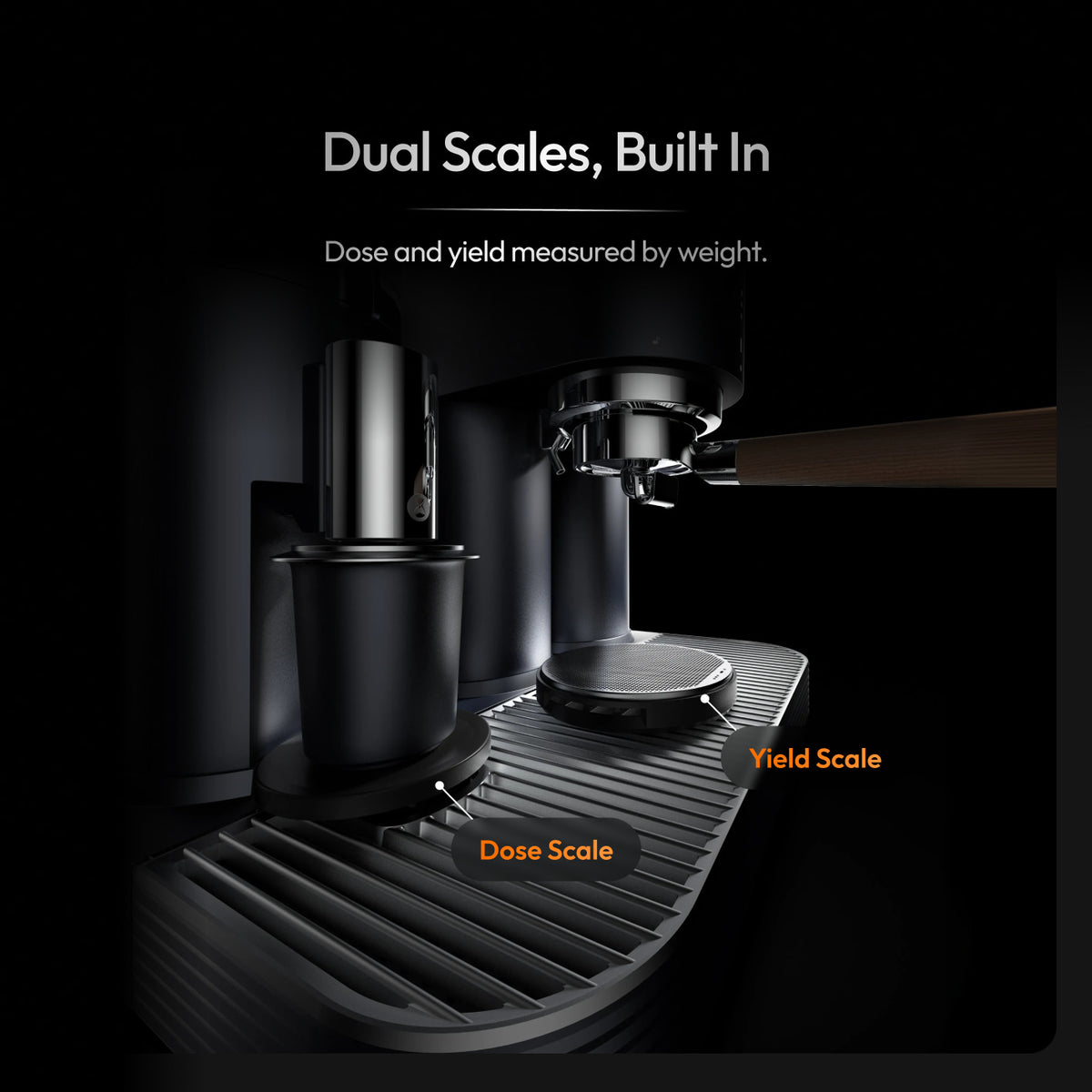
Grind-by-weight sticks when the dose target is fixed and the scale starts at zero — not when you reinvent grams every morning.
What “grind by weight espresso machine daily setup” really means for home buyers
“Grind by weight espresso machine daily setup” in search often lands on weight-vs-time debates, forum threads about single dosing vs hopper grind-by-weight, or brand-specific grind-size charts. For a home buyer it means something narrower: a repeatable weekday dose ritual on a machine that can stop grinding at a gram target — so the first shot of the day matches the second without scooping theater.
Grind-by-weight (also called grind-to-scale on some product pages) means the mill runs until the dose scale hits your set mass, then stops. Timed dosing runs the motor for a saved number of seconds. Seconds feel convenient until bean age, hopper level, or burr warmth change how many grams those seconds deliver. Grams stay grams.
Treat the keyword as habit design first. Meraki’s dual-scales explainer owns how two scales fit in one chassis. The brew-by-weight complete guide owns yield targets and shot reading. This page owns the dose-side weekday setup that makes those tools boring in a good way.
Who this page is for (and who should skip it)
This page is for precision beginners and busy espresso households who already have (or are about to have) grind-by-weight / grind-to-scale dosing and need the morning sequence to stick — not another theory essay.
Skip it if you still need yield literacy — start with Brew by Weight Espresso Machine: The Complete Guide. Skip a hardware tour of dose scale + brew scale — that is Grind-by-Weight and Brew-by-Weight: How Meraki’s Dual Scales Work. Skip a full dose/yield triangle or “how many grams per shot” deep dive — use dose and yield, how many grams per shot, and espresso ratio explained. Skip hopper single-dose workflow design — Meraki’s single-dose espresso workflow with a hopper owns that. Skip “same dose, same yield, weird taste” diagnosis — that is same dose, same yield, different taste. Come here when the question is: how do I make grind-by-weight stick on a weekday?
Why this is a daily setup (not a brew-by-weight complete guide)
SERP for this query leans toward community experience: weight vs time pros/cons, Reddit single-dose debates, Facebook “do you weigh the built-in grinder?” threads, and grind-size posts for other brands’ mills. Editorial how-tos that install a daily dose habit are thinner than the hardware and dial-in libraries.
The unique job here is that daily setup: lock one target dose, tare/zero before every grind, run the weekday sequence in the same order, recalibrate when the bag changes, prefer grind-by-weight over timed dosing for mornings, and practice seven days until the ritual is muscle memory. Disclosure: Meraki publishes this guide and sells the Meraki Espresso Machine. Live product story (2026-10-26 snapshot + homepage): true burr grinder co-developed with TIMEMORE®, grind straight onto the built-in scale (grind-by-weight / grind-to-scale / auto-dose), dual scales 1 kg · ±0.2 g, 45 grind settings. Meraki examples illustrate one verified path — not a universal dosing chart for every brand.
Tools and settings to prepare first
Daily grind-by-weight fails when the station is half-asleep. Stage tools while the machine warms: clean portafilter and basket, dry distribution/tamp tools you actually use, a clear place for the portafilter under the chute, and a sticky note with one weekday dose (and, if you already locked them, yield and drink style).
On Meraki’s current framing, dual boilers heat in about 3–4 minutes and the guided path runs grind → brew → steam → serve — confirm warm-up language on the live product page. If your grind-by-weight setup uses a separate mill and tray scale, put the scale where you can see zero before every grind; the habit below still holds.
Pick dose from your basket’s honest working range — Meraki’s grams-per-shot page owns the ranges; this page only asks you to write one number and stop shopping for a better one all week. Category literacy from the Specialty Coffee Association and CoffeeGeek’s guides beats any viral “always dose X grams” meme that ignores your basket.
Step-by-step workflow: weekday grind-by-weight setup
The weekday win is a dose that hits the same number before you chase flavor. Use this order until it feels automatic.
- Warm fully, then stage the portafilter. Do not grind into a cold group “to save time.” Meraki’s FAQ framing lists dual-boiler warm-up around 3–4 minutes — re-check your model. Seat a clean, dry portafilter under the chute so grounds land in the basket, not on the scale’s edges.
- Set (or confirm) the target dose. Enter the sticky-note grams on the grind-by-weight control — or confirm yesterday’s saved target is still what you want. Do not invent a new target because the bag “smells different” before you have tasted a weighed shot.
- Tare / zero before every grind. Empty basket, empty chute face wiped if needed, scale reading zero (or the machine’s ready-to-dose state). Skipping tare is how “18.0 g” becomes yesterday’s crumbs plus today’s dose. NIST is a reminder: a scale is only as honest as the zero you give it.
- Grind by weight once — then stop. Let auto-dose / grind-to-scale finish at target. Resist “a little more for luck.” If the machine undershoots or overshoots, note it once; do not tap the motor in panic before you understand retention and chute behavior.
- Distribute and tamp the weighed puck. Weight fixed the dose; distribution still decides channeling. Keep the same hand sequence every morning so the experiment stays fair.
- Brew to your weekday yield habit. Stop at the yield you already trust, or use brew-by-weight auto-stop if your machine offers it. Yield literacy lives on Meraki’s brew-by-weight complete guide — do not rebuild it here. Taste once; change grind later if needed, not dose mid-shot.
- Thirty-second reset. Knock the puck, wipe the basket face, confirm the dose scale is clear for tomorrow. Tomorrow’s “sticks” starts with today’s clean zero.
If you rotate beans with a hopper, purge and re-weigh after a change rather than trusting yesterday’s timed seconds — Meraki’s single-dose with a hopper page owns hopper tactics; here the rule is simply: new bag → confirm dose still lands on target before you judge grind.
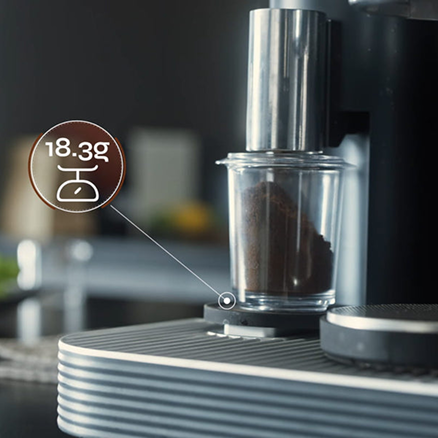
Weighed to the gram — the daily setup is target → tare → grind-by-weight → same hand sequence, not scoop-and-guess.
Targets and ranges that keep you out of rabbit holes
Targets exist so breakfast does not become a lab. Prefer one weekday dose, one familiar brew-ratio band, and ranges — not invented laboratory precision.
Many homes start near a classic ~1:2 brew ratio as a habit (for example ~18 g in → ~36 g out) while they learn dose discipline. That ratio is a familiar baseline from café culture and brewing literacy such as NCA brewing basics and SCA research — not a law that every great shot must obey. Lock dose first; let ratio explained teach when to break the rule on purpose.
Meraki lists dual scales to ±0.2 g with a 1 kg capacity on the product specs table — that supports honest dose and yield, not a license to chase hundredths before you can taste sour vs bitter. Extraction time is a traffic light only: mid-twenties into low thirties of seconds is a common home band, not an SCA stopwatch commandment. If taste is sweet outside that band at your locked dose, keep the taste.
Grind-by-weight vs timed dosing for daily use
| Daily question | Grind-by-weight / grind-to-scale | Timed dosing |
|---|---|---|
| What stays constant? | Target grams | Target seconds |
| Bean ages in the hopper | Dose still aims at the same mass | Same seconds often deliver fewer/more grams |
| After a new bag | Reconfirm target lands; then adjust grind | Rebuild time and grind — two variables |
| Weekday mental load | Set once, tare, go | Recheck cup weight when shots drift |
| Best use | Everyday espresso consistency | Rough batching when you lack a dose scale |
For weekday espresso, prefer grind-by-weight. Keep timed dosing as a backup when a scale faults — then weigh a check shot on a tray scale before you trust the clock again.
Common mistakes and quick fixes
Most “grind-by-weight doesn’t feel consistent” complaints are setup errors, not broken burrs.
| Mistake | What you feel | Quick fix |
|---|---|---|
| Skipping tare / zero | “Same target,” different puck | Zero every grind; wipe basket and chute face |
| Changing dose every morning | No baseline to taste against | Sticky-note one weekday dose for seven days |
| Timed dosing after a new bag | Shot races or crawls “for no reason” | Switch to grind-by-weight; then adjust grind |
| Chasing grind and dose together | No idea what worked | Freeze dose; change grind only (see dial-in hubs) |
| Grinding before ready lights | Thin first shot; blame the scale | Warm fully; prep tools during warm-up |
| Ignoring retention after bean swap | Taste of yesterday’s roast | Purge a little, re-weigh; then dial |
| Expecting ±0.2 g to fix channeling | One side blondes; dose looks perfect | Fix distribution/tamp; dose was never the villain |
If the cup still disagrees after dose is honest, jump to Meraki’s same dose, same yield, different taste checklist or the full dose and yield method — do not invent a second daily-setup essay here.
How to taste and decide what to change next
On a daily setup week, taste answers one question first: did the dose land? If the scale says you missed target, fix tare and chute before you touch grind. If dose is honest and the shot is wrong, name the defect once.
Sour-thin with fast flow usually wants finer grind (or a yield tweak you already understand from ratio pages). Harsh-bitter with a syrupy crawl usually wants coarser. Muddy or hollow with “perfect” grams often wants distribution — weight cannot fix an uneven puck. Under milk, ask whether espresso still tastes like coffee once diluted.
Change one variable after the sequence is automatic: usually grind, sometimes yield, almost never weekday dose until the bag changes. Keep a three-line note: date, dose target hit?, one taste word. That beats a spreadsheet in week one. Press context on Meraki’s measured path appears in places like Barista Magazine; still judge your cup.
A one-week practice or habit plan
A week installs grind-by-weight muscle memory without turning coffee into homework. Keep the same beans and the same drink.
- Day 1 — Target + tare. Write one dose. Practice zero → grind-by-weight → confirm grams twice. Ignore latte art.
- Day 2 — Same target, same hands. Identical dose and distribution order. Goal: two mornings within your scale’s honest tolerance without “bonus taps.”
- Day 3 — Yield habit only. Keep dose locked; stop brew at the same yield. Taste for gross errors only.
- Day 4 — Weight vs time drill (optional, small volume). Pull one timed dose on purpose, weigh it, see the drift — then return to grind-by-weight. Train why grams win weekdays.
- Day 5 — Bean-change rehearsal. Even on the same bag, empty the chute path, re-tare, confirm target still lands. Practice the new bag ritual before you need it.
- Day 6–7 — Guest pace, then lock. Make drinks without narrating the scale. Keep target and tare rules. Cut “just one more gram” when the cup was already fine.
Do not “save power” by skipping warm-up and blaming the dose scale for a cold first shot — home espresso energy is usually modest next to beans (energy.gov).
When to stop tweaking and just drink
Stop tweaking when tare is automatic, the weekday dose hits without drama, and further gram changes would only serve curiosity. Grind-by-weight is a habit tool, not a homework assignment to visit every tenth of a gram.
One roast for weeks? Protect the sticky-note target; re-check when the bag ages or a new bag arrives. Rotate often? Train fast reconfirmation of dose after each change, not a museum of historical gram settings. The dual-scales explainer waits for a quiet evening when you want the how the hardware works story again; the brew-by-weight complete guide waits when yield — not dose — is the open question.
FAQ
Do I still need to tare if my machine has grind-by-weight / auto-dose? Yes. Grind-by-weight aims at a target mass; tare/zero makes that target start from a clean basket and a clear scale. Crumbs, a damp basket, or a portafilter that was not seated the same way turn “18.0 g” into fiction. Treat tare as part of the daily setup, not optional theater reserved for café gear.
Is grind-by-weight better than timed dosing for weekday espresso? For daily espresso, yes — grams stay the controlled variable when beans age or hopper level changes. Timed dosing can still work as a backup, but you should weigh check shots when taste drifts. Meraki’s product framing emphasizes grinding to dose on the built-in scale (grind-to-scale / auto-dose); verify live language on the product page the day you buy.
What dose should I set as my daily target? One number inside your basket’s honest working range that you can hit half-asleep — often somewhere in the mid-teens to high teens of grams for many home double baskets, but your basket and taste decide. Lock it for a week. Use Meraki’s how many grams per shot page for ranges; do not change the sticky note every morning.
Do I need to recalibrate grind-by-weight when I change beans? Confirm the dose still lands on target after a purge/tare, then adjust grind (and yield if needed) for the new roast. The gram target can often stay; the particle size usually cannot. Full dial-in lives on Meraki’s dose and yield guide — this page only insists you reconfirm weight before you judge the new bag.
Can grind-by-weight work with a hopper, or only with single dosing? Both can work. A hopper is fine when you tare, hit target grams, and purge when you switch coffees. Single dosing shines for frequent bean rotation. Meraki’s single-dose workflow with a hopper owns that trade-off; the daily setup rule is the same either way: target → tare → weigh → stop.
If your goal is calm mornings on a grind-by-weight espresso machine, run the target → tare → grind-to-scale → reset loop above — and confirm today’s Meraki TIMEMORE® co-developed grinder, dual scales (1 kg · ±0.2 g), and grind-to-scale framing on the Meraki Espresso Machine product page when you want the guided all-in-one path. Support: Meraki Support (+1 833 854 9555, Mon–Fri 9 AM–5 PM EST).


