


Decision path: if your drinks include espresso, buy burr; if you only need chaotic French-press coarse on a trip, a blade can limp along; if you want both espresso and filter later, still buy burr once. The critical number is not wattage—it is particle spread.
Espresso at roughly nine bars punishes mixed dust and boulders with channeling. That is why this guide centers burr grinder consistency rather than generic “coffee grinder” hype. Deep dive geometry: flat vs conical burrs for espresso. Buying adjacent: espresso machine with grinder.
Who this guide is for
Home drinkers comparing burr vs blade before an espresso setup.
Also for owners blaming machines when the grinder is the real culprit.
Cafe menus will not save a random chop. Literacy: NCA, Coffee & Health.
What a burr grinder does
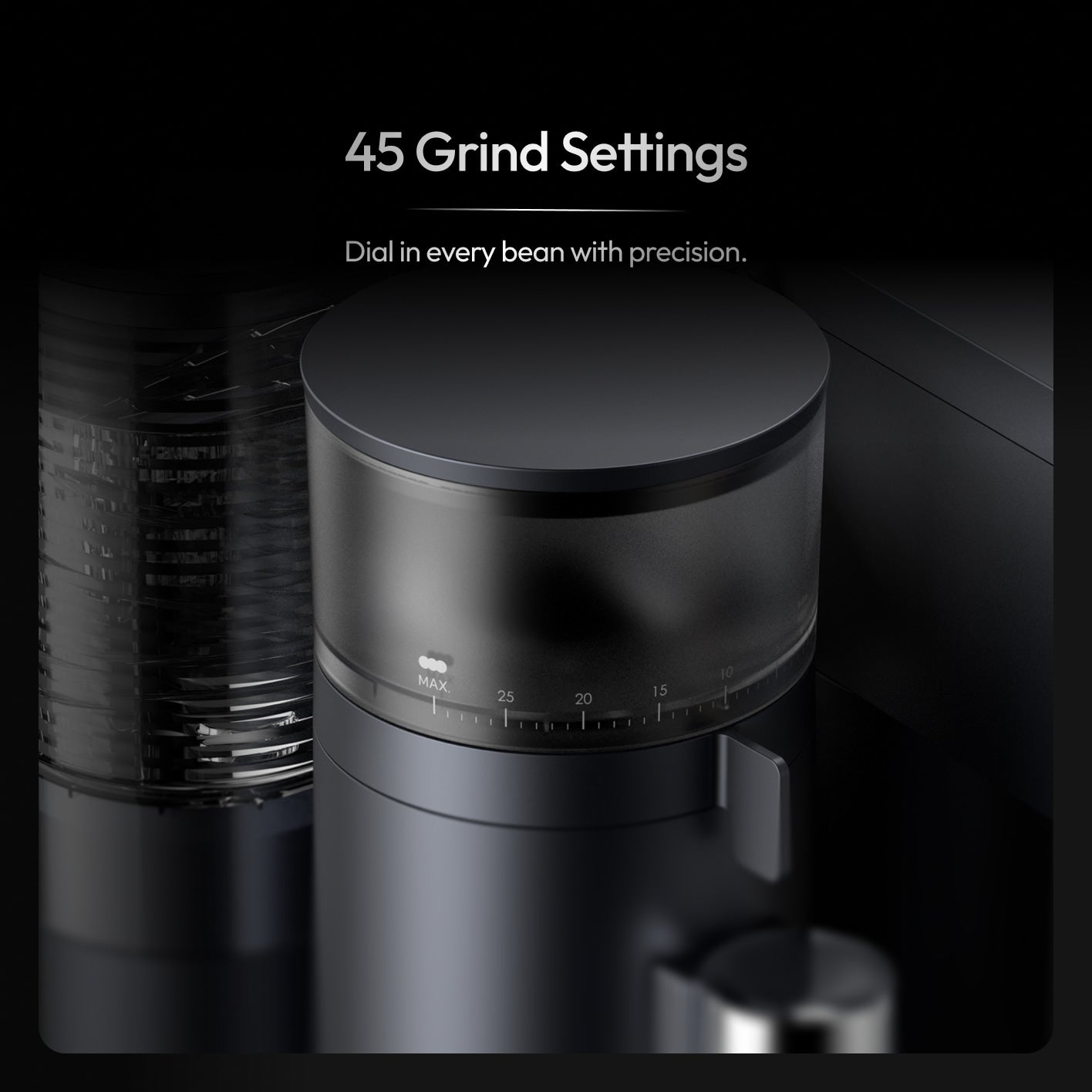
Two abrasive surfaces (conical or flat) crush beans through a gap you set. Finer gap, finer grounds. Good burrs aim for a tight size band so water flows evenly. Blade grinders spin a propeller that shatters beans by impact time—longer spins make more dust, not a calibrated espresso fine. Education: SCA, SCA education.
Burr vs blade comparison table
| Factor | Burr grinder | Blade grinder |
|---|---|---|
| Particle consistency | Narrower band | Dust + boulders |
| Espresso capable? | Yes, if fine range exists | No reliable espresso |
| Pour-over / drip | Excellent control | Compromise |
| Noise / mess | Varies by model | Often loud, static mess |
| Upgrade value | Keeps pace with better machines | Outgrown quickly |
Why espresso needs consistent particles
Water follows the path of least resistance. Fines clog; boulders under-extract. The cup tastes bitter and sour together—beginners blame roast or machine temperature first. A burr set lets you move the whole distribution finer or coarser. That is dialing. Sensory language: Coffee Review. Caffeine myths still track dose more than blade vs burr—Harvard caffeine, NCA caffeine.
Conical vs flat (short)
Conical burrs are common in home espresso gear and often feel mechanically forgiving. Flat burrs are praised for clarity when well aligned. Neither shape excuses poor retention hygiene. Read flat vs conical before buying on forum slogans alone.
Budget / all-in-one notes
Cheap blade grinders look like savings until espresso frustration burns beans and time. Mid burr grinders or integrated burr machines cost more up front and waste less coffee later. Water still matters after grinding—CDC, EPA WaterSense. Beans: beans collection.
Where Meraki fits
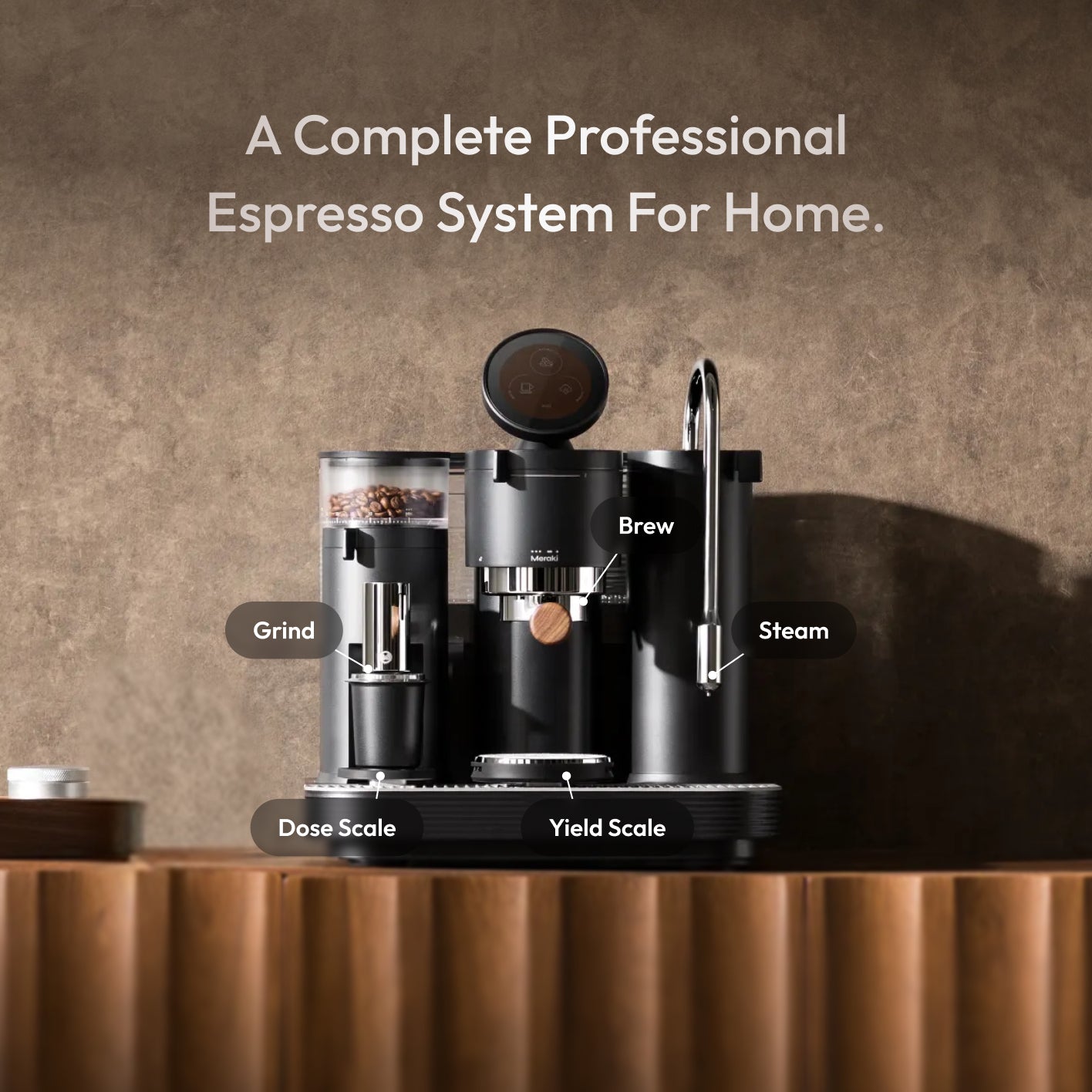
Meraki pairs a TIMEMORE co-developed burr grinder with dual boilers, scales, and guided workflow so particle control and brew control live in one footprint. This is Meraki’s product path—disclosed as such—not a secret multi-brand shootout. View the Meraki espresso machine, accessories in the accessories collection, and more in machine guides. Lifestyle: Harvard on coffee; habits: EatRight.
Mistakes to avoid
Blade grinding “finer” for thirty seconds and calling it espresso. Washing burrs recklessly (see cleaning guide). Judging burrs only by diameter stickers. Skipping retention cleaning when switching flavored or oily beans.
Practical tests before you blame the machine
If shots spray and taste muddy, inspect grind consistency before ordering new gaskets. Rub grounds between fingers—blade chaos feels gritty and dusty at once; decent burr fines feel more uniform. Puck inspection after a shot also hints at channeling from uneven particles.
Upgrade sequencing: burr grinder (or integrated burr machine) before premium cups, before syrup libraries, before a second knock box colorway. Particle control is the boring foundation under crema photos.
For filter-only drinkers tempted by blades, be honest about the compromise and leave headroom in the budget for a burr when espresso arrives. Cross-contamination of spices in a blade bowl is another quiet failure mode—coffee tasting like cumin is educational once.
Meraki’s integrated burr stance is product-true: the machine is built around consistent grinding plus dual-boiler brewing. Pair this page with the buying guide (MK-024) for retention and workflow, and with the cleaning guide (MK-023) so burrs stay sharp in practice, not only in theory.
Taste descriptors that reveal particle problems
Harsh bitterness plus sour snap in one sip often signals uneven particles more than “bad beans.” Hollow watery shots can mean too coarse overall—or channeling through boulder paths. Keep notes when you switch from blade to burr; the first clean dial-in can feel magical simply because fines and boulders stopped fighting.
Teach guests the fingertip test politely. Once they feel blade chaos, the budget conversation changes. Then point them at integrated or separate burr options without shaming the old spice chopper that got them started.
Close the loop with retention cleaning and water quality so burr advantages actually show up in the cup. Consistency is a system: particles, dose, yield, temperature, and hygiene.
If your current blade grinder must remain for travel, quarantine it to coarse camping cups and keep a burr system at home for espresso. Mixing roles without labeling jars is how cumin fines end up in a ristretto.
Particle consistency is the quiet skill under every flashy drink photo in this batch—from shaken espresso foam to mocha balance. Start with burrs.
Conclusion
Espresso demands consistent particles; burrs provide them and blades do not. Choose burr first—standalone or integrated—before chasing boiler upgrades to fix a choppy grind.
Choose burr-based grinding on the Meraki espresso machine, then keep learning with flat vs conical burrs.
FAQ
Is a burr grinder better than a blade grinder?
For even extraction—especially espresso—yes. Burrs crush beans toward a target size; blades chop randomly. Blade units can still grind coarse for rustic methods, but they lose on consistency.
Can I make espresso with a blade grinder?
Not reliably. Espresso needs a narrow fine particle band. Blade grinders produce dust and boulders together, which channels and tastes bitter-sour at once.
Burr grinder vs blade for pour-over?
Burrs still win for clarity. Blade grinders are a compromise for camping or ultra-budget drip, not a specialty pour-over tool.
Do I need a burr grinder if I only drink drip?
You will taste better evenness with a burr, but drip is more forgiving than espresso. If espresso is on your roadmap, buy burr once.
Flat vs conical burrs for home espresso?
Both can excel. Pick based on workflow, noise, retention, and budget. Read Meraki’s flat vs conical guide for deeper geometry notes.


