


Compare two honest setups side by side: a dual-boiler (or solid single-boiler) espresso machine plus a dedicated burr grinder, versus one footprint that grinds and brews together. The counterintuitive engineering take: “separate is always better” is incomplete—particle quality, retention behavior, and dial resolution matter more than whether the motor lives in a second box.
If your mornings already feel like a logistics puzzle, a capable coffee grinder and espresso combo in one chassis can beat a mismatched pair. If you love swapping light-roast filter beans at lunch and espresso at dawn, separate boxes still win. Related reading: espresso vs coffee grinder, espresso machine with grinder.
Who should buy a coffee grinder with their espresso setup
Anyone pulling real espresso needs a grinder that can hold a fine, repeatable particle band.
Capsule drinkers upgrading, couple households sharing one counter, and small kitchens with no “second appliance zone” are the classic all-in-one buyers.
Engineers and hobbyists who treat grind as an upgrade ladder usually prefer separate. Coffee literacy: NCA, SCA.
Built-in grinder vs separate: comparison table
Use this table as a decision sheet, not a morality play. Built-in systems vary from toy blades to true espresso burrs; separate grinders vary from entry conical units to high-end flat-burr specialty tools.
| Factor | Built-in / all-in-one | Separate grinder + machine |
|---|---|---|
| Cup quality ceiling | Set by the integrated burr quality and adjustment range | Often higher if you fund a strong dedicated grinder |
| Footprint & cables | One chassis, fewer plugs | Two appliances, more counter depth |
| Upgrade path | Usually whole-system | Swap grinder or machine independently |
| Cleaning access | Chute/hopper angles matter; follow the manual | Often easier to open and brush thoroughly |
| Workflow | Guided dosing can reduce scale juggling | You own dosing cups, scales, and purge habits |
| Best when | Space + consistency + one learning curve | Modularity + specialty single-dose ambitions |
Must-have specs vs nice-to-haves
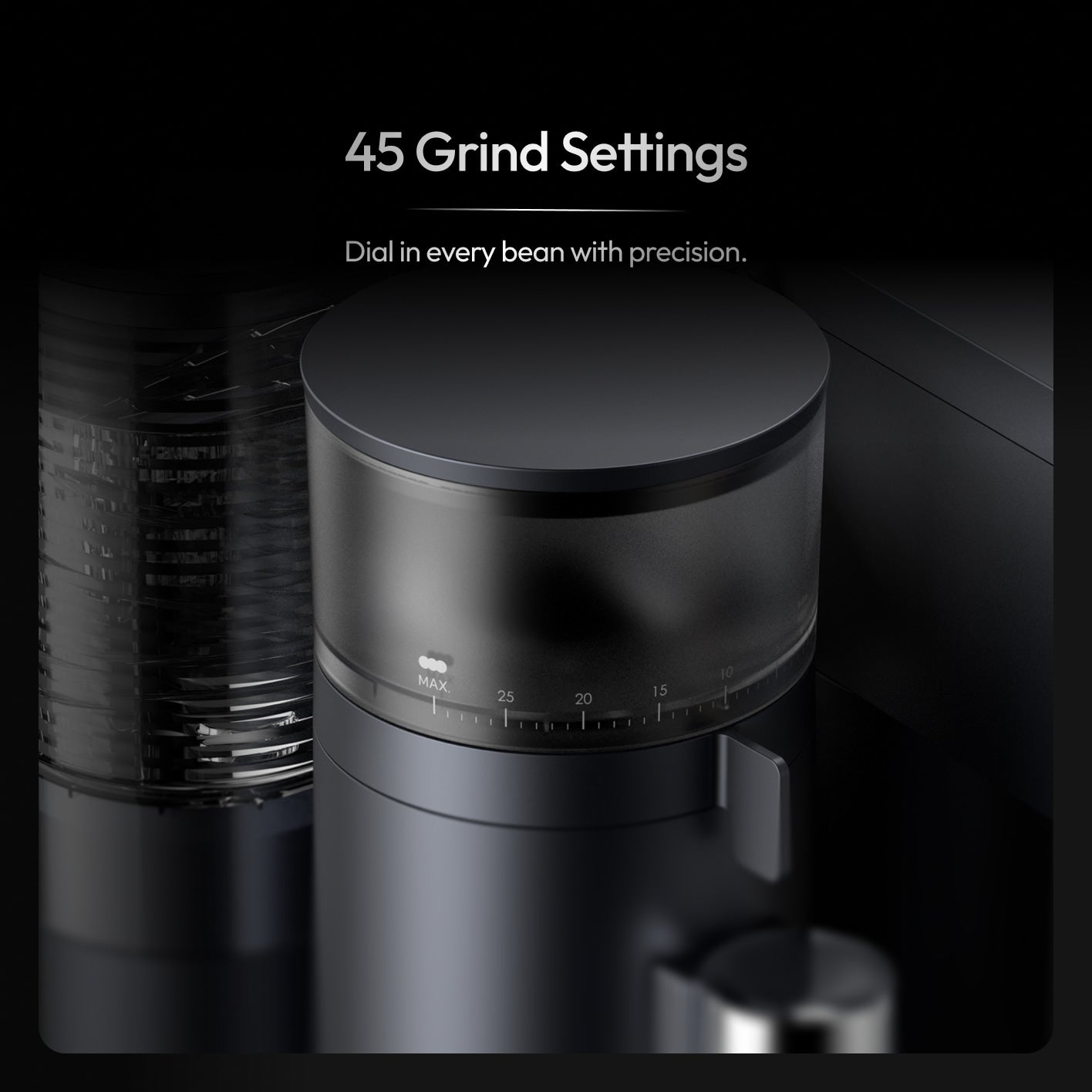
Must-haves for espresso grinding: burrs (not blades), fine adjustment that can reach classic shot times, and retention behavior you can live with. Nice-to-haves: huge hoppers, RGB lights, app toys. On the machine side, stable brew temperature and usable steam matter more than chrome thickness. Dual boilers help when milk drinks overlap shots; a rotary pump that holds a steady ~9 bar supports café-style pressure without guessing. Education: SCA education, sensory language at Coffee Review.
Dual boiler, grind, and steam tradeoffs
A dual boiler lets you brew and steam without the classic single-boiler wait. That advantage is wasted if the grinder cannot dose evenly. Steam power without microfoam skill still makes hot milk. Prioritize grind consistency first, then temperature/steam stability, then cosmetics. Water chemistry still shapes extraction—CDC water quality, EPA WaterSense.
Budget tiers and ownership cost
Entry: cheap machine + blade or weak grinder—false economy for espresso. Mid: either a solid separate pair or a capable all-in-one with real burrs. Higher: specialty separate grinders plus dual-boiler machines, or premium measured all-in-ones. Ownership cost includes beans, water filtration or descaling, cleaning time, and burr care—not only the sticker price. Habit context: Harvard on coffee, composition notes at Coffee & Health.
All-in-one vs separate setups
All-in-one shines when you want grind → weigh → brew → steam in one guided lane. Separate shines when you already own half the stack or refuse to share a grinder between flavored dessert beans and light Nordic filter. Neither path excuses skipping dial-in. Browse more angles in machine guides.
Kitchen constraints
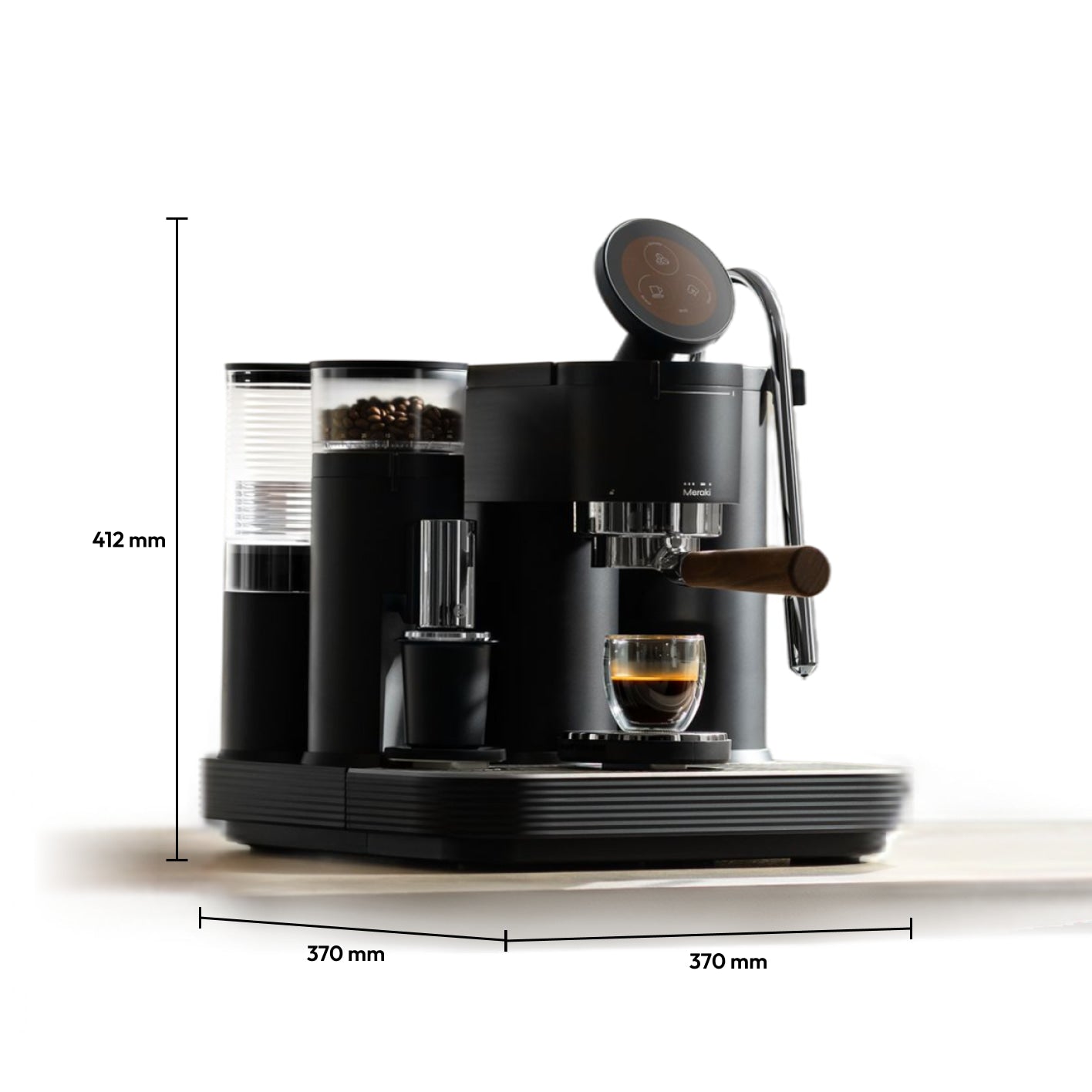
Measure width, depth under cabinets, and whether a second grinder will block the knife block. Noise at 6 a.m. matters. Hopper height vs single-dose bellows changes how you store beans. A dimension-aware buy beats a beautiful machine that never fits. Accessories that shrink the ritual live in the accessories collection.
Buyer checklist
Espresso-fine capable burrs? Adjustment resolution usable? Retention purge plan? Dual boiler or timed workflow for milk drinks? Counter depth OK? Cleaning access acceptable? Warranty and parts path clear? Beans plan from a real roaster—start with the beans collection if you need a curated shortlist.
Where Meraki fits
Meraki’s lane is the measured all-in-one: TIMEMORE co-developed burr grinder dosing onto built-in dual scales (±0.2 g), dual boilers, commercial rotary pump at a steady 9 bar, and guided touchscreen workflow from grind to steam. Disclose plainly: this article is a buying framework with Meraki as the integrated example, not a blind multi-brand lab ranking. Warm-up is typically a few minutes for dual boilers, with power-on to latte in about five minutes on the guided path. See the Meraki espresso machine. Industry craft: Perfect Daily Grind.
Mistakes to avoid
Pairing a capable boiler with a blade chopper. Buying built-in only for the photo of a hopper. Ignoring retention until every shot tastes like yesterday. Assuming separate automatically tastes better when the separate grinder is still a toy. Fast Q: built-in enough? When burrs and dialing are real. Separate always? Only if modularity is the goal. Grind size? Fine enough for your 25–30 s window. Upgrade later? Plan the architecture first. Cleaning hard? Brush daily; deep-clean on schedule.
Calibration, retention, and hopper hygiene
Built-in grinders punish neglect the same way separate grinders do. If yesterday’s dark oily beans linger in the throat, today’s light roast tastes muddy. Empty or purge when switching, brush the chute daily, and follow the maker’s deep-clean interval. Retention is not a moral failure of all-in-one design—it is physics plus oil. Single-dose enthusiasts prefer separate bellows workflows; hopper households should accept a purge ritual instead of pretending zero retention exists.
Calibration means tasting on a schedule after humidity swings or a new bag. Move one grind step at a time. If your integrated system doses onto a scale, trust weight more than hopper-time myths. Log dose, grind step, yield, and time for a week and you will see patterns faster than forum folklore.
Upgrade-path honesty: if you know you will chase specialty flat-burr single-dosing in six months, buy separate now. If you want one guided lane and will drink two or three milk drinks each morning, a capable built-in dual-boiler system is a coherent architecture—not a compromise you must apologize for.
When friends argue “Clive said separate always wins,” translate that to your kitchen: separate wins when you fund a strong grinder and accept two footprints. Built-in wins when the integrated burrs are espresso-real and the rest of the chassis matches—boilers, pump, steam, scales. Meraki argues for that matched stack; separate shops argue for modularity. Both can be rational.
When separate still wins—and when it does not
Separate grinders win for bean tourists who switch light filter and dark espresso daily, for households that already own a strong machine, and for enthusiasts who treat burrs as a hobby. They lose when the second appliance never fits, when dosing becomes a second job, or when the “separate” grinder purchased is still too coarse for espresso.
Built-in systems win when the burrs are espresso-capable, when scales close the dose loop, and when dual boilers keep milk drinks moving. They lose when the hopper is a toy, when cleaning access is ignored at purchase, or when buyers expect zero retention without habits.
A practical week test: write your actual drinks for seven days. If most cups are milk drinks on a shared counter, all-in-one coherence matters. If most cups are single-origin experiments, modularity matters. Then shop the table, not the ad.
External craft reading stays useful for technique, not for copying affiliate rankings: Perfect Daily Grind, EatRight on coffee habits. Keep Meraki’s measured stack as one coherent answer on the product page.
Footprint scenarios you can copy
Apartment galley: prioritize one chassis depth and a reservoir you can fill without moving the machine. Suburban island: separate can work if you dedicate a “coffee zone” with knock box and scale landing pads. Shared office kitchen: favor guided dosing and clear cleaning ownership so the grinder does not become everyone’s mystery mess.
Noise etiquette matters in lofts. Burr grinders are not silent; place mats and avoid hollow cabinets that amplify. If mornings start before others wake, practice dosing the night before on hopper machines, or choose workflows that shorten grind bursts.
Final buying filter: write “built-in” or “separate” on paper with three reasons each. If you cannot list three honest reasons for separate, you may be buying forum identity. If you cannot list three for built-in, you may be buying convenience cosplay without checking burr quality. Then open the Meraki espresso machine only if all-in-one reasons are real.
Conclusion
Choose separate when modularity and specialty grind workflows matter; choose a capable built-in when footprint and guided dosing matter. Judge particle quality first—then boilers and steam.
Explore the measured all-in-one path on the Meraki espresso machine, or keep comparing with espresso machine with grinder.
FAQ
Is a built-in grinder good enough for espresso?
It can be, when the burrs reach a true espresso-fine band, adjustment is fine enough to dial, and you clean retention regularly. A weak built-in grinder is not rescued by a strong boiler. Separate grinders win when you want single-dosing, filter versatility, or an independent upgrade path.
Should I buy the grinder separate from the machine?
Buy separate if you already own a capable machine, chase specialty single-dose workflows, or expect to swap grinders as you learn. Buy integrated when counter space, guided dosing, and one footprint matter more than modular upgrades.
What grind size do I need for espresso?
Espresso uses a fine grind that typically yields a classic double in about 25–30 seconds at your target dose and yield. Exact dial settings vary by bean, humidity, and basket. Coarse drip settings will channel and taste thin under nine-bar pressure.
Can I upgrade just the grinder later?
On separate setups, yes—that is the main advantage. On sealed all-in-one machines, the grinder is part of the system; you evaluate the whole package rather than swapping only burrs. Plan that path before you buy.
How hard is it to clean a built-in grinder?
Harder than wiping a standalone hopper you can open on the bench, but manageable with a daily brush of the chute, periodic empty-hopper purges, and following the maker’s deep-clean guidance. Oily flavored beans raise the cleaning load.


