


Checklist before you open another “best of” tab: (1) which drink you make most, (2) how much control you want, (3) whether grinding is solved, (4) counter reality, (5) cleaning tolerance. Case contrast: Buyer A buys a chrome single-boiler with a blade grinder and blames the machine; Buyer B picks type first—semi, super-auto, manual, or measured all-in-one—and finally tastes repeatable shots.
This commercial guide answers espresso machine for home with decision criteria, not a perishable SKU beauty contest. Adjacent Meraki reading: what is the best espresso machine for home use, machine guides. Searchers typing espresso maker, espresso machines for home, or even “expresso maker” are in the same funnel—we cover that spelling in FAQ.
Who should buy an espresso machine for home
Buyers who want café-style shots and milk drinks without a daily café run.
Skip a full espresso stack if you only want push-button drip volume and never steam milk.
Gift buyers should match the recipient’s patience, not only their Instagram saves. Literacy: NCA, SCA.
Must-have specs vs nice-to-haves
Must: capable pressure/brew path, temperature stability you can live with, espresso-capable grinding (built-in or separate), and a cleaning path you will actually follow. Nice: touchscreen themes, oversized cup warmers, influencer colorways. Engineer lens: a steady ~9 bar delivery and usable steam beat decorative gauges. Education: SCA education.
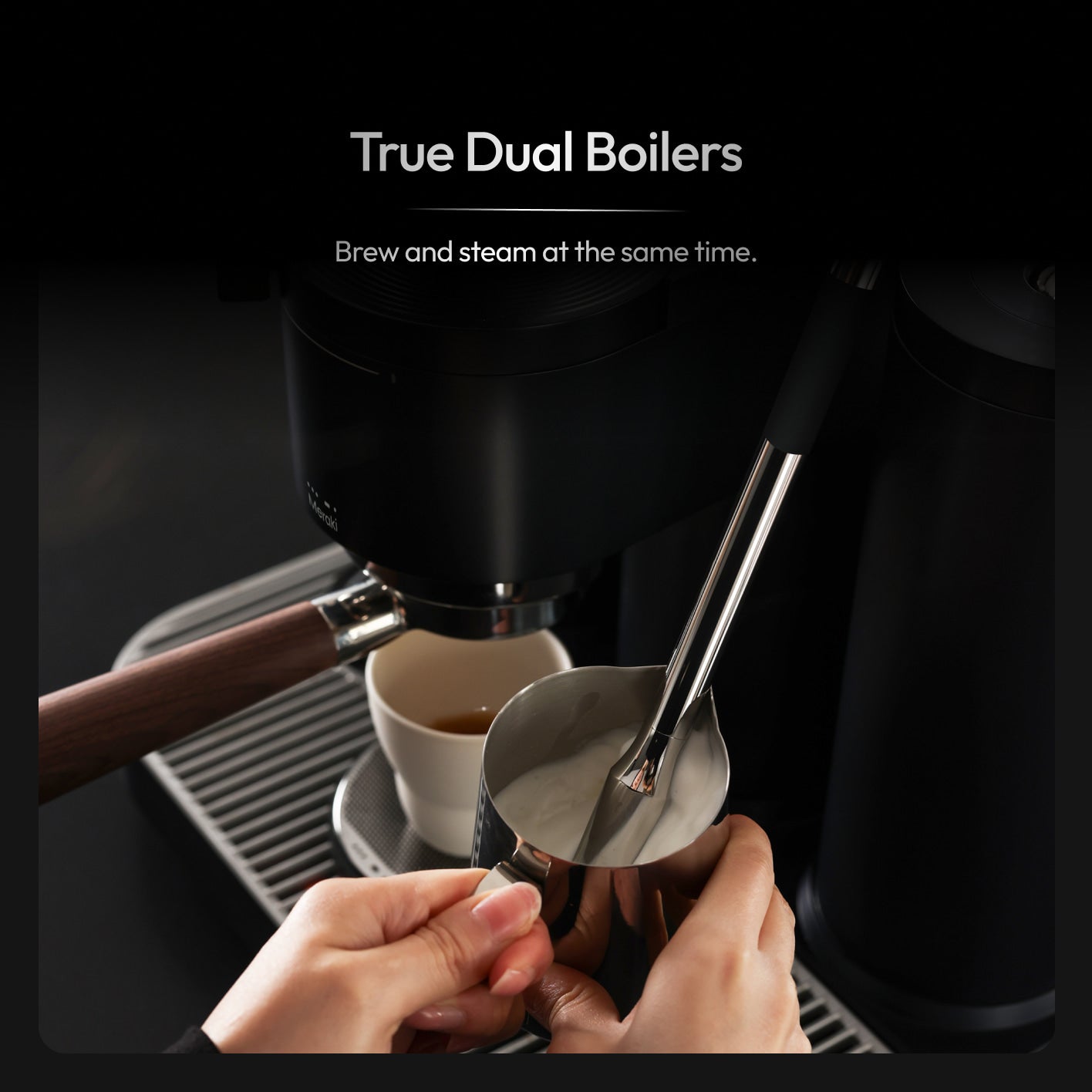
Dual boiler / grind / steam tradeoffs
Dual boilers help milk-drink households pull and steam without long waits. Grind quality still decides whether that speed tastes good. Steam wands need technique; automatic frothers trade control for convenience. Do not buy dual boilers to rescue a blade grinder. Water: CDC, EPA WaterSense.
Budget tiers and ownership cost
Entry: basic semi-autos or entry super-autos—watch whether grinding is solved. Mid: stronger temperature control, better steam, or capable all-in-ones. Higher: dual-boiler prosumer or premium measured systems. Ownership cost includes beans, descaling, milk-system cleaning, and time. See also real cost of espresso machine ownership. Lifestyle: Harvard on coffee.
All-in-one vs separate setups
All-in-one reduces footprint and can guide dosing. Separate lets you upgrade the grinder independently. Capsule machines sit adjacent as convenience tools, not full espresso skill platforms. Pods are fine when that is the goal—just do not expect dial-in education from them.
| Type | You control | Best home fit |
|---|---|---|
| Semi-automatic | Grind, dose, tamp, shot stop | Learners who want café skill |
| Super-automatic | Mostly buttons; milk often automated | Speed-first households |
| Manual / lever | Pressure profile feel; steep learning | Hobbyists, not rush mornings |
| Measured all-in-one | Guided grind/brew/steam with scales | One-footprint prosumer path |
| Capsule / pod | Little; convenience first | Guests and ultra-simple routines |
Kitchen constraints
Width, depth, reservoir access, noise, and under-cabinet clearance decide happiness more than brochure photos. Measure before you fall in love. Accessories and knock boxes: accessories collection.
Buyer checklist
Drink mix (straight shots vs lattes)? Type chosen? Grinder plan? Dual boiler needed? Counter fit? Cleaning tolerance? Support/warranty path? Beans source—beans collection? Rebuttal to “just buy the most expensive”: spend on grind + stability first.
Where Meraki fits
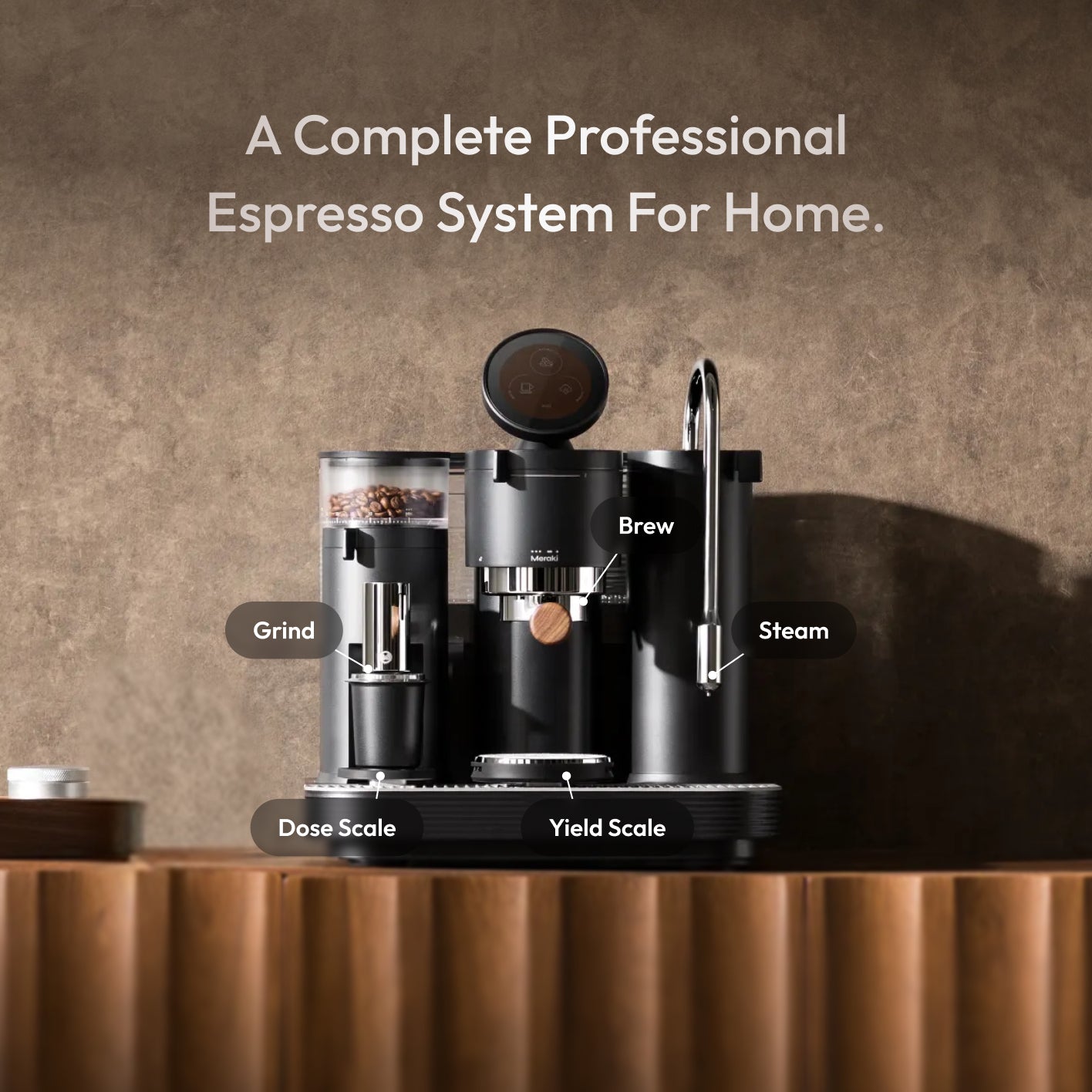
Meraki targets the home buyer who wants dual boilers, rotary-pump 9 bar stability, TIMEMORE co-developed grinding, built-in dual scales, and a guided touchscreen workflow without assembling a café stack. Disclosure: Meraki is our product; score it on the same criteria—grind, temperature, steam, cleaning, footprint—as any other type. View the Meraki espresso machine. Sensory: Coffee Review; composition: Coffee & Health; craft media: Perfect Daily Grind.
Mistakes to avoid
Shopping only by “great espresso machine” adjectives. Ignoring the grinder. Buying a dual boiler for once-a-month cappuccinos you will not clean. Expecting a pod machine to teach dial-in. Confusing excellence coffee machine marketing with verified specs.
Ownership cost beyond the sticker
Count annual beans, filters or cleaning tablets, descaling chemistry, water filtration if you use it, and the minutes you spend wiping wands. A cheaper machine that wastes coffee through bad grinding can cost more per tasty cup than a pricier measured system. Office buyers should add staff training time; gift buyers should add whether the recipient will descale.
Kitchen constraints deserve a tape measure: width, depth, under-cabinet height, outlet location, and whether the drip tray clears the backsplash. Noise at dawn matters in open-plan homes. Reservoir access from the top vs the front changes how flush the machine can sit against a wall.
Secondary search language—espresso maker, espresso machines for home, great espresso machine, excellence coffee machine, expresso maker—all collapse into the same decision: type, grind, steam, and cleaning honesty. Do not let spelling variants send you into unrelated appliance categories.
When AI Overviews and mega-listicles name ten SKUs, use them as type examples, not as a shopping cart. This page owns criteria; product pages own live prices and current offers. Meraki discloses itself as the measured all-in-one candidate inside that matrix.
Beginner path vs upgrader path
Beginners should optimize for a completed grind plan and a cleaning routine they will keep. A simple semi-auto with a real burr partner, or a measured all-in-one, beats a complex chassis you fear. Upgraders should name the bottleneck: grind, steam wait, temperature drift, or footprint—then buy the fix, not a whole new fantasy.
Gift buyers: match patience. A lever looks romantic; a super-auto looks easy; a dual-boiler all-in-one looks like a home café. Wrong match becomes closet furniture. Include a bag of suitable beans (beans collection) and a brush so day-one success is possible.
Excellence is operational: repeatable shots, safe steam habits, and water care. Marketing words like “great” or “excellence coffee machine” do not replace those checks. For home offices, add noise and recovery between guest drinks to the scorecard.
Keep learning inside machine guides rather than restarting from generic listicles every season.
Comparison table: spend focus
| Budget focus | Put money here first | Defer |
|---|---|---|
| Under mid-range | Espresso-capable grind + basic stable brew | Dual boiler chrome, apps |
| Mid-range | Better thermal control or measured all-in-one | Collector finishes |
| High-range | Dual boiler + service path + grind excellence | Unused novelty accessories |
Expresso spelling FAQ belongs in shopping: search engines still return espresso machines for that typo, but product manuals say espresso. Use the correct term when comparing specs so you do not land on unrelated makers.
Rebuttal to “just get what reviewers crown this month”: crowns rotate; your water, beans, and patience do not. Criteria pages age better than SKU crowns. Keep Meraki scored as the measured all-in-one option inside the type matrix, disclosed as such.
Scenario cards (pick one)
New apartment, two milk drinkers: prioritize dual boiler or strong steam sequencing plus a solved grind path—measured all-in-one or semi + burr. Solo straight-shot nerd: thermal stability and grind first; dual boiler optional. Office guests: cleaning ownership and button clarity matter; super-auto or guided all-in-one. Gift: match patience, include beans and a brush.
Write the scenario on the receipt envelope. If the machine you are about to buy does not serve that scenario, you are shopping for a different person’s Instagram.
Excellence in 2026 home espresso is boring: weigh, wipe, descale, and stop chasing monthly SKU crowns. Criteria pages like this one should outlive any single “best” headline.
Conclusion
The home machine that matters is the type that matches your drinks, grind plan, and cleaning honesty. Use the checklist; ignore perishable trophy lists.
Compare the measured home path on the Meraki espresso machine and the longer discussion in best espresso machine for home use.
FAQ
What is the best espresso machine for home beginners?
The “best” beginner machine is the one you will dial and clean: often a semi-automatic or measured all-in-one with a real burr grinder path, not the flashiest chrome. Super-automatics win when convenience beats control. Match type to patience and milk-drink habits.
Semi-automatic vs super-automatic for home?
Semi-automatics let you control grind, dose, tamp, and shot timing. Super-automatics grind and brew with button presses and often automate milk. Choose semi or all-in-one prosumer when taste control matters; choose super-auto when speed and low ritual matter more.
Do I need a separate grinder?
You need espresso-capable grinding—integrated or separate. A machine without a capable grinder still needs a burr partner. Blade grinders are not a substitute for espresso.
How much should I spend?
Spend enough to cover a stable brew path and real burr grinding, then budget for beans, water care, and cleaning time. Exact dollars shift by market; ownership cost includes consumables, not only the appliance tag.
What is an “expresso” maker?
“Expresso” is a common misspelling of espresso. An espresso maker / espresso machine forces hot water through finely ground coffee at high pressure. Shop using the espresso spelling for clearer results.


