


Q: Why does my “espresso machine” still taste random? A: Often the grinder—not the boiler—is the weak link. Retention, burr quality, and adjustment resolution decide whether dual boilers get good particles to work with.
Case contrast: Buyer A adds a $50 blade grinder to a capable machine and chases ghosts. Buyer B chooses either a strong integrated burr system or a dedicated espresso grinder with low retention and finally tastes repeatable shots. This commercial guide owns espresso grinder decisions without a perishable “top 10 of 2026” SKU list. Related: espresso machine with grinder, flat vs conical burrs.
Who should buy an espresso grinder
Anyone pulling true espresso who cannot dial grind finely and repeatedly.
If you only brew drip, a coarser-capable burr may suffice; espresso raises the bar.
Upgraders from capsules feel this gap first. Literacy: NCA, SCA.
Must-have specs vs nice-to-haves
Must: espresso-capable fineness, consistent burrs, usable adjustment, safe retention behavior for your workflow. Nice: fancy lights, huge hoppers, app toys. Engineer view: alignment and burr quality beat sticker diameter alone. Education: SCA education.
Retention, burrs, single-dose
Retention mixes yesterday’s coffee into today’s dose. Hopper machines can work if you purge or accept some blending; single-dose workflows weigh beans per shot and chase lower retention with bellows or specially designed grinders. Oily dark roasts increase sticking. Brush habits from the cleaning article still apply.
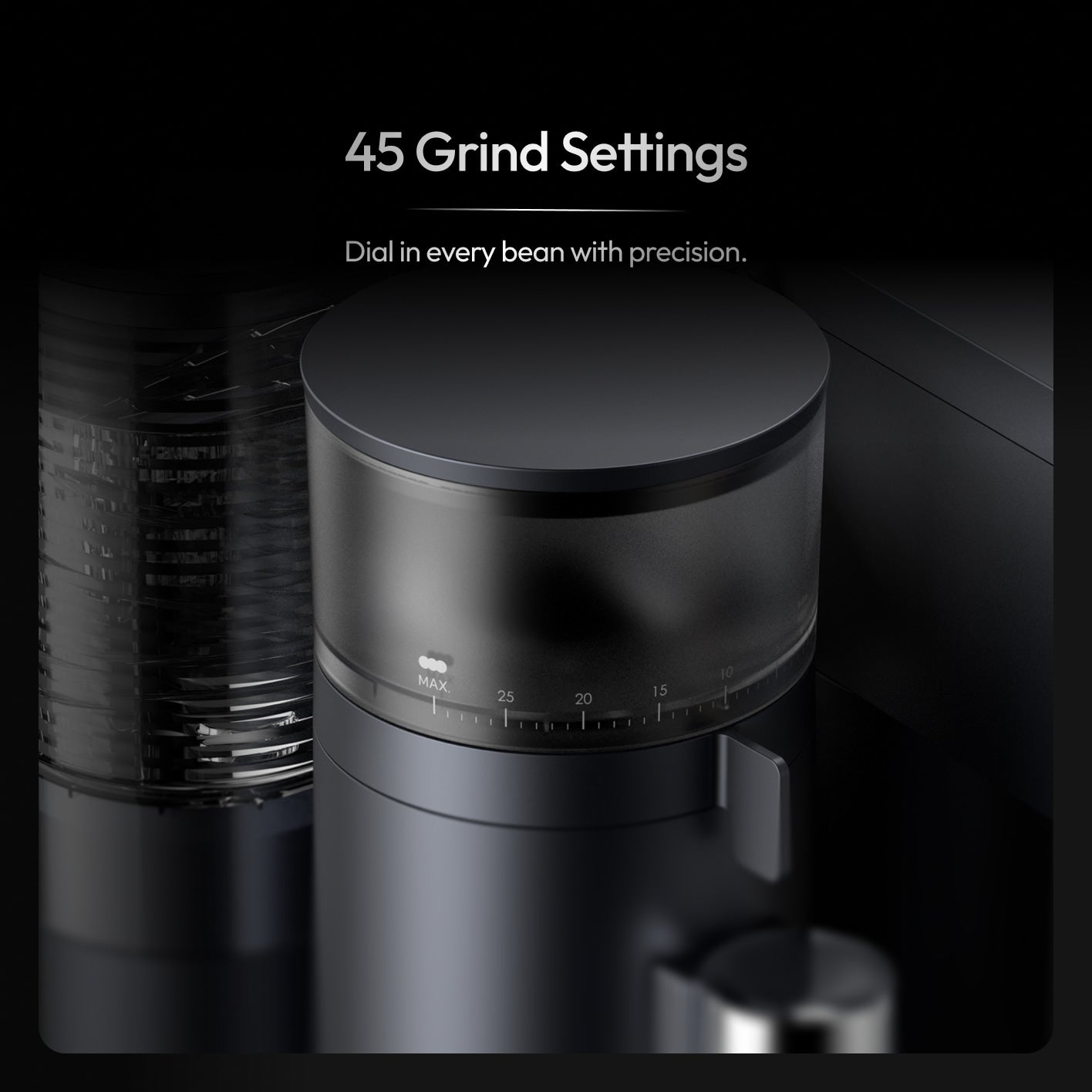
All-in-one vs separate setups
| Setup | Pros | Trade-offs |
|---|---|---|
| Integrated grinder machine | Footprint, guided dosing, fewer cables | Less swapping; cleaning angles differ |
| Separate espresso grinder | Upgrade path; single-dose options | Cost, space, two workflows |
| Blade grinder + espresso machine | Cheap entry | Inconsistent particles; poor espresso control |
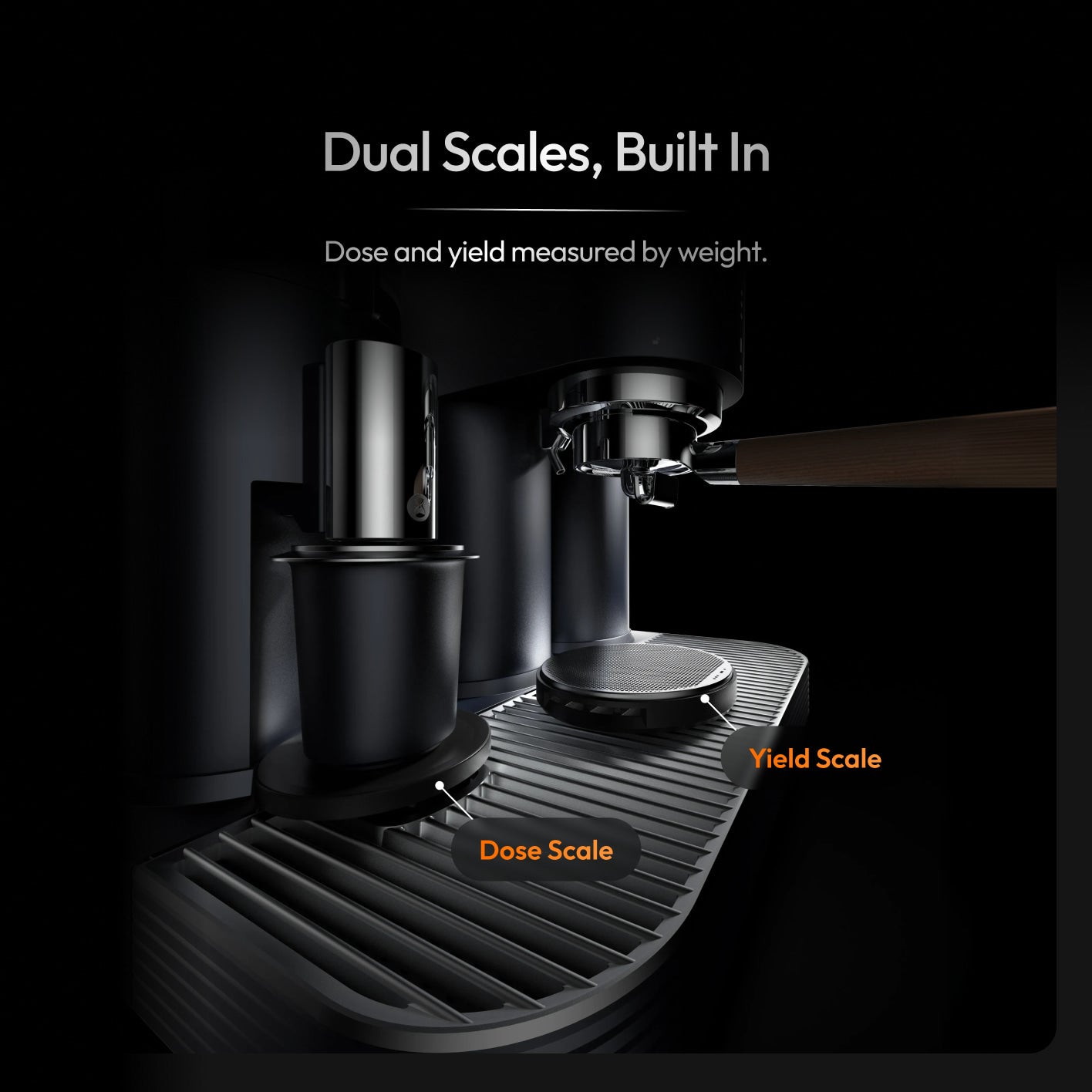
Meraki’s lane is the capable integrated path: TIMEMORE co-developed burr grinder dosing onto built-in scales inside a dual-boiler machine. Disclose clearly: this article explains buying criteria and where Meraki fits; it is not a blind multi-brand lab test.
Budget tiers and ownership cost
Entry separate grinders that truly do espresso cost more than blade toys. Mid tiers improve alignment and retention. High tiers chase flat burr clarity or zero-retention workflows. Ownership cost includes burr replacement and cleaning time. Water and beans still dominate cup quality—CDC water, beans collection.
Buyer checklist
Espresso fineness? Stepless or fine steps? Retention acceptable? Hopper vs single-dose? Noise OK for mornings? Counter depth? Easy cleaning? Warranty/support? Match grinder speed to your dual-boiler or single-boiler workflow so milk and shots stay synchronized.
Where Meraki fits
If you want one guided footprint—grind, weigh, brew, steam—evaluate the Meraki espresso machine as an all-in-one answer rather than shopping a separate grinder first. If you already own a machine without a capable grinder, a separate espresso grinder may be the higher-leverage buy. Accessories: collection. Guides: machine guides. Sensory: Coffee Review; lifestyle: Harvard on coffee; composition: Coffee & Health; caffeine literacy: NCA caffeine.
Mistakes to avoid
Blade grinders for espresso. Buying only on burr diameter numbers. Ignoring retention. Never cleaning. Expecting a thermoblock and a toy grinder to taste like a cafe. Fast Q: need separate? Only if integrated cannot dial. Retention? Stale leftover grounds. Flat vs conical? Both can work. Fine enough? Hit your shot time band. Stepless? Helpful for espresso.
Kitchen constraints and workflow matching
Measure counter depth, under-cabinet clearance, and whether you single-dose at 5:30 a.m. in socks. Loud flat burrs may be poor roommates. Hopper grinders suit households finishing one blend weekly; single-dose suits bean tourists.
Match grinder output to machine: a dual-boiler that steams while you grind rewards timed dosing; a slow hand grinder may cool the workflow. Built-in scales reduce the extra scale on the counter—useful in small kitchens.
When comparing integrated vs separate, include cleaning time and spare parts paths, not only peak flavor on day one. Disclose again: Meraki argues for measured all-in-one convenience; your home may still prefer a separate specialty grinder later. Either path beats blades.
Avoid perennial mistakes: buying on Instagram burr photos alone, ignoring retention, or pairing a capable boiler with a spice chopper. Use the checklist, then shop. Read flat vs conical notes before forum wars convince you geometry alone guarantees greatness.
Single-dose theater vs hopper realism
Single-dose looks tidy on video: weigh, grind, bellows, done. Hopper life looks like weekday reality: fill, dose, accept some blending, purge when switching. Neither is moral; both need retention awareness. If you buy separate, ask how much coffee stays inside after a dose. If you buy integrated, learn the purge and brush points on day one.
Warranty and parts matter more than finish color. Burr replacements and brush access decide whether the grinder ages gracefully. Pair purchase day with a cleaning calendar reminder so oils never varnish the throat unseen.
Write your non-negotiables on paper before shopping: espresso-fine capable, cleaning access, retention plan, and footprint. Cross out features that do not serve those four. That paper beats impulse upgrades when ads shout larger burr diameters without workflow context.
Then choose integrated Meraki or a separate specialist with eyes open—both can succeed; blades rarely do for espresso.
Conclusion
Buy for espresso fineness, retention behavior, and workflow fit—not for blade bargains. Choose integrated when you want one measured system; choose separate when you need specialty flexibility.
See the integrated path on the Meraki espresso machine or compare notes in espresso machine with grinder.
FAQ
Do I need a separate grinder if my machine has one?
Not always. A capable integrated burr grinder can cover daily espresso if adjustment range and consistency meet your beans. Enthusiasts add a separate grinder for single-dosing, lighter roasts, or filter coffee versatility.
What is grind retention?
Retention is ground coffee left inside the grinder after you stop. High retention mixes old stale grounds into the next dose. Single-dose workflows and bellows aim to reduce that stale blending.
Flat vs conical for home espresso?
Both can make excellent espresso. Flat burrs often emphasize clarity; conical burrs often feel forgiving and quieter. Build quality and alignment matter more than the shape slogan.
How fine does an espresso grinder need to go?
Fine enough to hit ~25–30 second classic shots at your dose without choking or spraying. Stepless or fine-stepped adjustment helps. Blade grinders cannot hold that band.
Stepped vs stepless?
Stepped grinders click between fixed points; stepless dials move continuously. Espresso often benefits from stepless or very fine steps when you chase small taste changes.


