


The listing says commercial rotary pump. Your morning is four lattes before a call — not a café rush. A commercial rotary pump coffee machine for home duty cycle search asks whether that café-sounding claim matches your daily volume, recovery gaps, and service habits — or whether you are paying for continuous-service language you will never use.
This Meraki technical guide owns duty-cycle honesty: what “commercial rotary” usually means for home and small-office volume, when it is overkill, maintenance signs worth watching, and honest limits for heavy home users. It is not a rewrite of why prosumer espresso machines use rotary pumps (home-system pressure, size, integration). Soft lanes: apartment noise/neighbor and quiet-rotary guides; what commercial-grade really means; home vs café gear. Use this page when the question is how hard will this pump work in my kitchen or shared office — and when is “commercial” slogan more than duty?
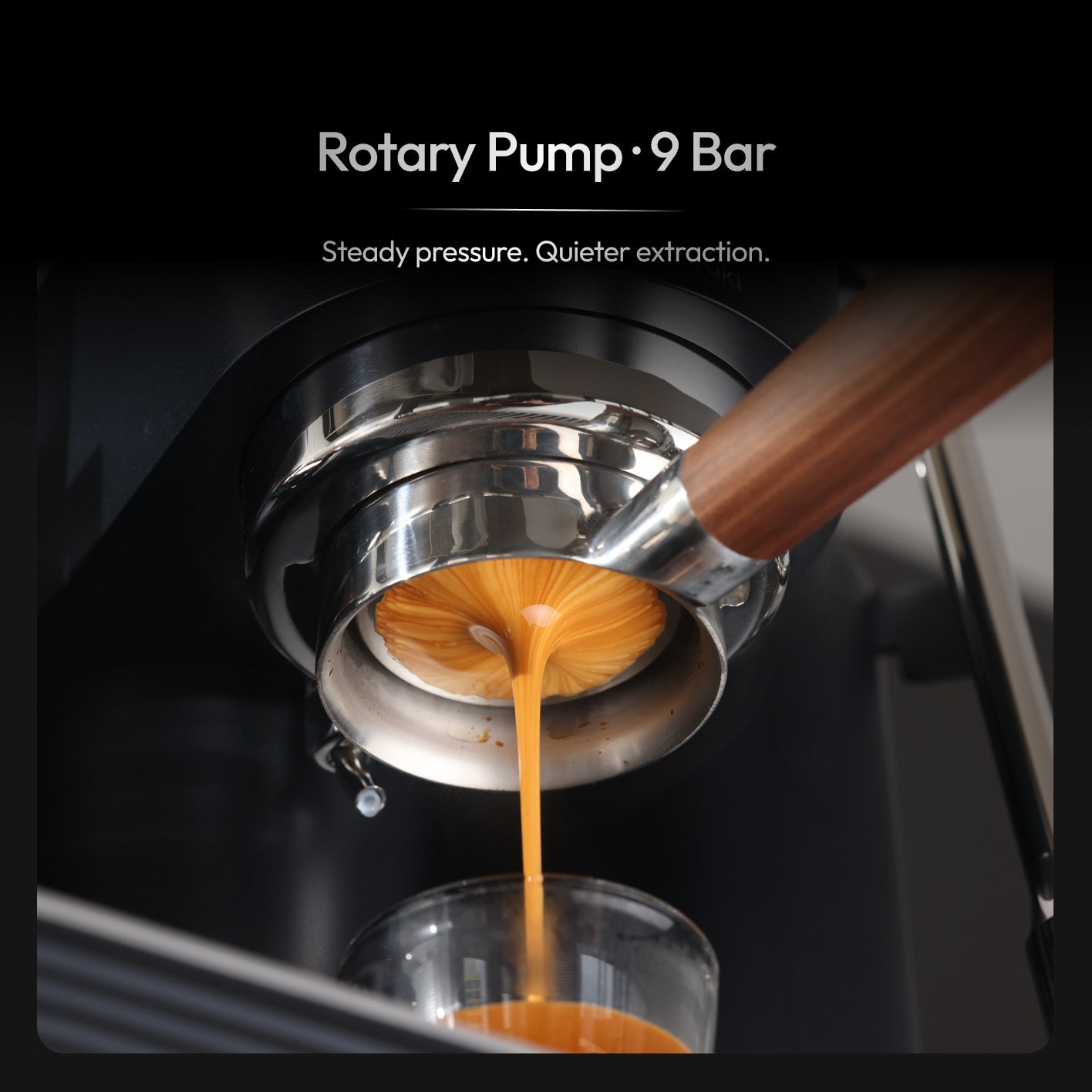
A commercial rotary claim describes pump class and pressure behavior — not a free pass for café-length continuous service at home.
What “commercial rotary pump coffee machine for home duty cycle” really means for home buyers
Duty cycle here means how often and how continuously the pump (and the rest of the hydraulic path) is asked to run in a real day — not a marketing synonym for “pro.”
Search for a commercial rotary pump coffee machine for home duty cycle often lands on pump-type debates, quiet-apartment tips, or commercial storefronts. Those pages chase hardware class or noise. Heavy home and small-office buyers need a narrower split: component class (rotary vane, often marketed commercial-grade) versus service duty (drink count, back-to-back gaps, how long the machine keeps cycling).
Treat the keyword as a volume-and-recovery brief. A home machine can honestly ship a commercial-class rotary and still be built and warranted for household or light shared use — not a busy café bar. Meraki’s live framing (2026-10-26/27 snapshot) names a commercial rotary pump with specs line Rotary, 9 bar inside a dual-boiler, water-tank home system — re-check the product page. That snapshot does not publish a shot-per-hour lab chart or competitor pump-life table, so this guide will not invent one.
Who this page is for (and who should skip it)
This page is for heavy home users and small-office hosts who want duty-cycle honesty before they equate “commercial rotary” with café throughput.
Skip why prosumer machines use rotary pumps for system integration. Skip noise/neighbor and quiet-apartment guides for shared walls or pads. Skip commercial-grade label deconstruction and the commercial-grade home guide for parts-vs-label literacy. Skip home vs café for continuous café hardware. Come here for: what does commercial rotary buy my daily drink count — and when is it overkill?
Why this is duty-cycle honesty (not another why-rotary rewrite)
Nearest rotary pages already cover why homes adopt rotary for pressure and fit; pump-category pages cover noise/pressure/price; commercial-grade pages separate adjectives from named parts. What stays thin here is a duty map: volume bands, recovery gaps, overkill signals, maintenance habits, and soft “best office / pro home” answers that refuse fake rankings.
Unique job: translate commercial-rotary claims into home and light-office duty language, show when home rotary is enough (and when café chassis still wins), list maintenance signs without inventing hour ratings, and end with a checklist. Disclosure: Meraki publishes this guide and sells the Meraki Espresso Machine. Live story (same snapshot): dual boilers (brew ~350 ml / steam ~550 ml), commercial rotary at steady 9 bar, water tank ~2000 ml, dual scales 1 kg · ±0.2 g, TIMEMORE® co-developed burr path, heat-up ~3–4 minutes (product FAQ), ~370 × 370 × 415 mm, 1600 W. We illustrate with Meraki’s verified path; we do not invent duty-cycle lab hours, competitor vane-life charts, or rankings.
The mechanism in plain language
A rotary vane pump moves water with a rotating assembly rather than a vibrating piston. In espresso machines that usually means steadier brew-pressure delivery and, on many designs, a softer pump character than common vibratory pumps — deepen on rotary vs vibratory (noise, pressure, price) and the rotary pump for home hub.
Commercial here usually means pump class borrowed from café practice, not rated for continuous café service. Cafés also need plumbed water, larger boilers, multi-group throughput, and service contracts. A home rotary on a reservoir still runs a home loop: fills, water quality, thermal recovery, and whatever duty warranty language actually supports.
Enthusiast notes often say vibratory pumps prefer intermittent on/off habits while rotary is marketed for longer continuous runs. Treat that as category direction, not a universal minute-on/off law or a Meraki lab certificate. Use a seller’s published daily-volume note if they give one; “commercial rotary” alone still leaves you a volume question.
What changes in your daily cup
Duty cycle shows up as consistency under back-to-back drinks, not as a different roast flavor by itself.
With one or two weekday drinks, most healthy pumps look fine. Commercial rotary starts to matter when you stack guests, office rounds, or milk drinkers with short gaps: calmer pressure while boilers recover and the wand stays useful. Meraki’s dual-boiler + rotary framing supports brew-and-steam overlap at home — confirm live — which helps workflow duty even when café throughput is out of scope.
What does not auto-change: grind, distribution, tamp, water, or milk skill. A steadier pump will not rescue a dull bag or clogged wand. Specialty Coffee Association literacy and CoffeeGeek guides still beat any pump adjective alone.
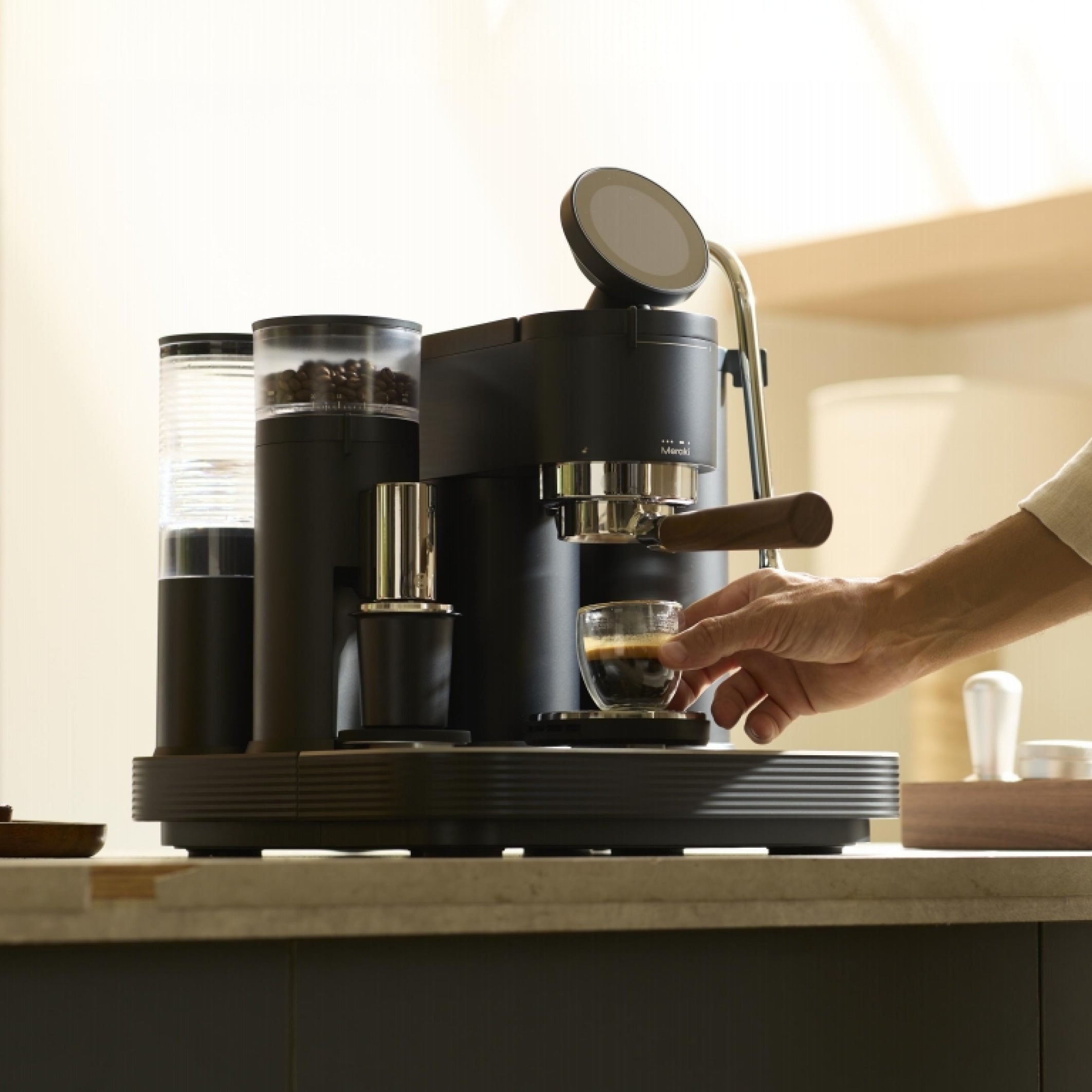
Daily cup changes show up in back-to-back recovery — not in a free upgrade to café-length continuous service.
Home tests you can run without lab gear
You do not need a lab chart to sanity-check duty fit. Run honest household tests and write what you observe.
Test 1 — Count your real peak hour
For three weekdays, count drinks in your busiest hour (household + guests); separate milk drinks. Two to four drinks with natural gaps is common heavy-home territory. Ten-plus with almost no pause points toward light commercial / café duty (home vs café).
Test 2 — Back-to-back recovery feel
After full warm-up (Meraki FAQ ~3–4 minutes; re-check live), pull two identical drinks at your real busy-morning gap. Taste and note steam reserve. You are testing your routine, not inventing a manufacturer hour rating.
Test 3 — Water and wipe habits for a week
Track tank refills (Meraki: water tank), empty the drip path, wipe the wand. NIST is a reminder that honest measurement starts with repeatable habits; scales help dose/yield, not pump immortality.
Test 4 — Listen for change, not adjectives
Note baseline pump character after week one. Later tone changes, hesitation, or odd cycling are service signals — not proof you “outgrew” rotary overnight. Neighbor noise belongs on soft-lane noise pages; this test is health.
Settings most people should leave alone at first
Duty problems are rarely fixed by exotic pump menus. Leave pressure fantasies alone until dose, grind, and yield are boring.
On a guided home system like Meraki’s, finish warm-up, lock a weekday dose/yield, keep water clean, and repeat one steam routine. Do not invent a “duty mode,” a continuous-run experiment, or a safety bypass. For general product-safety literacy see UL and CPSC — not as espresso tuning advice.
Save one weekday recipe if presets exist; more profiles do not raise hydraulic duty. Energy is usually modest next to beans — energy.gov — so leaving the machine on all day is comfort, not a pump upgrade.
Tradeoffs and limits of the feature
Commercial rotary at home is a capability with boundaries.
Useful when: you stack several espresso or milk drinks with short gaps; you want steadier pressure than many vibratory designs advertise; quieter brew-stage character is a side benefit (noise pages own neighbors); you accept home service and water care.
Overkill when: one careful drink most days with long gaps; you mainly wanted a café logo; the bottleneck is grind, water, or learning; you need multi-group continuous café throughput and a commercial warranty — buy café gear instead of stretching a home claim.
Honest limits: reservoirs still pause for fills; dual boilers still recover heat; one group is one group; warranty defines allowed “heavy.” Meraki’s home path uses a water tank, not default direct-plumb — confirm SKU on rotary pump for home. Unknowns: this Meraki snapshot does not state drinks-per-hour or vane-life hours. Other brands’ numbers speak for those sellers — cite page and date, or treat as unverified.
Duty-fit snapshot (no invented hour charts)
| Your pattern | What “commercial rotary” usually buys | When it is still the wrong tool |
|---|---|---|
| 1–2 drinks / day, long gaps | Smoother brew-stage manners; future headroom | Paying only for the adjective |
| Several drinks / busy morning, short gaps | Calmer back-to-back pressure feel inside a home system | Expecting café continuous service |
| Small office / creative studio rounds | Shared home-class rotary + dual-boiler workflow | True café peak volume or multi-group service |
| High continuous bar volume | Not this page’s job | Commercial multi-group + service contract |
How this pairs with grinder, scales, or steam
Pump duty is only one leg of the stool. Heavy mornings fail when grind, measurement, or steam lag the pump story.
A built-in burr path (Meraki: TIMEMORE® co-developed; confirm live) keeps repeated drinks honest — grinder noise/heat stay separate from rotary duty. Dual scales (±0.2 g) make back-to-back dose/yield comparable so you can see recovery issues. Steam capacity (Meraki steam boiler ~550 ml) matters as much as the pump when milk defines your peak hour.
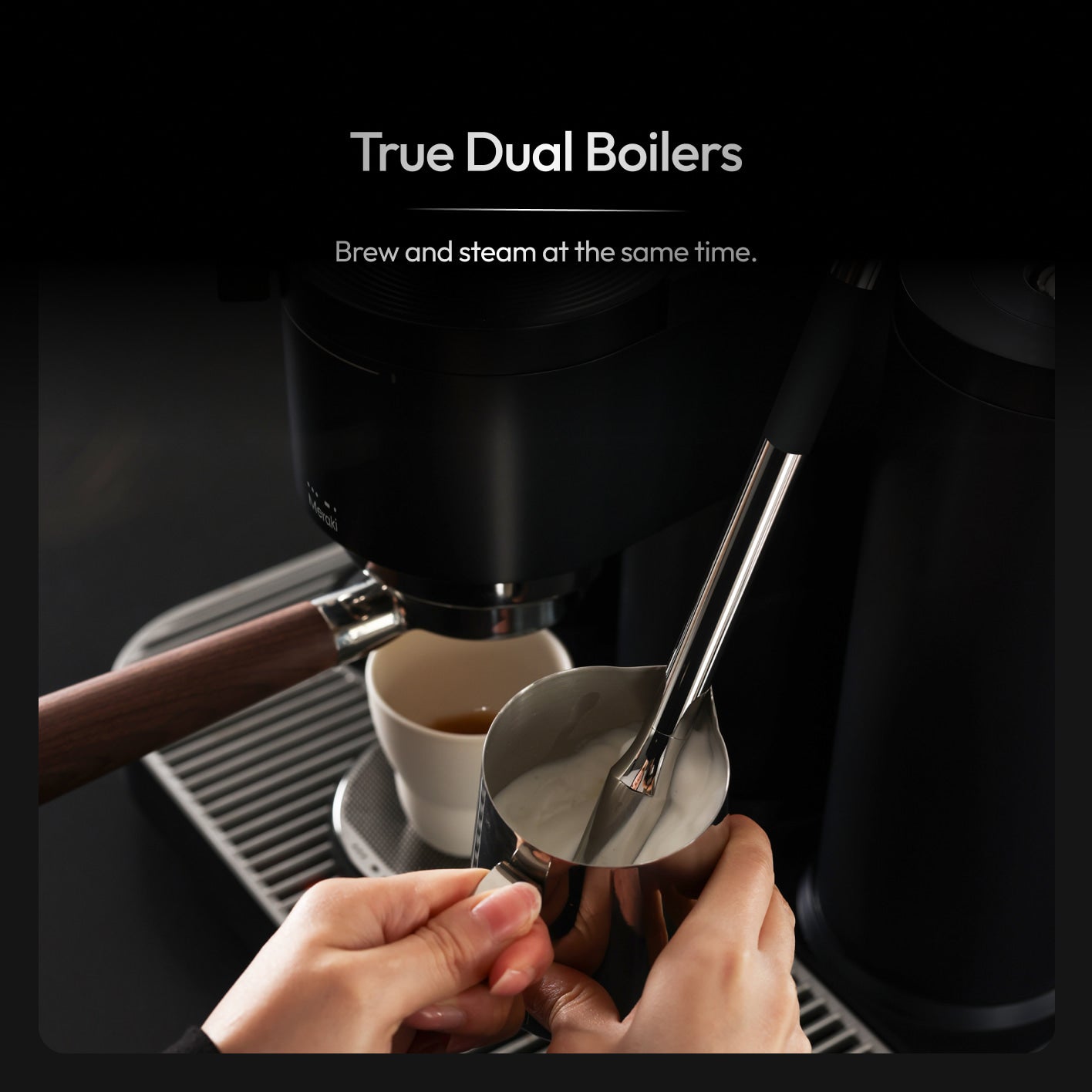
Pair rotary pressure with heat and measurement — duty is a system habit, not a pump sticker.
Keep milk hygiene ordinary on busy days — FDA safe food handling for general perishables context, not a medical espresso claim. Press context: Barista Magazine; still verify specs the day you buy.
Practical takeaway checklist
Use this before you stretch “commercial rotary” into a café fantasy — or dismiss it when mornings are actually stacked.
- Write peak-hour drink count (milk vs straight) for three days.
- Separate pump class (named rotary + pressure story) from service duty (café continuous vs home/light office).
- Confirm water path: tank habits vs any plumbing on your SKU.
- Warm fully; two back-to-back drinks at your real gap; note taste and steam reserve.
- Refuse “commercial” with no pump type, pressure story, or service path.
- Watch odd new pump sounds, longer fills, hesitation, leaks, ignored water care — book service (Support, warranty).
- Need multi-group continuous volume? Read home vs café.
- Neighbor noise only? Use soft-lane noise guides.
- One weekday recipe; do not “tune duty” with random presets.
- Re-check live Meraki claims (rotary 9 bar, dual boilers, tank, scales, trial, warranty) on the product page.
Which home espresso machines have a rotary pump?
Many prosumer and upper home machines name a rotary pump — verify the live spec sheet.
Rotary shows up across dual-boiler and some heat-exchanger home machines sold as prosumer or commercial-grade. Listings say “rotary,” “commercial rotary,” or only quiet/smooth with no pump type. Minimum bar: named pump + regulated brew-pressure story. Meraki’s example: Meraki Espresso Machine, specs Rotary, 9 bar (2026-10-26/27 snapshot). Not a complete brand catalog. Prefer seller pages dated the week you buy; use rotary pump for home for framing, not a scraped “full list.”
Which rotary pump espresso machine is the best?
No honest universal “best” — match duty, workflow, and service, then score brands on one checklist.
“Best” depends on peak volume, milk share, space, water path, measurement, and who services it. A café multi-group can win continuous service and lose a two-drink apartment; a guided home rotary can win stacked mornings and lose a high-volume bar. Disclosure: Meraki publishes this page and sells one verified home example (commercial rotary framing, dual boilers, built-in scales, guided workflow) — judge those attributes, not an invented ranking. Soft lane: professional espresso machine for home; re-check live specs.
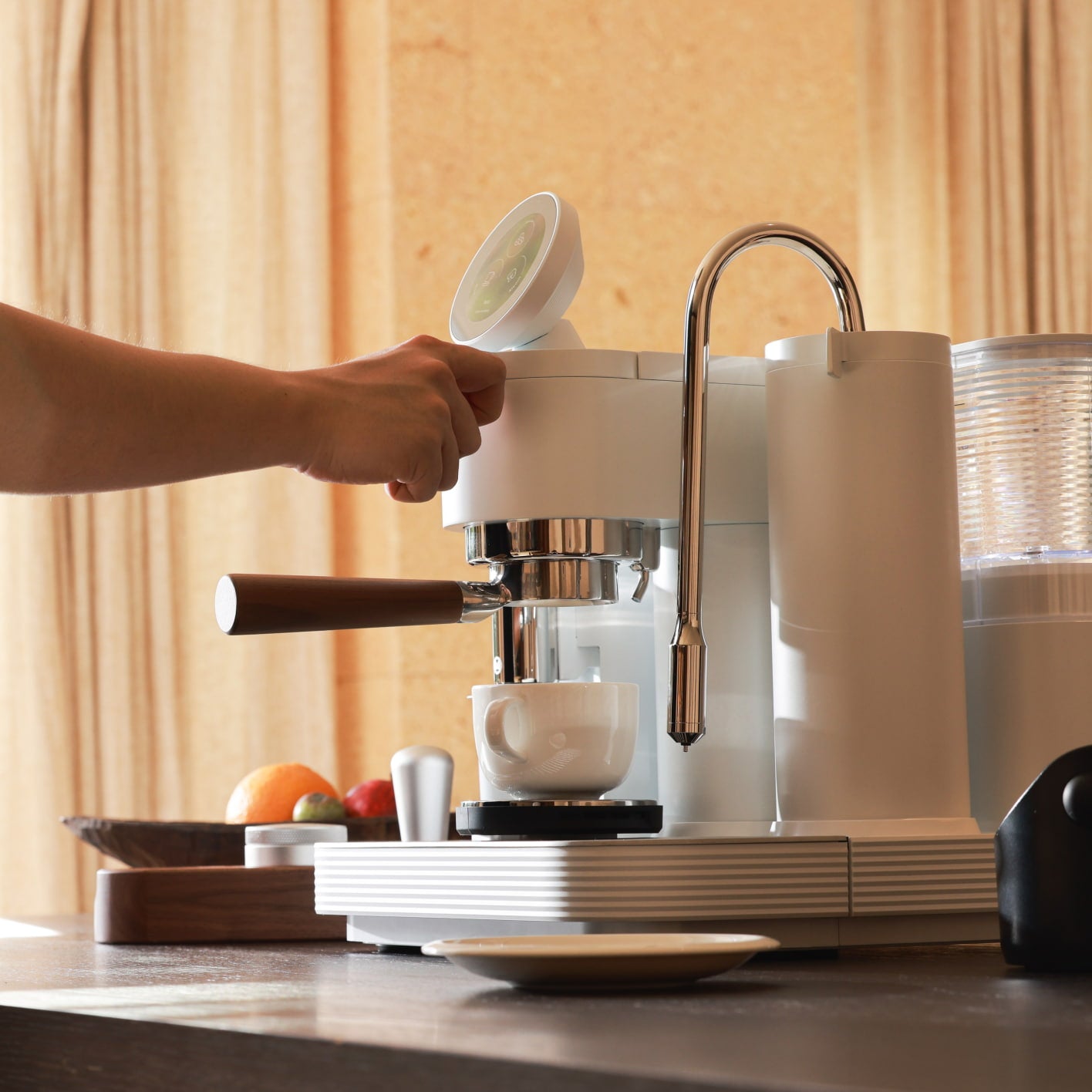
Score “best” on your peak-hour duty and service path — not on who shouted commercial the loudest.
FAQ
What is the best commercial coffee machine for office use?
There is no single best office machine without knowing headcount, milk share, plumbing, and who cleans it. For a small creative office with household-like peaks, a dual-boiler home rotary with clear service support can be enough. For continuous café-style traffic, shop true commercial multi-group gear and a service contract. Soft filter: name peak drinks per hour, water path, and wipe-down owner before you buy any “commercial” adjective. Meraki’s home rotary path is one guided option for light shared use — confirm live; we do not invent an office ranking.
What is the best professional espresso machine for home use?
“Best professional for home” usually means commercial-class parts inside a home-duty chassis — not a café machine forced onto a kitchen counter. Score pump type and pressure story, boiler independence, measurement, steam reserve for your milk habits, footprint, trial/warranty, and authorized service. Meraki publishes a professional-home landing page and sells a dual-boiler rotary example; disclose that ownership and compare every brand on the same checklist. Skip fake podiums that hide seller affiliation.
When is a commercial rotary pump overkill at home?
When your real pattern is one or two drinks with long gaps, and your bottlenecks are grind, water, or technique — not back-to-back pressure delivery. Rotary can still be a comfort upgrade, but the “commercial” price step is optional. It is also the wrong consolation prize if you truly need café continuous volume; buy café hardware instead of stretching a home claim.
What maintenance signs matter for a rotary pump at home?
New hesitation or odd pump sounds after a stable baseline, longer tank-to-shot delays, visible leaks, ignored scale/film in the water path, and steam that collapses only on busy mornings after poor wipe habits. Do not invent a home hour-meter reading Meraki does not publish. Book authorized service, keep water quality honest, and use the warranty path rather than continuous-run experiments.
Is this the same as Meraki’s why-prosumer-uses-rotary or apartment noise guides?
No. The why-prosumer page owns home-system pressure, size, and integration. Apartment noise/neighbor and quiet-rotary guides own heard mornings and placement. Commercial-grade pages own label-vs-parts tests. This page owns duty-cycle honesty for commercial rotary claims at home and light office volume — when the adjective helps, when it is overkill, and which limits stay honest without lab hour charts.
Conclusion
A commercial rotary pump coffee machine for home duty cycle decision is a volume-and-recovery judgment. Named rotary plus a steady pressure story can help stacked home and light-office mornings; it does not mint café continuous service, and Meraki’s snapshot is not a drinks-per-hour lab chart. Count your peak hour, separate parts class from service duty, watch maintenance signs, and refuse overselling adjectives and fake “best of” lists.
If that matches how you brew, review live framing on the Meraki Espresso Machine and rotary pump espresso machine for home — or call +1 833 854 9555 (Mon–Fri, 9 AM–5 PM EST) via Support.


