


What Is a Coffee Distributor and How Does It Improve Espresso?
That distinction matters because distributors, WDT tools, and tampers do different jobs. A distributor may help when the grounds arrive in a mound or the barista often starts the tamp on a tilted surface. It is optional, not a requirement for good espresso.
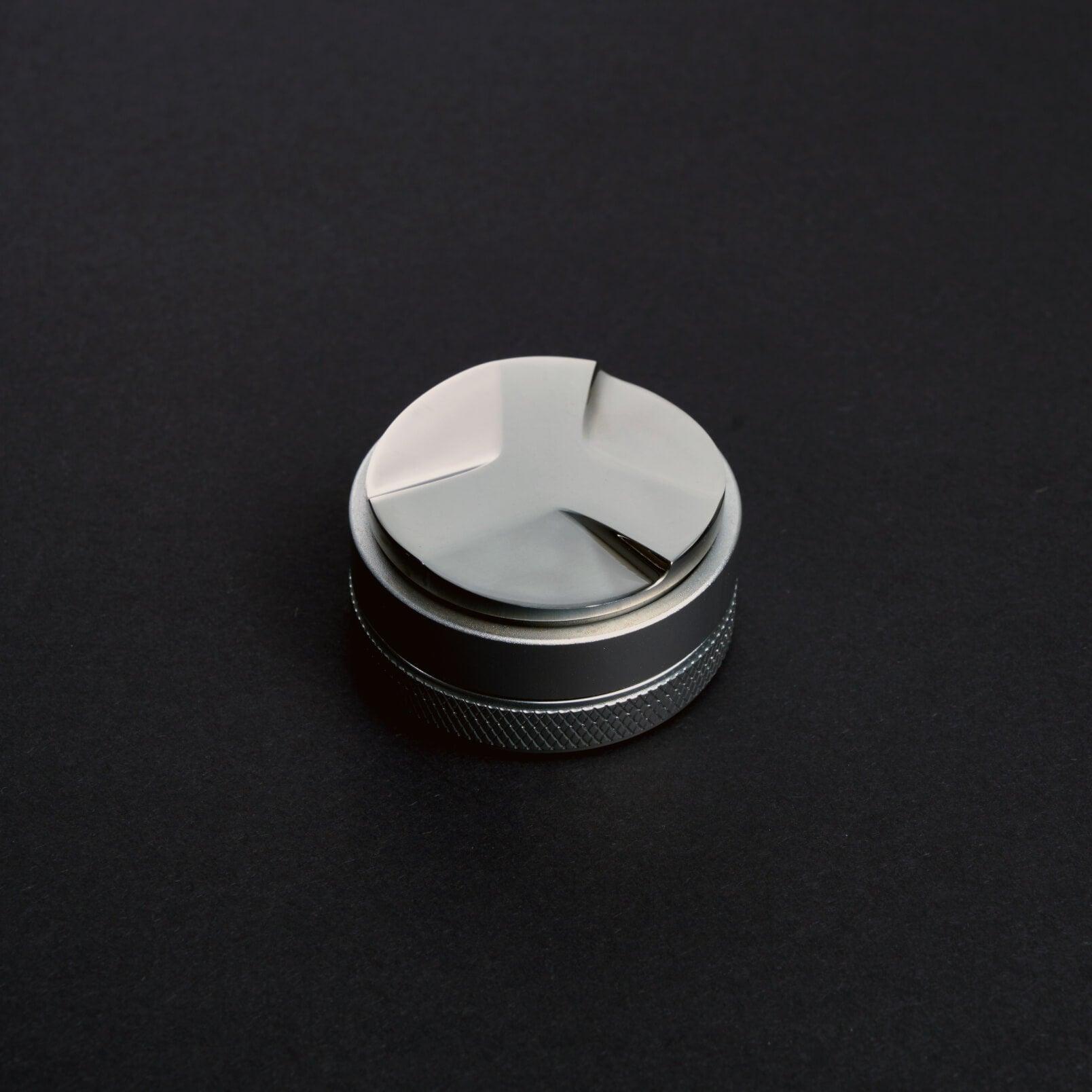
What does a coffee distributor do?
A rotating distributor touches the top layer of coffee and moves it across the basket. When the depth is set correctly, it can flatten a mound, make the surface easier to inspect, and help the tamper begin level.
It cannot show whether the lower part of the basket is evenly filled. If dense areas or voids remain below the surface, the top can look smooth while water still finds an easier path through the puck. This is why a distributor should not be described as a guaranteed cure for channeling.
Distributor vs WDT vs tamper
| Tool | Main job | When it may help | What it does not replace |
|---|---|---|---|
| WDT tool | Moves thin needles through the grounds to break clumps and redistribute coffee below the surface | When the grinder leaves visible clumps or an uneven bed | A level, consistent tamp |
| Coffee distributor | Levels the top surface with a rotating base | When the mound is hard to flatten consistently before tamping | Appropriate grinding, internal distribution, or tamping |
| Tamper | Compresses the prepared bed into a stable puck | Every conventional espresso preparation workflow | Even dosing and distribution before tamping |
You can use WDT and a distributor together, but you do not have to. A common sequence is dose, WDT if needed, tap or settle gently, use a shallow distributor, then tamp. Another valid workflow is dose, distribute manually or with WDT, and tamp without a rotating leveler. Compare results rather than adding steps automatically.
How to use a coffee distributor
- Start with a repeatable dose. Use the same basket, coffee, and target dose while you test the tool.
- Address visible clumps first. If the grounds are clumpy, distribute them internally with an appropriate method before leveling the surface.
- Set the distributor shallow. Adjust it until the base just contacts the coffee across the basket. Do not use it as a pre-tamper.
- Rotate with light pressure. One or two controlled turns are enough to evaluate whether the surface becomes level.
- Remove the tool and inspect. The surface should be even, without a deep compressed pattern or coffee pushed against one side.
- Tamp level. Use the same tamping method each time.
- Judge the result in the cup. Track dose, beverage yield, time, visible flow, and taste across several shots before deciding that the added step helps.
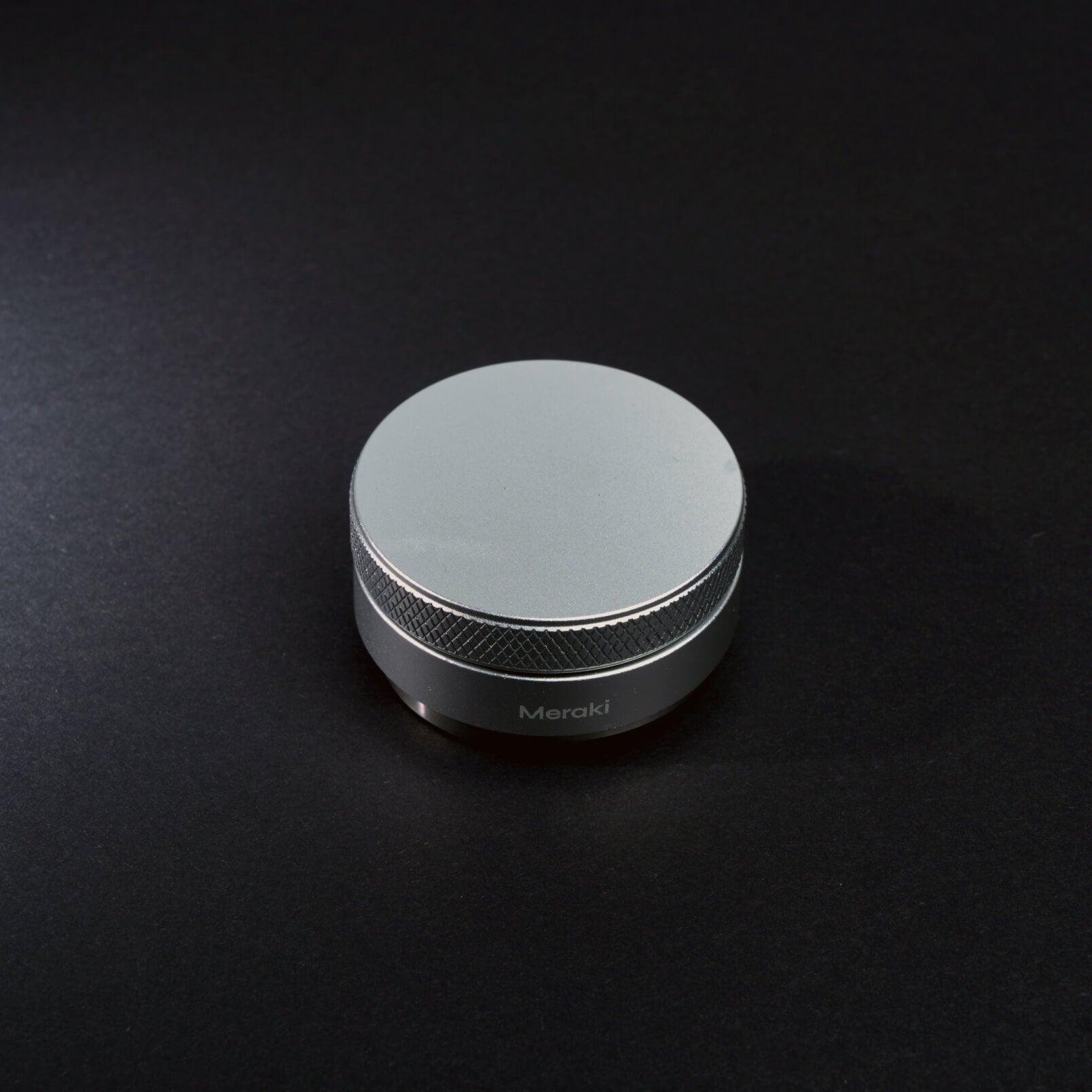
Is a coffee distributor necessary?
No. Many baristas make consistent espresso with careful dosing, manual distribution or WDT, and a level tamp. A distributor earns its place only if it makes your actual routine more repeatable without creating a new problem.
It may be worth testing if your coffee repeatedly forms a tall mound, your tamp tends to start tilted, or you want a simple visual checkpoint before tamping. It may be unnecessary if the grounds already enter the basket evenly and your shots are consistent.
Signs the setting may be too deep
- the tool leaves a strongly compressed pattern before tamping;
- coffee climbs the basket wall or shifts to one side;
- the distributor is difficult to rotate;
- the tamp feels unusually shallow after distribution; or
- shot behavior becomes less repeatable after adding the tool.
Will any distributor fit any espresso machine?
No. Match the tool to the basket, not only the machine name. Nominal diameter matters, but the distributor base also needs suitable clearance inside the basket. Basket taper, internal ridge, wall shape, and the tool's adjustment range can affect fit.
Meraki uses a 58mm commercial-style portafilter. Read the separate 58mm portafilter guide for the difference between nominal size and exact compatibility. The official Meraki Coffee Distributor is the direct accessory option for the Meraki workflow.
How a distributor fits the Meraki workflow
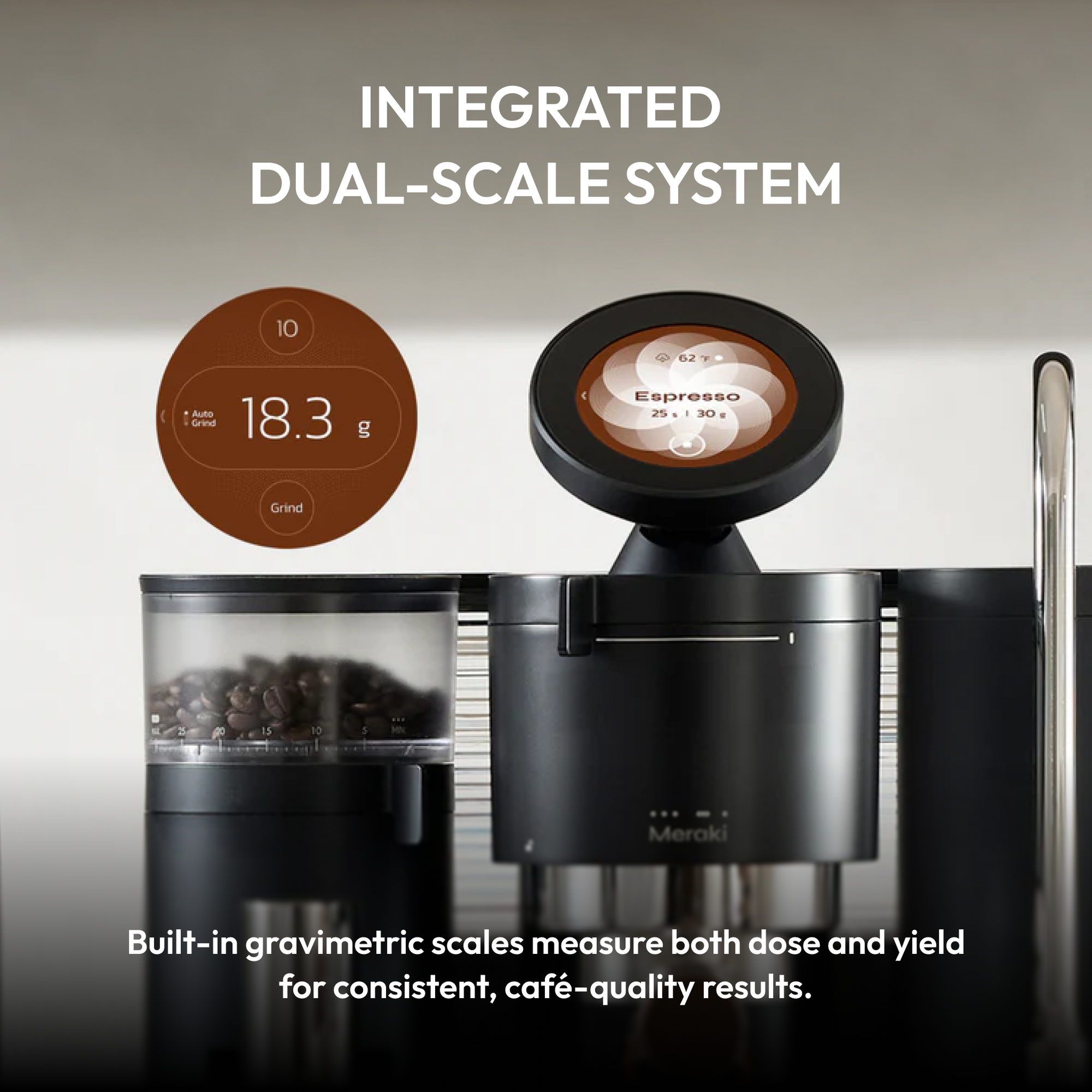
Meraki controls the steps before and after puck preparation with an espresso-tailored grinder and two built-in scales. Grind by weight helps deliver a repeatable coffee dose. Brew by weight tracks beverage yield in the cup. The distributor sits between those measured stages: after grinding and any internal distribution, but before tamping.
This makes its benefit easy to understand. The tool does not replace measurement; it supports a consistent physical preparation step. The dual boilers and quiet commercial rotary pump then provide stable brewing and steaming performance, while the machine holds fixed 9-bar brew pressure. Pre-infusion duration can be adjusted, but Meraki does not offer selectable pre-infusion pressure levels.
Frequently asked questions
Does a coffee distributor stop channeling?
Not by itself. It can level the surface, but channeling can also come from the grind, clumps, internal density, basket condition, tamp, dose, coffee freshness, or water delivery.
Should I use WDT before a distributor?
If clumps or uneven density are visible, WDT can address them before surface leveling. If the grinder already produces an even bed, the extra step may not be necessary.
Do I still tamp after using a distributor?
Yes. A surface distributor is not a substitute for the final level tamp in a conventional espresso workflow.
How deep should a coffee distributor be set?
Set it only deep enough for the base to contact and level the coffee consistently. Avoid a setting that noticeably compresses the puck before tamping.
Can a distributor improve espresso flavor?
It may improve repeatability if it fixes an inconsistent preparation step. Test several shots with the same coffee, dose, yield, and grind setting, then compare flow and taste.
Add tools only when they make the workflow more repeatable.
Explore the official Meraki Coffee Distributor, or see how the 58mm portafilter, espresso-tailored grinder, dual scales, dual boilers, and rotary pump work together on the Meraki Espresso Machine page.