


Cafe boards list ten names you halfway recognize. At home you only need one skill stack: a decent shot, then intentional milk volume and foam style. The menu becomes a chart, not a mystery.
This guide is an espresso drinks ratio map—shot through flat white—with explicit macchiato vs cortado vs latte coverage. It differentiates from Meraki’s existing espresso menu classics by leaning harder on a decision chart and home workflow pitfalls.
Espresso drinks menu: how to read ratios
Read drinks as espresso plus milk (or water) in deliberate volumes.
Once the shot is stable, changing ounces and foam style is what turns espresso into macchiato, cortado, cappuccino, latte, or flat white.
Ratios here are home-friendly guides, not laws. Cup size changes everything; a “latte” in a 16 oz tumbler is a different drink from a 6 oz Gibraltar. Specialty literacy from SCA and NCA keeps expectations realistic.
The classic lineup (table)
Use this chart as your fridge reference. Volumes assume a double shot unless noted; scale down for singles.
| Drink | Espresso | Dairy / water | Foam style | Cup feel |
|---|---|---|---|---|
| Espresso | 1–2 shots | — | Crema only | 1–2 oz demitasse |
| Macchiato | 1–2 shots | Spoon of foam/milk | Mark of foam | Tiny |
| Cortado | Double common | ~1:1 milk | Silky, little dry foam | ~4 oz glass |
| Piccolo | Ristretto/espresso | Small milk | Velvet | ~3–4 oz |
| Cappuccino | Double common | ~equal-ish milk+foam | Thicker foam | ~5–6 oz |
| Flat white | Double / ristretto | Less milk than latte | Microfoam, thin paint | ~5–8 oz |
| Latte | Double | Larger milk pour (~1:3) | Thin microfoam | ~8–12 oz |
| Americano | 1–2 shots | Hot water | — | Mug |
| Mocha | Double | Milk + chocolate | Latte-like | Latte cup |
Macchiato vs cortado vs latte
Milk volume is the honest difference.
Macchiato barely milks the shot; cortado equals it; latte stretches it into a longer breakfast drink.
Chain caramel macchiatos reverse the construction with layered milk and drizzle—delicious maybe, but a different taxonomy. Gibraltar often aliases cortado in US specialty. If you only remember one rule: more milk softens espresso and raises calories; look up dairy in USDA FoodData Central when you track intake. Milk-handling essays under Perfect Daily Grind’s milk tag help when foam fails.
Home workflow: shot then milk
Pull the espresso first into a warm cup, steam milk second, then pour with intention. Dual boilers make that sequence painless because steam is ready when the shot stops. Purge the wand, stretch briefly for cappuccino foam or keep stretch short for flat-white microfoam, texture to gloss, tap, swirl, pour. Keep a small pitcher from the accessories collection so cortados and piccolos are not drowned. Bean choice still sets the espresso character—browse the beans collection.

Pitfalls
Wrong cup size turns a flat white into a latte. Dry foam on a “cortado” makes a weird cappuccino. Overheating milk to scald kills sweetness—stay near the familiar 140–150°F home window. Syrup does not fix a sour shot. Learning twenty seasonal drinks before you can texture milk wastes weekends. Health context for coffee habits stays general via Harvard on coffee and EatRight.
Meraki fit
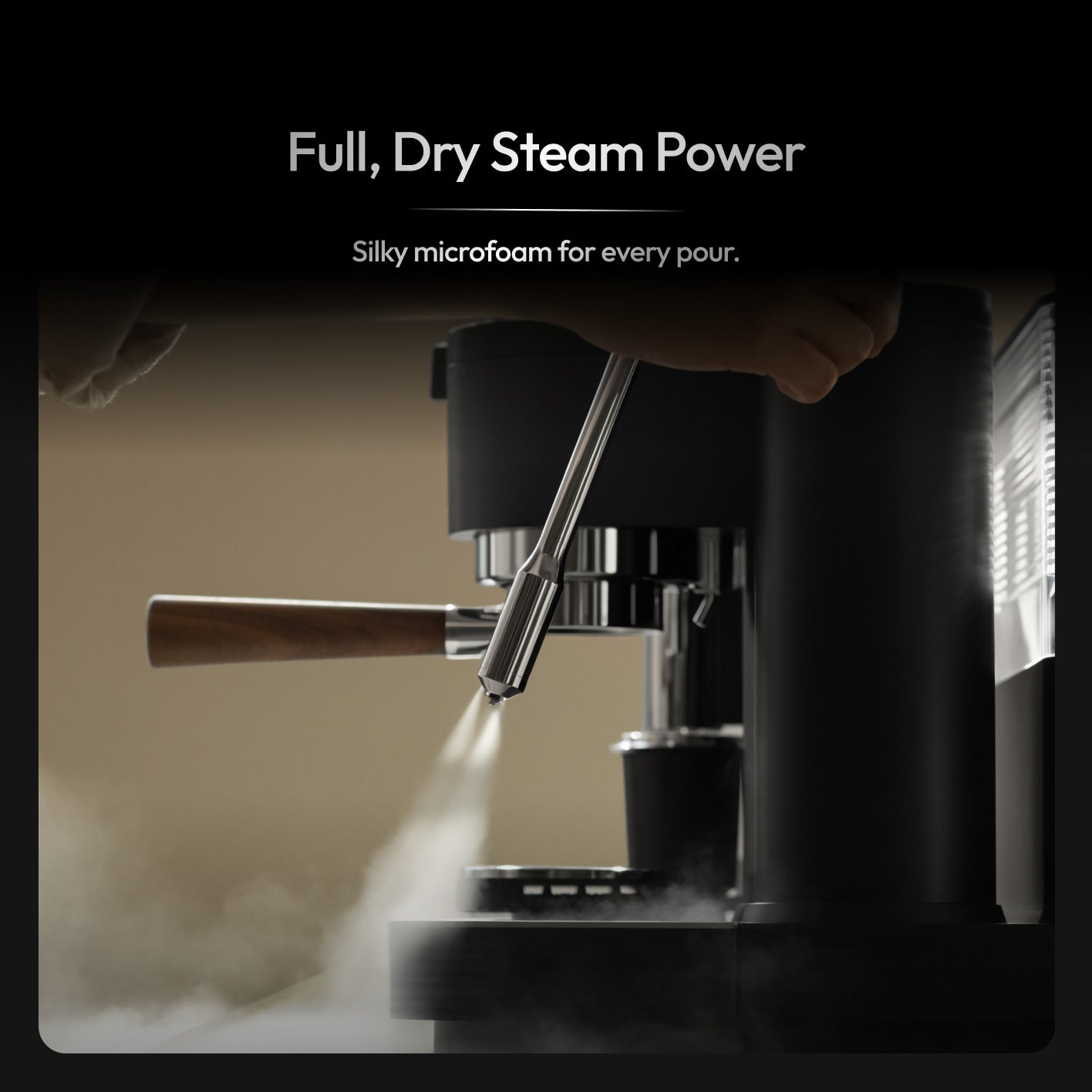
A guided grind-brew-steam path plus scales turns the menu chart into repeatable grams and textures. Dry steam helps microfoam for flat whites without watering cappuccinos into gray foam. If you want that on one machine, view the Meraki espresso machine. Continue recipe reading in coffee recipes and the existing menu classics post for adjacent angles.
Next reads
Deep-dive comparisons (flat white vs cappuccino, breve vs latte, piccolo) deserve their own pages in this batch—use this menu as the map, then open the specialist article for foam thickness or dairy swaps. Espresso definition and caffeine details also split out so this page stays a ratio cockpit.
Who this menu chart is for
This page is for home baristas who can pull a passable shot and want names to match textures. If you are still learning foam, practice latte volumes first because mistakes taste familiar. If you already steam well, use cortado and flat white to stress-test consistency in smaller cups. Gift buyers can use the chart to decode cafe receipts without pretending every chain uses Italian orthodoxy.
Office machines with weak steam will struggle with dry cappuccino foam; lean into Americanos and shorter milky drinks rather than forcing latte art. Super-automatics with drink buttons can approximate ratios, but tasting still beats trusting the icon. When a guest asks for a macchiato and expects a large caramel layered drink, clarify traditional vs chain language before you steam—hospitality beats pedantry, but clarity prevents waste.
Chocolate (mocha) and flavored syrups attach to latte volumes more often than to cortados. If you add sauce, reduce other sweetness and keep espresso assertive so the drink does not become hot milk dessert. Seasonal specials are fine; just map them back to a classic row on the chart so you know what changed.
Cleaning is part of the menu skill. Milk films change foam within a day. Backflush on the schedule your machine manual describes, soak baskets, and keep towels dedicated to steam wands. A perfect ratio chart cannot survive a sour wand tip. Pair the chart with a short weekend maintenance ritual and your drinks stop drifting for mysterious reasons.
Conclusion
Learn espresso drinks as a ratio chart: change milk ounces and foam style after the shot is good. Master macchiato, cortado, cappuccino, latte, and flat white before chasing novelty names.
Build the classics with measured shots and steam on the Meraki espresso machine.
FAQ
What is the difference between latte and macchiato?
A latte is espresso with a large steamed-milk pour and thin microfoam. A traditional macchiato is espresso “marked” with a small dollop of foam or milk. Cup size and milk volume are the giveaway—lattes are longer drinks.
Macchiato vs cortado?
Macchiato keeps milk minimal. Cortado balances espresso with roughly equal steamed milk in a small glass, silky rather than foamy. If your “macchiato” arrives as a large caramel drink, you are in chain-menu territory, not the traditional definition.
What is a flat white ratio vs cappuccino?
Flat white aims for velvety microfoam and a higher coffee-to-milk presence in a smallish cup. Cappuccino keeps a thicker foam layer and a classic small-cup structure. Exact ounces vary by cafe; foam style is the reliable tell.
Espresso drink recipes for beginners?
Learn a straight shot, then macchiato, cortado, cappuccino, latte, flat white, and Americano. Master milk texture once, then change volumes. Keep a simple ratio chart on the fridge instead of memorizing twenty seasonal specials.
Types of espresso coffee drinks—which to learn first?
Start with espresso, then latte (forgiving milk volume), then cappuccino (foam control), then flat white or cortado (smaller, less forgiving). Add Americano when you want black length without milk.


