


Trade-off: you want mug-sized coffee volume and espresso intensity. Red eye is the blunt instrument that combines both—one shot dropped into drip—rather than pretending an Americano is the same thing.
Concrete cup math: a 12 oz drip coffee plus one ~1 oz espresso shot is a red eye; the same mug plus two shots is commonly a black eye. This explainer locks red eye coffee definitions, the naming ladder, and a home dual-boiler sequence.
What is red eye coffee?
Brewed coffee fortified with one espresso shot.
Order it when drip alone feels soft but a straight double feels too small.
Names vary by cafe; the shot count is the decoder. Literacy: NCA, Coffee & Health.
Red eye vs black eye vs dead eye
Climb the ladder by shots, not by roast mythology.
| Name (common) | Typical build | Who it fits |
|---|---|---|
| Red eye | Drip + 1 espresso | Morning volume + bump |
| Black eye | Drip + 2 espresso | Heavier caffeine stack |
| Dead eye / triple | Drip + 3 espresso | Rare; very intense |
| Americano | Espresso + hot water | No drip base |
| Long black | Water first, then espresso | Espresso-forward long black |
Always confirm shot count when traveling—menus freestyle. Sensory notes: Coffee Review.
Taste, body, caffeine
Taste sits between drip and espresso: more punch than drip, more volume than a demitasse. Body depends on brew strength. Caffeine: add approximate shot milligrams to your coffee’s milligrams; a widely cited single-shot midpoint is ~63 mg with real-world spread. See Harvard caffeine and NCA caffeine. Not medical advice.
How to make red eye coffee at home
Brew drip, pour-over, or batch coffee as the base. Pull a fresh espresso shot. Combine while both are hot. Optional: weigh the shot (~18 g in / ~36 g out as a familiar double, then use half if you truly want a single). Do not stir like paint—a gentle fold keeps crema from vanishing instantly. Beans for either side: beans collection. Roast literacy: NCA roasts.
Comparison table (nearby drinks)
| Drink | Base | Espresso role | Volume feel |
|---|---|---|---|
| Red eye | Drip | +1 shot | Mug |
| Black eye | Drip | +2 shots | Mug, heavier |
| Americano | Water | Primary | Long black-ish |
| Espresso | None | Entire drink | Small |
Common misconceptions
Red eye is not a roast level. It is not automatically “bad for you” beyond normal caffeine caution. It is not an Americano. Adding espresso does not fix terrible drip—it amplifies it. Education: SCA education.
Airport folklore sometimes invents exotic origin stories; treat them as stories. What matters operationally is shot count and brew quality. If you dislike bitterness, sweeten deliberately or choose a chocolatey espresso blend rather than dumping a random lungo into thin drip. If you need less caffeine, drink smaller ounces or skip the second shot—do not rely on milk myths.
Office tip: brew a clean batch coffee base, then pull shots to order so early birds and late arrivals get fresh espresso bumps. Leaving espresso sitting in a thermal carafe with drip for an hour tastes tired. Dual-boiler machines shine when colleagues stagger their red eyes across a morning.

Meraki dual-boiler workflow
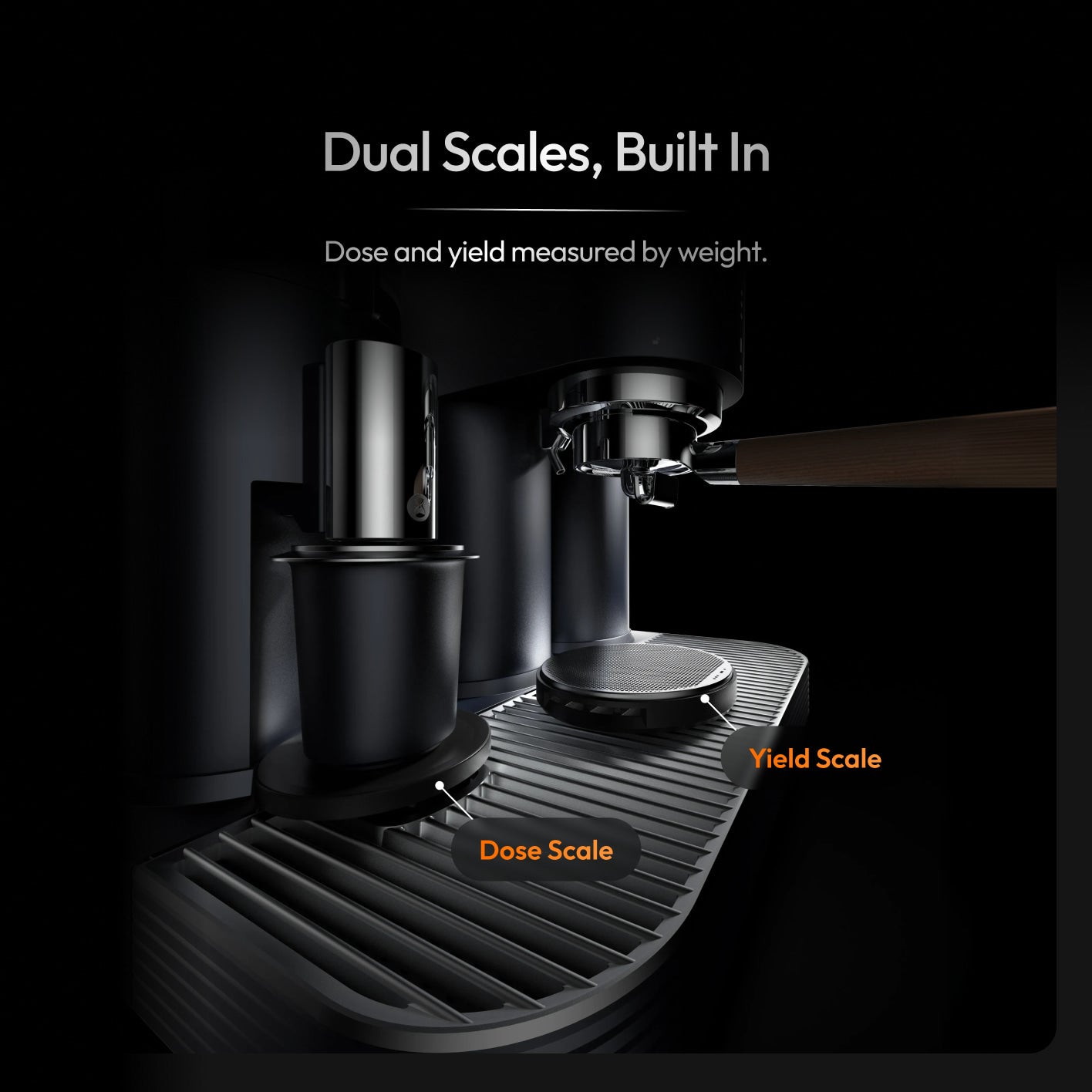
Practical sequence: start drip or kettle brew, heat the machine, pull espresso into the mug of coffee, serve. Built-in scales keep the espresso side measured when you graduate to black eye territory. View the Meraki espresso machine, browse coffee knowledge, and keep tools in the accessories collection. Habit context: Harvard on coffee, EatRight.
Taste tuning without wrecking the base
If red eye tastes muddy, fix drip strength first. Espresso cannot rescue papery batch coffee. If it tastes jabbing-bitter, your shot may be over-extracted or the drip already dark-roasty—try a chocolatey medium espresso blend rather than a third sugar packet as the only lever.
Travel tip: some shops use coffee concentrate as the “drip” base. Ask. Office tip: offer black eye as an opt-in second shot so caffeine-sensitive colleagues are not ambushed. Measure espresso when you can; mystery buttons create mystery mornings.
Nearby boundaries: Americano is espresso plus water; long black reverses order for crema emphasis; red eye keeps a true brew base. Piccolo and cortado are milk drinks—different job. Use the ladder table when menus invent poetic names.
When stacking dead eye territory, respect sleep and personal limits. Caffeine ranges are guides, not dares. Harvard and NCA pages stay your consumer anchors; this article will not invent brand-specific milligram lab results.
Home gear path that stays sane
You need a decent brew method plus an espresso machine capable of a repeatable shot. Dual boilers help when the kettle and the group compete for attention. Built-in scales keep the espresso half honest when black eye days tempt free-poured chaos. Wipe the portafilter before you park it on a drip mug so coffee oils do not paint the ceramic.
If you only own espresso, an Americano is still not a red eye—add water, not drip. If you only own drip, you cannot invent espresso with a moka detour and the same name; call it what it is. Language precision keeps this cluster from colliding with Americano and long black pages.
Gift buyers: a red eye ritual is a behavior, not a SKU. Focus on fresh beans and a machine that measures, not on novelty mugs alone.
Conclusion
Choose red eye when you want drip volume plus one espresso bump; climb to black or dead eye only with open eyes on shot count and caffeine. Keep Americano in its own lane.
Stack a measured shot with your brew using the Meraki espresso machine.
FAQ
What is red eye coffee?
Red eye coffee is drip (or brewed) coffee with one shot of espresso added. It is a strength and caffeine stack, not a different bean species.
How much caffeine is in a red eye?
Roughly the caffeine of your coffee cup plus the espresso shot you add—often cited near ~63 mg extra for a typical single, with wide variance. Total depends on brew strength and ounces.
Red eye vs black eye?
Red eye usually means one espresso shot in coffee. Black eye usually means two. Dead eye (or similar names) often means three. Local menus vary—ask how many shots.
Is red eye just coffee with espresso?
Yes. That is the definition. The skill is balancing a decent drip base with a dialed shot so it tastes intentional, not muddy.
Can I use Americano instead of drip as the base?
You can blend espresso into an Americano, but then you are stacking espresso with diluted espresso. Classic red eye uses drip or batch brew as the long base.


