


You open a listing that says NFC coffee machine, and the shopping card sounds like a smart-home pitch: tap a bag, sync a recipe, “connected” espresso. What you actually need is narrower — NFC coffee machine practical uses you will still bother with on a weekday, plus the limits that keep privacy, offline mornings, and taste judgment intact.
SERP for this phrase is messy — Pinterest pins, office vending, QR kiosks, TrendHunter gadgets, forum tag threads. Almost none is a home semi-automatic buyer’s enable / skip / offline-privacy checklist. This Meraki machine-guides explainer owns that checklist.
Soft-link NFC coffee machine: what the technology does (nearest tech literacy); CoffeeSense espresso workflow; how Meraki’s NFC bean recognition works; and Meraki CoffeeSense sensing and guidance explained. Soft-name CoffeeSense for extraction (A061), smart brewing without losing control (A063), family recipe profiles (A066), and programmable profiles that help (A029) when those lanes — not weekday enable/skip — own the next click.
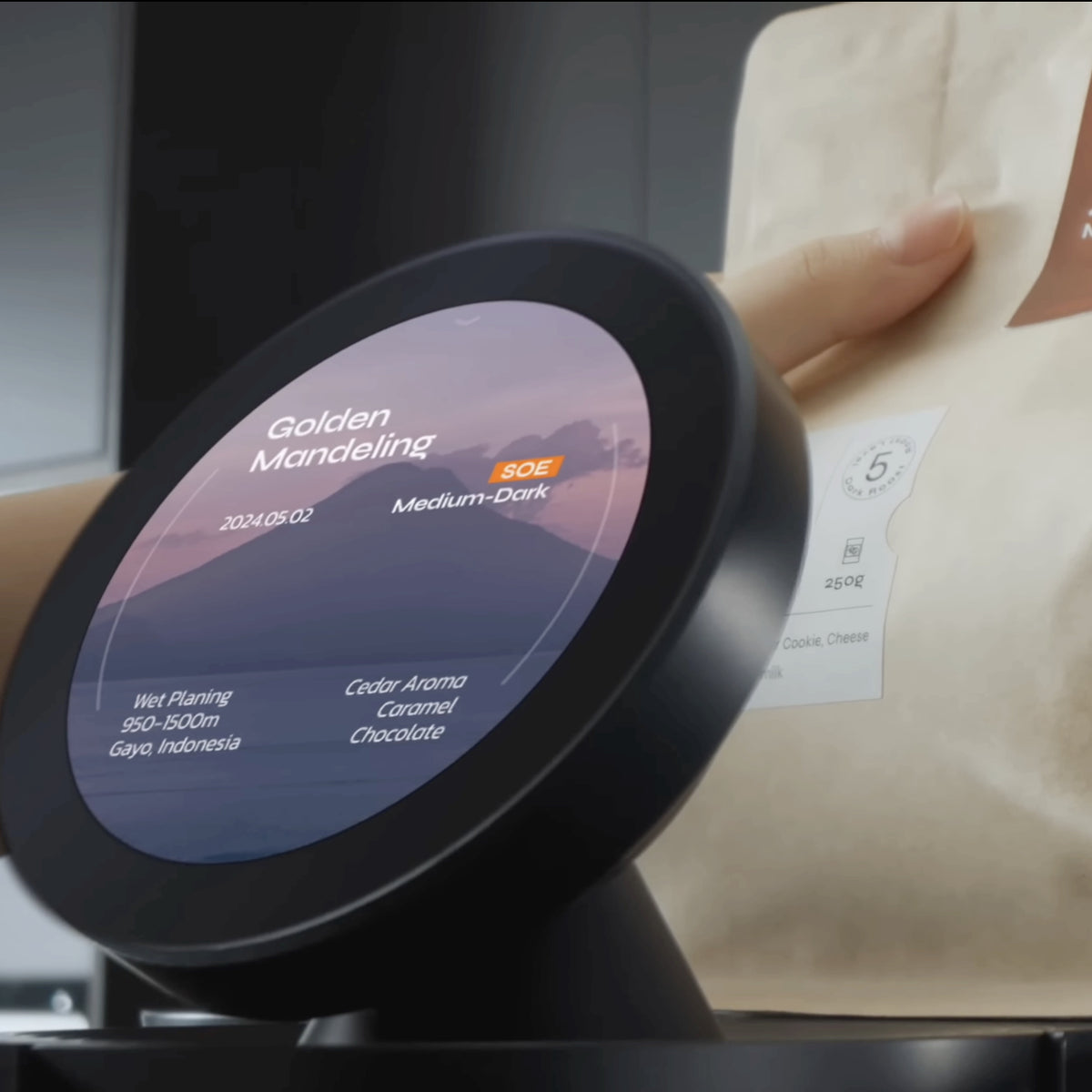
NFC earns a weekday slot when a tap loads a sane starting recipe — not when every tap becomes a cloud ritual you cannot turn off.
What “NFC coffee machine practical uses” really means for home buyers
NFC coffee machine practical uses, for tech early adopters, means deciding which tap-to-load behaviors are worth enabling on a busy morning — and which ones you should leave off for privacy, offline brewing, or simple calm — not collecting another “connected” shopping badge.
Treat the keyword as three jobs. Job one is weekday enable: bag recognition that shortens the first grind/dose/yield guess on a compatible NFC bag. Job two is weekday skip: remote scheduling theater, always-on accounts, or features that add taps without changing the cup. Job three is offline and privacy limits: knowing whether espresso still works when the network is down, and what a tap actually stores or syncs. Soft-link the technology explainer when what NFC is owns the next hour; stay here for practical limits — enable, skip, and tradeoffs.
Specialty coffee education still centers measured mass, grind, and taste — see the Specialty Coffee Association and NCA brewing basics. A chip shortens a starting recipe; it does not replace puck prep or your tongue.
Who this page is for (and who should skip it)
This page is for tech early adopters and careful upgraders who already know NFC exists and want a calm rule for what to turn on. You like connected tools. You also dislike features that nag for accounts, break when Wi‑Fi drops, or force a cloud path for a kitchen that should still make espresso offline.
Skip what the technology does for architecture literacy; CoffeeSense workflow for new-bag dial-in narrative; NFC bean recognition for chip mechanics; and sensing and guidance explained for sensing framing. Soft-name CoffeeSense-for-extraction, control-balance, family-profile, and programmable-profile drafts when those lanes own the miss. Come here for: practical NFC uses worth enabling, features worth skipping, and privacy/offline tradeoffs.
Why practical limits beat smart-home hype
This article is published by Meraki. The unique job is practical limits: a weekday enable / skip / offline-privacy card for NFC on a home espresso machine — not another smart-home hype reel, not an NFC architecture explainer, and not a CoffeeSense sensing deep dive.
That is not bean-recognition how-it-works, not an NFC workflow guide, not a “smart without losing control” thesis, and not a family recipe how-to. Soft-link those live Meraki posts when their lane owns the next question; keep this page for which NFC uses deserve a permanent ON. The reader who needs this page already believes tap-to-load can be convenient; they are failing on what to leave off so weekday coffee stays calm and private.
Disclosure: Meraki sells the Meraki Espresso Machine — dual boilers, rotary pump framed near steady 9 bar, dual scales (±0.2 g), TIMEMORE® co-developed grinder, guided touchscreen, CoffeeSense™ NFC as a listed Extra (vendor claims; re-check live). Live framing (2026-10-26/27): heat-up about 3–4 minutes; brew and steam together. Re-check the Meraki Espresso Lab and FAQ. No invented German Design / Red Dot / iF claims here. Hardware can offer a tap; it cannot decide which taps deserve weekday attention.
Core idea in plain language
Practical NFC use on a home espresso machine is a permission model, not a feature museum. You enable the taps that shorten a real morning decision. You skip the taps that only prove the machine is “smart.” You protect offline brew and privacy so a network bad day does not cancel coffee.
In Meraki’s verified CoffeeSense™ language (product Extras line and FAQ snapshot, 2026-10-26), the practical path is: swipe a Meraki coffee bean bag with an NFC chip; the machine provides suggested grinding and extraction parameters; you confirm on the touchscreen; dual scales stop grind and extraction at the quantity you accept. That is guidance plus measured execution — not mid-shot “adaptive” pressure magic, not AI taste learning, and not a claim that every grocery bag swipes.
The plain-language rule: enable NFC when it loads a starting recipe you would have typed anyway; skip rituals that need always-on accounts or block override; keep a path that still works offline. CoffeeGeek guides and About Coffee brewing still treat method and measurement as the craft core — NFC is a shortcut into that method, not a replacement.
How it shows up in a weekday workflow
On a weekday, NFC either saves one decision — or adds three. The difference is whether you treat the tap as a start card, not as a continuous identity system.
1. Compatible bag morning (enable). You already bought a Meraki NFC bag. Tap once, accept suggested grind and extraction parameters if they match your locked weekday drink, prepare the puck (distribution and tamp still matter), and let scales own stop points. Soft-link CoffeeSense workflow if you want the longer new-bag narrative; stay here for the enable decision.
2. Unmarked specialty bag morning (skip NFC expectation). No chip means no recognition story. Dial in manually with the same dual-boiler, scales, and touchscreen path. That is normal practice, not a feature failure — Meraki’s own technology page already frames bag compatibility as a limit. Soft-name programmable-profile drafts when a saved house recipe — not a bag tap — owns the weekday drink.
3. Guest or shared kitchen (bounded enable). One person taps their bag; another uses a named house recipe. Soft-name family-recipe drafts for Guest slots; do not force NFC onboarding for a one-off americano.
4. Offline morning (protect brew). Prefer local suggestions, saved recipes, and scale stops that do not need a live cloud handshake for every shot. Weekday test: can you brew without apologizing to an app? Soft-name control-balance drafts when override philosophy needs a full essay.
5. Privacy-aware limit. If a feature asks for an always-on account only to log taps you never review, leave it off. Read Meraki’s privacy policy; CISA’s IoT security notes remind buyers that connected devices deserve deliberate enablement.
What to verify on the machine or listing
Before you treat NFC as a reason to buy — or before you leave every NFC toggle ON — verify the listing against weekday reality.
- Named NFC role — Prefer “NFC / suggested grind and extraction parameters” language over vague “AI extracts for you” copy the FAQ does not use.
- Bag compatibility — FAQ-aligned Meraki path: Meraki coffee bags with an NFC chip. Do not assume third-party bags work unless Meraki publishes that.
- What the tap loads — Grind and extraction suggestions you can accept or override — not a locked café that refuses edits.
- Execution partners — Dual scales stop grind/extraction at quantity (FAQ wording); dual boilers and rotary ~9 bar stay separate hardware stories. Confirm NFC is not pretending to replace them.
- Offline behavior — Can you grind, brew, and steam from the UI if the network is down? If the listing is silent, ask support (+1 833 854 9555, Mon–Fri 9 AM–5 PM EST) rather than inventing a cloud dependency.
- Account asks — What needs sign-in vs a local tap? Re-read privacy and FAQ the week you buy.
- What is not claimed — No invented adaptive mid-shot pressure magic, channeling auto-repair, TIMEMORE® authorship of CoffeeSense, or German Design / Red Dot / iF awards.
Cross-check the live FAQ “How do I use CoffeeSense™?” — listing truth outranks article memory.
Tradeoffs and limits
NFC buys a shorter first guess on compatible bags. It also creates expectations that waste mornings if you treat every tap as mandatory intelligence.
Worth enabling. Compatible-bag recognition that loads suggested grind and extraction parameters; pairing suggestions with trusted scale stops; override one tap away so taste owns the final call. Soft-name CoffeeSense-for-extraction drafts for a longer cup-honesty pass.
Worth skipping. Account walls for local taps; cloud menus that bury manual grind; treating NFC as a substitute for distribution, tamp, or fresh beans; forcing guests through bag onboarding. Soft-name programmable-profile drafts when a boring saved preset beats another NFC ritual.
Privacy and offline limits. Bag NFC is a short-range tap; “connected espresso brewing system” marketing often blends that with app/cloud stories — keep them separate. A smart semi automatic coffee machine can still earn its keep with NFC mostly off if dual boilers, scales, and guided workflows do the daily work. Prefer local control; enable sync only for a concrete sharing or backup need. Soft-name control-balance drafts when override philosophy needs depth; stay here for the enable/skip card.
Category limits owned elsewhere. Compatible bags only (as published); suggestions age with roast date and storage; NFC does not level grounds or fix channeling. Soft-link what the technology does and bean-recognition pages for mechanics — here they are only reasons to skip over-trust.
Mistakes that waste time
These mistakes turn a useful tap into a weekday tax.
- Enabling every NFC-adjacent toggle on day one. Start with compatible Meraki bag recognition only; leave optional sync off until you have a reason.
- Expecting NFC to fix channeling. Distribution and tamp still own puck geometry.
- Blaming NFC on a non-NFC bag. No chip, no recognition story — dial in manually or use a saved profile.
- Refusing to override. Roast age and humidity move; override is craft, not failure.
- Merging CoffeeSense with TIMEMORE® co-development — mill pedigree ≠ bag suggestions.
- Merging NFC with dual-boiler or 9-bar performance — those are separate hardware lanes.
- Logging taps you never review — if you never open the log, do not pay the privacy tax.
- Skipping ordinary kitchen hygiene because the machine feels “smart.” See FDA safe food handling; NFC does not sanitize a neglected group head.
Barista Magazine still treats judgment and method as primary; NFC is an optional accelerator inside that craft.
A simple decision or setup checklist
Use this table at unbox — and again after week one when novelty fades.
| Decision | Enable when… | Skip or limit when… |
|---|---|---|
| Bag NFC recognition | You regularly buy compatible Meraki NFC bags | Most bags are unmarked specialty or grocery bags |
| Accept suggested parameters | Suggestion matches your locked weekday drink | Suggestion fights your known good grind/dose/yield |
| Override after taste | Shot is sour, bitter, thin, or harsh | You treat the chip as an uneditable law |
| Account / cloud sync | You have a concrete sharing or backup need | Sync exists only as a “connected” badge |
| Offline brew path | Local UI + scales + boilers still pull shots | Every shot demands a live handshake (verify before buying) |
| Guest / household | One person owns NFC bags; others use named recipes | Everyone must re-onboard NFC for a single drink |
| Attention budget | Tap replaces typing the same numbers | Tap adds screens without changing the cup |
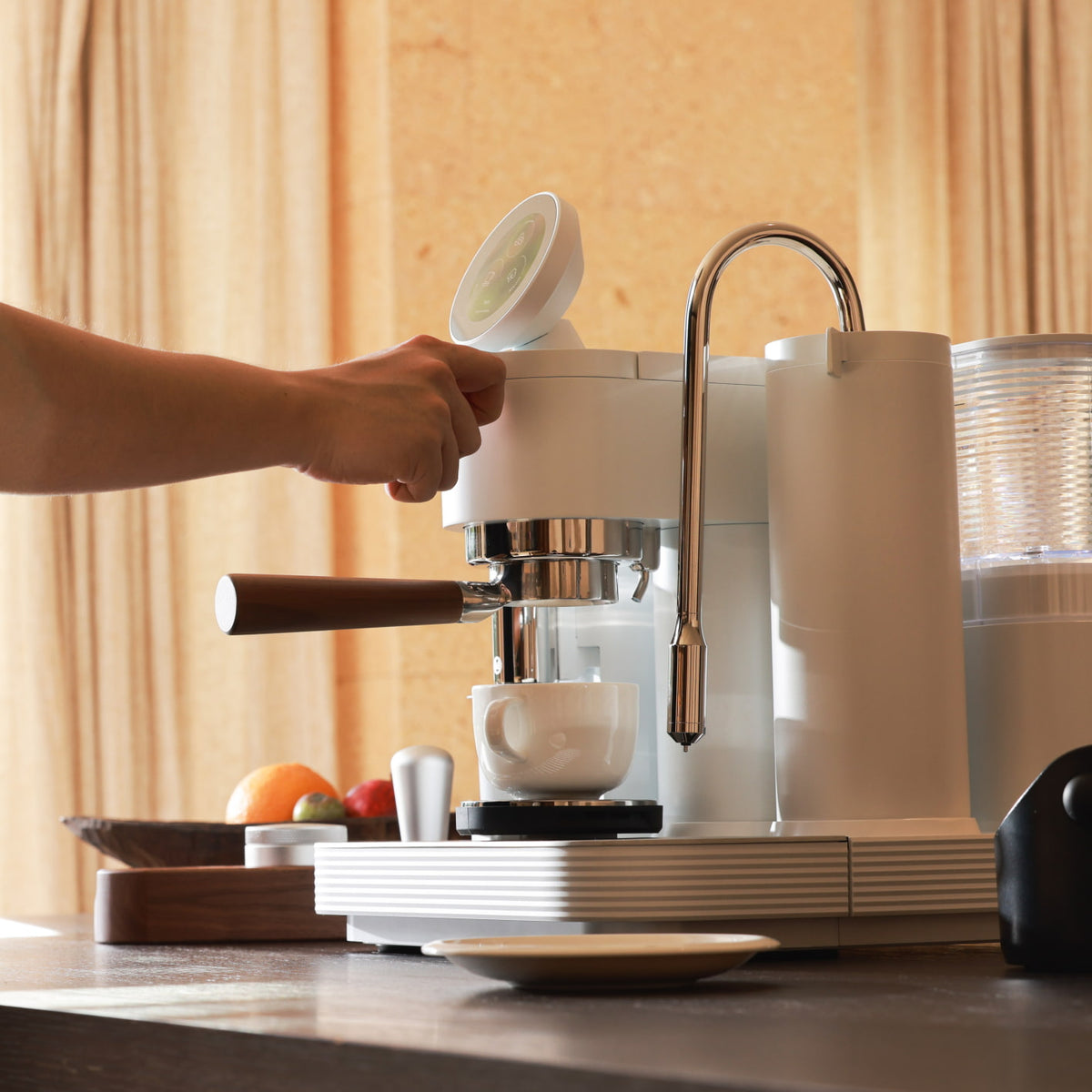
A connected espresso brewing system earns trust when dual boilers and scales still work if you leave optional NFC sync off.
Treat the middle column as your enable list; keep the right column off until a real weekday problem appears. Soft-name family-profile and programmable-profile drafts when household naming or useful presets — not bag taps — close the morning.
How this connects to Meraki’s dual-boiler system
NFC is a front door to suggestions. Dual boilers, a rotary pump framed near steady 9 bar, TIMEMORE® co-developed grinding, and dual scales (±0.2 g) are the engine room. Confusing the door with the engine is how shoppers over-weight a tap and under-weight temperature stability, simultaneous brew and steam, and honest dose/yield stops.
On Meraki’s machine, CoffeeSense™ sits in Extras beside pre-infusion and hot water (vendor claim). Honest weekday path: tap a compatible bag when you have one; accept or edit suggestions; let scales stop mass; let dual boilers keep brew and milk work from fighting after a ~3–4 minute heat-up. Soft-link sensing and guidance only for framing. NIST is a useful reminder that stated units and honest measurement matter — scales measure; they do not taste.
If you never buy NFC bags, dual-boiler guided workflow and scales still define most of the home café. That is a smart semi automatic coffee machine done calmly — connected options available, not mandatory for every shot.
Conclusion
NFC coffee machine practical uses at home are permission jobs: enable bag recognition when compatible Meraki NFC bags shorten a starting recipe you would have typed anyway; skip taps that only prove “connected”; protect offline brew and privacy so a network bad day does not cancel espresso. Practical limits beat smart-home hype when the chip stays a start card — and dual boilers plus scales keep doing the real work.
Soft-link Meraki’s live NFC / CoffeeSense near-dupe guides for literacy, workflow, recognition, and sensing; soft-name CoffeeSense-for-extraction, control-balance, family-profile, and programmable-profile drafts when those lanes own the miss; keep this page for enable / skip / offline-privacy.
When you want the guided dual-boiler station those habits sit on, start at the Meraki Espresso Machine.
FAQ
Which NFC coffee features are worth enabling on a weekday?
Enable bag recognition when you regularly use compatible Meraki NFC bags and the tap loads suggested grind and extraction parameters you can accept or override in one glance. Skip always-on sync, account walls for local taps, and any ritual that adds screens without changing dose, yield, or taste. Soft-link Meraki’s technology and bean-recognition pages for mechanics; stay here for the enable/skip card.
Can I use an NFC coffee machine offline?
You should be able to grind, brew, and steam from the machine UI without apologizing to an app for every shot — verify offline behavior on the live listing or with support before you buy. Treat bag NFC as a short-range start card, not as proof that espresso depends on the cloud. Soft-name control-balance drafts when override philosophy needs more depth; keep privacy and offline limits on this page.
What privacy limits should I set on a connected espresso brewing system?
Separate bag taps from optional account sync. Enable sync only when you have a concrete sharing or backup need; leave logging off if you never open the log. Read Meraki’s privacy policy for store/account framing and use ordinary IoT hygiene — connected kitchen devices deserve deliberate enablement. Soft-link sensing/guidance pages for feature framing; this FAQ owns the privacy boundary, not sensor architecture.
How do coffee pod machines work — and is that the same as NFC espresso?
Pod machines typically brew from sealed capsules with a simpler pressurized path; NFC on a guided semi-automatic espresso machine is a short-range bag/recipe tap around grind, dose, and yield you still prepare. Different kitchen. Soft-link Meraki machine-guides for espresso workflow; this page does not own pod mechanics.
What is the 15-15-15 coffee rule, and what about vending cost or the “7 elements” of coffee?
Those PAA phrases are off-lane for NFC enable/skip. “15-15-15” and “7 elements” are general coffee folklore or teaching lists — not Meraki NFC setup rules. Vending-machine purchase cost is a commercial channel, not a home dual-boiler decision. Soft-link Meraki brewing and machine-guides hubs for craft literacy; keep this article on practical NFC uses and limits.


