


Compare two mornings. Case A: you stand at a lever, feel resistance rise, and pull a slow, ritual shot—beautiful, quiet, no steam for the second person’s latte. Case B: you need two milk drinks before email, so a pump semi with dual boilers finishes while the kettle would still be heating on a manual-only setup.
This guide owns manual espresso machine decisions—lever espresso machine and manual espresso maker searches included—without pretending ritual always beats logistics. Contrast: automatic vs manual espresso machines.
Who should buy a manual espresso machine
Hobbyists who want pressure-profile feel and are patient with grind dialing.
Skip manuals as your only tool if weekday milk volume is high and steam is weak or absent.
Travelers and tiny-space dwellers sometimes choose portable manuals intentionally. Literacy: NCA, SCA.
Lever vs spring vs bare-manual
Spring levers store energy and can smooth the pull; direct levers put more continuous feel in your hands; bare manual portable kits rely on your force and a simplified group. Parameter view: pre-infusion feel, peak pressure control, and whether a boiler/steam wand exists. Education: SCA education.
Must-haves vs nice-to-haves
Must: espresso-capable grinder (almost always separate), sturdy portafilter workflow, and a clear stance on milk (wand, separate frother, or black-only). Nice: boutique finishes, stand lighting, collector lineage. Water: CDC, EPA WaterSense.
Daily convenience vs control
| Priority | Manual / lever | Pump semi / dual boiler |
|---|---|---|
| Pressure feel | High | Lower hands-on feel |
| Weekday milk speed | Often limited | Strong with dual boiler + wand |
| Learning curve | Steep | Moderate |
| Footprint | Can be tiny (portable) | Larger chassis |
| Guest-proofing | Low | Higher with guidance |
Steam / milk drink limitations
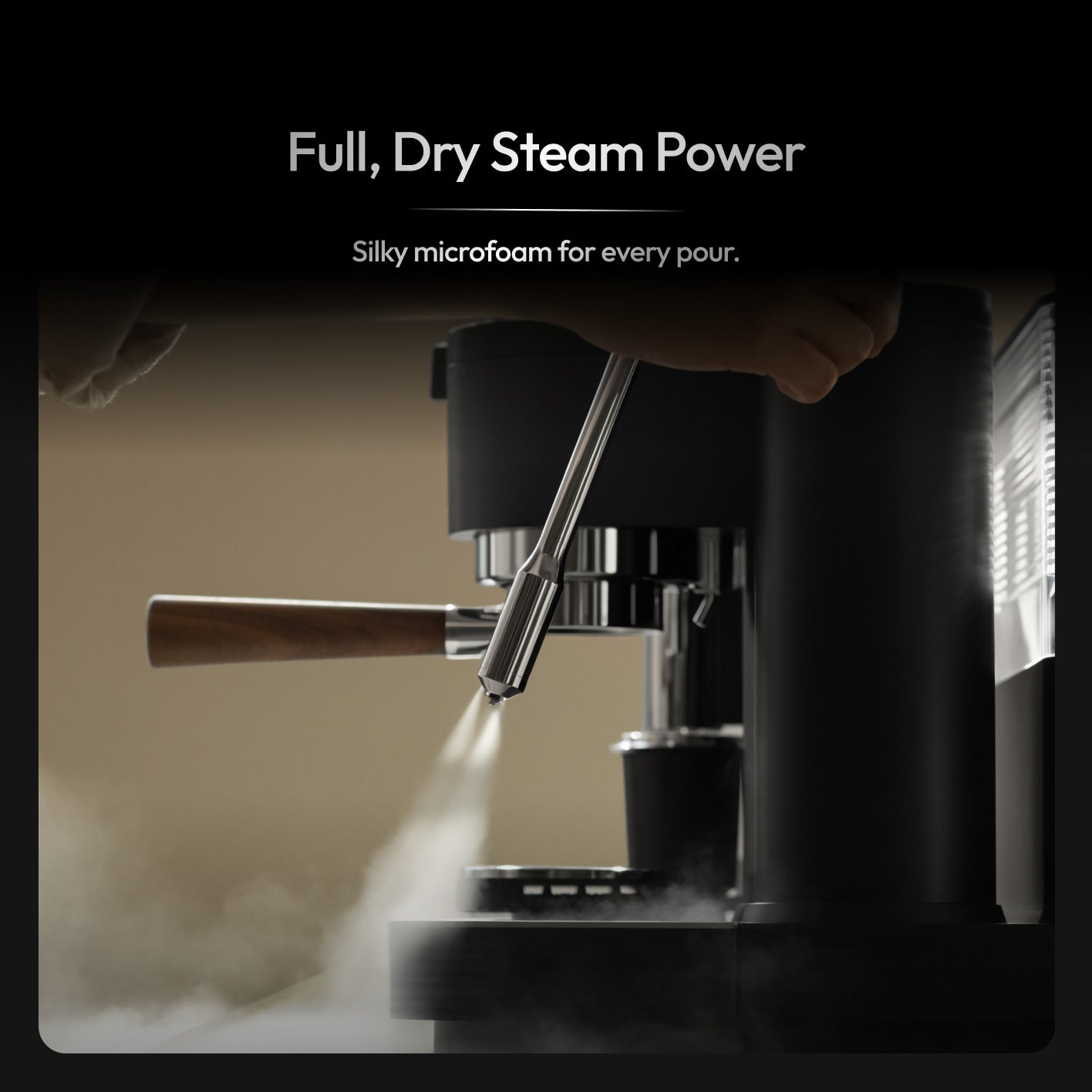
Many beloved manuals are espresso-first. If flat whites are the household language, verify steam before buying romance. Separate milk frothers help but rarely match a strong dual-boiler wand. Habit: Harvard on coffee.
Budget tiers
Portable manuals look cheap until you add a capable grinder—still required. Countertop levers climb quickly. Ownership includes practice beans. Curated bags: beans collection. Accessories: accessories.
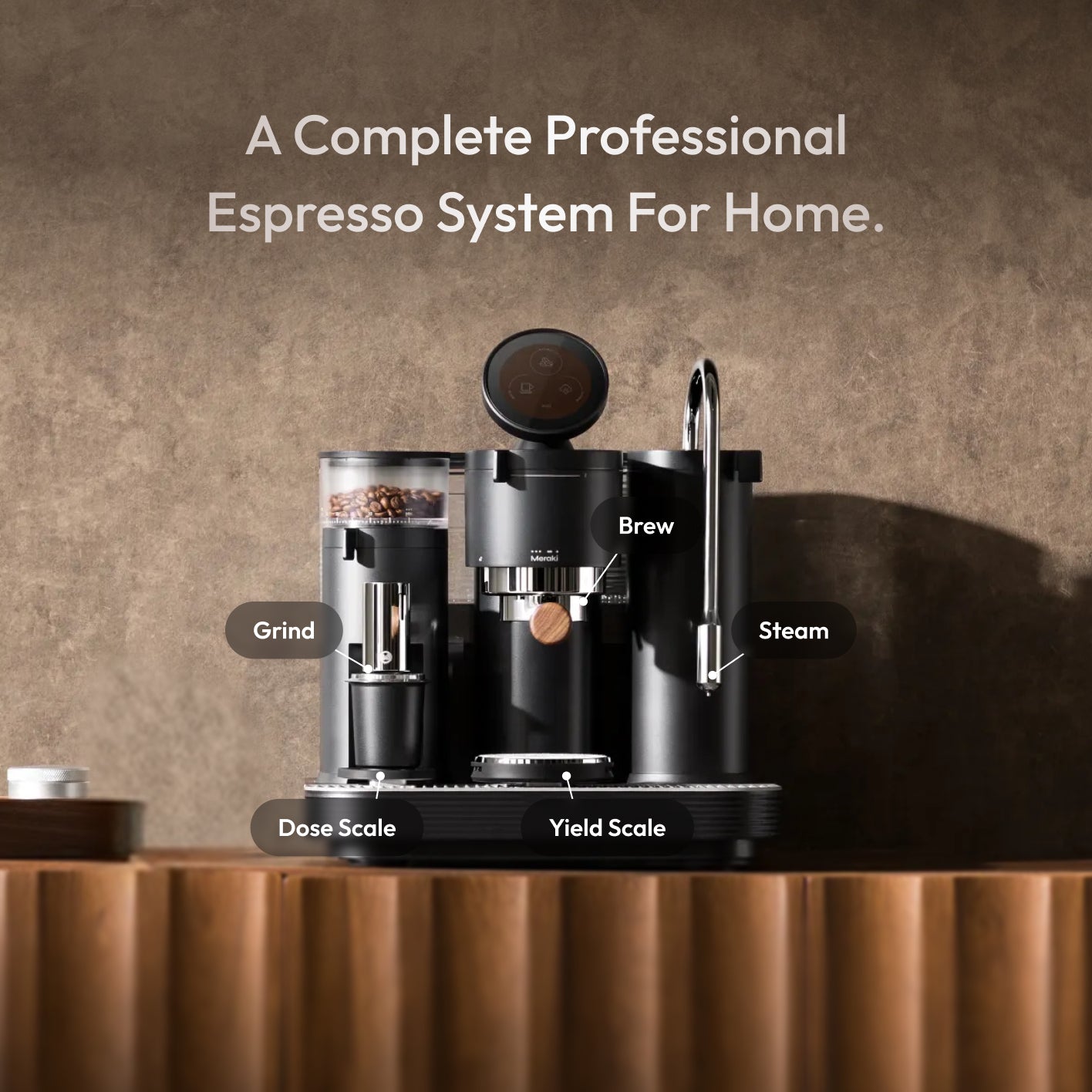
Where Meraki (pump dual-boiler) fits instead
Choose Meraki when lever feel is optional but simultaneous brew/steam, scales, and guided grind-to-cup flow are not. Disclosure: Meraki is a pump-driven all-in-one, not a lever; it is the daily-convenience alternative this comparison points to. View the Meraki espresso machine. Guides: machine guides. Sensory: Coffee Review; composition: Coffee & Health; craft: Perfect Daily Grind; caffeine: Harvard caffeine.
Mistakes to avoid
Buying a portable manual as a surprise gift for a latte-only drinker. Skipping the grinder budget. Expecting lever romance to survive a two-kid school morning without steam. Assuming “manual” always means better espresso than a well-dialed pump machine.
Depth: portable kits vs home levers
Portable kits shine in travel and micro-kitchens. Home levers shine when you have space for a boiler and want ritual as the point. Neither replaces a dual-boiler milk café unless steam is truly capable. Be precise in product titles when you shop.
Learning curve honesty: film yourself pulling ten shots. If joy rises, manual is for you. If resentment rises, pump guidance will taste better because you will practice more.
Manual buyer self-test
Answer yes/no: I enjoy slow mornings. I will buy a capable grinder immediately. Milk drinks are rare or handled separately. I accept guest confusion. I want pressure feel more than latte speed. Four or five yeses → manual can thrive. Two or fewer → pump dual-boiler convenience will make you a more consistent drinker.
Portable manual kits deserve a separate budget line for a travel grinder or carefully chosen ground coffee for trips only. Home quality still wants burrs.
Lever communities are generous with technique notes; they cannot steam milk on a machine that has no wand. Read the spec sheet for steam capacity in grams or practical pitcher size, not only heritage stories.
If you keep a manual for fun and a pump machine for weekdays, say so out loud—two-machine homes are allowed. Just clean both.
Meraki remains the weekday pump answer when the self-test fails the manual lifestyle check. Compare calmly, without sneering at either ritual.
Parameter reminder: dose, grind, yield still rule manual shots. Lever feel does not suspend particle physics. Keep a scale even when the machine looks vintage.
Ritual economics
Manual espresso is a leisure product as much as a coffee product. If leisure minutes exist, lever feel pays. If leisure minutes do not exist, the same machine becomes guilt. Be ruthless about calendar reality before heritage branding convinces you otherwise.
Steam limitations deserve a bold sticky note on the box: “milk plan = _____”. Fill it with wand, separate frother, or black only. Empty sticky notes create returns.
Portable manuals plus travel grinders can be a joy on the road and a frustration as a sole home tool. Countertop levers with boilers change the math but still rarely beat dual-boiler pump machines for two-latte speed.
Learning resources from lever communities are excellent on puck prep. Pair them with a scale and a burr grinder. Without those, manual theater produces random cups that teach the wrong lessons.
When you decide weekday convenience wins, step to pump dual-boiler workflows without framing it as selling out. Consistency is its own craft. Meraki’s measured stack is one such weekday craft path among others—evaluate steam, grind, and scales on evidence.
Home café pacing vs lever romance
Romance is real: the resistance of a lever, the quietness without a rotary pump, the sense that your hands finished the shot. Pacing is also real: school mornings, overlapping oat milks, guests who will not wait for a third lever lesson. Write which reality owns more days each month.
If romance owns weekends only, keep a portable manual for Saturday and a pump dual-boiler for weekdays. If romance owns your identity every dawn, invest in a proper home lever with a steam plan and a serious grinder. If pacing owns everything, stop auditioning manuals as primary tools.
Grind remains non-negotiable in all three stories. Blade grinders behind a beautiful lever still channel. Budget burrs before budget wood handles. Taste references stay useful at Coffee Review while you learn.
Meraki’s offer for pacing-first homes is dual boilers, scales, and guided grinding without pretending to be a lever. That honesty helps both products: levers keep their ritual audience; pump machines keep the weekday audience.
Conclusion
Buy manual for lever feel and intentional pacing; buy pump dual-boiler workflows when milk drinks and weekday convenience lead. Match the machine to the morning you actually live.
See the daily pump dual-boiler path on the Meraki espresso machine or compare philosophies in automatic vs manual.
FAQ
Are manual espresso machines any good?
Yes for enthusiasts who enjoy lever feel and puck prep theater. They are less good as the only machine for rush-hour milk drinks unless you accept slow pacing and limited steam.
Lever vs semi-automatic?
Levers emphasize pressure-profile feel with your hands; pump semis emphasize repeatable pump pressure with button or switch control. Levers ask more practice; semis fit daily milk workflows more easily when paired with strong steam.
Can I steam milk on a manual machine?
Some lever machines include steam wands; many portable manuals do not. Check the exact model. No-steam manuals push you toward separate milk frothers or black coffee.
How long does a manual shot take to learn?
Plan weeks of practice for consistent lever timing and pre-infusion feel. Portable kits can make drinkable shots sooner, still with a learning curve on grind and dose.
Is Flair-style portable “enough” for home?
It can be enough for travel or small spaces focused on straight espresso. It is rarely enough if you want dual-boiler milk pacing every morning.


