


People say espresso when they mean “strong coffee,” then look surprised when a 1-ounce shot tastes different from a mug of drip. Espresso is a brew method and a building block—not just a stronger kettle.
This explainer answers what is espresso, covers pressure, ratios, crema, and the expresso spelling trap, then gives a home parameter table. Drink-menu depth lives with espresso menu classics; caffeine math continues in the coffee-knowledge cluster.
What is espresso?
Espresso is pressure-brewed concentrated coffee in a small serving.
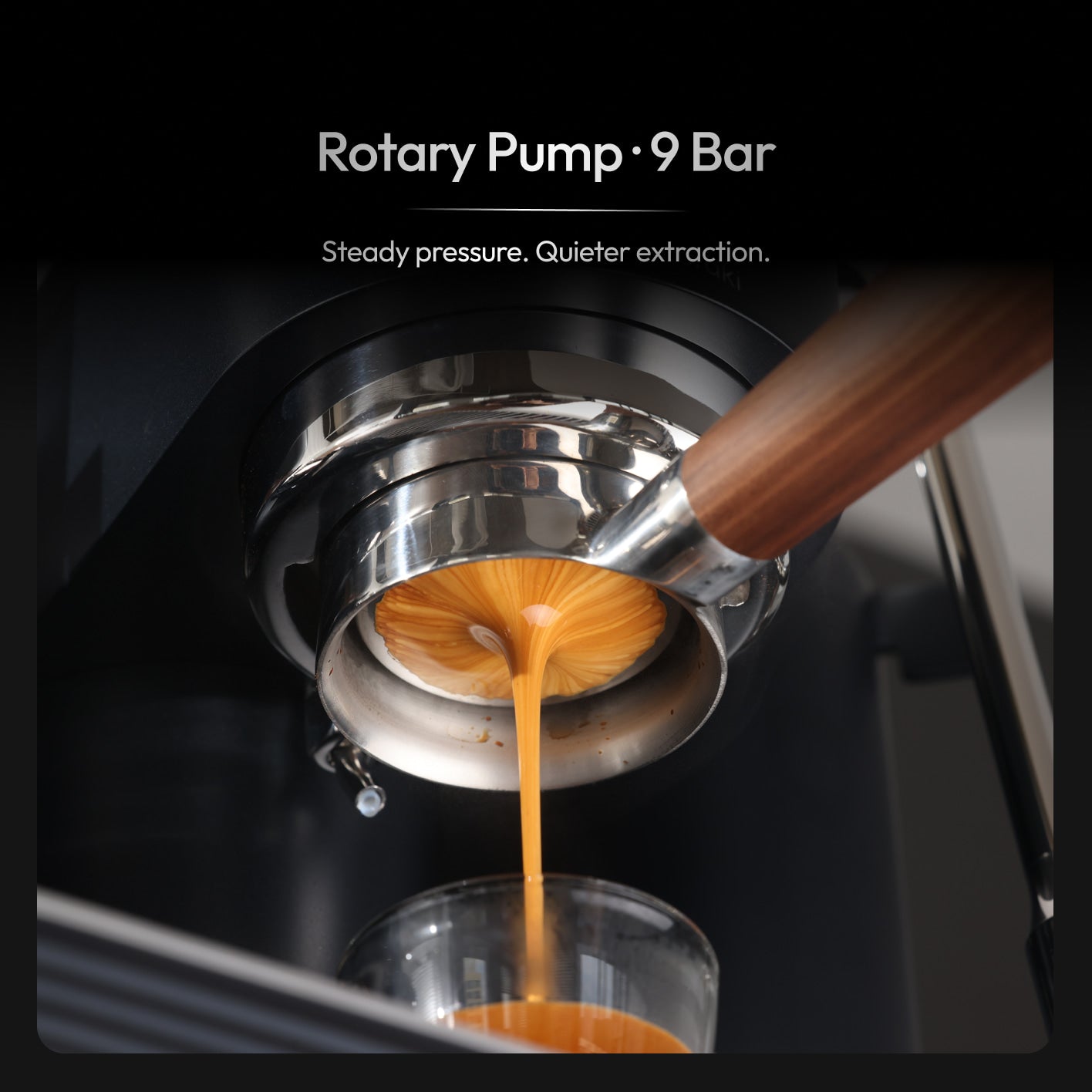
Hot water is forced through a fine puck—commonly near 9 bar at the group—yielding a short drink with crema that becomes the base for many cafe beverages.
It is not a bean species. You can roast espresso-style blends or brew any fresh coffee as espresso if the grind and machine allow. Literacy primers from the NCA and Coffee & Health keep definitions grounded.
Crema, pressure, and what a shot actually is
Crema is the emulsion on top; pressure is the path that made it possible.
A typical home target might be ~18 g in to ~36 g out (about 1:2) in ~25–30 seconds, with crema present but not worshipped as the only score.
Fresh beans trap more CO2 and often show thicker crema; stale beans look flatter. Darker roasts can show pretty crema while tasting baked. Use crema as a clue, then taste. Education notes from the SCA education hub and references from Coffee Review reinforce sensory judgment over foam selfies.
Espresso vs drip coffee
Different grind, time, pressure, and cup size.
Drip uses coarser grounds and minutes of contact time; espresso uses fine grounds and tens of seconds under pressure.
Per ounce, espresso is stronger. Per mug, drip often delivers more total liquid and sometimes more caffeine. If you want a longer black espresso-based drink, make an Americano rather than running a drip cycle on espresso grind. Roast choice still applies—see the NCA roast guide.
Taste, body, and caffeine (preview)
Good espresso tastes intense but balanced: sweetness, acidity, and bitterness in a short sip. Body is syrupy relative to drip. Caffeine for a single shot is often cited near ~63 mg with large variance; doubles scale with dose. Use Harvard caffeine and NCA caffeine for ranges. Detailed single-vs-double tables belong in the caffeine article; here, remember serving size before bragging rights.
How to pull a shot at home (parameter table)
Dose, yield, time, and grind are the four dials.
Pick a basket dose, target about 1:2 yield, note time, then move grind before you chase random button mash.
| Parameter | Home starting point | What it means |
|---|---|---|
| Dose | ~16–20 g (basket-dependent) | How much coffee you start with |
| Yield | ~1:2 (e.g., 18→36 g) | Liquid espresso in the cup |
| Time | ~25–30 s (guide) | Secondary clue after taste |
| Pressure | ~9 bar class at group | Espresso’s defining path |
| Temp | Machine-stable brew boiler | Prevents sour/bitter swings |
Distribute evenly, tamp level, preheat the machine, and weigh output. Browse puck tools in the accessories collection and beans in the beans collection.
Common misconceptions (including “expresso”)
Espresso is the spelling; expresso is the frequent typo for the same drink. Espresso is not just “more caffeine than coffee” in every serving size. Crema is not a gold medal by itself. A blonde, fast, watery pour is usually underextracted—not a style flex. Single vs double is mostly dose and basket, not a personality test.
Meraki all-in-one angle
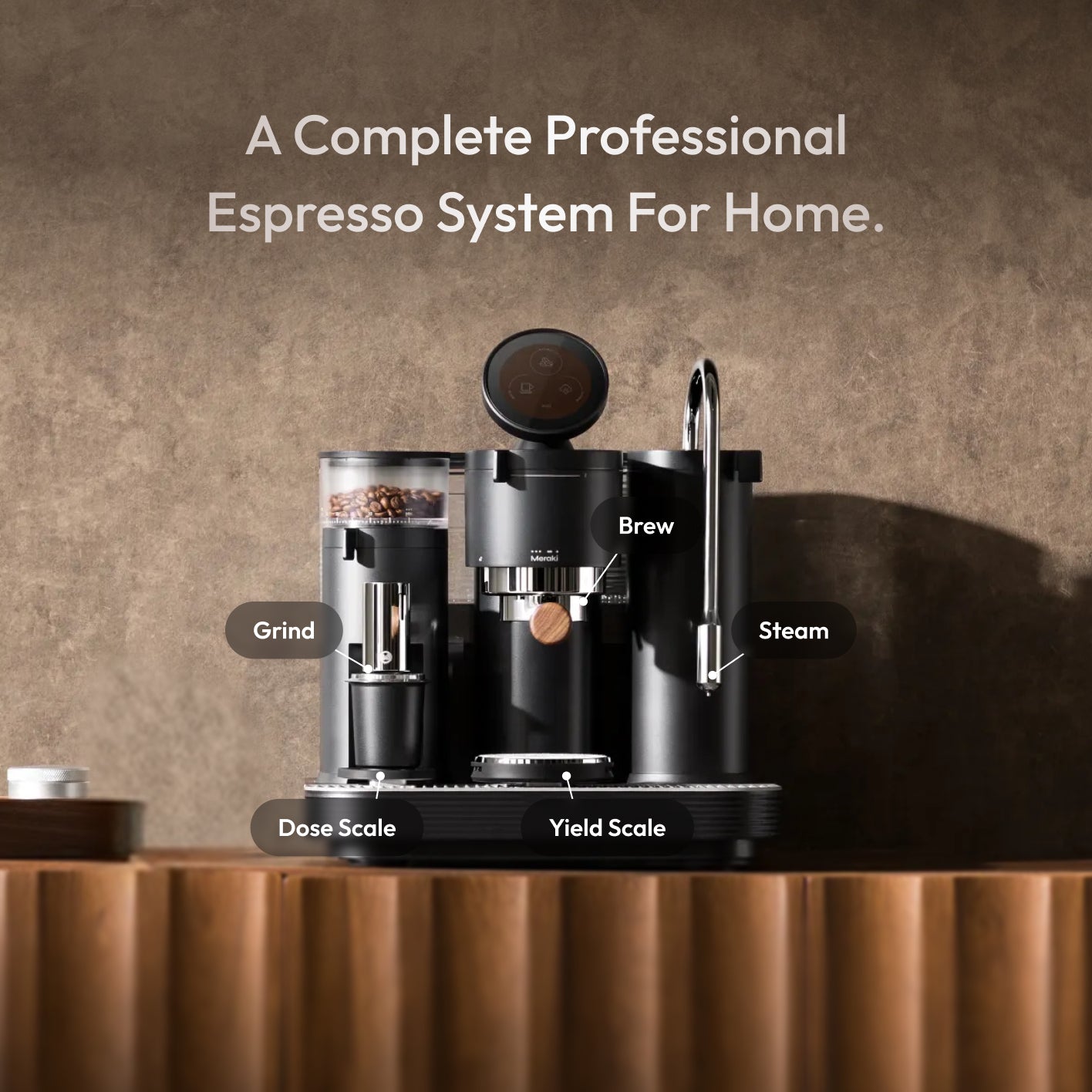
Espresso rewards boring consistency: dose, yield, temperature, and pressure you can trust. Dual boilers, a rotary pump path near 9 bar, built-in scales, and a guided touchscreen workflow exist to make that consistency available without a commercial bar. If that is the counter setup you want, view the Meraki espresso machine. Keep learning in coffee knowledge.
Single vs double without the drama
A single and a double are mostly about dose and basket, not moral seriousness. Many home baskets are happiest near 18 g doubles; forcing a 9 g single in a double basket invites mess. If you want less caffeine, pull a double and share it, make a longer Americano from one shot, or choose a smaller milk drink—do not torture the wrong basket.
Preheating changes first-shot quality more than people admit. Run water through the group, warm the cup, and give boilers time after power-on. Espresso pulled into a cold demitasse loses aroma and tastes muted, which beginners misread as a grind problem. Wipe and purge the steam wand even on black-coffee mornings so old milk films never near the next shot glass.
Storage habits protect crema potential: airtight containers, away from heat, and grinding close to brew time. Pre-ground espresso can work in a pinch but collapses the control that makes “what is espresso” answerable at home. If you chase latte art later, remember art sits on microfoam—espresso definition still starts with the weighed shot underneath. Keep a simple log: dose, yield, time, taste word. Three rows teach more than another gear purchase.
When someone asks whether espresso is “bad for you,” separate brewing definition from personal health context. Authoritative consumer pages discuss caffeine ranges and general coffee habits; they do not crown espresso as virtue or vice. Your serving pattern—shots per day, sleep, and sensitivity—matters more than the dictionary.
Conclusion
Define espresso as pressure-brewed coffee with a short, weighable recipe—then use crema as a clue, not a trophy. Compare it to drip on method and serving size, and spell it espresso even when search suggests expresso.
Practice weighed shots on the Meraki espresso machine, then explore drink builds in espresso menu classics.
FAQ
What is an espresso shot?
An espresso shot is a small, concentrated coffee brewed by forcing hot water through finely ground coffee under high pressure. Home recipes often land near a 1:2 brew ratio in roughly 25–30 seconds, though beans and baskets shift the target.
What does crema mean?
Crema is the golden-brown foam layer on a fresh espresso, made of emulsified oils and CO2. It signals freshness and emulsification, but it is not a perfect quality score by itself—taste still decides.
Is espresso stronger than coffee?
Per ounce, yes—espresso is more concentrated. Per typical serving, a large drip mug can contain more caffeine than a single shot. Strong flavor and caffeine milligrams are related but not identical.
Is it espresso or expresso?
The correct spelling is espresso. “Expresso” is a common misspelling of the same drink. Search either way; order with the standard spelling.
How much caffeine is in a shot?
Many references cite roughly ~63 mg for a typical single shot, with wide real-world variance. Doubles scale with dose. See Meraki’s caffeine article cluster and Harvard or NCA caffeine pages for ranges—not medical advice.


