


Someone swears a tiny espresso hits harder than a mug of drip, while someone else claims tea is “sneakier.” Both arguments mix serving size with concentration. If you care about espresso caffeine content, you need milligrams, ounces, and a few honest variables—not a cafe myth.
This explainer tables single vs double espresso, compares espresso to drip at fair volumes, and covers tea vs coffee for the secondary keywords in this cluster. Meraki already hosts how much caffeine in coffee; this page differentiates with espresso-first math plus a tea comparison table.
Espresso caffeine content: single vs double
A common reference point is roughly ~63 mg per single shot.
Doubles often land near twice that when dose truly doubles, but button labels and basket sizes can break the neat math.
Caffeine dissolves early in espresso extraction, so yield changes matter less than people think—dose and species matter more. Robusta blends can jump higher than arabica. Use Harvard’s caffeine overview and the NCA caffeine page for consumer ranges. This is not medical advice; sensitive drinkers should follow clinician guidance.
| Serving | Typical citation range | What changes it |
|---|---|---|
| Single espresso | ~50–75 mg (often ~63 mg cited) | Dose, species, roast, yield |
| Double espresso | ~80–150 mg common band | True double dose vs long single |
| Espresso in latte/cappuccino | Same as the shots used | Milk does not remove caffeine |
What changes the milligrams
Dose is the biggest home lever: more grounds usually means more caffeine. Species matters—robusta is typically higher than arabica. Roast level changes mass and extraction quirks; lighter roasts are sometimes said to retain slightly more caffeine by mass, but serving differences often swamp that nuance. Yield (ristretto vs lungo) shifts flavor more dramatically than it shifts caffeine for many recipes. Grind and channeling change extraction uniformity, which can nudge results. For general coffee composition, see Coffee & Health and NCA.
Espresso vs drip coffee caffeine
Fair comparisons use the same final ounces.
A single shot in a demitasse is not competing with a 16 oz drip tumbler. Per ounce, espresso wins concentration; per big mug, drip often wins total milligrams.
Example thinking only: one ~63 mg shot vs a 12 oz drip cup that may land near 140–180+ mg depending on brew strength. Two shots in an Americano can close the gap. Always state volume when you argue. Harvard and NCA pages above remain the consumer anchors; USDA databases help when you look up branded bottled teas or milks, not espresso itself.
Coffee vs tea caffeine (comparison table)
Typical brewed coffee outpaces typical tea cups.
Black tea sits in a middle band; green tea usually lower; matcha and long steeps can climb. Energy drinks are a separate category.
| Beverage (typical cup) | Caffeine tendency | Notes |
|---|---|---|
| Espresso single (~1 oz) | ~50–75 mg | High per ounce |
| Brewed coffee (~8 oz) | Often ~80–100+ mg | Varies with brew strength |
| Black tea (~8 oz) | Often ~40–70 mg | Steep time matters |
| Green tea (~8 oz) | Often ~20–45 mg | Usually below coffee |
| Double espresso | Often ~80–150 mg | Depends on true dose |
If your question was “does tea have more caffeine than coffee?” the everyday answer is no for standard cups—with exceptions for unusual concentrates. Green tea vs coffee follows the same pattern. Lifestyle context: Harvard on coffee and EatRight on coffee habits.
How drinks built on espresso add up
Latte, cappuccino, flat white, and breve inherit the caffeine of their shots. Syrup does not cancel caffeine. Larger milk drinks feel gentler but are not lower-caffeine unless shots decrease. Iced drinks dilute flavor with melt but keep the dissolved caffeine. Track shots if you are stacking afternoon Americanos. Browse beans in the beans collection when you want arabica-forward espresso rather than guessing from roast color alone.
Meraki angle (consistent dose and yield)
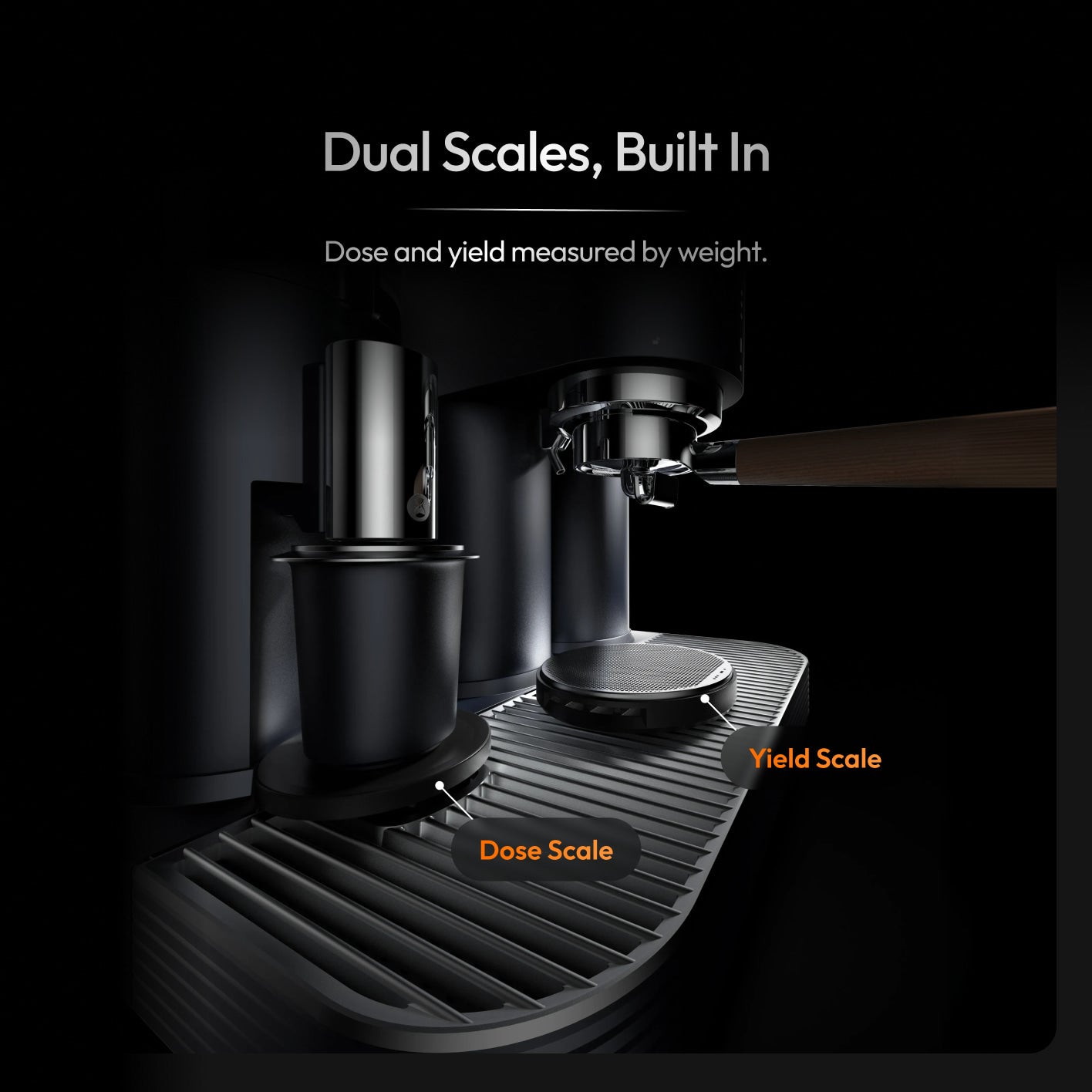
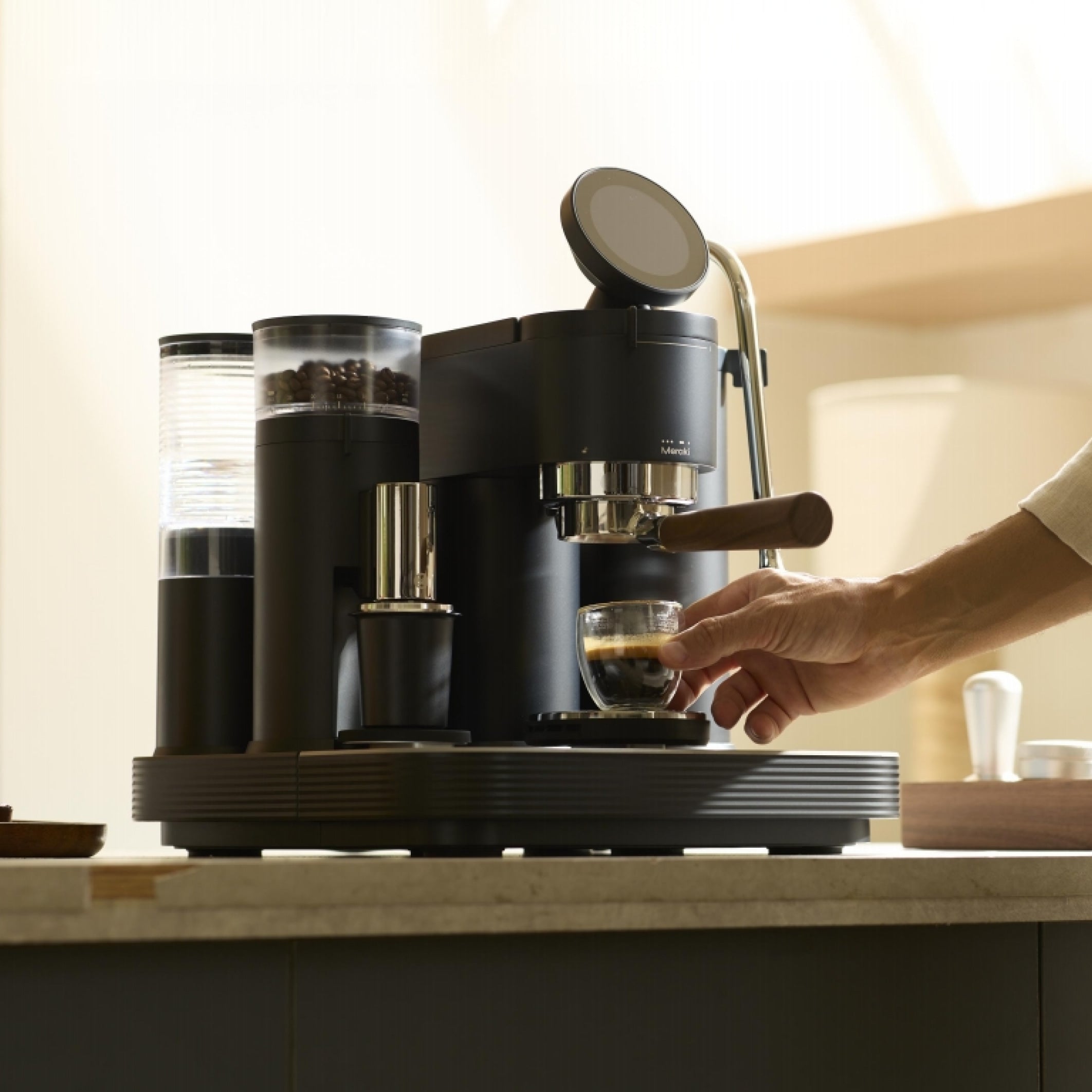
You cannot weigh caffeine at home without a lab, but you can weigh dose and yield so your intake band stays predictable. Built-in scales and guided workflows reduce accidental “long doubles” that feel like singles. Dual boilers keep milk drinks from tempting you into mystery extra shots while you wait. If that consistency is the shopping reason, view the Meraki espresso machine. Technique references: SCA, Coffee Review, and the deeper Meraki note at how much caffeine in coffee.
Reading labels and lab-ish numbers without panic
Packaged cold espresso drinks and bottled coffees print caffeine when regulations and brands cooperate; cafe drinks rarely do. That asymmetry fuels internet arguments. When a bottle says 100 mg and your home double “feels stronger,” remember concentration, sugar, and expectation shape feel. Milligrams are still the fair ledger.
Tea comparisons deserve the same honesty. A strong breakfast tea steeped five minutes in a small pot can surprise you, while a quick green tea bag may sit far below coffee. Matcha whisked as a latte can climb depending on grams of powder. If you switch from coffee to tea hoping for zero stimulation, verify the cup you actually brew.
Timing across the day matters more than a single spike. Two morning shots and an afternoon latte add quietly. Write shot counts if sleep suffers. Decaf espresso still uses the espresso method; caffeine is reduced, not always absolute zero—read decaf process notes when you need certainty. None of this replaces medical advice for pregnancy, anxiety, or medication interactions; use clinician guidance there.
Home consistency is the practical win: same basket dose, same beans for a week, same cup. Your body learns that pattern even if you never send a sample to a lab. Scales turn “I think I used more coffee” into a number you can dial down tomorrow.
Conclusion
Anchor espresso caffeine near widely cited single-shot ranges, scale honestly with dose for doubles, and compare drip or tea only at equal volumes. Use shot count—not drink sweetness—to manage your day.
Keep dose consistent on the Meraki espresso machine, and keep learning in coffee knowledge.
FAQ
How much caffeine is in a shot of espresso?
Many widely cited references place a typical single espresso near roughly 63 mg of caffeine, with real cups varying by dose, species, roast, and yield. Treat that figure as a midpoint, not a lab label for your kitchen.
How much caffeine is in a double?
A double usually scales with dose—often near twice a single when you truly double the grounds. Programmed “double buttons” that only run longer on the same dose may not double caffeine the way a true double basket does.
Does tea have more caffeine than coffee?
Usually no for typical servings. Brewed coffee often lands higher than a standard cup of black tea, and far higher than most green teas. Matchmaking depends on leaf amount, steep time, and cup size—compare equal volumes when you can.
Green tea caffeine vs coffee?
Green tea generally contains less caffeine per cup than coffee. Exact milligrams vary by leaf grade and steep. If you are sensitive, shorter steeps and smaller cups matter as much as the beverage name.
Is espresso stronger than coffee?
Per ounce, espresso is more concentrated in flavor and often in caffeine. Per serving, a large drip mug can out-caffeinate a single shot. Strong taste and total milligrams are different questions.


