


You already know dose and yield matter. The weekday problem is different: every new bag turns into a mini science project, and “perfect” never ships. An espresso ratio tracking machine simple targets habit only helps when you lock a few practical brew-ratio targets, track them across bean changes, and stop over-optimizing before breakfast does.
This Meraki how-to owns simple targets: sticky-note brew ratios, light tracking when beans change, a one-week habit plan, and stop rules that protect the cup you already like. Soft-lane the live espresso ratio explained essay for taste language and ratio literacy. Soft-lane A056 when the missing piece is milk-drink yields under foam. Soft-lane A052 / A053 / A054 / A046 for auto-stop habits, dual-scale roles, ±0.2 g cup translation, and full-station workflow. Use this page when the job is simple brew ratio targets without a lab notebook.
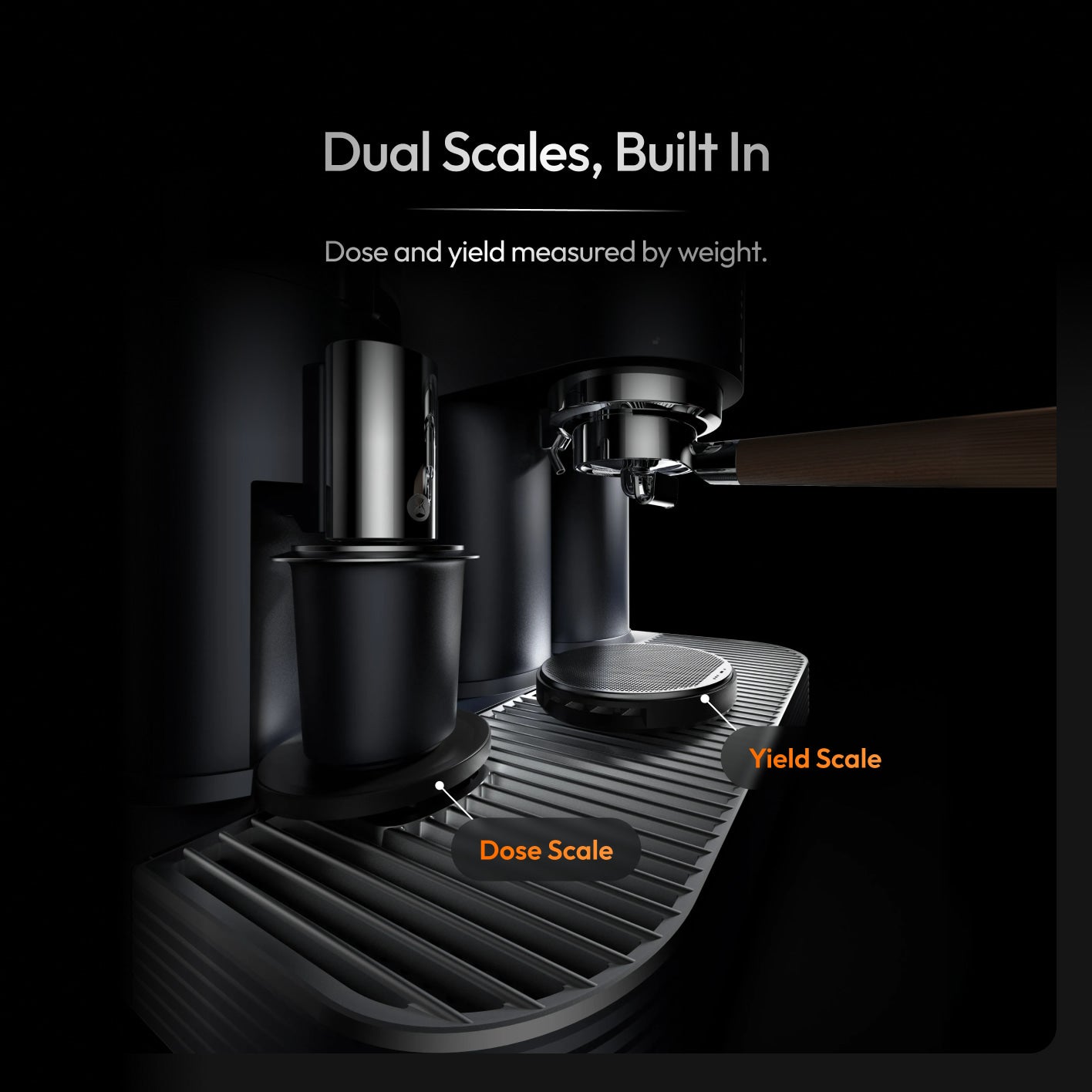
Simple ratio targets start with honest dose and yield mass — tracking is a sticky note, not a second career.
What “espresso ratio tracking machine simple targets” really means for home buyers
Espresso ratio tracking machine simple targets, for home buyers, means a weighing path (built-in or mat) that lets you lock dose and yield as a few practical ratios and re-check them when beans change — not a dashboard of infinite “perfect shot” charts.
Search often lands on calculators, forum threads, and extraction charts that treat every tenth of a gram as destiny. Those pages sell dial-in theater. This page sells weekday ratio discipline: pick a starting band, write the numbers once, track only what changes with a new bag, and refuse rabbit holes that do not improve the cup you drink.
Espresso brew ratio control here means holding in-mass and out-mass in a relationship you can repeat. An espresso machine that weighs shot yield (or a mat that does) is the tool that makes that relationship visible. Literacy from the Specialty Coffee Association and CoffeeGeek’s guides beats any UI that flashes a ratio without saying which grams you froze.
Who this page is for (and who should skip it)
This page is for intermediates — home baristas who already weigh shots some mornings, rotate beans, and want simple brew ratio targets that survive a new bag without over-optimizing.
Soft-skip espresso ratio explained if you still need what a ratio tastes like and how dose/yield language works. Soft-skip A056 for latte/cappuccino milk-drink yield targets. Soft-skip A052 for general brew-by-weight auto-stop habits; A053 for which scale is dose vs yield; A054 for what ±0.2 g changes in the cup; A046 for the full grind→dose→brew chain. Soft-skip dose and yield dial-in when you want a fuller method essay. Come here for: simple targets, bean-change tracking, a week habit plan, and stop rules.
Why this is simple targets (not taste deep-dive or milk yields)
SERP for this query leans community tips, calculators, and “start at 1:2” charts. Soft-lane the live ratio-explained post for taste literacy; soft-lane A056 for milk-drink yields. What stays thin for machine-guides is a how-to that treats simple targets as the product: which bands to write down, how to track across bean changes without a spreadsheet, and when to stop tweaking.
The unique job is simple targets — starting ranges, bean-change rechecks, over-optimize stop rules, one-week practice — not a second taste essay, not a milk-yield guide, not A052/A053/A054/A046. Disclosure: Meraki publishes this guide and sells the Meraki Espresso Machine. Live framing (2026-10-26/27): dual scales (1 kg · ±0.2 g), auto-stop at target yield, grind-to-scale with TIMEMORE® co-developed burrs, dual boilers, rotary framed at steady 9 bar, warm-up about 3–4 minutes, café-menu framing latte ~1:3, cappuccino ~1:2, flat white ~1:2 with microfoam — vendor claims / practical starting points; confirm live. No invented lab-true ratio charts. Channel: machine-guides. Guided station context: Meraki The Espresso Lab.
Tools and settings to prepare first
Stage tools while the machine warms: clean portafilter and basket, a clear cup on the brew/yield scale, a sticky note with three lines — dose grams, yield grams (or ratio), and one taste word — plus the bean name and roast date if you rotate bags.
On Meraki’s current framing, dual boilers heat in about 3–4 minutes and the guided path runs grind → brew → steam → serve — confirm on the live product page. Soft-lane A053 if you cannot name dose vs yield scales; stay here for which simple numbers you write. You need locked dose, locked yield, and a place to note a bean change — not a lab log. NCA brewing basics still start from measured coffee and water; ratio targets are that honesty with a stop rule attached.
Step-by-step workflow
The weekday win is a ratio you can hit twice before you invent a third. Use this order until tracking feels boring in a good way.
- Warm fully, then seat a dry cup on the yield scale. Do not brew into a cold group “to save time,” then blame the ratio for a harsh first shot. Soft-lane A052 if tare/hands-off is still the loudest chaos.
- Confirm dose is already locked. Ratio tracking cannot fix scooping by eye. Soft-lane A055 / dose rituals if dose still drifts; soft-lane A053 if you mix dose and yield roles.
- Write one simple target — not five. Example habit: dose near what your basket likes → yield near a ~1:2 starting ratio for straight espresso (for example 18 g in → about 36 g out). Mark it as a starting point, not a certificate. Soft-lane ratio explained for what that band often tastes like.
- Tare / zero the brew scale. Empty cup, clear zero (or the machine’s ready state). NIST is a reminder: a stop is only as honest as the zero you give it.
- Brew to the yield stop — hands off. Watch for gross failures (gusher, choke). Do not abort because the stream looked a little blond under a clock you already know is only a traffic light.
- Write one taste word, not a paragraph. Sweet / sour-thin / harsh / flat is enough. Soft-lane taste deep-dive on the live ratio essay if you need richer language later.
- On a new bag, reconfirm once — do not rebuild the universe. Keep dose; keep the same ratio target for two shots; change grind only if flow or taste clearly demands it. That is tracking ratios across bean changes.
- Thirty-second reset. Knock the puck, wipe the group area, clear the brew scale. Tomorrow’s target starts with today’s clean zero.
Milk drinks most mornings? Keep a separate sticky family for milk-drink bases — soft-lane A056 — instead of stretching every straight-shot target into a guest lungo.
Targets and ranges that keep you out of rabbit holes
Targets exist so coffee stays a drink. Prefer practical starting ranges, labeled as starting points — never invented “lab truth” charts.
Many homes begin straight espresso near a classic ~1:2 brew-ratio habit (dose → about twice that mass out) while they learn trust. That band is café-culture shorthand and literacy from sources such as SCA research and CoffeeGeek’s espresso guides — not a law every great shot must obey. Meraki’s café-menu framing lists latte about 1:3, cappuccino about 1:2, and flat white about 1:2 with microfoam as drink starting points on current product language — confirm on the product page. Soft-lane A056 when those milk numbers are the whole job.
| Situation | Simple target habit | Over-optimize trap |
|---|---|---|
| Same bag, weekday straight shots | Lock one dose + one yield (~1:2 start) for a week | Hopping 0.2–0.5 g every morning “just to see” |
| New bag, same basket | Keep dose; keep ratio; reconfirm grind after 1–2 shots | Rewriting ratio, dose, and grind in one panic pull |
| Milk drinks | Separate sticky (soft-lane A056) | Stretching straight-shot yield “for more coffee in milk” |
| Guest “a little longer” | Override once, name it, return tomorrow | Letting guests permanently rewrite your sticky |
| Curious weekend | One planned experiment; freeze weekday sticky | Turning every shot into a new ratio |
Espresso brew ratio control without over-optimizing means: same dose, same yield, one taste word — three sticky lines. Dual scales to ±0.2 g (1 kg) support honest tracking, not hundredths-chasing. Time is a traffic light: mid-twenties into low thirties of seconds is a common home band — sweet cup outside it at locked ratio? Keep the taste. Soft-lane La Marzocco USA’s brew-by-weight introduction for mass-over-clock mindset; steal the discipline, not another machine’s numbers.
Common mistakes and quick fixes
Most “my ratios never work” complaints are habit errors, not broken machines.
| Mistake | What you feel | Quick fix |
|---|---|---|
| New bag → new everything | Chaos after every roast | Keep dose + ratio; change grind only |
| Tracking ten ratios | Anxiety, not better coffee | One weekday sticky; one weekend optional |
| Skipping tare | “Same ratio,” different cups | Zero every shot; seat the cup the same way |
| Changing grind and ratio together | No idea what fixed the cup | Freeze ratio for a week; change grind only |
| Dose still scooping | Perfect yield stop, wild ratios | Fix dose honesty first (soft-lane A055 / dose rituals) |
| Treating calculator output as law | Pretty number, wrong cup | Mark every chart as a starting point; taste wins |
| Milk stretch as ratio “fix” | Thin, harsh latte base | Soft-lane A056; do not rewrite straight targets under foam |
If the cup still disagrees after dose and yield are honest, soft-lane dose and yield dial-in — do not invent a second taste encyclopedia here.
How to taste and decide what to change next
Taste answers one question first: did dose and yield land at the sticky target? Missed grams? Fix tare or dose before grind. Honest ratio and a wrong cup? Name the defect once.
Sour-thin / fast flow → finer grind (after the sticky week, not mid-week ratio panic). Harsh-bitter / syrupy crawl → coarser. Flat with “perfect” grams → beans, distribution, or temperature — not a third spreadsheet column. One-sided blonding → puck prep; a weighing path cannot fix an uneven basket.
Change one variable: usually grind on a new bag, almost never weekday ratio until the basket or drink style changes. Note: date, bean, dose, yield, ratio hit?, one taste word. Barista Magazine’s Meraki test drive covers a measured path; still judge your cup. Soft-lane Perfect Daily Grind’s barista category for broader literacy; stay here for simple next moves.
A one-week practice or habit plan
A week installs ratio muscle memory without turning coffee into homework. Keep the same beans for Days 1–5 if you can.
- Day 1 — Write three sticky lines. Dose, yield (or ratio), one taste word. Confirm tare → brew → stop twice.
- Day 2–3 — Freeze the target. Same numbers; two mornings without early aborts or “just two more grams.”
- Day 4 — Grind only if needed. If taste is clearly off at locked ratio, move grind one notch — not the sticky yield.
- Day 5 — Bean-change drill (or simulate). Open a new bag or pretend: keep dose + ratio, reconfirm grind after one or two shots. That is tracking without over-optimizing.
- Day 6 — Guest pace. Pull without narrating the scale; refuse permanent sticky rewrites from “a little longer.”
- Day 7 — Lock and drink. Cut curiosity hops when the cup was already fine. Soft-lane A056 if milk drinks need their own locked bases.
Do not skip warm-up and blame ratio targets for a cold first shot. Soft-lane A052 if the hard part is still trusting auto-stop at all.
When to stop tweaking and just drink
Stop tweaking when tare is automatic, the sticky ratio finishes without hovering, and further gram changes would only serve curiosity.
One roast for weeks? Protect the sticky; re-check on a new bag. Rotate often? Train fast reconfirmation, not a museum of ratios. Taste literacy → ratio explained. Milk-drink yields → soft-lane A056. Auto-stop trust → soft-lane A052. Hardware → dual-scales explainer. Yield literacy → complete brew-by-weight guide. Guided station → Meraki The Espresso Lab.
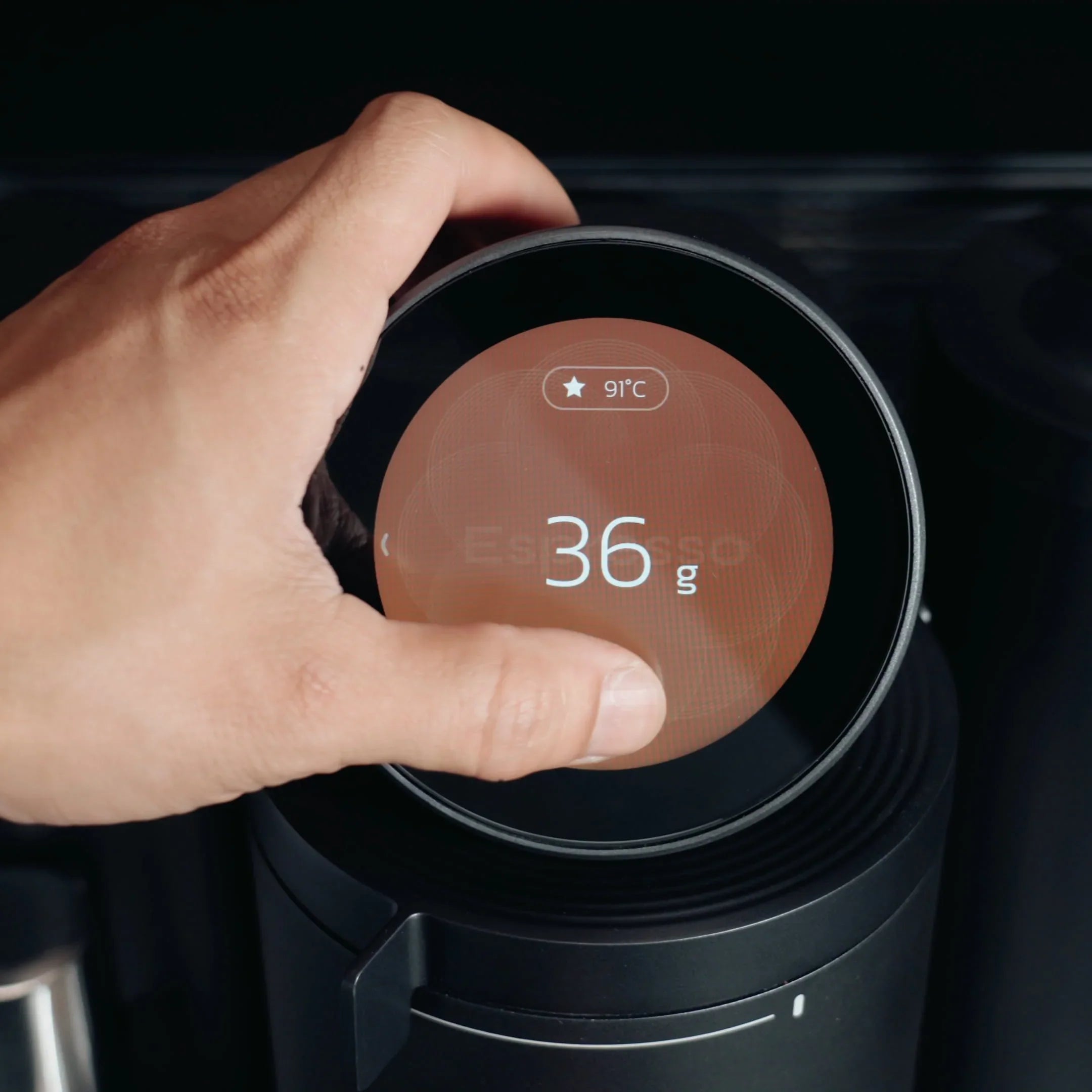
Lock the yield stop that matches your sticky ratio — then drink. Tracking exists to protect the cup, not to replace it.
FAQ
Do I need a different ratio for every new bag? No. Keep the same simple dose and ratio target first; change grind if flow or taste clearly demands it after one or two reconfirm shots. New bags change density and freshness; they do not automatically require a new “perfect” ratio. Soft-lane ratio explained for taste language; use this page for the bean-change tracking rule that stops over-optimizing.
Is 1:2 the only correct home espresso ratio? No — it is a common starting point, not a certificate. Many homes begin near ~1:2 for straight espresso and adjust from taste. Meraki café-menu framing (latte ~1:3, cappuccino/flat white ~1:2 on current language) is likewise a drink starting point — confirm live on the product page. Soft-lane A056 for milk-drink yield targets; do not treat any chart as lab-true.
Can an espresso machine that weighs shot yield replace tasting? No. Weighing makes ratio tracking honest; tasting decides whether the locked target is worth keeping. Auto-stop and dual scales (1 kg · ±0.2 g on current Meraki framing) remove gram chaos so taste can point at grind, beans, or prep. Soft-lane A054 for what ±0.2 g-class accuracy changes in the cup; soft-lane A053 for dose vs yield roles.
How is this different from milk-drink yield control? This page locks simple brew ratio targets for weekday espresso and bean-change tracking. A056 owns latte/cappuccino milk-drink yields and lungo-style pitfalls under foam. Keep separate sticky families if you rotate straight shots and milk drinks — do not stretch every straight target into a home lungo “for more coffee in milk.”
Do I need a spreadsheet for espresso brew ratio control? No. Dose grams, yield grams, bean name, and one taste word on a sticky note are enough for weekday control. Spreadsheets help if you enjoy logs; they are not required. Soft-lane dose and yield dial-in when you want a fuller method without turning breakfast into project management.
If your goal is calmer home espresso, run the sticky target → tare → hands-off stop → one taste word → bean-change reconfirm loop above — and confirm today’s Meraki dual scales (1 kg · ±0.2 g), target-yield auto-stop, café-menu starting ratios, and TIMEMORE® co-developed grinder framing on the Meraki Espresso Machine product page when you want the guided all-in-one path. Explore the station story on Meraki The Espresso Lab. Support: Meraki Support (+1 833 854 9555, Mon–Fri 9 AM–5 PM EST). Shipping, refunds, and warranty: shipping policy, refund policy, warranty claim.
More on this topic: Espresso Ratios, Dose, Yield & Measurement.


