


You can steam silky milk and still serve a washed-out latte — because the espresso base was too long, too short, or different every morning. An espresso machine with yield control for milk drinks only helps when latte and cappuccino yields are locked as drink targets, not when you invent a new “just a little longer” pour under foam.
This Meraki how-to owns milk-drink yields: set auto-stop targets for lattes and cappuccinos, keep brew-ratio control without a spreadsheet, and spot lungo-style home pitfalls that drown the shot in milk. Soft-lane A052 for general brew-by-weight auto-stop habits (tare, hands-off, weekday trust). Soft-lane programmable control and presets for menu/preset literacy — not a second profiles essay. Soft-lane Brew by Weight: The Complete Guide, ratio explained, and grams out per shot for yield literacy. Use this page when the missing piece is milk-drink yield control.
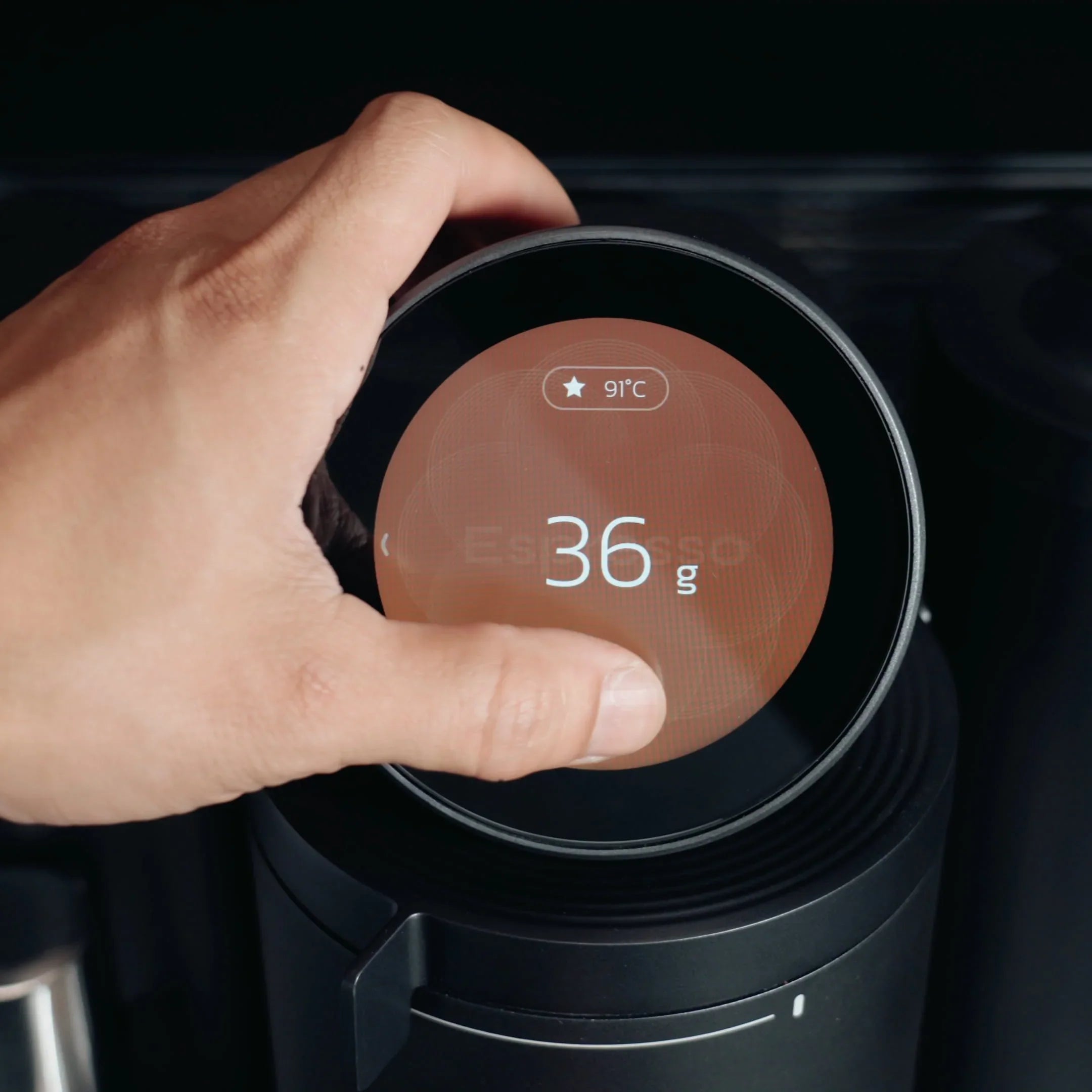
Yield control for lattes and cappuccinos starts with a locked espresso-out mass — milk texture cannot rescue a chaotic base.
What “espresso machine with yield control for milk drinks” really means for home buyers
Espresso machine with yield control for milk drinks, for home buyers, means a machine that can stop the shot at a set espresso mass (brew-by-weight / auto-stop) so the coffee under your steamed milk stays familiar — not a milk-frother shopping list.
Search often lands on frother roundups and product cards that never separate yield from foam. Those pages sell steam wands. This page sells espresso-out discipline for milk drinks: latte and cappuccino bases you can repeat, without hovering over Stop or stretching into a home “lungo latte.”
Yield control means you set grams out and the brew path stops there. Espresso brew ratio control means holding dose and yield in a practical relationship without a lab notebook. Auto stop is the weekday mechanism — not a super-automatic milk menu that hides the portafilter. Literacy from the Specialty Coffee Association and CoffeeGeek’s guides beats any UI that only says “Latte” without saying what mass landed in the cup.
Who this page is for (and who should skip it)
This page is for milk-drink makers — home baristas whose weekday cups are mostly lattes, cappuccinos, or flat whites — who need yield/auto-stop targets that survive foam, not another general espresso essay.
Soft-skip A052 for general auto-stop habits; A053 for dose vs yield roles; A055 for dose automation; A029 / programmable presets for profile usefulness. Soft-skip ratio explained, grams out, and dose and yield dial-in for literacy/method. Soft-skip deep steam / milk-temp pages when those land — milk here is only the reason the espresso base must stay honest. Come here for: yield targets for lattes and cappuccinos, ratio without a spreadsheet, and lungo-style pitfalls.
Why this is milk-drink yields (not general auto-stop habits)
SERP for this query leans frother roundups and “best for milk drinks” listicles. Soft-lane A052 owns general auto-stop habits; programmable-presets content owns menu literacy. What stays thin for machine-guides is a how-to that treats latte and cappuccino yields as the product: which espresso-out targets to lock under foam, brew-ratio control without a spreadsheet, and why “make it longer so the milk tastes stronger” usually fails at home.
The unique job is milk-drink yields — drink-specific targets, ratio-as-habit, lungo pitfalls, taste under foam, a one-week practice — not a second A052 essay, not A053/A055/A029. Disclosure: Meraki publishes this guide and sells the Meraki Espresso Machine. Live framing (2026-10-26/27): dual scales (1 kg · ±0.2 g), auto-stop at target yield, grind-to-scale with TIMEMORE® co-developed burrs, dual boilers, rotary framed at steady 9 bar, warm-up about 3–4 minutes, café-menu framing latte ~1:3, cappuccino ~1:2, flat white ~1:2 with microfoam — vendor claims / starting points; confirm live. No invented lab ratio charts as fact. Channel: machine-guides.
Tools and settings to prepare first
Stage tools while the machine warms: clean portafilter and basket, a clear cup on the brew/yield scale, a milk pitcher, cold milk, and a sticky note with two lines — latte out-mass and cappuccino out-mass (or one shared milk-drink base).
On Meraki’s current framing, dual boilers heat in about 3–4 minutes and the guided path runs grind → brew → steam → serve — confirm on the live product page. Soft-lane A052 for tare/hands-off; stay here for which milk-drink numbers you write. You need locked dose grams, locked yield grams, and enough milk for your cup — not a spreadsheet. NCA brewing basics still start from measured coffee and water; foam is a second layer on that honesty.
Step-by-step workflow
The weekday win for milk drinks is an espresso base that hits the same out-mass before you steam. Use this order until latte mornings feel boring in a good way.
- Warm fully, then stage cup and pitcher. Do not brew into a cold group “to save time,” then blame yield control for a harsh first latte. Seat a clean, dry cup on the brew scale so espresso lands on the weighing surface.
- Confirm dose is already locked. Yield control cannot fix scooping by eye. Soft-lane A055 / dose-side rituals if dose is still the loudest chaos; soft-lane A053 if you are unsure which scale is dose vs yield.
- Set the milk-drink yield target — not a guest “lungo.” Enter the sticky-note grams for today’s drink (latte line or cappuccino line). Do not stretch the stop “so the milk has more coffee” before you have tasted a stopped base under normal foam.
- Tare / zero the brew scale. Empty cup, clear zero (or the machine’s ready state). NIST is a reminder: a stop is only as honest as the zero you give it. Soft-lane A052 if tare discipline is the missing habit.
- Start brew — hands off until auto-stop. Watch for gross failures (gusher, choke). Do not abort because the stream looked a little blond under a milk-drink clock.
- Steam after the stop, not during a panic override. Texture milk for the drink you planned. Do not re-pull a longer shot because foam looked pretty — change the sticky yield later on purpose if the cup is chronically weak.
- Taste the combined drink once. Ask whether espresso still tastes like coffee under milk. If foam washes everything flat, the next change is usually grind or milk volume — not a third spreadsheet column.
- Thirty-second reset. Knock the puck, wipe the group area, clear the brew scale, rinse the pitcher tip. Tomorrow’s latte yield starts with today’s clean zero.
Rotating straight espresso and milk drinks? Keep two sticky families — straight-shot yield vs milk-drink base — not a new guest number every morning.
Targets and ranges that keep you out of rabbit holes
Targets exist so breakfast does not become a café lab. Prefer practical starting ranges, labeled as starting points — not invented “lab truth” charts.
Many homes keep a classic ~1:2 brew-ratio habit for an espresso base under milk (for example a locked dose near what your basket likes → about twice that mass out) while they learn yield trust. That band is café-culture shorthand and literacy from sources such as SCA research and CoffeeGeek’s espresso guides — not a law every great latte must obey. Meraki’s café-menu framing lists latte about 1:3, cappuccino about 1:2, and flat white about 1:2 with microfoam as drink starting points on current product language — confirm on the product page.
| Weekday drink | Yield-control habit | What not to do |
|---|---|---|
| Cappuccino / flat-white style | Lock one espresso-out mass near a ~1:2 starting ratio for your dose | Stretch the shot into a home lungo “for more coffee in the foam” |
| Latte | Lock a milk-drink base (Meraki menu framing ~1:3 as a starting point) so milk does not turn the cup into coffee-flavored milk water | Rewrite grams every morning because the pitcher looked full |
| Guest “just a bit longer” | Override once, write it down, return tomorrow | Let guests permanently turn your latte target into a lungo |
| Straight espresso days | Separate sticky line (soft-lane A052) | Mixing straight and milk targets mid-week without labeling |
Brew ratio control without a spreadsheet means: same dose, same yield, one taste word — three sticky lines. Soft-lane ratio explained for deeper taste language. Dual scales to ±0.2 g (1 kg) support honest auto-stop, not hundredths-chasing under foam. Time is a traffic light: mid-twenties into low thirties of seconds is a common home band — sweet latte outside it at locked yield? Keep the taste.
Lungo-style home pitfall: stretching yield “so the milk has more coffee” often extracts thinner, harsher espresso milk cannot hide. Prefer a locked espresso base plus enough steamed milk for cup size.
Common mistakes and quick fixes
Most “my lattes taste different every day” complaints are yield-habit errors, not broken steam wands.
| Mistake | What you feel | Quick fix |
|---|---|---|
| Stretching yield under milk | Thin, harsh, or watery latte | Lock a milk-drink base; change milk volume or grind next |
| One sticky number for every drink | Cappuccinos fine, lattes washed out (or reverse) | Two lines: latte base vs cappuccino base (or one style only) |
| Hovering / aborting early | “Same recipe,” different cups | Hands off until stop; soft-lane A052 for override rules |
| Skipping brew-scale tare | Yield drifts; blame the frother | Zero every shot; seat the cup the same way |
| Changing grind and yield together | No idea what fixed the latte | Freeze milk-drink yield for a week; change grind only |
| Dose still scooping | Perfect stop, wild milk drinks | Fix dose honesty first (soft-lane A055 / dose rituals) |
| Treating “Latte” preset as yield literacy | Pretty button, chaotic base | Confirm the grams the preset actually stops at |
If the cup still disagrees after yield is honest under foam, soft-lane dose and yield dial-in — do not invent a second steam-technique essay here.
How to taste and decide what to change next
Taste answers one question first: did the espresso base land at target? Missed grams? Fix tare before grind. Honest yield and a wrong latte? Name the defect under milk once.
Sour-thin / fast flow → finer grind (after the milk-drink week, not mid-week yield panic). Harsh-bitter / syrupy crawl → coarser. Flat and milky with “perfect” grams → less milk volume or a richer locked base next week. One-sided blonding → puck prep; auto-stop cannot fix an uneven basket.
Change one variable: usually grind, sometimes milk volume, almost never weekday milk-drink yield until the bag or cup size changes. Note: date, drink, yield hit?, one taste word. Barista Magazine’s Meraki test drive covers a measured path; still judge your cup. La Marzocco USA’s brew-by-weight introduction stresses mass over clock theater — steal the mindset, not another machine’s numbers.
A one-week practice or habit plan
A week installs milk-drink yield muscle memory without turning coffee into homework. Keep the same beans and mostly the same drink.
- Day 1 — Write two sticky lines. Latte base and cappuccino base (or one milk-drink base if you only make one). Confirm tare → brew → auto-stop twice.
- Day 2 — Latte only. Same latte yield; two mornings without early aborts.
- Day 3 — Cappuccino / flat-white style. Use the second sticky line once; change nothing else.
- Day 4 — No lungo rescue. If a guest asks for “more coffee,” override once with a named reason, then return to the locked base.
- Day 5 — Milk volume, not yield panic. If the cup tastes flat, adjust how much milk you steam — not the stop grams mid-week.
- Day 6–7 — Guest pace, then lock. Make drinks without narrating the scale; cut “just two more grams under the foam” when the cup was already fine.
Do not skip warm-up and blame yield control for a cold first latte. Soft-lane A052 if the hard part is still trusting auto-stop at all.
When to stop tweaking and just drink
Stop tweaking when tare is automatic, milk-drink auto-stop finishes without hovering, and further gram changes would only serve curiosity under foam.
One roast for weeks? Protect the sticky yields; re-check on a new bag. Rotate often? Train fast reconfirmation, not a museum of latte presets. Presets → programmable control and presets. Auto-stop trust → soft-lane A052. Hardware → dual-scales explainer. Yield literacy → complete brew-by-weight guide.
My espresso flow rate is too high. What can I do to fix this?
Usually grind finer — not a longer milk-drink yield.
High flow (a fast, blond, thin shot) often means the grind is too coarse, the dose is low, or the puck is poorly distributed. For milk drinks, do not “fix” a gusher by stretching auto-stop into a lungo; that usually makes a thinner base under foam. Soft-lane A052 for hands-off stop discipline; soft-lane dose-side pages if dose is still drifting. Confirm yield hit first, then move grind one notch finer and taste again under the same locked milk-drink target.
What are two shots of espresso with milk called?
It depends on milk volume and texture — not one universal name.
In café language, a double espresso with a lot of steamed milk is often a latte; with less milk and thicker foam it may be a cappuccino; with less foam and a stronger coffee presence it may land near a flat white. Names vary by shop. For yield control at home, label sticky notes by your drink (latte base / cappuccino base), not by arguing internet taxonomy. Soft-lane Perfect Daily Grind’s barista category for broader drink literacy; stay here for grams out under milk.
What kind of milk do you need for an espresso machine?
Any milk you are willing to steam and clean up after — dairy or barista-style alternatives.
Whole dairy milk is the common home starting point for glossy microfoam; many “barista” oat or almond cartons steam more predictably than thin supermarket alternatives. Yield control does not require a special milk SKU — it requires an honest espresso base before steam. Soft-handle only: deep steaming technique and milk-temp sensors belong on their own pages when published; this guide only needs milk as the reason your espresso-out mass must stay locked.
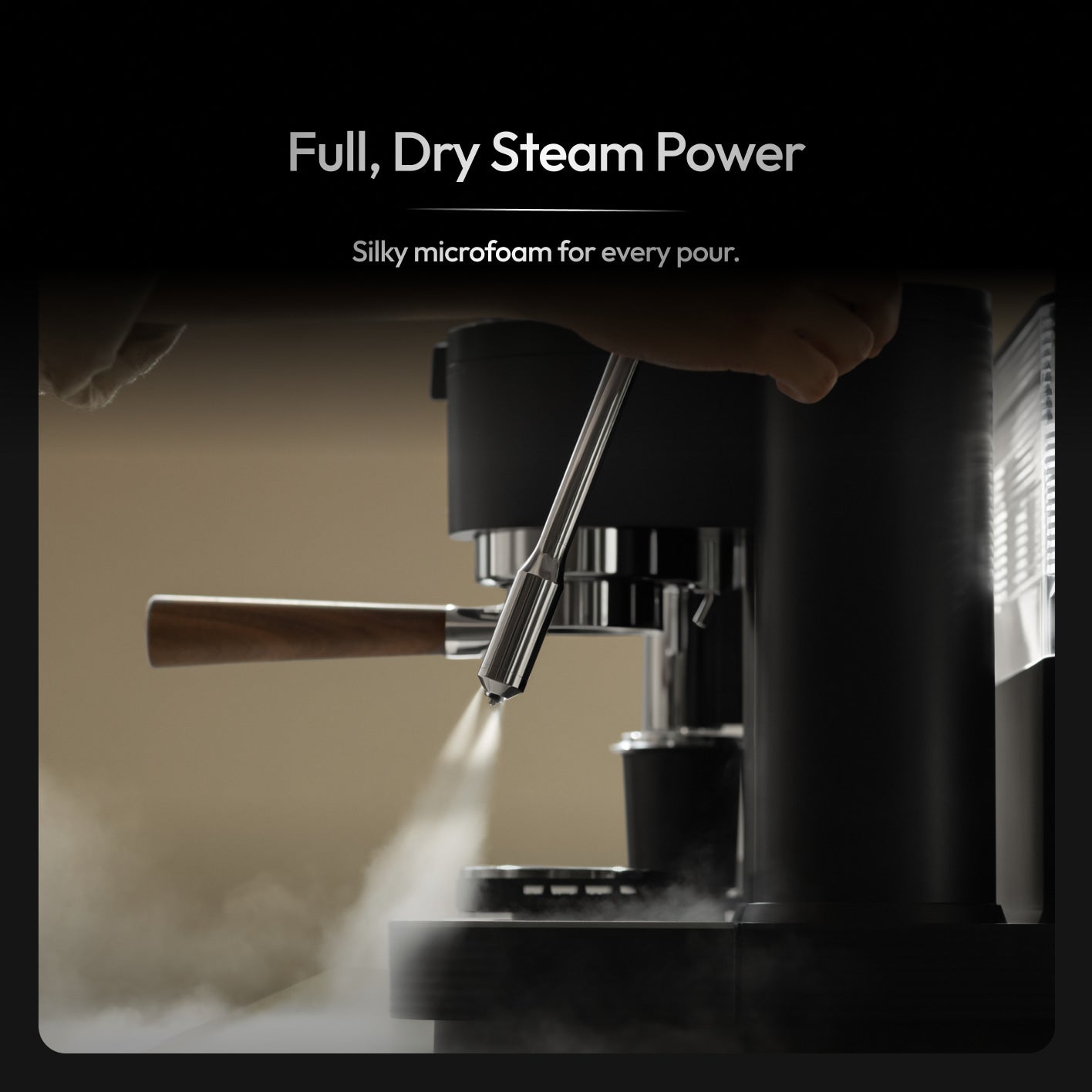
Steam after the yield stop — milk texture is step two; espresso-out mass is still step one for lattes and cappuccinos.
FAQ
Should lattes and cappuccinos use different yield targets? Often yes — many households keep one latte base and one cappuccino (or flat-white) base so milk volume does not force a single compromise shot. Lock both for a week instead of inventing a third number daily. Meraki’s menu ratios (latte ~1:3, cappuccino/flat white ~1:2 on current framing) are drink starting points, not a lab certificate — confirm on the live product page. Soft-lane A052 if you still need general auto-stop trust more than drink-specific numbers.
Is a longer “lungo” yield better under milk? Usually no for home lattes. Stretching yield far past your locked base often extracts thinner, harsher espresso that foam cannot hide. Prefer a familiar espresso-out mass plus enough steamed milk for cup size. Soft-lane grams out and ratio explained for literacy; change milk volume or grind before you turn every latte into a lungo experiment.
Do I need a spreadsheet for brew ratio control? No. Write dose grams, yield grams, and one taste word on a sticky note. That is brew-ratio control for milk drinks. Spreadsheets help if you enjoy logs; they are not required for weekday lattes. Soft-lane dose and yield dial-in when you want a fuller method without turning breakfast into project management.
Does yield control replace steam skill? No. Yield control locks the espresso base; steam skill textures milk. A perfect stop with scorched milk or huge bubbles still makes a weak drink. Soft-lane dedicated steam / milk-temp pages when you need technique depth — this page only insists the espresso-out mass stays honest before you steam.
How is this different from programmable latte presets? Presets can store a drink path; yield control is the grams-out discipline those presets should respect. Soft-lane programmable espresso machine control and presets for what presets actually help. Use this page to choose and lock milk-drink yield targets so a “Latte” button is not a mystery pour.
If your goal is calmer home lattes and cappuccinos, run the milk-drink sticky yield → tare → hands-off auto-stop → steam → reset loop above — and confirm today’s Meraki dual scales (1 kg · ±0.2 g), target-yield auto-stop, café-menu starting ratios, and TIMEMORE® co-developed grinder framing on the Meraki Espresso Machine product page when you want the guided all-in-one path. Support: Meraki Support (+1 833 854 9555, Mon–Fri 9 AM–5 PM EST). Shipping, refunds, and warranty: shipping policy, refund policy, warranty claim.
More on this topic: Espresso Ratios, Dose, Yield & Measurement.


