


What a metal puck screen is for
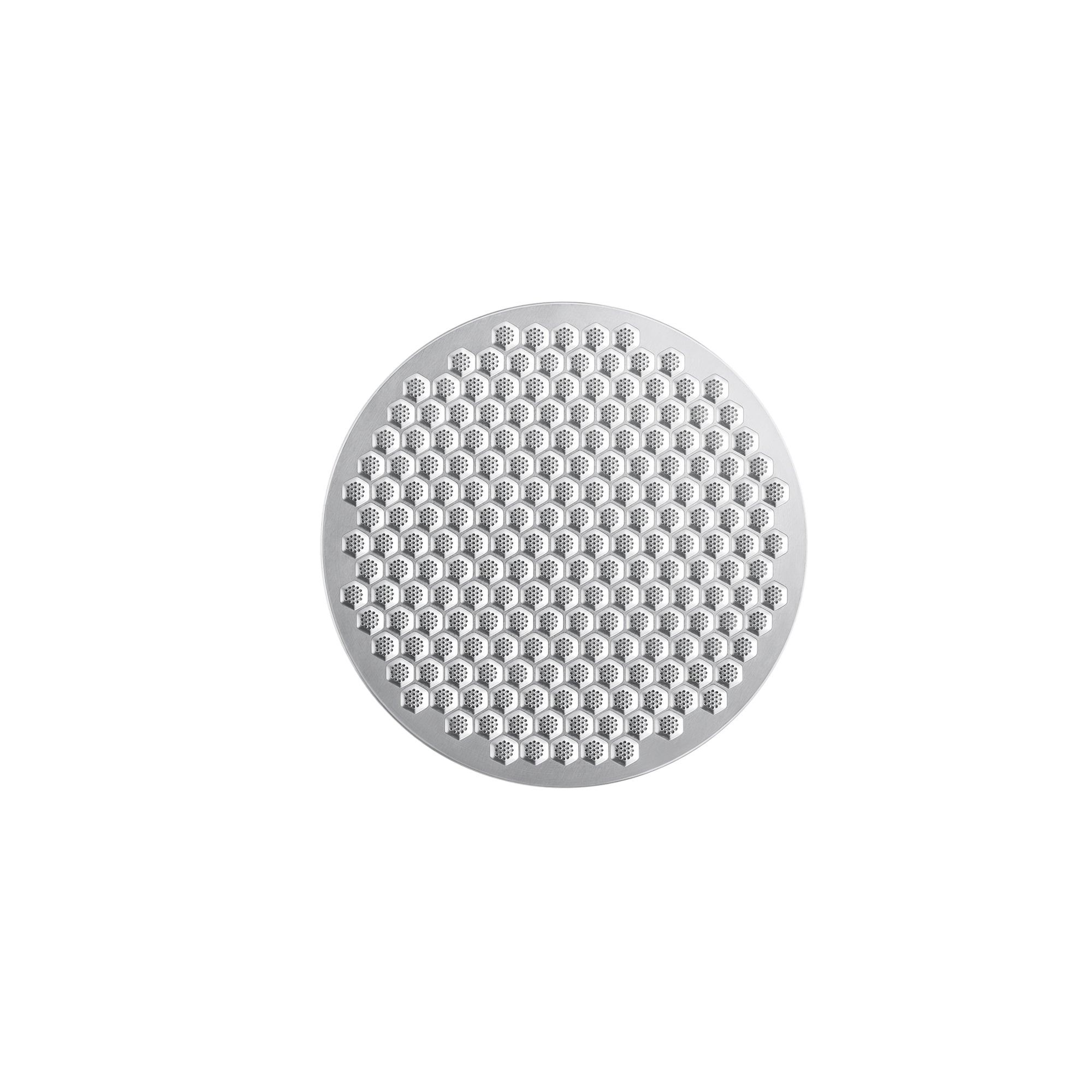
A puck screen is a thin metal disc you set on the tamped coffee, not a part of the group head.
Its usual jobs are practical: helping water spread across the puck, reducing a messy transfer of grounds onto the shower screen, and catching some fines at the top of the bed. Those are possible effects, not guaranteed upgrades. Meraki publishes this guide and also sells a 58mm espresso puck screen; that product is ours, and it is optional. Recheck the live listing for current size notes, checked on 23 November 2026 (Asia/Shanghai).
This page is a decision between two already-documented tools. It will not rewrite a dedicated puck-screen explainer, a paper-fit guide, or a shower-screen cleaning article. If your only question is how a disc differs from the machine’s shower screen, start with those existing pages and come back here when you are choosing paper versus metal.
A screen also has a thickness. On a basket that is already very full, that extra layer can reduce headspace and make a tight, messy puck worse. If the disc sits like a lid under the shower screen, reduce the dose slightly or skip the tool rather than forcing it. Paper is thinner, but a wrinkled sheet can take up height in a different way. In both cases, look at the locked-in portafilter and the spent puck, not at a marketing photo.
What a paper filter in the basket is for
Paper in the basket is a disposable layer, used on top of the puck, under it, or occasionally both.
People reach for paper to catch fines, change how the puck releases, or keep the group a little cleaner. Placement is its own topic — Meraki already has a guide to paper on top versus on the bottom — and this article will not retell that lecture. Fit comes first. A disc that bunches, leaves a dirty ring, or does not sit in your 58mm portafilter basket will not give you a fair test. The existing paper-filter fit guide is the place to confirm diameter before you buy a stack.
Paper is a consumable. A metal screen is reusable if you clean it. That difference matters more than most taste slogans.
Mess, shower-screen gunk, and stuck pucks
If the mess is on the shower screen, either tool can be a test — after you have cleaned the group honestly.
Grounds stuck to the shower screen are often a dose, headspace, or cleaning problem first. Official shower-screen cleaning and replacement guidance belongs in that routine. A puck screen or a top paper can then be a reasonable experiment if the group is already cared for and pucks still plaster themselves to the screen. Neither tool is a reason to skip brushing the group.
If the mess is only in the knock box — a wet, crumbling puck that will not drop — paper under the puck is sometimes used as a release layer. That is a different complaint from a dirty shower screen. Match the tool to the mess you actually have.
| The mess you have | A metal puck screen is a fair try when | Paper in the basket is a fair try when |
|---|---|---|
| Grounds on the shower screen after a shot | The group is already clean, and you want a reusable disc on top of the puck | You want a disposable top layer and do not mind replacing it every shot |
| A puck that will not knock out cleanly | Usually not the first fix — check dose and grind first | A correctly sized bottom paper is the experiment some people run, after fit is confirmed |
| Already even, clean shots | Optional curiosity, not a requirement | Optional curiosity, not a requirement |
| A grind or dose that is clearly off | No — change the recipe first | No — change the recipe first |
Taste claims you should test, not assume
Clearer cups, sweeter shots, and “more crema” are hypotheses, not results you can borrow from a forum thread.
Paper can filter fines; a metal screen can change how water first meets the puck. Either change may also slow the shot slightly or shift the way the coffee tastes for reasons that have nothing to do with quality. The only honest test is your coffee, your basket, and a few days of the same dose. Brewing context from the Specialty Coffee Association education hub and the National Coffee Association’s brewing overview is a reminder that espresso is a set of variables, not a single accessory.
If you cannot taste a difference you would keep, you do not need the tool. That is a valid outcome.
Flow, time, and when either tool slows a shot
Adding a layer can add resistance. Treat a time change as information, not a fault by itself.
If the shot suddenly runs long after you add paper or a screen, do not immediately grind coarser as a panic move. Note the time, taste the cup, and decide whether the new flow is useful. If the shot chokes or spatters, remove the extra layer and return to the recipe that already worked. A layer that does not sit flat will create its own channel.
Measurement caution from sources such as NIST is only a reminder to trust a documented diameter over a guessed trim. Household pages such as Energy.gov will not time your shot.

Cleanup and ongoing cost
Paper is cheap per pack only if you ignore the stack you will throw away. A screen is cheap only if you will clean it.
Rinse or brush a puck screen after each use so oils and fines do not bake into the mesh. A neglected screen becomes a dirty flavor source. Paper should be food-contact coffee paper, sized for the basket, and discarded after the shot — do not reuse a wet disc. This article will not invent a price comparison; compare live listings on the day you buy, and count your own time.
If you will not clean a screen, paper may be the more honest choice. If you dislike consumables, a correctly sized metal screen may be the more honest choice.
Travel and tasting flights are a practical edge case. Paper is easier to pack in a sleeve and throw away. A metal screen is better in a daily home tray if you already have a rinse habit. Do not buy a year’s box of paper for a test you might abandon in three days; start with a small quantity and a confirmed diameter.
When you might use both — and when that is overkill
Using paper and a metal screen together stacks two layers on one already small bed.
Some people do it. Many do not need to. If one tool already solved the mess, adding the second is usually ritual. If the shot gets slower or harder to repeat, take a layer out. Overkill is any combination you cannot explain in one sentence: “I use this because of that mess.”
On a Meraki espresso machine, confirm basket and accessory fit on the live pages rather than from a kit photo. Broader coffee context from the National Coffee Association’s About Coffee site will not choose the disc for you.
A decision table
Choose by the job, then test. Do not buy both “just in case” on the first morning.
Start with cleaning and a sensible recipe. Then pick one tool that matches the remaining mess. Keep the other in reserve only if the first test is clearly incomplete. The table above is the habit filter; the three-day test below is how you prove it.
How to run a fair three-day test
Keep the coffee, dose, and grind target the same, and change only the layer.
- Day one: brew your normal routine with no paper and no puck screen. Write down time, mess, and taste.
- Day two: add only one tool, correctly sized, and note whether the shower screen or the knockout improved.
- Day three: repeat the better setup, or briefly try the other tool alone — not both at once — if day two solved nothing.
- If you cannot explain a keep-worthy difference, stop. Return the extra layer to the drawer.
- If a screen stays in the rotation, clean it as often as you use it.
Conclusion
A metal puck screen and a paper filter can both tidy a messy puck, but they are different tools: reusable disc versus disposable layer, usually aimed at slightly different messes. Neither one fixes grind. Confirm fit, clean the shower screen first, and keep only the option that still earns its step after a short, fair test. Meraki’s live puck screen and the existing paper-fit guide are the practical starting points, not a requirement to use both.
FAQ
Is a puck screen better than a paper filter for espresso?
Not automatically. A metal puck screen is a reusable disc on the puck; paper is a disposable layer. Choose by the mess you have, confirm fit, and test for a few days rather than assuming a taste upgrade.
Will a puck screen or paper filter fix channeling?
Usually not by itself. Channeling is more often grind, dose, or uneven prep. Use either tool only after those basics are stable, and treat it as a cleanup or spreading aid, not a cure.
Can I use a paper filter and a puck screen together?
You can, but it is often overkill. Stacking two layers can slow the shot and add ritual without a clear benefit. Test each tool alone first, and keep both only if you can explain the job each one is doing.
Does a puck screen replace cleaning the shower screen?
No. The shower screen is part of the machine and still needs official cleaning. A puck screen or top paper may reduce how much coffee reaches it, but it does not replace that care.
How should I check fit before buying paper or a 58mm puck screen?
Compare the actual diameter to your basket, not to the “58 mm” nickname alone. Recheck the live product page or the paper-fit guide, and do not force a disc that bunches or leaves a dirty ring.


