

Professional Brewing Hardware
Dedicated brew and steam boilers, PID temperature control and a commercial-grade rotary pump provide a stable foundation for espresso and milk drinks.
 [countryName]? Switch to your local site for purchasing and region-specific info.
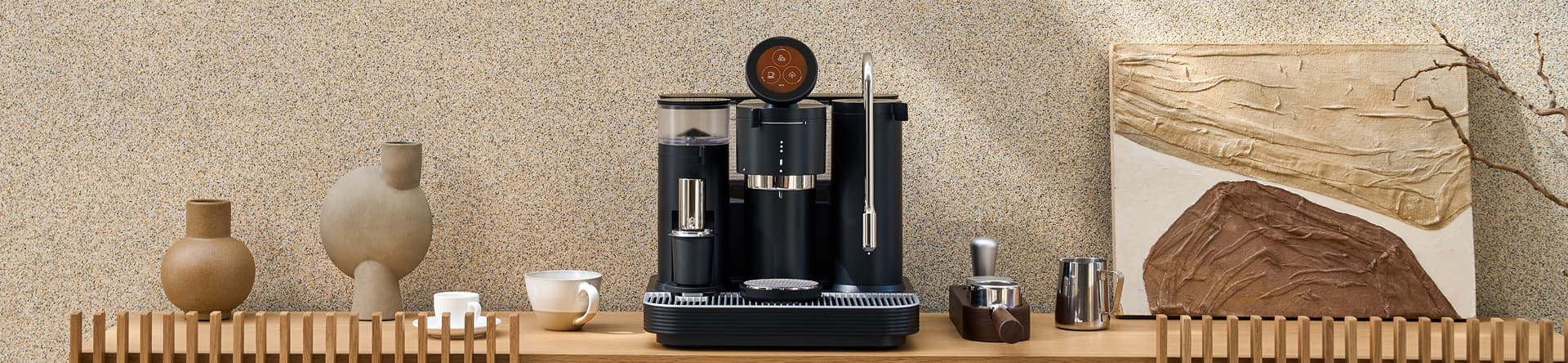
Build a serious home espresso setup without buying a separate machine, grinder and pair of scales. Meraki combines professional-style brewing hardware and a connected, weight-based workflow in one complete espresso system under $2,000.
 Sale
Sale
Dual boilers · Rotary pump · Built-in grinder · Dual precision scales
A complete professional-style espresso system for home, combining independent brewing and steaming with espresso-focused grinding, weight-based dosing and real-time yield measurement.
Meraki combines the essential hardware and measurement tools of a serious home espresso setup in one integrated machine under $2,000.

Dedicated brew and steam boilers allow you to extract espresso and texture milk at the same time. A commercial-grade rotary pump maintains smooth, stable nine-bar pressure for repeatable shots with quieter operation.

An espresso-focused grinder measures each dose by weight, while a second integrated scale tracks the espresso yield in real time. Grind, measure and brew without adding a separate grinder or pair of scales to your counter.

Instead of budgeting separately for a machine, espresso grinder and measuring tools, Meraki brings the core workflow together in one system. Essential preparation accessories are included so you can begin building repeatable recipes from beans to cup.
Built as a complete system
A home espresso budget is rarely limited to the machine. Grinding, weighing, brewing and steaming all require capable equipment. Meraki brings those essential steps together so you can build a serious setup without filling the counter with separate devices.
Dedicated brew and steam boilers, PID temperature control and a commercial-grade rotary pump provide a stable foundation for espresso and milk drinks.
The built-in grinder is designed for espresso adjustment, removing the need to budget for another large appliance before you can begin dialing in fresh coffee.
One integrated scale measures the ground dose and another tracks the espresso yield, helping turn a good shot into a repeatable recipe.
Look beyond the machine price when planning a home espresso station.
| Setup component | Separate setup | Meraki system |
|---|---|---|
| Espresso machine | Purchased separately | Included |
| Espresso grinder | Additional purchase | Built in |
| Dose scale | Additional purchase | Integrated |
| Brew scale | Additional purchase | Integrated |
| Workflow | Multiple devices | One connected system |
Explore the current configuration, included accessories and regional availability.
Buying guidance
Yes, but the total depends on what is included. A machine priced below $2,000 may still require a separate espresso grinder, scales and preparation tools. Meraki integrates the grinder and two scales into the same system.
Yes. Grind consistency and fine adjustment directly affect espresso flow and flavor. Buyers comparing prices should include a capable espresso grinder in the total setup cost, whether it is separate or built into the machine.
Some machines in this price range use true dual boilers, while others use a single boiler, thermoblock or heat-exchange design. Meraki has dedicated brew and steam boilers, allowing extraction and milk steaming to happen at the same time.
A rotary pump is designed to provide smooth, stable brewing pressure with relatively quiet operation. Meraki uses it to maintain the nine-bar pressure standard associated with professional espresso extraction.
No. Meraki is a semi-automatic espresso system. It assists with grinding by weight, brewing by weight and milk-temperature feedback, while the user still prepares the portafilter and controls the hands-on workflow.
It is best suited to home baristas upgrading from an entry-level machine, households that regularly prepare milk drinks and buyers who want more measurement and control without assembling several separate appliances.
Choosing an espresso machine under $2,000 involves more than comparing prices or counting features. Espresso quality depends on how well the grinder, dose, temperature, pressure and final beverage weight work together. A machine should also match the drinks you prepare, the amount of counter space available and the level of hands-on control you want to develop.
The under-$2,000 category includes very different products. Some are compact appliances designed for convenience, some are traditional prosumer machines sold without a grinder, and others combine several parts of the workflow. Comparing the complete system helps reveal what is included in the purchase price and what will require an additional investment.
A traditional setup often begins with the espresso machine and then adds a capable grinder, dosing scale, cup scale and preparation tools. This modular approach can be ideal for users who already own equipment or want to select every component independently. New buyers, however, may discover that the total setup exceeds the original machine budget.
Meraki is designed as a complete espresso system for home. The espresso-focused grinder, grind-by-weight scale and brew-by-weight scale are integrated with the brewing controls. This reduces the number of separate devices involved while keeping important recipe variables visible.
Boiler configuration affects both temperature control and daily workflow. A single heating system generally has to change temperature between brewing espresso and producing steam. A true dual boiler espresso machine assigns those tasks to independent systems, allowing extraction and milk steaming to happen simultaneously.
This capability is particularly useful for households that prepare lattes, flat whites or cappuccinos. It reduces waiting between steps and makes preparing several drinks more manageable. Someone who only makes occasional straight espresso may place less value on simultaneous brewing and steaming.
High maximum-pressure numbers are commonly used in appliance marketing, but espresso is not improved simply by applying more bars. Controlled pressure through the coffee puck is more meaningful. Meraki uses a commercial-grade rotary pump to maintain smooth nine-bar extraction pressure with relatively quiet operation.
Pressure must still work together with puck preparation, grind size, dose and water temperature. No pump can correct every preparation problem, which is why measurement and adjustment remain important in a professional-style home espresso workflow.
Espresso requires fine and controlled grind adjustment. Small changes in grind size can alter how quickly water moves through the puck and therefore change flavor, texture and extraction time. A general coffee grinder may not offer the range or precision needed for this process.
Buyers comparing the best espresso machines under $2,000 should check whether the grinder is included and how dosing is controlled. Meraki's built-in grinder works with an integrated scale so it can stop at the selected coffee weight. This provides a measurable starting point for each recipe.
Shot time is useful, but it does not show how much liquid espresso has entered the cup. Measuring both the dry dose and brewed yield creates a brew ratio that can be recorded and repeated. If the flavor needs to change, the user has clearer information about which variable to adjust.
Meraki includes a second scale below the cup to track yield during extraction. The system can stop at the selected target weight, helping the same recipe remain more consistent across multiple preparations. This does not remove the craft of espresso; it makes the result easier to understand and reproduce.
A professional home espresso machine under $2,000 can suit someone upgrading from an entry-level appliance, a household that prepares several milk drinks or a developing home barista who wants more control over grind, dose, yield and temperature. An integrated format also appeals to users who want serious capability without a counter filled with separate equipment.
Before purchasing, consider drink preferences, daily volume, available space, cleaning routine and whether you prefer a hands-on or fully automatic process. Meraki is semi-automatic: it guides and measures key steps while leaving portafilter preparation and milk texturing in the user's hands. Buyers considering higher-performance home equipment can also review what defines a professional espresso machine for home.