


Implementation path: identify your group diameter → choose a matching portafilter and basket dose range → distribute and tamp level → lock into the group → pull and read the flow. Failure scene: buying a beautiful 58 mm bottomless portafilter for a machine that takes a smaller size, then blaming “espresso accessories” when nothing locks in place.
This explainer owns the portafilter—definition, size, basket, spouted vs bottomless, and basic tamping. Knock boxes and milk jugs stay out of deep sections on purpose. Prior Meraki reading: what is a portafilter and why it matters; hub machine guides.
What a portafilter is (direct answer)
A portafilter is the handled filter holder that carries a basket of ground coffee into the group head.
It is the physical interface between your grind and tamp craft and the machine’s pressurized water.
Without a correctly sized portafilter and basket, other espresso accessories cannot rescue the shot. Literacy: NCA, SCA.
Why size—especially 58 mm—matters
Diameter must match the group head. The 58 mm ecosystem is large: baskets, tampers, distributors, puck screens, and bottomless tools are widely stocked. Smaller consumer sizes can still make excellent espresso; they simply narrow third-party choices. Measure before you shop. Education: SCA education.
Espresso tamping tools must also match diameter. A 58 mm tamper on a smaller basket bridges edges and invites channeling. Compatibility is boring and decisive.
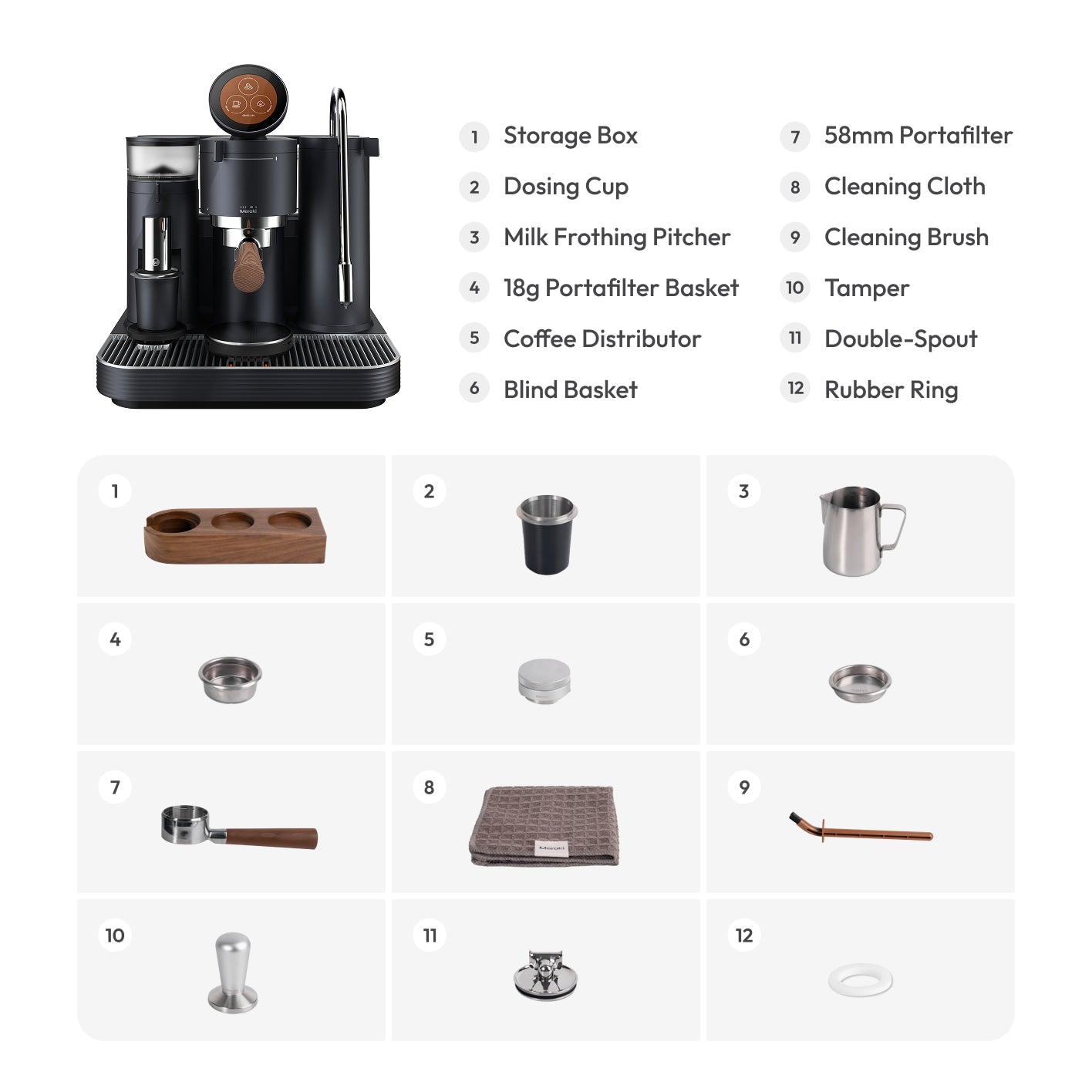
Basket types and dose ranges
Single and double baskets target different dose windows; ridged vs ridgeless designs change how baskets seat; precision baskets tighten hole patterns for more even flow when grind and distribution are already careful. Overfilling a small basket or starving a large one invites channels. Weigh dose when you can—scales beat eyeballing. Sensory language: Coffee Review.
Spouted vs bottomless decision
| Type | Pros | Watch-outs |
|---|---|---|
| Spouted | Directs flow into one or two cups; tidier milk-drink service | Hides some channeling visuals |
| Bottomless | Shows jets and blonding; excellent feedback | Messier; unforgiving of poor distribution |
Neither style creates pressure alone—the pump and puck do. Water chemistry still shapes extraction: CDC, EPA WaterSense.
Tamping and channeling visibility
Level the bed, apply firm consistent pressure, and stop theatrical polishing. On bottomless portafilters, angled jets scream channeling—fix distribution or grind before buying a heavier tamper as superstition. WDT tools and distributors help when clumps persist. Habit context: Harvard on coffee, Coffee & Health.
Cleaning cadence
Knock pucks promptly, rinse basket and ears, wipe the face that seals against the group, and follow your machine’s blind-basket backflush guidance. Oils varnish flavor if you only rinse when something tastes off. Detachable spouts need occasional deep cleans too.
Comparison table: what changes results
| Variable | Effect | Home tip |
|---|---|---|
| Diameter match | Locks and seals | Verify before buying parts |
| Basket dose range | Flow and contact time | Weigh; respect capacity |
| Spouted vs bottomless | Feedback vs neatness | Learn on bottomless; serve on spouts if you prefer |
| Cleanliness | Oils and stuck fines | Rinse daily; deep-clean on a schedule |
| Tamper fit | Edge gaps cause channels | Match basket ID |
Common misconceptions
Bottomless automatically tastes better. Any 58 mm part fits every machine. Portafilter brand matters more than grind quality. Caffeine myths still track dose more than spout style—NCA caffeine, Harvard caffeine.
Where Meraki fits
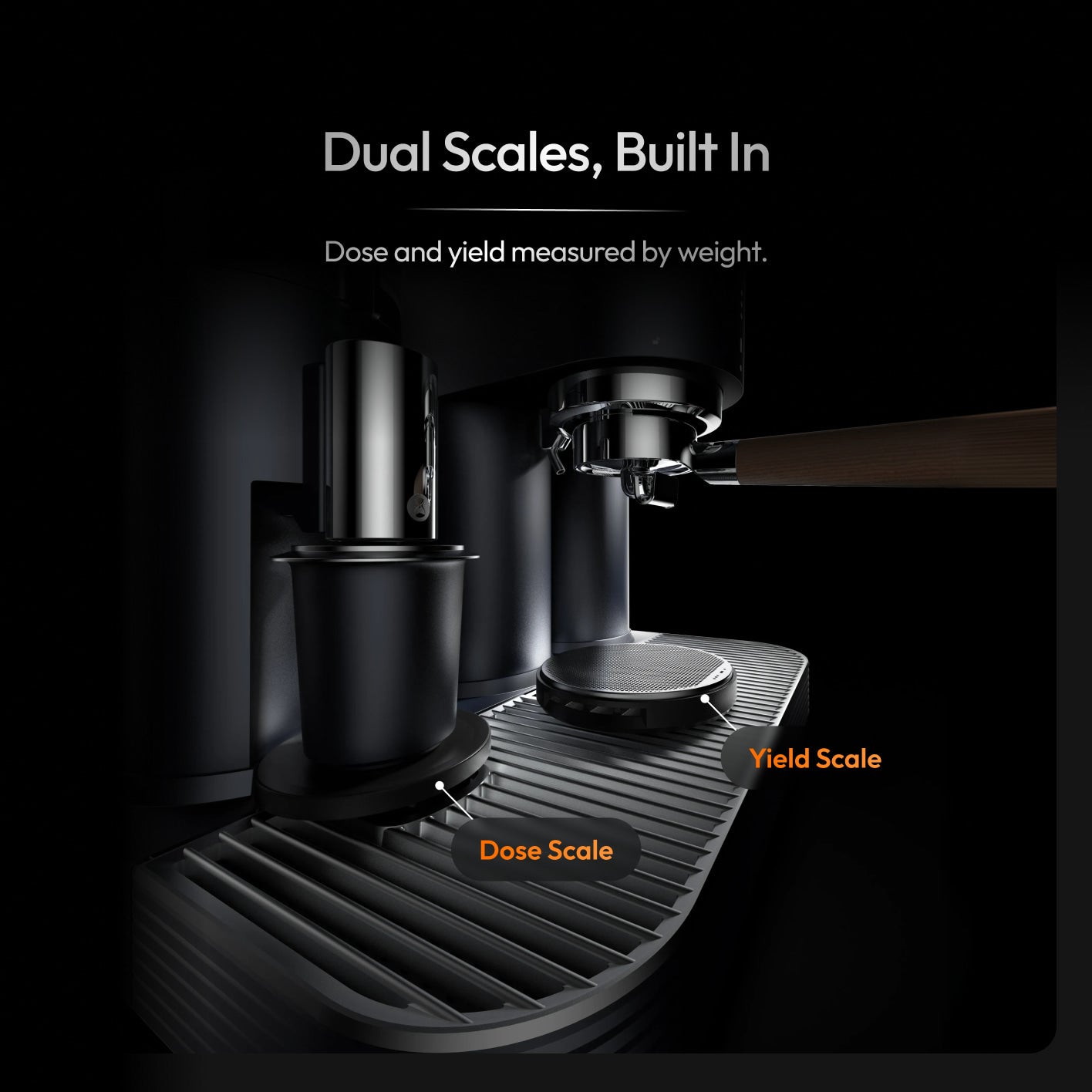
Meraki’s espresso system is built around a standard 58 mm-class portafilter ecosystem with baskets and related tools in the accessories line—confirm live product details before ordering spares. Built-in dual scales help you hit basket dose targets. Disclosure: Meraki is the brand example here, not a secret multi-brand shootout. Product: Meraki espresso machine; tools: accessories collection. Next workflow piece: knock boxes guide. Craft: Perfect Daily Grind. Beans: beans collection.
Espresso accessories that belong beside the portafilter
Once size is correct, a matching tamper, distributor or WDT tool, and clean towels do more for shot quality than collecting novelty handles. Puck screens and blind baskets support cleaning and flow experiments. Keep the knock box and milk jug nearby, but learn each tool on its own page so this portafilter explainer stays focused. Browse the accessories collection for 58 mm-compatible pieces rather than mixing diameters in one drawer.
When shots taste hollow despite a fancy bottomless portafilter, return to grind, distribution, and dose before shopping another basket. Tools reveal problems; they rarely invent extraction. Log one change at a time for a week and you will outpace most accessory impulse buys.
Home workflow from empty portafilter to locked group
Heat the machine, dose into a dry basket, distribute, tamp, purge water if your routine calls for it, lock in, and brew to your yield target. Unlock, knock, rinse, wipe the ears, and reseat for the next drink. That loop is the real “portafilter skill,” not a single heroic tamp video. If the handle loosens mid-shot, stop and check gasket condition and seating rather than forcing chrome into soft metal.
Choosing baskets without collecting metal souvenirs
Start with the basket that matches your typical dose and machine guidance. Add a precision basket only after grind and distribution are stable enough to show the difference. Bottomless portafilters are feedback mirrors; spouted portafilters are service tools. Owning both is reasonable; owning five near-identical doubles is rarely a taste upgrade.
Gasket health matters as much as basket hype. A worn group gasket leaks, sputters, and mimics channeling. Replace gaskets on the maker’s schedule rather than blaming every fault on grind. Wipe the portafilter ears so coffee oils do not bake into sticky films that make locking feel gritty.
When friends ask why 58 mm matters, translate: it is an accessory language. Speaking 58 mm means tampers and screens are easy to source. Speaking a rarer size means planning purchases carefully. Neither diameter guarantees greatness; both demand good coffee and honest dialing.
Portafilter myths that waste money
Heavier tampers do not fix channeling by mass alone. Gold finishes do not change pressure. Bottomless portafilters do not increase crema by magic—they show what your puck already does. Spend first on beans, burr grinding, and a correctly sized basket; spend second on feedback tools; spend last on cosmetic twins of gear you already own.
If your machine ships with a solid spouted portafilter, learn on it, then add bottomless when curiosity peaks. Jumping straight to messy diagnostics on day one frustrates new owners who still struggle with grind. Sequence kindness into the learning curve.
Conclusion
Match portafilter size to the group, pick baskets for your dose, use bottomless as feedback when you want it, and keep the tool clean so grind and distribution can do their jobs.
See the Meraki espresso machine and browse espresso accessories.
FAQ
What size portafilter do I need?
Match the portafilter diameter to your machine’s group head—commonly 58 mm on many prosumer and commercial-style home machines, with smaller diameters on some consumer models. Measure or check the manual; accessories are not universal.
What is a bottomless portafilter?
A portafilter without spouts, so you can see the extraction stream from the basket. It is a diagnostic and style tool, not a requirement for good espresso, and it makes messes more visible when channeling happens.
Portafilter vs group head?
The group head is the machine’s locking brew interface; the portafilter is the handled filter holder you lock into it. Baskets sit inside the portafilter.
How often should I clean a portafilter?
Knock spent pucks after shots, rinse the basket and ears regularly, and deep-clean oils on a schedule that matches your shot volume. Blind-basket backflushing follows your machine’s guidance.
Do I need a precision basket?
Precision baskets can improve consistency when your grind and distribution are already careful. They do not fix a blade grinder or a badly channeled tamp.


