


A small kitchen does not necessarily need the smallest espresso machine. It needs an espresso setup that leaves enough room to actually make coffee. A narrow machine can still create a crowded counter if it requires a separate grinder, external scale, water jug and several accessories. An integrated machine may measure slightly larger on paper yet occupy less total working space.
How Much Space Should You Really Reserve for Espresso?
Measure three things separately: the machine footprint, working clearance, and storage.
You need enough room to insert and remove the portafilter, place a cup, use the steam wand and empty the drip tray. A useful kitchen layout leaves a small clear patch beside the machine rather than using every centimetre for equipment.
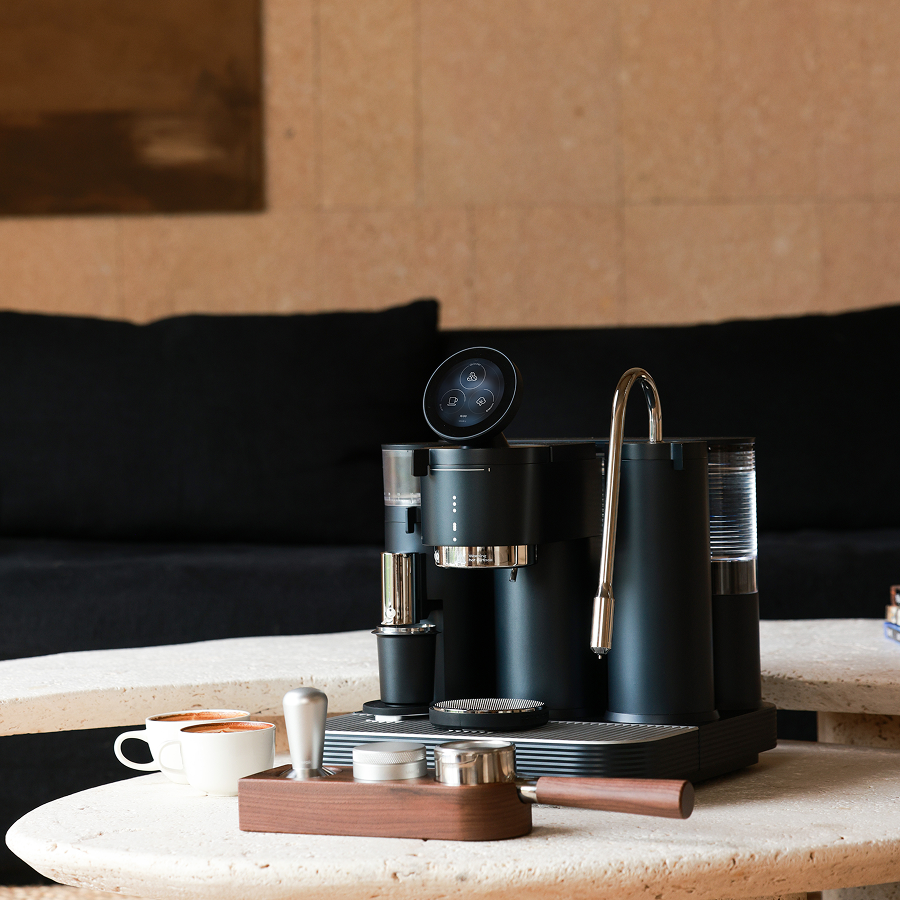
Meraki measures approximately 370 × 370 × 415 mm, so buyers should think beyond the square base and also check overhead and rear access.
1. Put the Machine at the End of the Counter
Instead of centring the machine on a counter, move it toward an end where the portafilter and steam wand have open side access. The remaining counter becomes the preparation zone.
2. Use an Integrated Machine to Eliminate the Separate Grinder
When space is genuinely tight, reducing the number of devices usually matters more than shaving a few centimetres from one appliance.
A separate machine, grinder and scale can easily consume more usable counter width than one integrated unit.
Meraki's space-saving espresso guide explores the trade-off between integrated and separate equipment.
3. Build a Coffee Corner Beside the Sink
Water and cleanup determine more of the daily experience than most buying guides acknowledge. Placing the espresso machine near the sink makes filling the tank, rinsing the portafilter and cleaning the milk pitcher easier.
4. Turn a Shallow Niche Into a Coffee Station
An unused cabinet opening or shallow appliance niche can make an excellent espresso station if the machine does not become trapped inside it.
- Check clearance above the bean hopper.
- Check access to the water tank.
- Allow heat and ventilation.
- Leave room to remove the portafilter.
- Allow steam-wand movement.
5. Use a Rolling Cart When Counter Space Is Zero
A cart is practical when the kitchen genuinely has no permanent espresso space. Choose a stable cart with locking wheels, enough depth that the machine does not sit close to the edge, and a shelf below for beans and accessories.
6. Store Accessories Vertically
Small kitchens are often short on counter area but not wall area. Cups can go on a shelf. Cleaning brushes can live in a drawer. A milk pitcher can hang from a rail.
Before adding tools, browse espresso accessories and decide which ones genuinely solve a recurring workflow problem.
7. Separate Bean Storage From the Machine
Coffee beans do not need to live beside your espresso machine. A cooler cabinet or pantry away from heat and direct sunlight is often a better location.
If you regularly change coffees, Meraki's coffee knowledge guides can help you choose beans without turning the counter into storage.
8. Use a Fold-Out or Temporary Preparation Surface
Sometimes the machine fits comfortably, but there is nowhere to put the portafilter, dosing cup or milk pitcher. A small fold-out shelf, pull-out board or adjacent table can solve that problem without permanently sacrificing counter area.
Is Meraki Actually Suitable for a Small Kitchen?
At roughly 370 mm square, Meraki is not a miniature machine. But its integrated grinder and built-in weighing workflow can remove separate devices that would otherwise occupy the same counter.
Compare the complete system rather than the machine alone.
What Should You Measure Before Ordering?
Measure the usable depth from the backsplash to the counter edge. Measure from the worktop to the cabinet above. Then imagine yourself standing there with a portafilter in one hand and a milk pitcher in the other.
A good compact espresso station is not the setup that occupies the least space. It is the one that lets you make coffee without having to rearrange your kitchen first.


