


You can watch tulip and rosetta clips for a month and still not know whether you are stuck on foam, a white blob, or a heart that keeps becoming a comma. Searching espresso machine for latte art skill stages mostly returns shopping cards, barista YouTube intros, and “best machine for latte art” threads — useful for hardware envy, weak for naming which skill level you are on.
This Meraki guide owns a skill-stage map on home espresso steam: pourable microfoam → white blob → heart → tulip/rosetta path, with exit criteria, stuck points, and an equipment vs skill bottleneck diagnosis. Soft-name the latte art practice plan with a home espresso machine for the 4-week calendar and drills — this page is the taxonomy, not that syllabus. Soft-name dry steam espresso for home microfoam, powerful steam wand technique, milk temperature sensor workflow, auto milk temperature control vs hand frothing, plus cappuccino and flat-white drink targets when those lanes own the detail. Soft-link Meraki’s latte art for beginners, master microfoam, and how to steam and texture milk for pour and foam literacy on espresso-brewing. Soft-link what is a professional espresso machine only when you are still sorting pro-feature language — not as a substitute for stage exit rules.
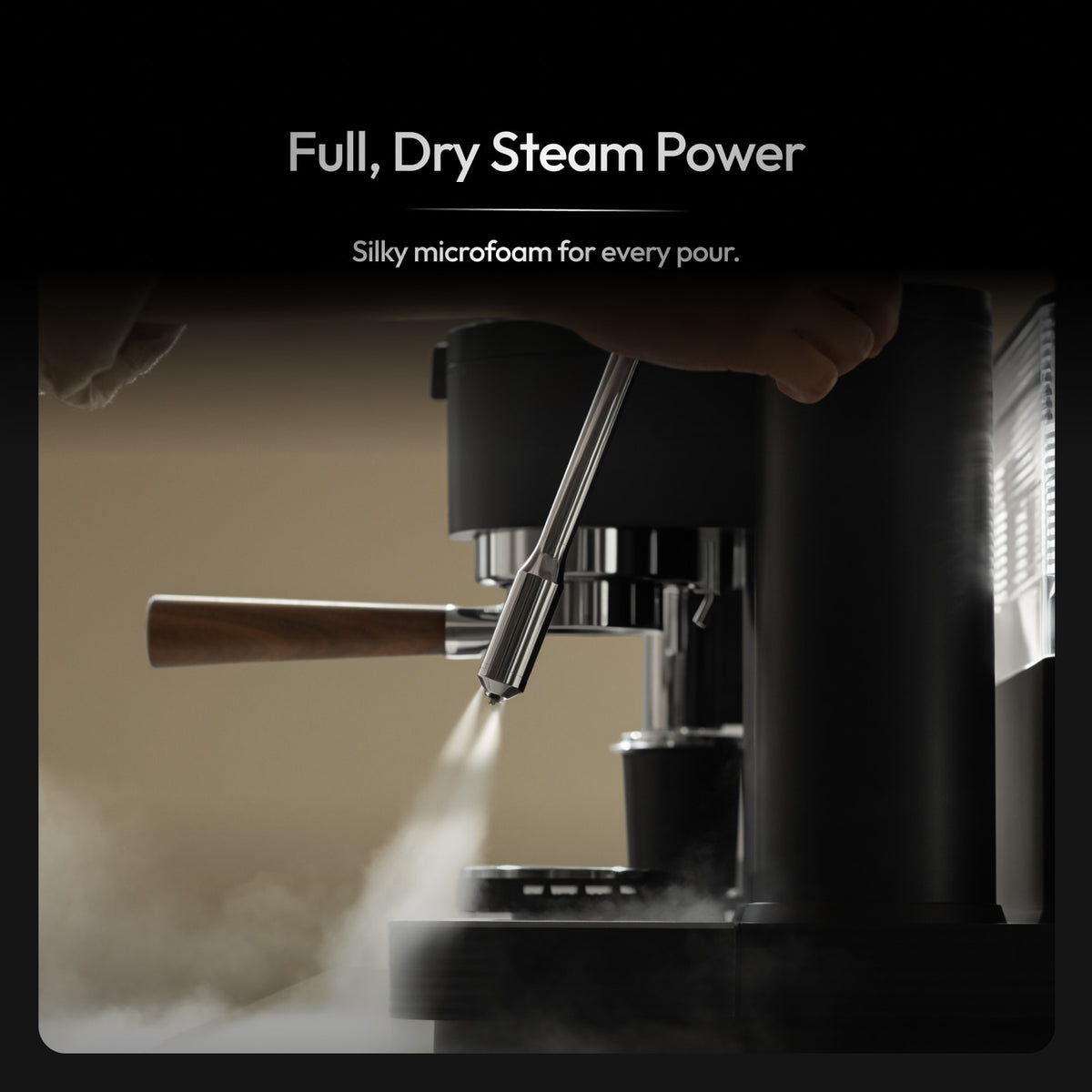
Home latte art stages start with steam you can purge and milk you can pour — then honest exit criteria, not a new swan video.
What “espresso machine for latte art skill stages” really means for home buyers
Espresso machine for latte art skill stages, for home buyers, means a named ladder of milk-and-pour skills on a home steam wand — with exit criteria and stuck-point diagnosis — not a ranked shopping list of “latte art coffee machines.”
Search mixes video intros, Reddit budget recs, Facebook frothing tips, and roundups that treat “latte art ready” as a product badge. Those pages answer which machine. A useful microfoam espresso machine skill-stage page asks: Am I failing foam before any pattern? Is my white disc ready for a heart? Is the bottleneck the wand — or pour height? Which practice milk keeps feedback cheap while I climb one stage?
Café literacy from the Specialty Coffee Association, CoffeeGeek guides, and About Coffee brewing still starts with espresso you can taste and milk you can pour. Stages organize skill, not awards. No fabricated competition scores.
Who this page is for (and who should skip it)
This page is for latte art learners on a home espresso steam wand who need a stage map — what “beginner / next / stuck” means in pourable foam, blob, heart, and tulip/rosetta terms — plus a clear equipment-vs-skill check before buying another steamer narrative.
Skip stretch literacy — how to steam and texture milk. Skip microfoam polish — master microfoam. Skip first pour shapes — latte art for beginners. Soft-name latte art practice plan with a home espresso machine for the 4-week calendar. Soft-name dry steam espresso for home microfoam, powerful steam wand technique, milk temperature sensor workflow, and auto milk temperature vs hand frothing when dryness, power, or stop trust is the gap. Soft-lane cappuccino on a grinder-equipped dual boiler and flat white steam targets for drink ratios. Soft-link pitcher sizes for volume match; soft-link steam-wand milk-drinks shopping and what is a professional espresso machine when hardware class is still open. Come here for stages + exit criteria + bottleneck diagnosis.
Why this is a skill-stage map (not a 4-week practice plan)
SERP leans clips (“intro to latte art,” tulip/rosetta how-tos) and shopping (“best espresso machine for latte art”). Meraki already publishes pour, microfoam, and steam literacy on espresso-brewing. Soft-link those; do not clone them. Soft-name the practice plan article when you need week-by-week drills, session stop rules, and milk/pitcher staging as a curriculum calendar — this page owns the taxonomy: named stages, exit criteria, stuck points, and when to blame equipment vs skill.
The unique job is skill stages — from blob to heart on home steam, with an honest bottleneck split. Disclosure: Meraki publishes this guide and sells the Meraki Espresso Machine. Live framing (2026-10-26/27): dual boilers, dedicated 550 ml steam boiler (vendor claim), powerful dry steam with Auto Temp Stop, warm-up about 3–4 minutes, rotary framed at steady 9 bar, dual scales (1 kg · ±0.2 g — vendor claim) — confirm live. Menu latte ~1:3 and cappuccino/flat white ~1:2 are drink-balance starting points — soft-lane drink curricula; not pour scores. Channel: espresso-brewing.
Tools and settings to prepare first (practice milk that saves money)
Stages fail when the station teaches noise: wrong pitcher, warm milk, or five variables at once. Stage tools while boilers warm: clean portafilter and basket, a dry cloth for the wand, fridge-cold milk, and a matched pitcher — spout that centers over your cup, fill line with stretch room.
Practice milk that saves money: whole dairy in a pitcher matched to one cup is the cheapest honest feedback loop for most home learners. Buy milk you will finish this week — not a specialty carton you under-steam to protect. Plant milks are a later-stage experiment, not Stage 0–2 chaos. Change only one of milk brand, fat level, or pitcher size per day. Keep milk cold until steaming (FDA safe food handling; CDC food safety). Soft-link pitcher sizes for latte art; confirm kit pitcher size on the live product page.
On Meraki’s current framing, dual boilers heat in about 3–4 minutes and the guided path runs grind → brew → steam → serve — confirm live. Soft-name dry-steam / powerful-wand / sensor / auto-vs-hand pages if dryness, power, or stop trust is still chaotic; stay here for which stage you are climbing.
Step-by-step: skill stages from blob to heart on home steam
Use this ladder as a diagnosis, not a personality label. Stay on a stage until the exit rule is boring. Soft-name the practice-plan calendar when you want week structure around these stages — do not treat this table as a 4-week syllabus.
| Stage | What you own | Exit criteria (move on when…) | Common stuck point | Soft-lane if stuck |
|---|---|---|---|---|
| 0 — Pourable microfoam | Glossy, paint-like milk that still flows | Foam looks like wet paint, no big bubbles, pours without dumping dry islands | Shiny in pitcher, dead on pour — or big soap bubbles | Soft-name dry steam espresso for home microfoam; soft-link steam + texture / master microfoam |
| 1 — White blob / blank canvas | Centered white disc that integrates with crema | Smooth white oval/circle, no islands, cup not all espresso-brown | Foam sinks as speckles; or thick raft that won’t integrate | Soft-link first three pours; check pour height / start position |
| 2 — Heart | High start → drop → gentle push into a heart | Recognizable heart on 2 of 3 weekday attempts with the same milk/pitcher | Comma / wing / off-center blob | Soft-link first-three-pours; soft-name powerful-wand / sensor workflow if heat/power chaos |
| 3 — Heart consistency | Repeat Stage 2 without changing three variables | Same heart after one small tweak (height or pitcher fill — not both) | “Almost” every day; new milk/pitcher/grind same session | Soft-link pitcher sizes; soft-name practice plan for drill calendar |
| 4 — Tulip or rosetta path | Choose one advanced path | One clean tulip or a controlled rosetta wiggle you can repeat once on a weekday | Chasing both shapes + swan in one session | Soft-link master microfoam / first-three-pours; soft-lane drink-ratio pages for thicker foam cups |
Session workflow (any stage): (1) Warm fully, purge the wand. (2) Pull one honest espresso — do not stage-test art on a gusher shot. (3) Cold milk in a matched pitcher. (4) Steam for Stage 0 texture first. (5) Wipe, purge again — soft-link steam wand hygiene. (6) One pour intent for your current stage. (7) One note: “too high / too late / foam dry / shot thin.” (8) Cap at 1–2 drinks; fresh cold milk if you re-steam.
Dual boilers let brew and steam overlap on a weekday; that helps stages, but it does not replace exit criteria. Soft-link steam-wand milk-drinks shopping only when hardware class — not stage clarity — is open.
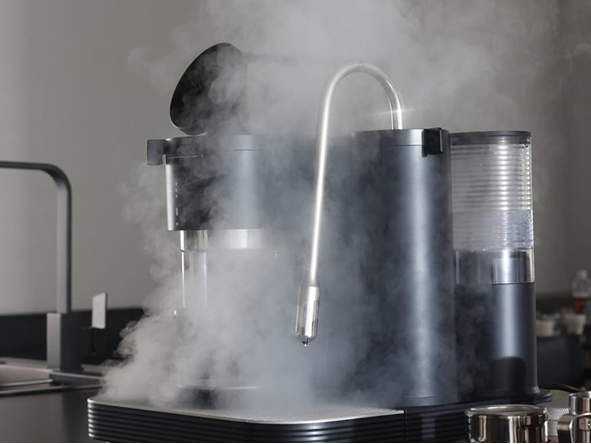
Stage 0 exit looks like glossy, pourable milk — hearts and tulips wait until that texture is boring.
Targets and ranges that keep you out of rabbit holes
Targets keep stages from becoming endless “almost.” Use bands, not certificates.
| Stage target | Starting band (home) | What “good enough” feels like | What not to chase this week |
|---|---|---|---|
| Stage 0 foam | Glossy, paint-like, still flows | Soft-name microfoam / dry-steam pages for dryness → pourability | Dry Instagram foam that won’t pour |
| Stage 1 canvas | Centered white disc | Soft-link first three pours | Swan outlines on speckled foam |
| Stage 2 heart | Recognizable 2 of 3 | Same milk/pitcher as Stage 0–1 | Tulip and rosetta same day |
| Heat stop | Sweet milk, not cooked | Hand cue and/or Auto Temp Stop (Meraki live framing) | Waiting for a prettier whirlpool after milk is already hot |
| Espresso under the art | Drinkable, crema present | Soft-link dose/yield literacy if shot is thin/harsh | Blaming steam for a channeling puck |
| Session length | 1–2 drinks, then stop | One stage note written | Five re-steams until foam dies |
Menu ratios (latte ~1:3, cappuccino/flat white ~1:2) are cup-balance starting points — soft-lane cappuccino / flat white curricula. SCA research, NCA brewing basics, and Barista Magazine’s Meraki test drive are useful context; your stage exit note still wins — the drink under the art still has to taste good.
Equipment vs skill bottlenecks in latte art
Blame the machine last — after stage honesty.
Skill bottleneck (stay on the stage map): Foam is already glossy and Stage 0 exits, but patterns fail — pour height, timing, cup tilt, or jumping to Stage 4 too early. Soft-link latte art for beginners. Soft-name the practice plan when you need a drill calendar, not a new wand fantasy.
Prep / espresso bottleneck: Shot is thin, sour, hollow, or channeling before milk touches it. Steam will not save latte art. Fix dose, distribution, tamp, grind, or yield stop first — soft-link brew-by-weight literacy on Meraki’s espresso-brewing cluster when the puck is the problem.
Equipment bottleneck (verify listing language before rewriting your identity): Wand cannot sustain texture for a matched pitcher after an honest purge; steam is wet/sputtery every attempt; panarello-style auto-foam that never reaches Stage 0 pourable microfoam. Soft-name dry steam espresso for home microfoam and powerful steam wand technique. Soft-name auto milk temperature vs hand frothing / milk temperature sensor workflow when stop trust — not pattern skill — is the gap. Soft-link what is a professional espresso machine, the product page, and steam-wand milk-drinks shopping when wand class is still open — confirm live. Treat electrical safety as non-negotiable (CPSC).
Common mistakes and quick fixes
Most “I’ve practiced forever” complaints are stage errors, not missing swan tutorials.
| Mistake | What you feel | Quick fix |
|---|---|---|
| Skipping Stage 0 | Hearts on bubbly foam | Exit pourable microfoam first |
| Treating stages as a 4-week calendar | Guilt for “falling behind” | Soft-name practice plan for calendar; stay here for exit rules |
| Five shapes in one session | Noise, no progress | One stage intent; log one line |
| Oversized pitcher for a small cup | Foam you cannot control | Match pitcher — soft-link pitcher sizes |
| Reheating the same milk | Muddy texture cues | Fresh cold milk only |
| Blaming steam for a bad puck | Pretty foam on harsh espresso | Fix shot first; then stage-test |
| Changing milk, grind, and pitcher same day | No causal lesson | One variable per stage week |
| Buying “practice milk” you won’t use | Under-steaming to save cost | Cheap whole dairy you will finish |
How to taste and decide what to change next
After the pour, taste the drink — not only the photo. Sweet milk + balanced espresso means keep the current stage drill. Cooked milk means stop heat earlier (soft-name sensor workflow / auto-vs-hand / powerful-wand safety). Harsh espresso under a perfect heart means change grind or yield before another pour video. Flat, bubbly foam means return to Stage 0 (soft-name microfoam focus). Pattern off-center means Stage 1–2 pour height — soft-link first-three-pours literacy.
Write one next change: “Stay Stage 0 — shorter stretch” or “Stage 2: lower pour height” or “Fix shot — pause art today.” Stages without a decision rule become hobby doomscrolling.
A one-week habit for stage work
This is a habit wrapper, not a 4-week curriculum. Soft-name latte art practice plan with a home espresso machine when you want Weeks 1–4 drills spelled out.
| Day focus | Habit | Pass signal |
|---|---|---|
| Mon–Tue | Name your stage from the table; one Stage 0 check every session | Foam exits Stage 0 or you soft-lane microfoam/dryness |
| Wed–Thu | One pour intent for current stage only | Exit rule closer (photo + one note) |
| Fri | Equipment vs skill check once | Sticky says “skill” or “verify wand listing” — not both |
| Weekend | Optional: one Stage+1 attempt if exit was boring | Or just drink — no make-up marathon |
Miss a day? Resume the same stage. Do not “catch up” with five pours.
When to stop tweaking and just drink
Stop when you hit the session cap (1–2 drinks), when foam collapses from re-steaming, or when the sticky already names tomorrow’s single stage change. Drink the cup. Latte art stages that never end in a finished drink train performance anxiety, not skill.
Also stop blaming equipment after Stage 0 exits and the shot is drinkable — return to pour height and timing. Soft-link support for machine issues; soft-link professional-machine / steam-wand shopping pages only when hardware class is open.
FAQ
What are the latte art skill stages on a home espresso steam wand? A practical home ladder is: pourable microfoam → white blob/canvas → heart → heart consistency → one advanced path (tulip or rosetta). Each stage needs an exit rule before you “level up.” Soft-name the practice-plan article for week-by-week drills; soft-link Meraki’s first-three-pours and microfoam guides for shape and foam literacy.
How do I know if my bottleneck is equipment or skill? If Stage 0 foam already glosses and pours, but hearts fail, it is usually skill (height, timing, tilt) or espresso prep — not the wand. If foam never reaches pourable microfoam after honest purge/wipe and a matched pitcher, verify steam path / dry-steam / wand type on the listing. Soft-name dry-steam, powerful-wand, and auto-vs-hand pages for those gaps.
What practice milk saves money while learning stages? Whole dairy you will actually finish in 1–2 practice drinks is cheaper than specialty cartons you under-steam to protect. Match pitcher to cup; change one variable at a time. Soft-link pitcher sizes; confirm kit pitcher size on the live product page.
Is this the same as Meraki’s 4-week latte art practice plan? No. Soft-name latte art practice plan with a home espresso machine for the calendar, drills, and session stop rules. This page owns stage names, exit criteria, stuck points, and equipment-vs-skill diagnosis on espresso-brewing.
Do I need a dual-boiler “pro” machine to climb these stages? No — you need a purgeable steam wand, cold milk, a matched pitcher, drinkable espresso, and honest exit criteria. Dual boilers (Meraki live framing: brew + steam overlap, ~3–4 minute warm-up, dedicated steam capacity as a vendor claim) make weekday sessions smoother; they do not replace Stage 0. Soft-link what is a professional espresso machine for feature language; stay here for stages.
If your goal is an espresso machine for latte art skill stages you can actually use, name your current stage, pass its exit rule before chasing tulips, and blame equipment only after Stage 0 and the shot check out — then confirm today’s Meraki powerful dry steam, dual boilers, 550 ml steam boiler, and Auto Temp Stop framing on the Meraki Espresso Machine product page. Soft-name the practice-plan curriculum when you need Weeks 1–4. Support: Meraki Support (+1 833 854 9555, Mon–Fri 9 AM–5 PM EST). Shipping and refunds: shipping policy, refund policy.


