


You already own a machine. The cup is “fine most days,” forums keep whispering prosumer, and the cart is open before you have written down what must change. Searching espresso machine for coffee enthusiasts upgrade path mostly surfaces Reddit upgrade threads, “grinder first” videos, and brand ladders — useful lore, thin on buyer verification before you compare prices.
This Meraki guide owns the enthusiast verification path: must-have checks before price shopping, cup-relevant specs vs vanity specs, setup / shipping / trial / warranty questions, honest TCO, listing and review red flags, a short saveable checklist, and when enthusiasts should stay put because skill or the grinder — not the chassis — is the limit. Soft-link the live prosumer espresso machines: the upgrade path for enthusiasts for the capability-ladder thesis (triggers, tiers, resale math). Soft-name Espresso Machine for Beginners: A First-Week Plan for absolute beginners — opposite audience. Soft-name upcoming specialty dial-in, shopping-order, and related enthusiast shopping pieces — this page stays on pre-purchase verification for people who already brew.
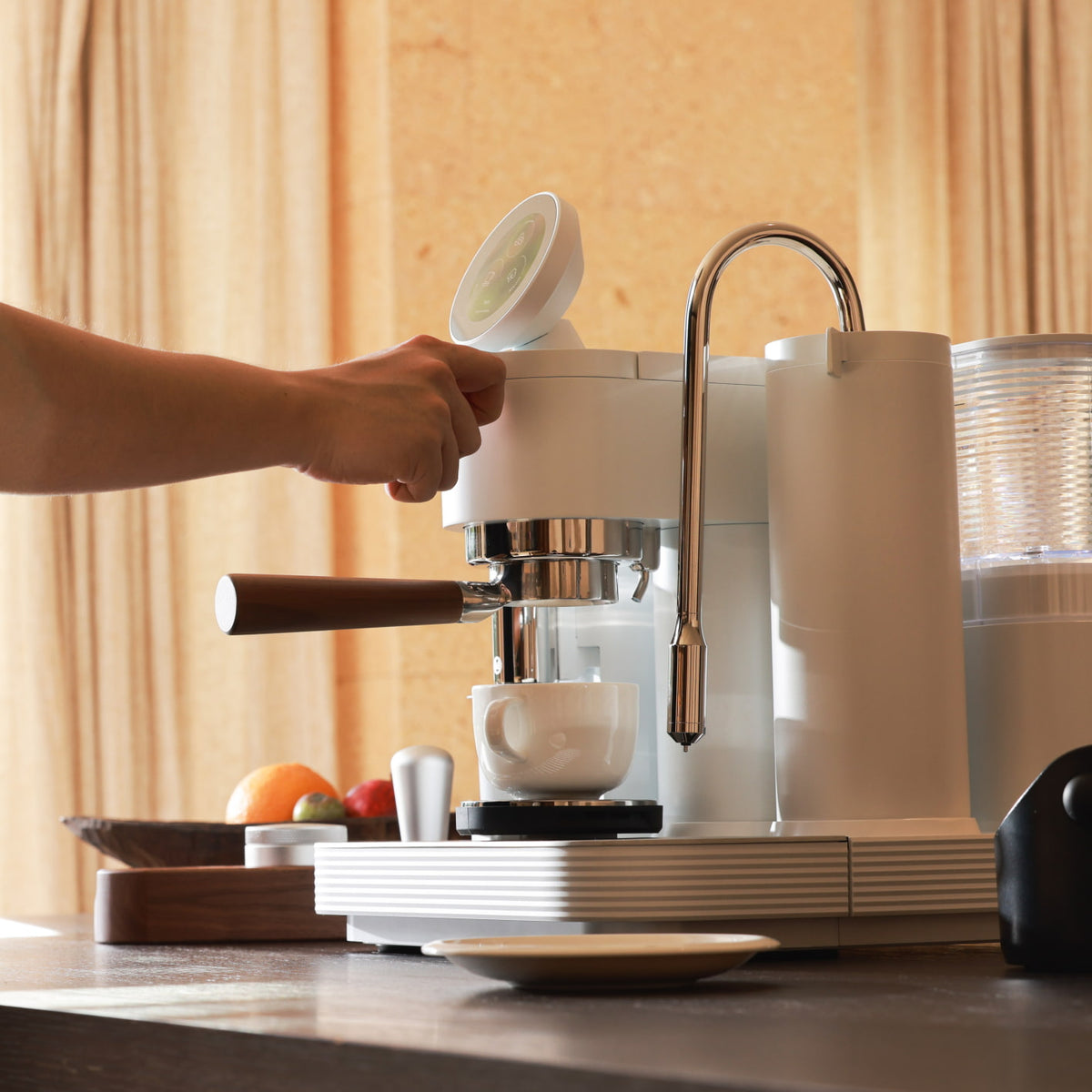
Upgrade path for enthusiasts starts with verification — name the cup limit, then check specs, policies, and TCO — not another brand ladder.
What “espresso machine for coffee enthusiasts upgrade path” really means for home buyers
“Espresso machine for coffee enthusiasts upgrade path,” for a home buyer who already pulls shots, means a disciplined next-machine decision: which cup problems hardware can fix, which checks to run before sticker price, and when to keep the machine you have. It does not mean climbing a status ladder for its own sake.
Community SERP leans experience-led: “I’m upgrading from X,” “grinder first,” dual-boiler wish lists. Those threads help name frustrations. They rarely give you a verification sequence — what to confirm on the listing, which specs change the cup, which policies protect a four-figure mistake, and which red flags to reject. Category literacy from the Specialty Coffee Association still starts with grind, dose, yield, time, and prep; an upgrade only helps when it removes a named bottleneck in that chain.
Treat the keyword as enthusiast buyer verification, not a rewrite of Meraki’s published capability ladder. If you want “upgrade the limitation, not the brand” and the step table, use the prosumer upgrade-path guide. Come here when the question is: am I ready to price-compare — and what must I verify first?
Who this page is for (and who should skip it)
This page is for coffee enthusiasts who already own a machine — daily home baristas, milk-drink households fighting sequential brew/steam, and careful upgraders who want checks before a checkout click.
Skip absolute-beginner week-one onboarding (soft-name Espresso Machine for Beginners: A First-Week Plan). Skip the live capability-ladder / triggers / resale essay if you only need the tier thesis — soft-link it, do not re-read it here as a second copy. Soft-name upcoming specialty dial-in and shopping-order guides when your blocker is recipe depth or purchase sequence rather than verification. Cafe / commercial buyers should size for duty cycle elsewhere; this page is home.
If Cisco Meraki networking gear is what you meant: wrong Meraki. This site is Meraki Tech home espresso.
Why this is a buyer verification path (not another capability-ladder essay)
SERP and forums already teach “grinder before machine,” dual boiler vs single boiler folklore, and resale vibes. Meraki’s live machine-guides piece already owns upgrade the limitation, triggers, the capability ladder, upgrade cost framing, when to keep, and resale math. Rewriting that essay under a brewing-channel slug would only create a near-duplicate.
This page’s unique job is verification before price compare: a must-have checklist, cup-relevant vs vanity specs, setup/shipping/trial/warranty questions, TCO beyond sticker, listing/review red flags, a short saveable card, and a clear “stay put” gate when skill or grinder is the real limit. Disclosure: Meraki publishes this guide and sells the Meraki Espresso Machine; the planned next-step CTA is the espresso machine upgrade page. Specs and policies below follow a 2026-10-26/27 live snapshot — re-check the product and policy pages before you buy. German Design / Red Dot / iF award lines are omitted here on purpose.
Must-have checks before you compare prices
Price tabs are useless until you can name the cup problem the new machine must remove — and prove your current limit is not skill or grind.
Write one sentence: “I cannot repeat X because of Y.” Valid Y examples: brew and steam cannot overlap on weekday milk drinks; temperature recovery fails on the second shot; dose/yield are guessed so taste swings; steam fades after one pitcher. Invalid Y: “a friend bought something shinier,” or “this bag tastes different” with no fixed grind/dose/yield. CoffeeGeek’s guides and SCA research reinforce the same idea: change one variable at a time; hardware upgrades are just expensive variables.
Then gate skill and grinder before machine shopping:
- Same bean, same dose, same yield, same distribution for a week. If taste still wanders after honest prep, measurement or thermal hardware may be next — not a new chassis first.
- Grinder honesty. If the burr set cannot hold a fine espresso setting without clogging or jumping, a machine upgrade often disappoints. Soft-link the live ladder page for why grinder/scale steps often precede machine steps; do not re-climb the tier table here.
- Milk-drink count. One latte a day can be technique; three back-to-back drinks expose steam capacity and dual-boiler overlap.
Only after those three checks should you open price comparisons. If the sentence fails, stay put — the upgrade path is practice or a grinder, not a cart.
Specs that matter in the cup (and vanity specs to ignore)
Cup-relevant specs are the ones that change repeatability, recovery, and milk workflow on your counter — not the ones that decorate a product card.
Use this filter when you read listings. Meraki examples illustrate one verified all-in-one path (dual boilers; commercial rotary pump framed at steady 9 bar; dual scales 1 kg · ±0.2 g; true burr grinder co-developed with TIMEMORE®; guided touchscreen Grind → Dose → Brew → Steam; warm-up about 3–4 minutes per product FAQ). Confirm live on the product page. NIST is a reminder that a scale claim only helps if you can zero it and trust the gram.
| Spec / claim | Cup-relevant? | Why it matters (or doesn’t) |
|---|---|---|
| Dual boilers (brew + steam) | Yes for milk households | Overlap: pull and texture without long waits |
| Stable brew temperature / PID or equivalent control | Yes | Back-to-back shots stay closer to target |
| Dose + yield measurement (built-in or workflow) | Yes | Repeatability without guessing grams |
| Real burr grinder (or a known separate grinder) | Yes | Particle consistency drives extraction more than chassis chrome |
| Steam power + dry steam / usable wand | Yes for milk drinks | Texture quality and pitcher recovery |
| Rotary vs vibratory pump | Context | Rotary often quieter / steadier at 9 bar framing — verify the claim you care about |
| “15 bar” marketing alone | Often vanity | Peak pump ratings without stable brew control do not equal better taste |
| LED color themes / app badges without recipe control | Vanity | Pretty UI that hides dose/yield is still guesswork |
| “Prosumer” as a badge with no thermal or steam detail | Vanity | Label ≠ capability — ask what limitation it removes |
Ignore vanity first; shortlist only machines that address your written Y. NCA brewing basics still apply after the unboxing: water, grind, ratio, and time beat brochure adjectives.
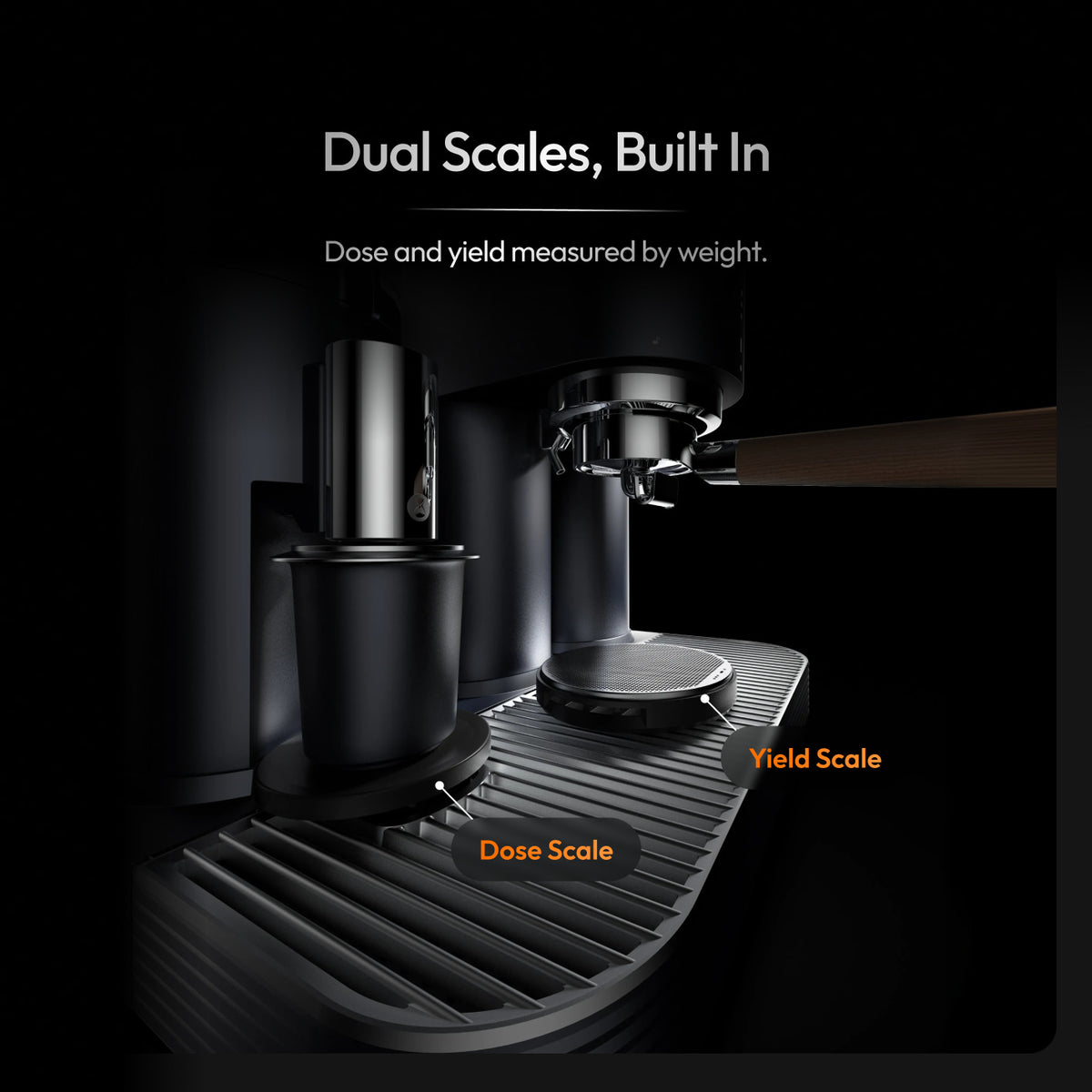
Cup-relevant upgrade: grams you can see and stop — not a louder “bar” number on the box.
Setup, shipping, trial, and warranty questions to ask
Enthusiast machines fail the kitchen when the policy and logistics do not match a heavy, wet, high-draw appliance — verify those before you argue about PID decimals.
Ask every seller (DTC or retailer) the same set:
- Footprint and power. Confirm counter depth, height under cabinets, and circuit expectations. Meraki’s published product snapshot lists roughly 370 × 370 × 415 mm, about 14.5 kg, and 1600 W rated power — re-check live; your kitchen wins if numbers conflict.
- Shipping damage plan. Who pays return freight on DOA? How fast is replacement?
- Trial window. Meraki frames a 30-day home trial from delivery and a 30-day refund path — read refund policy before you treat “trial” as unlimited tasting.
- Warranty length and service. Meraki claims an industry-facing 2-year warranty with authorized service framing and repair shipping covered both ways on covered repairs — confirm warranty / support (+1 833 854 9555, Mon–Fri 9 AM–5 PM EST).
- Free-shipping threshold. Site framing: free shipping on orders over $200 — confirm shipping policy; dispatch/delivery ranges change.
- Current gift / kit offers. Confirm any upgrader kit or bundle on the live product or upgrade page; offers are not permanent pricing.
Barista Magazine coverage and independent reviews can inform feel; they do not replace your policy read. Electrical and product-safety literacy belongs with bodies like the U.S. CPSC — buy from sellers who answer warranty and recall questions without fog.
Budget and total cost of ownership
Sticker price is the opening bid; enthusiasts regret upgrades when workflow extras and year-one care were never in the spreadsheet.
Build a simple TCO card before you compare machines:
- Machine price (currency + date-checked on the seller page — or omit the number and link).
- Grinder if the chassis has none — often the real upgrade.
- Measurement if scales are external: a trustworthy scale beats a vanity PID you never use.
- Accessories you lack: tamper that fits, pitcher, WDT, knock path, baskets.
- Consumables: water treatment, cleaner, descaler, group gaskets over time.
- Energy habit: dual boilers draw more during warm-up; Energy.gov appliance tips still reward not leaving heat on all day if your routine does not need it.
- Service risk: parts availability and who pays shipping on warranty repairs.
Meraki’s all-in-one framing (grinder + dual scales + dual boilers in one footprint) can collapse lines 2–4 for some households — that is a workflow argument, not proof every enthusiast must buy Meraki. Soft-link the live cost-of-upgrading discussion for category cost intuition; keep your numbers on this card. If TCO exceeds the cup problem you named, stay put or buy the cheaper missing piece (usually grinder or scale).
Red flags in product listings and reviews
Listings and reviews fail enthusiasts when they sell aspiration and hide the limitation you are trying to fix.
Walk away — or demand clarification — when you see:
- Peak bar numbers with no brew-stability or measurement story.
- “Prosumer / commercial” labels without boiler type, steam capacity, or pump class you can verify.
- Stock lifestyle photos only, no portafilter, wand, or scale detail you can inspect.
- Review clusters that praise unboxing aesthetics but never mention shot repeatability, steam recovery, or service — or that only appear in the first week after launch.
- Support fog: no warranty length, no trial terms, no phone/hours, no returns URL.
- Feature soup: NFC, apps, LEDs, and “AI” claims that never say how dose and yield are controlled.
- Silent grinder omission on “espresso machine” cards when the listing expects a separate $400–$1,000 burr set you did not budget.
Trust patterns that name failure modes (channeling, sour second shots, weak steam) and how the machine addresses them. About Coffee brewing literacy beats star averages alone. Prefer sellers who link policies in plain text — Meraki’s FAQ, shipping, refund, and warranty pages are the verification targets, not Instagram captions.
A short buyer checklist you can save
Use this card on your phone before any price tab. If three items fail, do not upgrade the machine yet.
- Named limit: one sentence — cup problem + hardware cause (not boredom).
- Skill gate: one week of fixed bean/dose/yield/distribution already tried.
- Grinder gate: current burr path can hold espresso fineness, or grinder is next spend.
- Cup-relevant specs: dual boiler / recovery / measurement / steam / grind path match the named limit; vanity filtered out.
- Policy pack: shipping damage, trial days, warranty years, support path — all written URLs saved.
- TCO card: machine + grinder + measurement + year-one care ≤ willingness to pay for that limit.
- Red-flag scan: no fog on bar ratings, “prosumer” badges, or missing support.
- Stay-put exit: if skill or grinder is the bottleneck, keep the chassis; buy practice time or burrs instead.
Print it. The upgrade path for coffee enthusiasts is this sequence — not a midnight cart.
Next step: verify on the product page
If your checklist passes and the named limit is simultaneous brew/steam, built-in dose/yield measurement, or a guided weekday workflow in one footprint, verify those claims on Meraki’s espresso machine upgrade page and the live Meraki Espresso Machine product page — then decide. Soft-link the prosumer capability-ladder guide when you still need the tier thesis. Soft-name beginner week-one if someone else in the house is new. Soft-name upcoming dial-in and shopping-order pieces when recipe depth or purchase sequence is the real blocker.
If the checklist fails, stay put. An advanced espresso machine that copies your old variables is just a heavier regret.
FAQ
When should coffee enthusiasts stay put instead of upgrading the machine?
Stay put when drinks already taste good to you, temperature and steam match your drink count, and the frustration is technique, distribution, or a weak grinder — not boiler recovery or missing measurement. Run a week of fixed dose and yield first. Soft-link Meraki’s live “when to keep” framing on the prosumer upgrade-path page for the category thesis; this FAQ only restates the verification gate.
Is the grinder usually a better upgrade than a new espresso machine?
Often yes when shots taste muddy or inconsistent at the same dose and the burr set cannot hold a fine setting. A capable grinder on an entry machine frequently beats a premium chassis on a weak grinder. Confirm your named limit before you spend; measurement (scales) is the other cheap consistency step.
What warranty and trial terms should enthusiasts verify before buying?
Read the seller’s written trial length, refund window, warranty years, who pays repair shipping, and support hours. Meraki’s live framing (2026-10-26/27 snapshot) includes a 30-day home trial, 30-day refund path, and 2-year warranty with authorized-service language — re-check refund, warranty, and support before you treat those as permanent promises.
How is this page different from Meraki’s prosumer “upgrade path” article?
That live machine-guides article owns capability triggers, the tier ladder, cost framing, when to keep, and resale math. This espresso-brewing page owns buyer verification: checks before price compare, cup vs vanity specs, policy questions, TCO, red flags, and a saveable checklist. Soft-link the ladder; do not use this page as a second ladder.
Does “advanced” or “precision” on a listing guarantee better espresso?
No. Advanced and precision only help when they map to control you will use — stable temperature, honest grams, usable steam, and a grind path that holds. Marketing adjectives without those levers are vanity. Verify the mechanism that fixes your written Y.


