


You switch coffees and the same scoop produces a different shot. Someone suggests that denser beans always need a finer grind, but that shortcut skips the dose and the actual grounds. An espresso bean density grind size decision should begin with a weighed recipe, then test the new coffee's behavior. Density is useful context, not a dial setting printed invisibly on each bean.
Espresso bean density grind size checks: distinguish the measurements
Density means mass relative to volume, but the volume being measured matters. An individual bean, a cup of loose beans, and a packed bed of grounds are different objects. Their density values cannot be treated as interchangeable.
Bulk density includes the spaces between particles or beans. Apparent bean density concerns the volume of the bean itself, including its internal structure under the particular measurement method. Neither directly measures how easily water passes through your prepared puck.
Research on ground-coffee density and compressibility found dependence on particle size as well as roasting and grinding conditions. That supports keeping the measured object and preparation conditions clear rather than assigning a single density label to every stage.
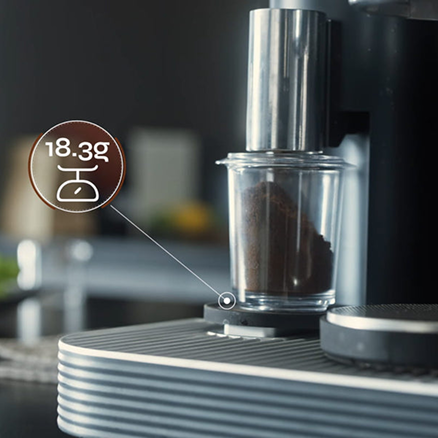
For your recipe, the first useful measurement is coffee mass. It lets you compare shots without allowing a different scoop weight to disguise itself as a need for a different grind setting.
Does a high-density description automatically mean grind finer?
No; it is not a universal setting rule.
A density description cannot determine the grounds your grinder produces or the flow through your puck; use it as context and choose the next adjustment from comparable brewing observations.
Origin, altitude, bean appearance, roast description, and measured density are not substitutes for one another. A bag's altitude figure is not a measurement of the roasted coffee in your kitchen, and a lighter-looking bean does not provide an exact density result.
The Uman and colleagues grinding study found similar distributions across its tested origins and processing methods under controlled conditions. Its authors also identified limits to the tested roast range. Neither finding creates a universal density-to-grind conversion.
Start from a reasonable recipe and assess the new coffee. If it needs a finer setting, let the result support that choice. Do not label the choice correct in advance because the bean is small, grown high, or described as dense.

Replace the scoop comparison with a weighed dose
If two coffees fill the same scoop but weigh differently, the scoop has changed your recipe. Weigh the intended dry dose before drawing conclusions about extraction. Keep the basket and target beverage yield consistent for the first comparison.
For illustration, a scoop delivering 16 g of one coffee and 18 g of another changes the coffee input by 2 g. Those are hypothetical measurements, not typical values for a particular roast. The point is that equal scoop volume does not guarantee equal coffee mass.
Do not compensate for the difference by changing the grind and dose together. Restore the appropriate measured dose first, then observe the shot. If the dose does not fit your basket correctly, resolve that separate constraint before continuing.
The grind-size guide covers the broader dial-in process. Before using it, establish whether the new scoop changed the coffee mass: otherwise, a dosing difference can be mistaken for evidence that the beans require a different grind.
Remember that the puck receives a distribution of particles
A grinder setting does not produce identical particles. The grounds contain a range of sizes, including very small particles often called fines. Their proportions help determine how the packed bed resists water flow.
The study The role of fines in espresso extraction dynamics found that increasing the share of fines reduced coffee-bed permeability and slowed flow under its tested conditions. Permeability means how readily liquid can pass through the bed.
That gives you a more useful distinction than dense bean equals dense puck. The whole bean's description does not reveal the complete particle distribution produced by your equipment, and average grind size alone does not describe every aspect of that distribution.
At home, use the resulting shot rather than trying to infer an unseen fines percentage. A new coffee running differently at the same setting is a reason to check and dial in, not proof that its whole-bean density caused the difference.
Test finer only while it improves the actual result
With dose and target yield held steady, a finer setting can be a reasonable next test for an overly fast shot that tastes unsatisfactory. Make a small adjustment within your equipment's instructions, then compare flow and taste again.
Do not assume each finer step extracts more. The model in Uneven Extraction in Coffee Brewing investigates how fine grinding can promote unequal flow pathways and reduced extraction beyond a critical region. It is a model-based explanation, not a universal cutoff for your grinder.
If further tightening produces excessive restriction or less enjoyable flavor, stop pursuing fineness as the goal. Return to the more useful setting and reconsider the recipe rather than insisting that a dense coffee must be capable of tolerating more.
Keep the decision conditional: finer is helpful when a comparable shot improves. It is not an achievement by itself, and a longer shot time does not establish that the new setting is better.
Keep roast age and recipe changes out of the density conclusion
When switching bags, you often change more than the bean structure. Roast age, flavor profile, storage history, and your intended drink may all differ. A change in the preferred setting cannot isolate density unless those other variables are addressed.
In the SCA freshness lecture by Samo Smrke, roasted-coffee freshness includes gradual gas release as well as aroma changes. That gives roast age its own role in your notes, rather than allowing density to stand in for every difference between bags.
Record the coffee identity, roast date when known, dose, yield, and setting. Mark any deliberate recipe change separately. If you choose a longer beverage for a different flavor style, do not treat that result as a direct comparison with the previous recipe.
You can find a good setting without proving the cause. Keep the practical outcome and the explanation separate, and avoid turning a successful adjustment into a general rule about all dense coffees.
Choose the setting the coffee supports, not the label predicts
Use a density description to ask better questions, then let a weighed dose and comparable shots determine the grind choice. Keep that recommendation when switching origins, roast styles, or bag sizes. None supplies a universal conversion to grinder clicks.
If the new coffee performs well at the existing setting, keep it. If it runs too quickly or becomes excessively restricted, test an appropriate adjustment and judge the result. Do not make a change solely to conform to a claim about altitude or bean appearance.
Save the successful recipe under the coffee's identity. That record is more useful for your next drink than a density guess, because it describes what worked with your actual dose, basket, grinder, and preferred flavor.
Ready to try another coffee? Explore Meraki's coffee-bean collection and plan to dial in by measured results rather than a density shortcut.
FAQ
Can I compare density by floating beans in water?
Do not use a home flotation test as a grinder-setting guide. Floating behavior does not directly establish the density relevant to your brewing decision, and wetting the beans introduces a handling condition that may be unsuitable for the grinder. Keep the coffee dry and compare measured doses through your normal recipe. If you want an actual density measurement, use an appropriate documented method and understand what it measures. A kitchen observation should not become a formula for choosing an espresso setting.
Do bigger beans always require a coarser grind?
No. Whole-bean size does not supply a universal grind direction. The grounds produced, the dose, and the resulting espresso all matter, and the dimensions of an intact bean do not reveal the full particle-size distribution after grinding. Use a successful recipe as the starting point and assess the new coffee at a measured dose. Avoid changing the setting solely because the beans look larger or smaller than the previous bag, and keep the comparison focused on the shot you actually brew.
Should two coffees have the same tamped height at the same weight?
Not necessarily. Ground-coffee packing depends on properties beyond the weighed amount, so equal mass does not guarantee identical occupied volume. Keep the basket's appropriate dose and clearance requirements in view rather than forcing every coffee to reach the same visual height. If the new dose does not fit the basket properly, resolve that fit question before comparing grind settings. Do not add coffee simply to match a line in the basket and then interpret the altered shot as evidence about bean density alone.


