


One RDT test reports higher espresso concentration; another reports lower extraction. Before choosing a side, compare what each experiment held constant and what it measured. When assessing RDT espresso beans advice, separate charge reduction, delivered coffee mass, shot behavior, and taste. Equipment permission comes before any home trial, but permission alone does not make two experiments comparable.
RDT espresso beans experiments: define the outcome being tested
RDT, short for Ross Droplet Technique, refers to adding a small amount of water to whole beans before grinding. The intended intervention concerns static electricity generated during grinding, not soaking beans or washing the grinder.
Static can make particles cling, scatter, or aggregate into clumps. The University of Oregon's research summary reports reduced charge with water addition under the tested conditions. That gives the technique a plausible role when static is disrupting your workflow.
Read the result in the units reported. Electrical charge, coffee left in the grinder, beverage concentration, and extraction yield answer different questions. A photograph of a clean dosing cup cannot supply the other measurements, and a longer shot does not by itself show a preferred flavor.
Write the proposed claim before comparing results: less scattering, more coffee delivered, or a preferred drink. Then identify the observation that could support it. This prevents an experiment about one outcome from becoming an endorsement of every claimed RDT benefit.
Does evidence of static reduction guarantee better extraction?
No; those are different outcomes.
Water addition can affect particle behavior, but a cleaner grinding routine does not establish a universal improvement in espresso concentration, extraction yield, flavor, or consistency across different equipment.
The research preprint Chemical strategies to mitigate electrostatic charging during coffee grinding compared charge-mitigation methods. Its reported brewing changes were tied to the tested coffees and experimental conditions, not every roast and grinder.
Barista Hustle's own RDT experiment generally dialed in toward a fixed shot time rather than holding grind size fixed, and reported lower extraction with water addition. It also acknowledged a smaller dataset and less precise equipment. These differences prevent treating the two experiments as interchangeable tests.
Decide which benefit you are evaluating. If it is tidier dosing, measure that outcome. If it is flavor, taste comparable shots. Do not use a reduction in visible grounds on the counter as evidence that the espresso must now extract better.

Record equipment permission separately from experimental results
The operating instructions are the first gate, not an optional caution after the experiment. Check whether your exact grinder permits water-treated beans and what limits or handling steps apply. Another model's approval cannot be transferred to yours.
Record the permitted preparation method alongside the grinder model and instruction used. A report that omits those details may still describe a research observation, but it cannot establish a procedure for your equipment. Keep approval and experimental effectiveness as separate entries.
For Meraki equipment, clarify an unresolved question through the contact team. Describe the intended preparation and ask about the integrated grinder specifically. Do not infer approval from a component partnership or a demonstration using an unrelated grinder.
If permission is absent, compare published protocols without running a wet-bean trial. You can still identify their controls, measurements, and limitations. Do not copy a research water quantity or another grinder's approval to fill the missing instruction for yours.
A drop or spritz is not a reproducible measurement
Social-media directions often hide the amount of water behind a familiar gesture. Different bottles deliver different quantities, and a count of sprays says little without knowing the output. More water should not be assumed to produce a proportionally better result.
For equipment that explicitly permits RDT, follow its stated amount and preparation method. Do not take a laboratory test quantity and convert it into a home operating recommendation. A research condition explains an experiment; it does not set the manufacturer's moisture limit.
Keep the dry bean weight separate from the added water in your notes. Otherwise, the prepared portion's mass can obscure how much coffee you intended to grind. Do not alter the recipe's coffee dose merely to compensate for a change you have not quantified.
If the approved instructions are too vague to reproduce, ask for clarification. An uncontrolled spray count makes comparison difficult and should not become a reason to increase the amount until something noticeable happens.
Compare fixed-setting and dialed-in trials separately
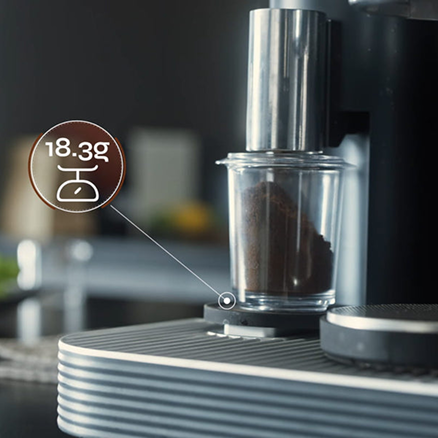
A useful trial starts with the same coffee and established dry recipe. Keep the bean dose, grind setting, target beverage yield, and puck preparation consistent for the initial comparison. Record the output and taste rather than judging one visually tidy shot.
Bean temperature should stay consistent too. The Uman and colleagues grinding-temperature study found changes in the tested particle-size distributions. Changing temperature at the same time would introduce another factor into your RDT comparison.
Use repeated dry and permitted-treatment observations, recording the order so time drift is visible. Log scattering, delivered coffee mass, shot time at the chosen yield, and taste separately. A tidier dose with a longer shot is two findings, not a single improvement score.
A later dial-in comparison asks a different question: which recipe you prefer after adjusting each condition. Label it separately and record the changed settings. Do not merge its shots with fixed-setting runs, because water addition and recipe adjustment are now both involved.
Keep preparation timing and excluded runs in the record
A comparison becomes harder to interpret when one dose is prepared immediately and another sits after treatment. Record preparation-to-grinding timing without treating a longer wait as an optimization. Follow the approved procedure and keep untreated reserve beans separate.
The National Coffee Association's storage guidance identifies moisture as a concern for stored coffee. That storage problem is different from the deliberately controlled conditions of a grinding experiment.
Mark a run as non-comparable if you change the coffee, temperature, water method, dose, or puck preparation unexpectedly. Keep its observation in the notes, but do not combine it with the matched runs as evidence for the original claim.
Stop an experiment if you encounter abnormal feeding, residue, or an operating fault, and follow the equipment's support guidance. Do not attempt to fix an unexpected result by adding more water or washing the grinding path. The machine-cleaning guide covers the separate care topic; use the approved instructions for your model.
Report each outcome before deciding whether to keep RDT
Use RDT only when the grinder's guidance permits it and repeated observations show a worthwhile benefit for your routine. If either condition is missing, keep the dry workflow and investigate the actual cause of the mess.
Summarize results by outcome: scattering changed or did not, delivered mass changed or did not, and comparable drinks were preferred or not. Include the preparation effort and any excluded runs. Do not average these unlike observations into one vague claim that RDT worked.
Do not adopt the technique to imitate a research percentage or complete an accessory collection. A reliable recipe and an understood operating routine matter more than adding another uncontrolled variable. Keep the trial record so you can explain why the step stayed or was removed.
Considering an integrated home setup? Explore the Meraki Espresso Machine and clarify its approved bean-preparation workflow before adding techniques.
FAQ
Is RDT the same as spraying water on the tamped puck?
No. RDT concerns adding a small amount of water to whole beans before grinding, while wetting a prepared puck changes a different stage of brewing. Results from one intervention should not be credited to the other. Keep puck preparation unchanged when assessing an approved RDT trial, so you can identify which change produced an observation. Do not combine several internet techniques and then assume that a cleaner grinder or a different shot proves all of them helped.
Should a spray bottle be a required espresso purchase?
No. A bottle is useful only if your equipment permits the technique and you have a specific problem worth addressing. It does not establish grinder compatibility, and its presence does not make RDT an essential brewing step. Check your normal dry workflow first. If the grinder already delivers a manageable dose with little static-related mess, another accessory may add more work than value. Avoid buying a bottle as a substitute for identifying why grounds are scattering or remaining inside the grinder.
Can I use flavored water or an additive for RDT?
Do not substitute flavored water, oils, syrup, or another additive for the water condition described in an approved procedure. Those ingredients introduce a different material and are not covered by research about water addition before grinding. They may also conflict with equipment instructions. If you want a flavored beverage, keep that separate from bean preparation and use an appropriate finished-drink recipe. Do not interpret a pleasant aroma or a social-media demonstration as evidence that an additive belongs in the grinder.


