


What “plumbed in” actually means on a home machine
Plumbed in means the machine draws from a water line, not only from a tank you fill.
On a machine that officially supports it, a dedicated feed — and often a drain — replaces the daily pitcher-and-reservoir routine. That is a plumbing project as well as a coffee decision. It is not a synonym for “better espresso,” and it is not available on every home chassis.
Some machines are designed as convertible: they can run from a reservoir or from a line. Others are tank-only. If the official manual never describes a water-line kit, do not invent one. The contrast in this guide is a direct line versus a reservoir you fill, for people who can actually consider plumbing.
What a reservoir already does well
A tank is already a complete water path for most home kitchens.
You fill it, you can use filtered water you trust, and you can leave the cabinet under the sink alone. You can also move the machine later. For renters, for a first machine, and for a household that makes a few drinks a day, that is often enough. The fault is not “a tank is amateur.” The fault is underestimating how often you will refill it if you host a long brunch.
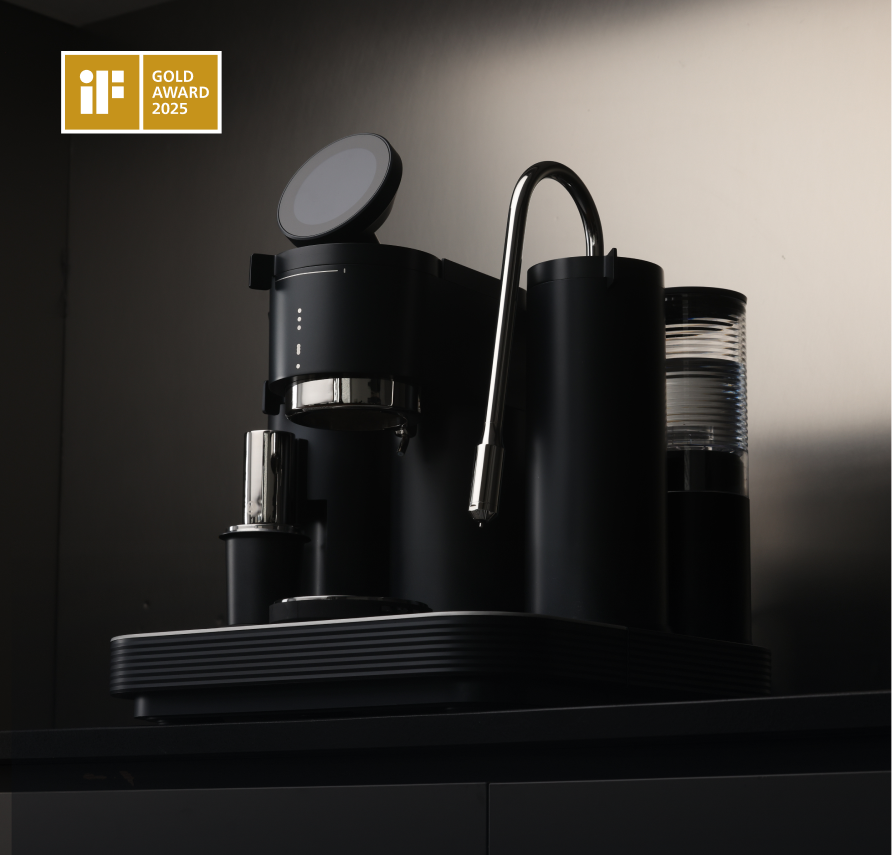
Meraki publishes this guide and is disclosed here as a reservoir machine. The live Meraki espresso machine product page lists a 2,000 ml water tank among current specifications (checked 23 November 2026, Asia/Shanghai). Recheck that page before you treat the figure as permanent. This article does not claim a plumbing kit for a tank-only machine.
Water quality still comes first, line or tank
Plumbing does not forgive hard, poorly treated water.
Scale, corrosion, and off flavors follow the minerals in the water, whether they arrive from a tank or a copper line. A direct connection can even raise the stakes: you are now trusting whatever is in the household supply, plus any filter you install on that line. The U.S. Environmental Protection Agency’s drinking-water pages and, if you are on a well, its private well information, are better starting points for water quality than a coffee forum thread. The Water Quality Association is another independent industry resource when you are comparing filter approaches.
If you already research cartridges and mineral targets, use the live notes in Espresso Water Filter Types: Compare Performance Sheets Before Buying rather than repeating that comparison here. The decision on this page is only whether a line or a tank is the better way to deliver that water.
Installation, shutoff valves, and leak risk
The unglamorous parts of a direct line are the parts that flood a kitchen.
A proper install usually needs an accessible shutoff, a leak-safe connection, the pressure range the manufacturer specifies, and often a drain path for brew water and rinse water. Those details belong to a licensed plumber working from the machine’s official manual, not to a weekend experiment with a cheap saddle valve. If you cannot shut the water off quickly, you do not have a finished install.
Leak risk is the case that changes people’s minds. A tank that cracks or overflows is a mess on the counter. A failed line can run until someone notices. Place drip protection and a visible shutoff in the plan before you drill a cabinet. If something later needs service, Meraki support is the right door for product questions; it is not a plumbing contractor.

Who benefits from a direct line
A water line helps when volume and location make refilling a genuine burden.
The usual case is a dedicated home-café counter where several drinks come out in a row, the machine will stay put for years, and a plumber can reach a cold-water feed and a drain without compromising a rental. Remodelers who are already opening the cabinet have a cheaper path than someone who has to add a line after the kitchen is finished.
That remodel-versus-retrofit contrast is often the real cost difference. In a renovation, a plumber can place a shutoff and a drain while the cabinet is already open. After the kitchen is finished, you are paying to reopen finished work for a convenience the tank already provides. Independent water-quality reading still comes first, and brew-method context from the SCA education hub will not decide the plumbing. Building-code organizations such as the International Code Council are for the professionals who will do the work, not for a weekend saddle-valve experiment.
It is a weaker idea when the machine might move, when the only available supply is awkward or unfiltered, or when no one in the household wants to own a shutoff-and-leak routine. A line is infrastructure. Treat it that way.
Who should stay with a tank
Stay with a reservoir if plumbing is the part you do not want to own.
Renters, apartment kitchens, and anyone who cannot modify a cabinet should almost always stay on a tank. So should households that make a modest number of drinks and are willing to refill a two-liter-class tank as part of the morning reset. A tank also makes it easier to use a known bottled or filtered water if your tap is a poor match.
If you are comparing pump types or apartment noise, that is a different article. This page does not reopen rotary-versus-vibratory arguments. It only asks whether a line is worth installing under a machine that officially supports one.
| Question | Lean toward a reservoir | Lean toward a plumbed line |
|---|---|---|
| Can you modify the kitchen? | No, or only with a landlord’s doubtful yes | Yes, with a licensed plumber and official fittings |
| Will the machine stay put? | You may move it or rearrange the counter | It has a permanent station |
| Daily volume | A few drinks; refilling is acceptable | Long sessions where the tank becomes the bottleneck |
| Water control | You want to pour in a known filtered supply | You will install and maintain a line filter |
| Failure mode you can live with | A spilled tank on the counter | A shutoff you can reach if a line leaks |
If your machine is tank-only, what this article is not promising
A tank-only machine is not a plumbed machine waiting for a hidden kit.
Third-party adapters and unofficial tees can void a warranty and create a leak path the manufacturer never approved. If the official manual does not describe a plumbing option, treat the machine as a reservoir machine. Meraki’s current product page describes a water tank, not a home water-line kit. That is a design choice, not a missing accessory.
You can still take water quality seriously, keep the tank clean, and place the machine where filling is easy. Those steps do not require drilling the cabinet. If you later want a machine that is officially convertible or dedicated to a line, that is a different purchase, verified on that model’s manual.
Maintenance differences: filters, lines, and tanks
Both paths need maintenance; they just hide it in different places.
A reservoir asks you to empty stale water, dry the tank on a schedule, and descale according to the official manual and your water. A plumbed line asks you to service the filter cartridge, inspect fittings, and still follow the machine’s water and descale guidance. Neither path is “fit and forget.”
If you travel or store the machine, a tank is simpler to empty. A plumbed install is part of the room. For shipping or service questions after a leak or a move, start with support and, when a carton is involved, the live shipping policy rather than an improvised packing plan.
A decision checklist before you drill anything
Write the answers down before anyone cuts a hole in a cabinet.
If any official requirement is missing — a listed plumbing kit, a pressure range, a drain plan, or a plumber who will install a shutoff — stay on the tank. A delayed decision is cheaper than a leak.
- Does the official manual describe a manufacturer-approved plumbing option?
- Can a licensed plumber install a shutoff and, if required, a drain you can service?
- Do you have a water-quality plan, including a line filter if the manual expects one?
- Will the machine stay in this location long enough to justify the work?
- If the answer to any of the first three is no, keep the reservoir and improve filling and water instead.
Conclusion
Plumb a machine only when the official design supports a line, a plumber can install a shutoff and a safe drain path, and daily volume makes the tank a real bottleneck. Everyone else should stay with a reservoir and spend the effort on water quality. Meraki, as of the current product page, is a tank machine; do not treat this article as a promise that it can be plumbed. Verify specifications on the live Meraki espresso machine page before you plan any cabinet work.
FAQ
Does a home espresso machine need a water line?
No. Many home machines, including tank-only designs, are built to run from a reservoir you fill. A water line is useful only when the machine officially supports it and your kitchen can host the plumbing.
Is a plumbed-in espresso machine better than a reservoir model?
Not automatically. A line can reduce refilling and support heavier use, but it adds installation, leak risk, and filter maintenance. Espresso quality still depends on grind, dose, temperature, and water chemistry.
Can I plumb in a tank-only espresso machine myself?
If the official manual does not describe a manufacturer-approved plumbing kit, do not improvise one. Unofficial adapters can leak and can fall outside the warranty. Choose a machine designed for a line, or stay with the tank.
Do I still need a water filter if the machine is plumbed in?
Usually yes, unless the manufacturer’s water guidance says otherwise for your supply. Plumbing does not remove hardness or other minerals. Plan a line filter and a maintenance schedule before you open the cabinet.
Is Meraki a plumbed-in espresso machine?
The live Meraki product page describes a water tank, not a home plumbing kit. Treat it as a reservoir machine unless official documentation changes, and recheck that product page before you plan any installation.


