


You pull a good shot, someone asks for a latte, and the compact machine now has to climb toward steam. That pause is the real Meraki vs Profitec Go question. It is more specific than a generic Meraki-versus-Profitec brand page, because the Go is a compact single-boiler machine with its own weekday rhythm.
The Go is a traditional prosumer box: PID, a small footprint, and a separate grinder. Meraki is a guided all-in-one. This page is about wait time, temperature habits, and whether you want that classic setup or a station that already includes the grind step.
Where Profitec Go sits in the Profitec lineup
The Go is the compact single-boiler entry in a broader prosumer family.
It is not Profitec’s dual-boiler flagship, and it should not be judged as if it were. Official Profitec materials checked on November 23, 2026, present the current model as the GO 2.0: a compact single boiler with a ring brew group, described as a refinement that keeps the Go’s signature character.
That placement matters. If you were comparing Meraki with Profitec as a whole, you would be talking about a range of machines, service culture, and several boiler designs. This page stays on the Go: small, PID-controlled, one boiler, and a traditional workflow. If you later want the wider brand comparison, that is a different article. Here, the useful facts are the ones that change a weekday: heat-up, the brew-to-steam swap, and the need for a separate grinder.
Disclosure: Meraki is the all-in-one in this comparison
Meraki is the brand behind this site.
This is a disclosed comparison, not a scored independent review. We use official, public attributes and daily routine, and we do not invent prices, awards, or unpublished tests.
Profitec specifications mentioned here come from the official GO 2.0 product page checked on November 23, 2026. Meraki features should be confirmed on the live Meraki espresso machine page. Owner comments are on Meraki reviews, and brand context is on About Meraki. Read the official pages side by side before you buy.
Single boiler versus brewing and steaming without a long swap
A single boiler does one thermal job at a time.
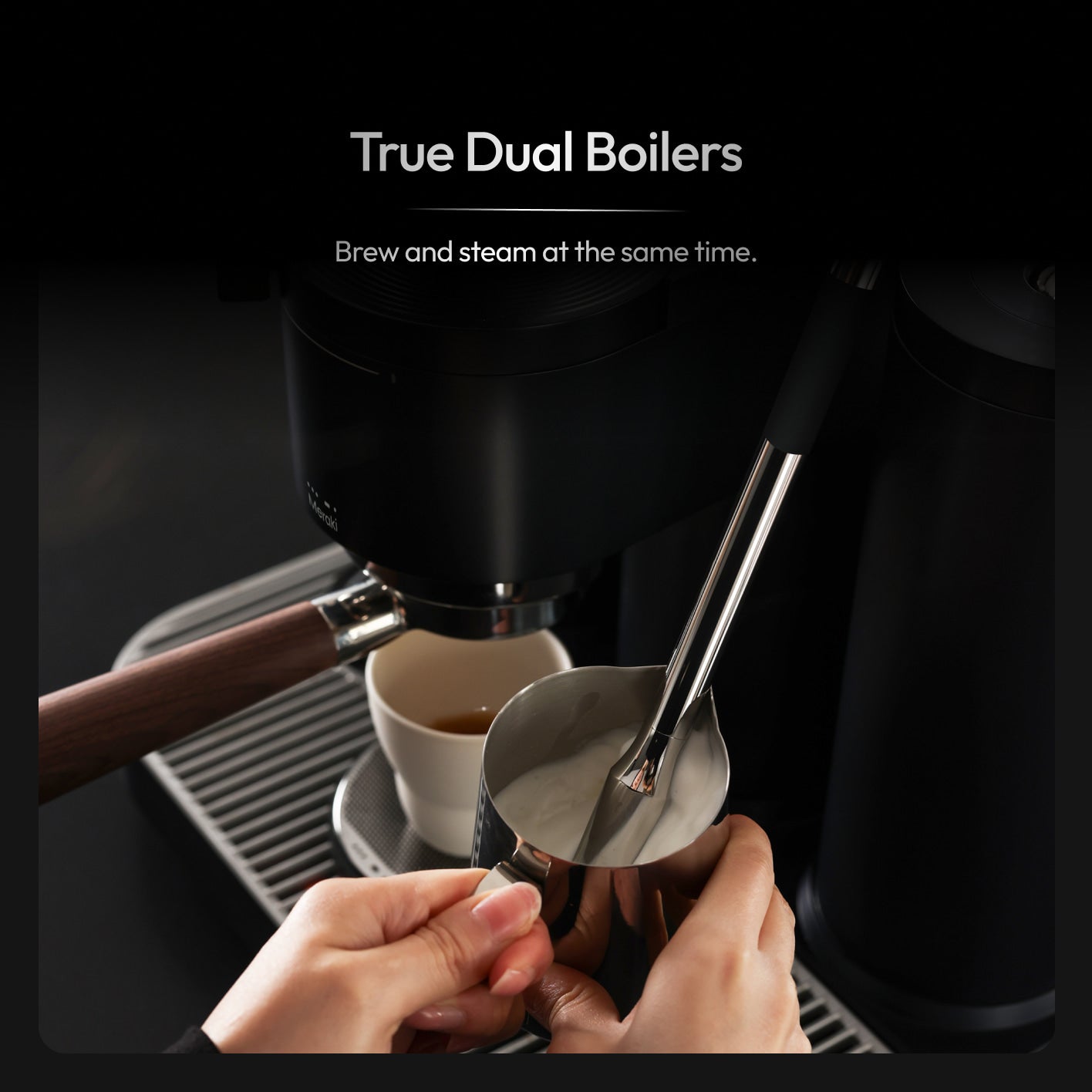
After a shot, the Go has to change temperature to steam, then settle again for the next careful extraction. A dual-function all-in-one is built so brew and steam do not have to stand in the same line.
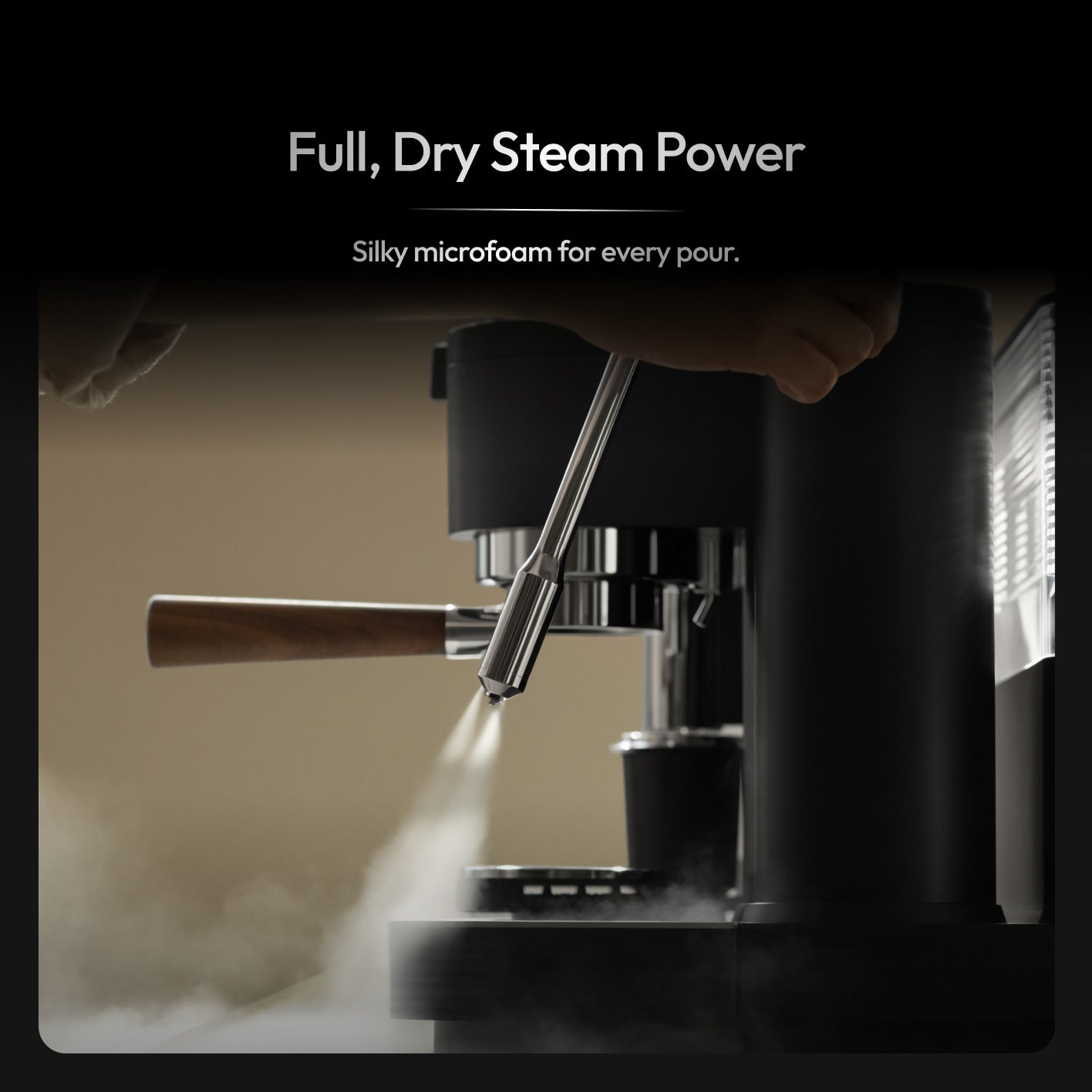
Official GO 2.0 materials describe a 0.3 liter insulated brass boiler, steam through a rotary valve, and a hot-water function above the steam wand. Those are honest, useful features in a compact machine. They do not remove the physics of a single boiler. If your morning is one straight espresso, the swap barely matters. If your morning is two lattes, it is the feature you will feel. Meraki’s all-in-one path, including its dual-boiler design as described on the current product page, is aimed at that second morning. Neither approach is a trick. One asks you to wait or to sequence drinks carefully. The other asks for a larger, more integrated station.
Temperature control and shot-to-shot habits
PID is one of the Go’s main selling points, and it is a genuine one.
Official GO 2.0 copy lists PID-controlled temperature, selectable pre-infusion, LED brew buttons with shot timers, and an OLED display for machine functions. That is a serious compact-control package for a traditional machine.
The habit it rewards is a measured, repeatable shot: you set a temperature, watch a timer, and learn how your grinder and basket behave. The habit it cannot erase is the thermal transition when you steam. A guided all-in-one also asks for repeatable dose and yield, but it hides more of the sequencing on-screen and, on Meraki, can weigh in the workflow if the current product page still includes that feature. Do not treat PID as a reason the Go is “more pro” in every kitchen. Treat it as precise control inside a single-boiler box. For method-level espresso context, the Specialty Coffee Association education hub is a useful independent reference.
Build, service culture, and what you should verify
Profitec has a traditional prosumer reputation, and you should still verify the current machine, not the reputation alone.
Official GO 2.0 materials also list a vibration pump, a pump pressure gauge, an expansion valve for brewing-pressure adjustment, a 2.8 liter water tank, programmable on/off times, and an ECO mode. Those are checkable, practical details.
What you should still confirm, on official pages or with a dealer, is parts and service in your region, because a compact prosumer machine is only a good long-term buy if you can keep it running. Meraki publishes support and warranty information on Meraki support and the current product page; those terms can change, so read them live. This article will not invent service-network claims for either brand. If local service is a deciding factor, ask before you pay, not after a leak appears.
Grinder: standalone pairing versus an integrated standalone grinder
The Go expects a separate grinder. Meraki includes an integrated standalone grinder.
That difference often matters more than the logo on the boiler. A traditional prosumer setup is a machine plus a grinder you already love, or a grinder you still have to buy and place.
If you already own a strong espresso grinder, the Go can be a compact, high-control brew box that respects that investment. If you do not, the “smaller” Profitec path is not smaller once the second box is on the counter. Meraki’s all-in-one pitch is that the grind step lives in the same footprint. Confirm both official product pages so you are comparing complete stations. For tools around a 58mm path, see espresso accessories.
Counter size, noise, and morning timing
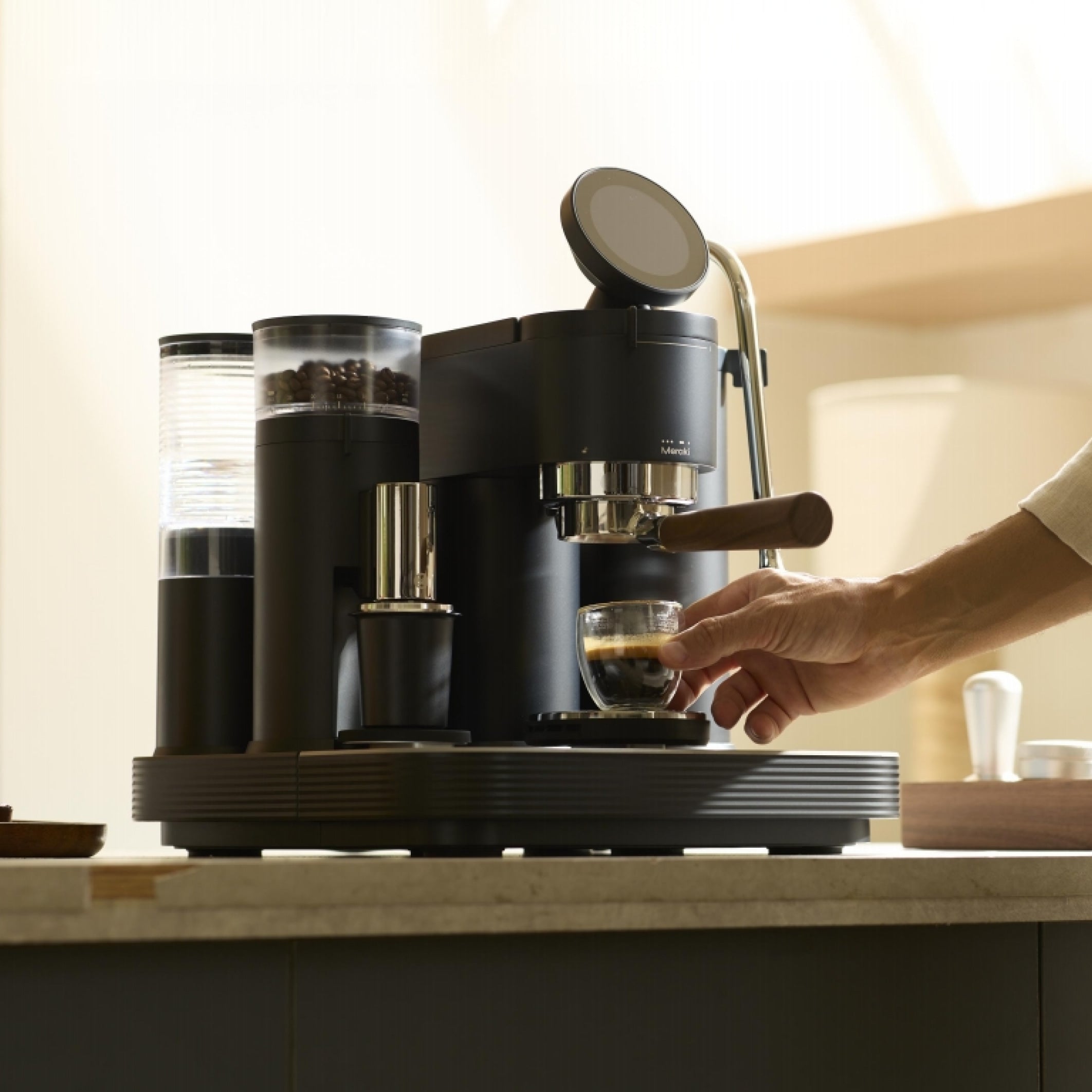
The Go is compact; the all-in-one is a larger dedicated station.
Official GO 2.0 copy also cites a heat-up time of approximately seven minutes. That is quick for a traditional boiler machine, and it is still not instantaneous. Meraki’s current heat-up and ready time should be read on the live product page, not copied from an old brief.
Noise will come from a vibration pump on the Go, plus whatever grinder you pair with it. An all-in-one has its own grind and pump sounds in one chassis. Morning timing is the more honest comparison: seven minutes to heat, a shot, a steam wait, a second drink. If that sequence still fits your day, the Go remains a coherent compact machine. If it does not, the single-boiler pause is the reason to look at a guided all-in-one, not a vague sense that electric is more modern. For idle-energy habits, see ENERGY STAR. For everyday brew-method language, see the NCA brewing overview.
Who the Profitec Go still fits
The Go still fits the buyer who wants a compact traditional machine and already thinks in terms of a separate grinder.
It also fits people who want PID, a visible gauge, and a classic brew-then-steam rhythm, and who mostly make one or two drinks rather than a household queue. If that is your kitchen, the Go is a specific, serious option, not a halfway step.
It is a weaker fit if you need several milk drinks in a row, or if you wanted the grinder included. Those wants point to a different station, including Meraki in this comparison.
Who should choose a guided all-in-one
Choose the guided all-in-one if the weekday has to include grind, shot, and steam without a long boiler swap.
Meraki is our version of that station. Confirm current features, support, and terms on the product page. If you love traditional machines and already have the grinder, do not let a comparison talk you out of the Go for no reason.
Decision table
Use the table as a routine map, then verify the current official pages. The official Profitec page checked for this article is the GO 2.0, dated November 23, 2026 in our notes.
| Weekday issue | Profitec Go / GO 2.0 | Meraki all-in-one |
|---|---|---|
| Boiler role | Compact single boiler, ring brew group, official PID control | Guided dual-boiler all-in-one; confirm live specs |
| Heat-up | Official claim: approximately 7 minutes | Confirm the current product page; do not use outdated brochure times |
| Milk drinks in a queue | Brew, then wait on the same boiler to steam | Designed to brew and steam in one session |
| Grinder | Separate espresso grinder required | Integrated standalone grinder in the same chassis |
| Best fit | Traditional compact buyers who already have a grinder | Households that want one guided weekday station |
For roast-level language, see the NCA roast guide. For a food-composition lookup, use USDA FoodData Central.
Conclusion
If you want a compact traditional machine with PID control, and you already have a capable grinder, the Profitec Go can be a satisfying weekday setup for one or two drinks. If you want grinding, brewing, and steaming in one guided station without a long single-boiler swap, Meraki is the all-in-one in this disclosed comparison. Verify current official details, including the current GO 2.0 page, before you buy.
To review the guided all-in-one side, start with the Meraki espresso machine and Meraki support.
FAQ
Where does the Profitec Go sit in the Profitec lineup?
It is Profitec’s compact single-boiler home machine, not a dual-boiler prosumer flagship. The current official page, checked on November 23, 2026, is for the GO 2.0, described as a compact single boiler with a ring brew group and PID-controlled temperature. It keeps the Go’s small-footprint role: brew, then manage steam on the same boiler. Larger Profitec models are a different comparison, and Meraki already has a broader brand-level page for that range.
Why does a single boiler make you wait for steam?
A single boiler has one heated vessel to do two jobs. After you brew, the machine has to raise temperature for steam, then come back down before the next careful shot. Official GO 2.0 materials also mention steam via a rotary valve and hot water through the steam wand, which is useful, but it does not create a second independent boiler. If two drinks in a row include milk, that wait is part of the daily math. A dual-boiler or all-in-one station is built to shrink that swap.
Does the Profitec Go include a grinder?
No. Official Profitec materials describe a compact espresso machine with a PID, a brew group, and steam, not a grinder in the same chassis. You pair it with a separate espresso-capable grinder, which is normal in traditional prosumer setups and should be counted in the budget and the counter plan. Meraki is sold with an integrated standalone grinder, so the morning path is a different kind of station. Compare complete setups, not only the boiler story.
Who should choose a guided all-in-one instead of the Go?
Choose the all-in-one if you want grinding, brewing, and steaming in one weekday sequence, without a long single-boiler swap or a second grinder box. The Go still fits if you want a compact traditional machine, PID control, and a separate grinder you already trust. Meraki publishes this comparison and is the guided all-in-one option here. Confirm current official details on each product page before you buy.


