


You are staring at a product page that says “independent boilers” and a forum thread that says “dual boiler,” while your weekday reality is simpler: two milk drinks back to back, or a shot that goes sour while you wait for steam. You do not need another full boilers-pumps-controls library. You need an espresso machine with independent boilers explained in plain language — what the two tanks actually do, and when that use case matters at home.
This Meraki guide is a mechanism + use-case explainer for independent brew and steam boilers. Meraki already publishes a boilers, pumps, and controls guide library, a what is a dual boiler primer, and a complete home dual boiler guide. Use those for architecture shopping. Use this page when the missing piece is: how do two boilers work in the cup — and who actually benefits on a home counter?
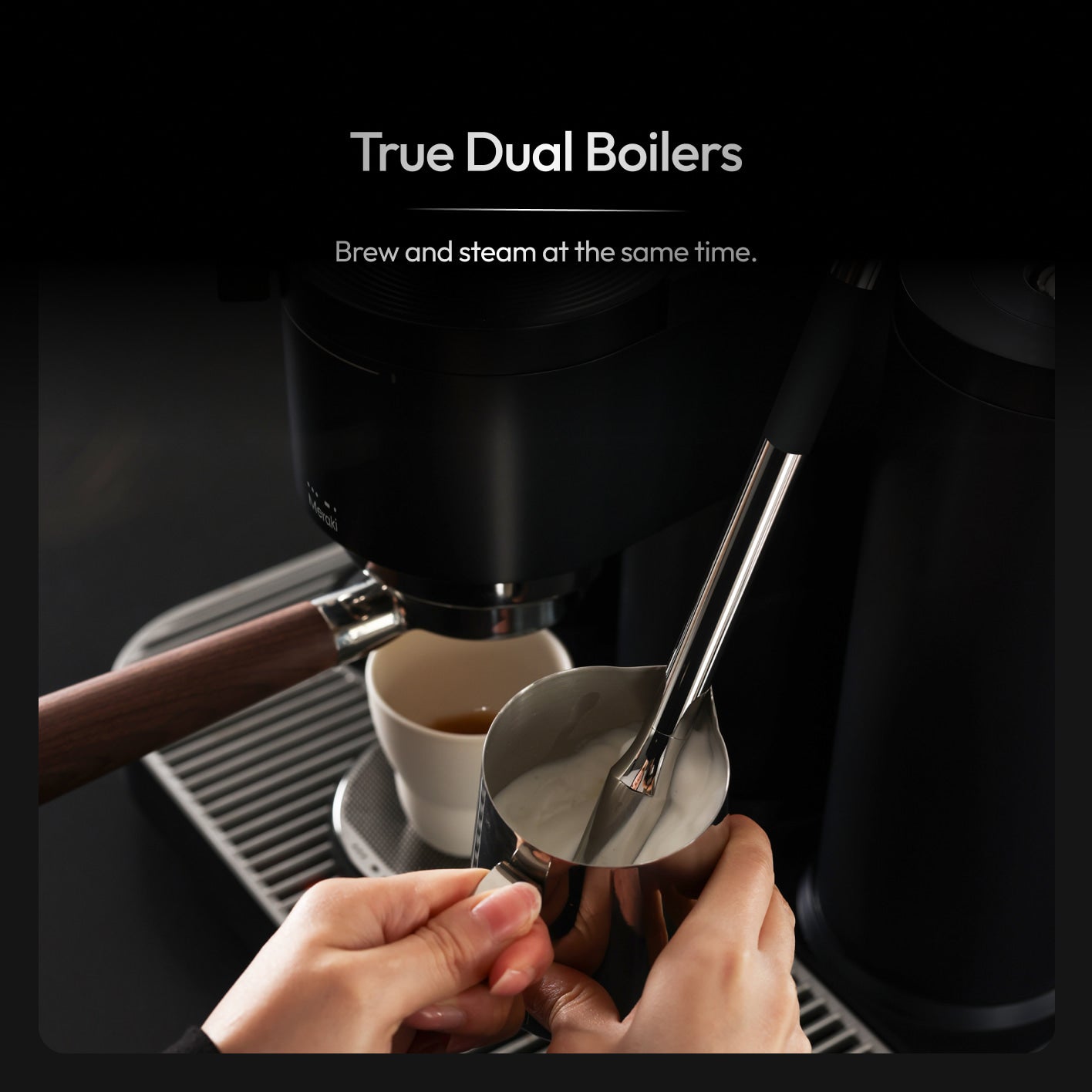
Independent brew and steam boilers keep espresso water and milk steam on separate heat jobs — the home win is back-to-back drinks without a long temperature swing.
What “espresso machine with independent boilers explained” really means for home buyers
“Espresso machine with independent boilers explained” in search results usually returns boiler-type buying guides, single-vs-dual videos, and feature encyclopedias that also cover pumps, PID, and grinders. For a feature shopper it means something narrower: Why would I pay for two heat systems — and what changes on Tuesday morning when I make two lattes?
In buyer language, independent boilers means a dedicated brew boiler (or brew heat path) held near espresso temperature, plus a dedicated steam boiler held hotter and pressurized for milk. They are not sharing one tank that flips roles. That is different from a single boiler that waits between brew and steam, and different from many thermoblock / shared-path designs that heat water on demand through one metal block. Category literacy from the Specialty Coffee Association and practical home reading from CoffeeGeek’s guides beat any badge that only says “pro” without naming what is independent.
Treat the keyword as a mechanism + home use-case problem first. Full component literacy already lives on Meraki’s boilers, pumps, and controls hub and the dual boiler espresso machine landing page.
Who this page is for (and who should skip it)
This page is for milk-drink households and dual-boiler upgraders who want a plain mechanism story — not a parts catalog and not a morning stopwatch essay.
Skip the guide library — boilers, pumps, and controls. Skip the definition primer — what is a dual boiler. Skip the full buyer overview — complete home dual boiler guide. Skip heating-system tables — single boiler vs thermoblock vs dual boiler. Skip heat-up vs shot-ready drafts (A022) and simultaneous hand sequences (A023). Come here for independent brew + steam mechanism and when that home use case pays off.
Why this is mechanism + use case (not another boilers-pumps encyclopedia)
Search results already sort machines into single boiler, heat exchanger, thermoblock, and dual boiler. Meraki’s nearest published hub is a library index of boiler, pump, and control articles — useful for browsing, not one plain-language mechanism page for back-to-back home drinks. Complete dual-boiler guides own shopping breadth; temperature essays own setpoints; workflow pages own hand order.
The unique job here is the mechanism-to-morning map: what “independent” means in the metal, what a dedicated steam boiler changes for milk, which home checks show the use case, and when a shared thermoblock or single boiler is still enough. Disclosure: Meraki publishes this guide and sells the Meraki Espresso Machine, a dual-boiler all-in-one. Live Meraki product materials (October 26–27, 2026 snapshot) state two independent boilers, brew 350 ml / steam 550 ml, heat-up about 3–4 minutes, rotary pump framed at steady 9 bar, dual scales near ±0.2 g, and PID plus a heated group head. Those are vendor published claims — not a third-party lab certificate, and not invented competitor boiler volumes or steam setpoints.
The mechanism in plain language
Espresso and milk steaming want incompatible temperatures. Brew water needs a relatively narrow band for repeatable extraction. Steam needs hotter, pressurized vapor to stretch milk. A single boiler usually holds one job at a time: brew, wait to climb for steam, wait again to recover for the next shot. A shared thermoblock heats water through one metal path on demand — often compact and quick to first heat, but brew and steam still share attention when you stack drinks.
Independent brew and steam boilers separate those jobs. The brew side stays near espresso temperature. The dedicated steam boiler stays hotter and pressurized so the wand can deliver usable steam without draining brew heat first. PID or similar control (when present) holds each side nearer its target; NIST literacy is a reminder that a temperature claim without a defined sensor location is marketing, not metrology.
“Independent” is not magic. Group metal, portafilter mass, and recipe still matter. Dual boilers remove the classic single-boiler swing and enable overlapping brew and steam when both sides are ready — they do not erase warm-up, water quality, or grind. Follow your manual for vents, descaling, and pressure care; listing context for electrical appliances includes bodies such as UL.
What changes in your daily cup
When independent boilers match your household, back-to-back milk drinks stop feeling like a relay race. You can finish one latte and start the next without waiting for a single tank to climb and fall. Steam stays more available for a second pitcher because the steam side was not emptied to protect brew water. Shot-to-shot brew heat is easier to keep usable because you are not swinging one boiler through steam mode between drinks.
When you do not need that use case, the daily cup may barely change. Straight espresso with long gaps, or one patient cappuccino, can taste excellent on a well-used single boiler or a good heat-exchange / thermoblock design. Independent boilers buy thermal separation and workflow, not automatic better beans. Morning heat-up energy is usually modest next to beans and milk — see energy.gov — so the wrong architecture often costs time and wasted shots more than electricity.
Do not expect every dual-boiler listing to share the same steam power, recovery after five drinks, or footprint. Capacity and wand tips vary. Meraki publishes 350 ml / 550 ml as its own capacities; we will not invent competitor volumes or °C tables.
Home tests you can run without lab gear
You do not need a thermocouple kit. Run these kitchen checks on a demo, return window, or after unpacking.
Two-drink timing. Make two milk drinks back to back. Note waits for a temperature light, a long flush, or soft steam between drinks. Independent boilers should make overlap possible; long waits after every shot often mean shared heat or a machine that is not steam-ready yet.
Steam after brew. Pull a shot, then texture immediately. Soft, wet steam that collapses milk is different from waiting for reheat. Capacity and recovery matter more than the word “dual” on the box.
Shot 1 vs shot 2. Lock dose, grind, and yield. If drink two only falls apart because you steamed hard on a single boiler, you felt the shared-tank tradeoff. If both shots stay close after milk work on a dual boiler, the use case is showing up. Deeper stability protocols belong on dedicated test guides — this page needs a weekday sanity check only.
Station chaos. Independent boilers do not quiet a vibrating pump or organize a cluttered counter. Pair the architecture check with how you grind and weigh so you do not blame boilers for dosing errors.
Settings most people should leave alone at first
Leave brew-temperature offsets, steam-power experiments, and “secret” flush rituals alone until a locked weekday recipe is stable for a few mornings. Only flush when your manual asks for it — do not paste another brand’s blank-shot ritual onto a different machine.
Do not chase forum steam-boiler °C numbers across models. Dedicated steam boilers run hotter than brew water by design; setpoints are model-specific. Meraki does not publish a single public FAQ steam-boiler °C figure the way it publishes heat-up minutes — we will not invent one. Follow the manufacturer’s steam settings and wand technique. If you have PID and a heated group (Meraki’s framing), treat them as stability aids: lock dose and grind first; change one variable at a time.
Tradeoffs and limits of the feature
Independent boilers solve a real home problem — and create new ones. Cost, size, and maintenance usually rise versus a compact single boiler or thermoblock. Two heat systems need descaling and good water. Warm-up still exists: both sides must be ready before “simultaneous” means anything useful.
| Claim you will see | What it usually means | Home limit |
|---|---|---|
| “Independent / dual boilers” | Separate brew and steam heat jobs | Both sides must be ready; not a flavor warranty |
| “Dedicated steam boiler” | Steam not shared with brew tank | Power still depends on capacity, tip, technique |
| “Brew and steam at once” | Overlap possible when ready | Hands and mise en place still matter |
| Shared thermoblock / single boiler | One heat path or one tank | Often cheaper/smaller; waits on stacked milk drinks |
Limits of this page: no invented competitor boiler volumes, steam setpoints, or lab recovery charts; no rewrite of Meraki’s boilers-pumps library, heat-up essay, or simultaneous how-to. Safety follows your manual — not kitchen pressure experiments.
How this pairs with grinder, scales, or steam
Independent boilers fix heat jobs — they do not dose coffee. A separate grinder and tray scale can still deliver excellent espresso; an integrated path (Meraki framing: TIMEMORE® co-developed burrs with auto-dose onto a built-in scale, dual scales near ±0.2 g) mainly reduces station chaos so you can use the overlap instead of hunting tools.
Dedicated steam basics at home: wait for steam ready, purge condensation, texture to a clear fill line, wipe and purge the wand. Dry, usable steam combines boiler design, tip, and technique — Meraki’s product framing emphasizes a powerful dry steam wand with auto temp stop on its own machine; treat that as a vendor claim, not a universal dual-boiler law. Latte-art lessons and simultaneous hand sequences belong on their own guides — not this mechanism page.
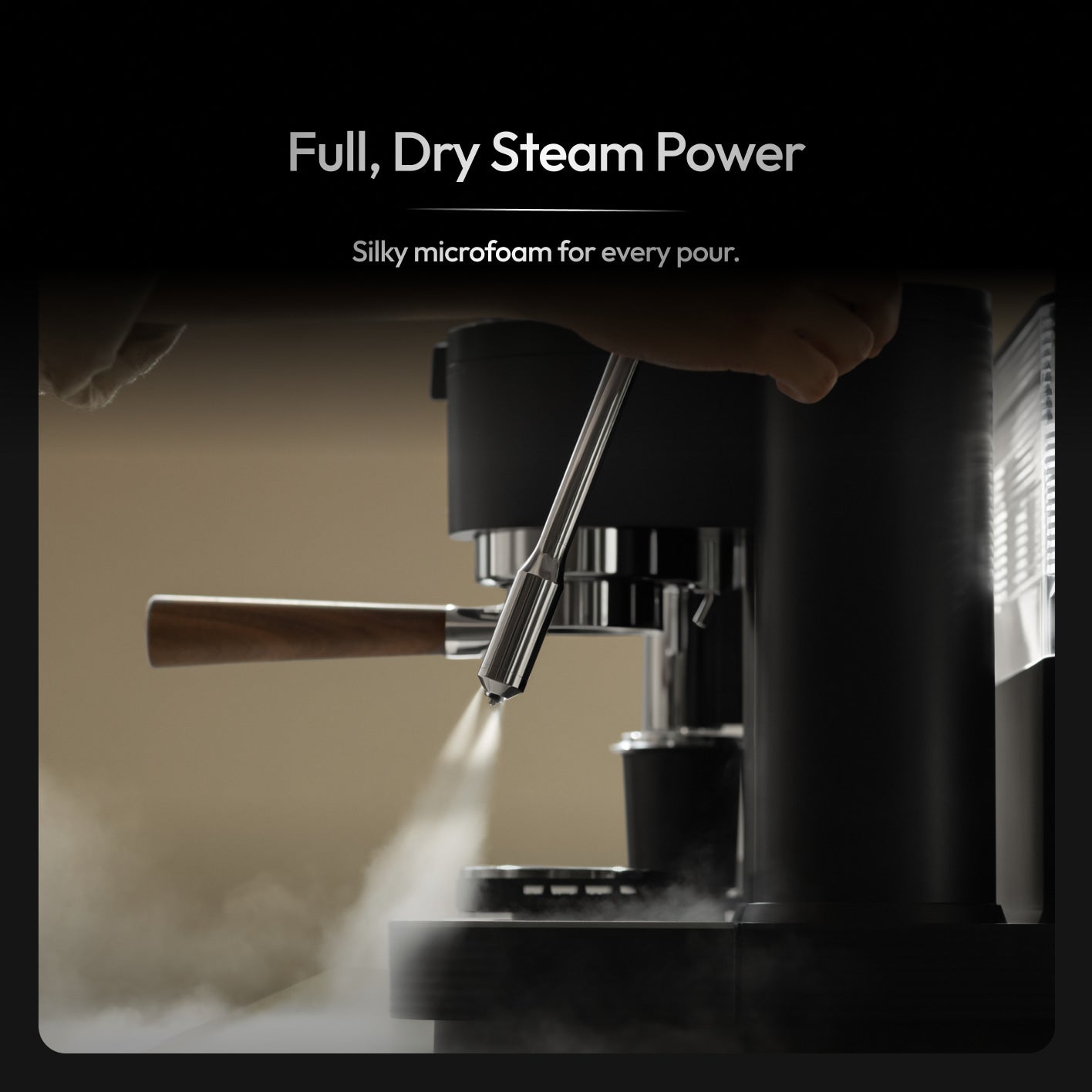
A dedicated steam boiler keeps milk work from hijacking brew heat — technique and a clear pitcher still decide whether foam is glossy or stiff.
Practical takeaway checklist
- I am judging independent brew + steam mechanism and use case, not rewriting Meraki’s boilers-pumps library.
- My household regularly makes back-to-back milk drinks or hates single-boiler waits — otherwise shared heat may be enough.
- Dedicated steam means a separate heat job, not unlimited steam after five drinks.
- I read this model’s manual — I do not invent competitor boiler ml or °C.
- For Meraki: independent dual boilers, 350 ml / 550 ml, heat-up about 3–4 minutes, rotary 9 bar, dual scales near ±0.2 g, PID + heated group (live claims).
- I lock grind and dose before blaming boilers for a sour shot.
- Clock-vs-stability mornings and simultaneous hand sequences belong on their own guides.
What are the key differences between single boiler and double boiler espresso machines?
Single boiler shares one tank; double (dual) boiler separates brew and steam heat.
A single boiler typically holds one temperature job at a time, so milk drinks often mean waiting while the machine climbs for steam and then recovers for the next espresso. A double / dual boiler keeps independent brew and steam heat so you can overlap those jobs when both sides are ready. Heat-exchange designs are a third family (steam boiler with a brew heat exchanger) — useful, but not the same as two fully independent boilers. For side-by-side heating-system shopping, Meraki already publishes single boiler vs thermoblock vs dual boiler and do you actually need a dual boiler. This page only needs the mechanism contrast: shared tank vs dedicated brew + steam.
Is espresso healthier than coffee?
Health depends more on dose and add-ins than on boiler count.
Espresso is a concentrated brew method, not a separate medical category from “coffee.” Total caffeine, sugar, syrups, and how much you drink matter more than whether the machine uses independent boilers. Meraki does not make medical claims about espresso versus drip. For general coffee-and-health reading from a public nutrition source, see Harvard T.H. Chan School of Public Health’s coffee feature. If health is your real question, talk with a clinician about your caffeine limits — then come back here only if you still need the boiler mechanism for milk-drink workflow.
FAQ
How do lever espresso machines work? Lever machines use a mechanical lever (and often a spring) to create brew pressure rather than relying only on an electric pump profile. Some levers still use a boiler or heat system for water temperature; “lever” answers pressure delivery, not whether brew and steam heat are independent. This page owns independent boilers for home milk-drink use cases — not a full lever physics course. If you are shopping levers, read manufacturer pressure and temperature docs carefully; do not assume dual-boiler workflow language applies.
Do independent boilers mean I never wait? No. You still wait for warm-up until both brew and steam sides are ready, and you still need mise en place. Independence removes the classic single-boiler brew↔steam temperature swing and makes overlap possible — it does not erase physics or a cold portafilter.
Is a dedicated steam boiler the same as dual boiler marketing? Usually a dual / double boiler implies a dedicated brew heat system plus a dedicated steam boiler. Always read the specs: some listings blur thermoblock, heat exchanger, and dual boiler language. Look for separate brew and steam heat jobs — not just the word “pro.”
How is this different from Meraki’s other dual-boiler pages? The boilers, pumps, and controls page is a guide library. What is a dual boiler owns a short definition primer. The complete dual boiler guide owns broader architecture shopping. Temperature-control and simultaneous-workflow pages own setpoints and hand sequences. This page owns plain-language independent brew + steam mechanism and when that home use case matters. Press context on Meraki’s measured workflow: Barista Magazine’s Meraki × TIMEMORE test-drive.
Where do I verify Meraki’s own boiler claims? On the live Meraki Espresso Machine product page and Meraki support / FAQ materials — including independent dual boilers, published capacities, heat-up, pump, and scales claims. For shipping, returns, and warranty terms, use shipping policy, refund policy, and warranty claim rather than assuming blog numbers.
If your checklist still points to independent brew and steam boilers for back-to-back home milk drinks — and Meraki’s published dual-boiler path fits how you actually brew — confirm today’s inclusions and terms on the Meraki Espresso Machine product page, then judge the architecture by two weekday drinks in your kitchen, not by a silent demo reel.


