


Your first weekday shot tastes bright and clean. The second tastes dull. You did not change the grind. That gap is why people search temperature stable espresso machine home tests — not for a lab certificate, but to tell thermal stability from first-shot luck.
This Meraki guide is a practical-tests kit for intermediate baristas: simple home checks, taste-led decisions, ranges that stay out of rabbit holes, a one-week habit plan, and a clear stop rule. Soft lane for the probe-and-log worksheet: how to test temperature stability at home. Soft lane for manufacturer-style verification: temperature stable espresso machine: how to verify it. Soft lane for PID literacy: what temperature stability buys. Use this page when you need weekday tests you will actually repeat — without cloning a thermometer protocol or inventing °C charts.
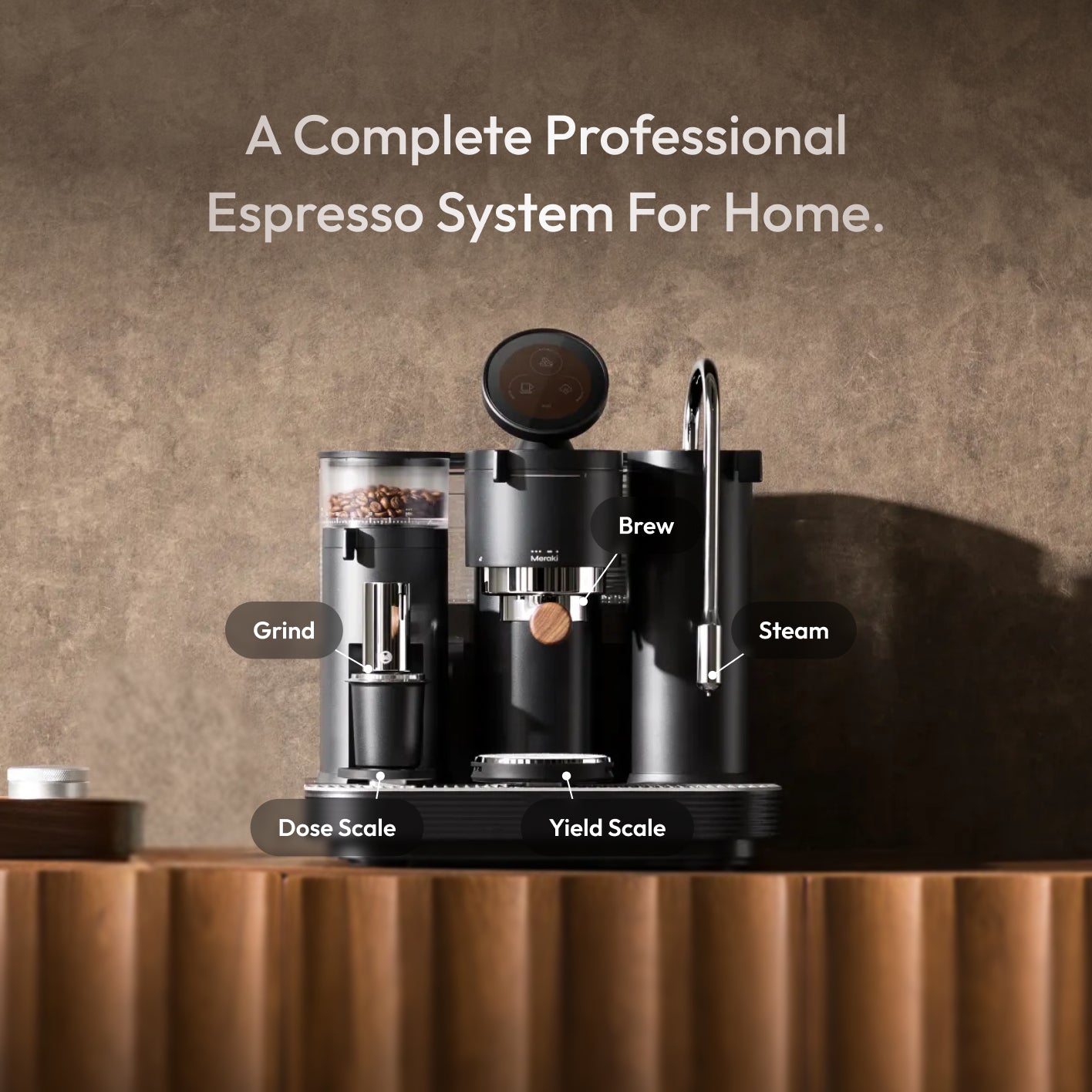
Home temperature tests earn trust when the cup, the clock, and one locked recipe agree — not when a single lucky first shot does.
What “temperature stable espresso machine home tests” really means for home buyers
Home tests here mean repeatable kitchen checks that separate machine heat behavior from recipe noise — not a thermocouple lab report.
Search often returns probe blank-shot guides, PID explainers, or “best machine” roundups. Intermediate owners need a narrower question: Is brew heat holding across shots — or was shot one luck?
Thermal stability means the same dose, grind, and yield taste alike across a short series. First-shot luck is when a cold group, hot boiler, cold cup, or drifting dose makes shot one look “solved” while later cups wander. Category literacy from the Specialty Coffee Association and CoffeeGeek’s guides beats any PID badge as a flavor guarantee. NIST is a reminder that a number without a defined method is marketing, not a test.
Treat the keyword as a practical-test brief. Probe worksheets: home temperature-stability test guide. Architecture: dual boiler espresso machine and Meraki the Espresso Lab.
Who this page is for (and who should skip it)
This page is for intermediate baristas who already pull espresso most weekdays, can lock a recipe for a few mornings, and want practical home tests — taste, timing, and notes — without buying a lab kit first.
Skip the probe-and-log worksheet when you want blank-shot °C readings — how to test temperature stability at home. Skip the five-step verification protocol / trial framing — how to verify it. Skip PID hardware literacy — what temperature stability buys. Skip brand-compare temperature shopping (Meraki vs Lelit-style decision frameworks). Skip heat-up clock vs shot-ready expectation essays. Come here when the missing piece is: practical tests, a decision tree, a week plan, and when to stop.
Why this is practical tests (not another probe-protocol rewrite)
Nearest Meraki pages already own probe blank-shot logging and a verify-it protocol. Forums chase brand winners or PID encyclopedias. What stays thin is a taste-first practical kit: first-shot luck vs stability, tools you own, locked-recipe workflow, rabbit-hole-safe targets, a taste decision tree, a one-week plan, and a stop rule.
Unique job: a week of tests you will finish — then soft-link the probe guide for numbers. Disclosure: Meraki publishes this guide and sells the Meraki Espresso Machine — dual-boiler all-in-one with PID + heated group-head framing, commercial rotary near steady 9 bar, dual scales (±0.2 g), TIMEMORE® co-developed burr path, heat-up about 3–4 minutes (product FAQ; re-check live, 2026-10-26/27). We illustrate with Meraki’s verified path. We do not invent competitor °C charts, fake thermocouple tables, or price-tier drift rankings.
Tools and settings to prepare first
You do not need a lab probe to start. You need a fixed recipe and honest notes. If you later want blank-shot water readings, use the probe worksheet — do not mix both methods in the same morning until you can run each cleanly.
Practical kit (weekday version)
| Tool | Why it matters | Leave alone at first |
|---|---|---|
| Locked dose + grind + yield target | Stops recipe noise impersonating heat drift | Random “one more click” mid-series |
| Scale (built-in or tray) | Makes shot 1 vs shot 2 comparable | Switching scale mid-week |
| Timer (phone is fine) | Flags flow that changed while “settings” looked fixed | Chasing every second of variance |
| Same cups, warmed | Serving heat vs brew-path heat | Ice-cold ceramic every morning |
| Notebook or phone note | First-shot luck vs series pattern | Memory-only “it felt different” |
| Clean portafilter / dry basket | Mass and moisture steal heat | Testing on a wet, dirty basket |
On a guided system like Meraki’s, finish warm-up, keep dose/yield on the built-in scales if you use them, and leave brew-temperature offsets and exotic flushes alone until the locked recipe is boring. Follow the manual plus general appliance literacy (UL, CPSC) — no DIY heater workarounds. Warm-up energy is usually modest next to beans (energy.gov).
Step-by-step workflow
Run one series. Change one variable later. The goal is a decision, not a spreadsheet hobby.
- Warm fully. Wait for your machine’s ready signal, then add any short buffer your own first cups have already taught you. Meraki’s FAQ lists about 3–4 minutes heat-up — that is a vendor ready-signal claim, not a lab path certificate. Confirm live on the product page.
- Lock the portafilter habit. If your manual allows, heat with a clean portafilter locked; dry the basket before dosing.
- Pull a discard or rinse only if your manual asks. Do not copy another brand’s blank-shot ritual onto yours.
- Pull shot A with the locked recipe. Note taste in three words (e.g., bright / balanced / dull), plus dose, yield, and time.
- Pull shot B within your real weekday gap (often 1–5 minutes). Same recipe. Same note fields.
- Optional shot C only if mornings usually stack three drinks. Same recipe again.
- Steam check (milk drinkers). After brew, note whether steam feels soft, spit-heavy, or dry — steam readiness is a cousin of brew stability, not the same test.
- Decide with the table below before you touch grind.
If A and B match after full warm-up and a locked recipe, you have usable weekday stability — even without a probe. If they diverge while dose/yield match, heat (or cup/group mass) is a suspect. If flow time also wandered, fix grind, distribution, and dose before blaming temperature.
Targets and ranges that keep you out of rabbit holes
Home tests fail when the target becomes “perfect °C.” Use behavioral targets instead. We will not publish invented laboratory temperature charts for Meraki or competitors.
| Target type | Useful home range (behavioral) | Rabbit hole to avoid |
|---|---|---|
| Recipe lock | Same dose / grind / yield for the whole series | Changing grind between shot A and B “just to fix it” |
| Taste match | Shot A and B both “good enough to drink” on the same descriptors | Chasing café-score perfection on weekday mornings |
| Timing sanity | Flow time in the same ballpark across the series | Obsessing over ±1 second with no taste change |
| Warm-up honesty | Ready signal + short buffer if your notes show shot 1 always weird | Believing any ready light equals full path saturation |
| Probe numbers (optional) | Use only with the probe guide; compare drift, not internet folklore | Pasting forum °C tables onto a different machine |
| Stop rule | Two matching mornings, then drink | Endless offset menus after cups already agree |
Brew heat still shapes flavor — cooler can taste sharper; hotter flatter or harsher — as cup language, not a license to invent absolute °C targets. SCA education: sca.coffee / research. Press context, not lab data: Barista Magazine.
Common mistakes and quick fixes
Most “unstable machine” mornings are messy tests, not broken boilers.
| Mistake | What it looks like | Quick fix |
|---|---|---|
| Testing before warm-up finishes | Shot 1 thin/sharp; shot 2 “solved” | Finish ready; add a short buffer if notes demand it |
| Changing grind mid-series | Every shot “proves” a new theory | Lock recipe; change after notes |
| Cold cups / wet basket | Serving heat or channeling blamed on brew PID | Warm cups; dry clean basket |
| Steam chaos in brew notes | Soft steam read as brew failure | Separate steam-feel notes |
| Copying another brand’s flush | Confusing water rituals | Flush only if your manual says so |
| Probe without a log / stopping after shot A | One number or first-shot luck | Use the probe worksheet; always run shot B |
Milk hygiene stays ordinary when you steam — FDA safe food handling for perishables context, not a medical claim.
How to taste and decide what to change next
Taste is the decision engine. Numbers support it; they do not replace it.
Use this taste-led decision tree after shot A vs shot B (same recipe):
| What you taste / see | Likely next change | What not to do yet |
|---|---|---|
| A and B match; both drinkable | Stop. Log “stable enough.” Drink. | Opening PID menus |
| A sharp/thin; B better; dose/yield matched | Warm-up / group-mass habit (portafilter, buffer, cups) | Blaming beans first |
| A and B both dull or harsh; times match | Small grind or dose move after the series — one change | Changing three things at once |
| Times wandered; taste wandered | Distribution, dose, grind consistency first | Declaring “temperature failure” |
| Milk drinks only diverge | Steam readiness / pitcher / wipe habits | Rewriting brew offsets for foam |
| Everything matches except one weird shot | Prep error; re-run tomorrow | Panic-buying a new machine |
If the taste tree points at heat and you want numbers, open the home temperature-stability test guide. Architecture shopping belongs on dual-boiler hubs — not this kit.
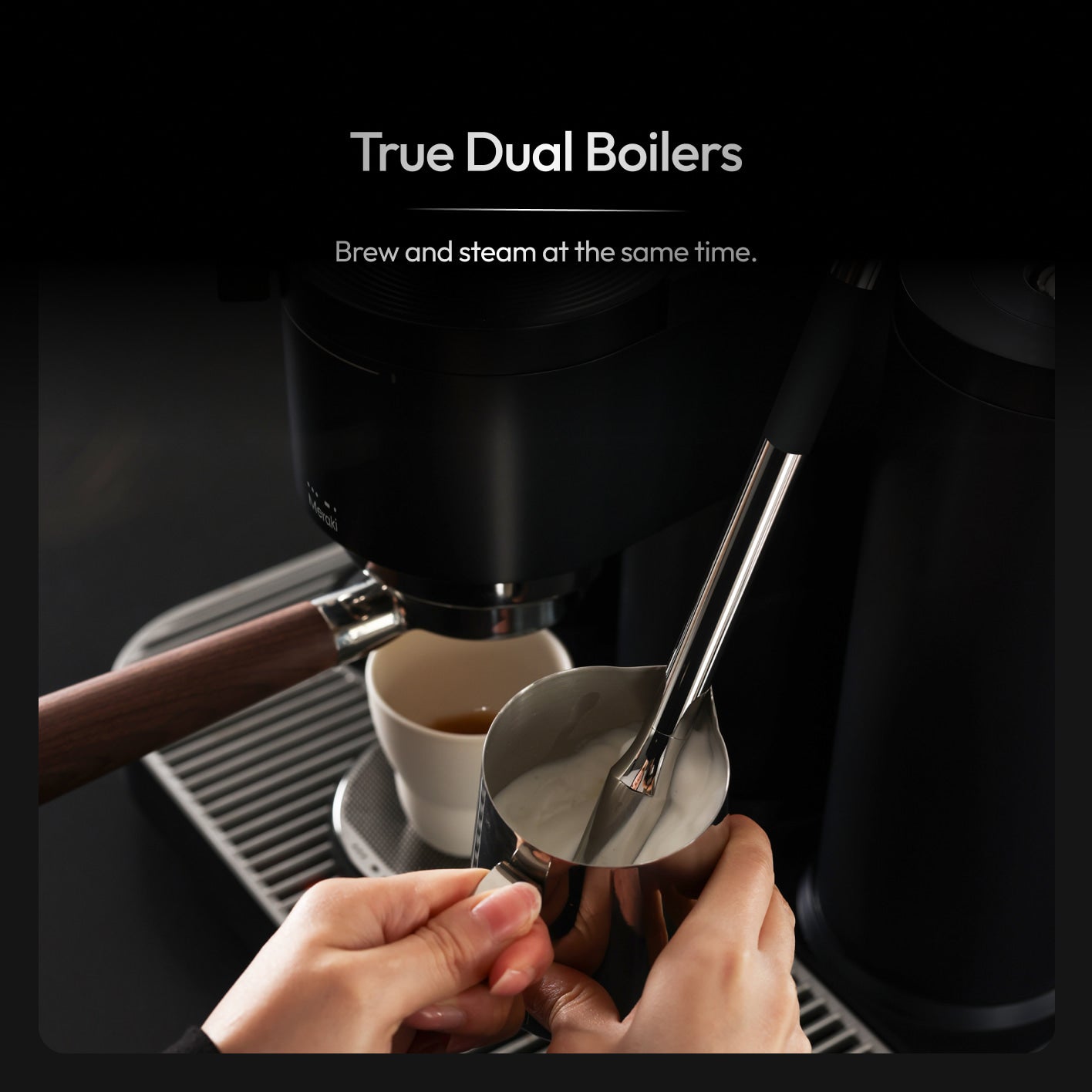
Taste A vs B with one locked recipe — then decide whether the next move is warm-up habit, grind, or a probe worksheet.
A one-week practice or habit plan
A one-week plan beats a Saturday of blank shots you will never repeat.
| Day | Habit | Pass signal |
|---|---|---|
| Day 1 | Warm fully; lock recipe; pull A + B; note three taste words each | Notes exist; recipe unchanged mid-series |
| Day 2 | Same recipe; warm cups; portafilter habit if allowed | A/B closer or already matching |
| Day 3 | Milk drinkers: add steam-feel note after brew series | Steam note separate from brew note |
| Day 4 | Idle gap: after 10–15 idle minutes, pull one locked shot | Compare to Day 1 shot B (pattern, not perfection) |
| Day 5 | Optional: run the probe blank-shot series or skip if cups already agree | Either numbers logged or conscious skip |
| Day 6 | Guest or stacked morning: A → B → optional C at real gaps | Still one recipe |
| Day 7 | Review notes; apply the stop rule | Decision written: stable enough / fix prep / escalate to probe or support |
Keep water quality ordinary — stale tanks and ignored wipe-downs fake instability. Meraki’s dual scales and guided workflow make a locked recipe easier; re-check the product page and Meraki the Espresso Lab.
When to stop tweaking and just drink
Stop when two consecutive mornings produce matching A/B cups on the locked recipe and you would happily serve both. That is usable thermal stability for home purposes — not a lab medal.
Keep tweaking only when A/B still diverge after honest warm-up and prep; taste is stuck dull/harsh with matched times (one grind/dose move); or the tree points at heat and you are ready for the probe guide. Book Support for hardware symptoms — no continuous-run experiments. First-shot luck asks for one more change; stability asks you to drink.
What is the most reliable espresso machine for home use?
No honest universal “most reliable” — score service path, parts honesty, and your weekday duty on one checklist.
Reliability is warranty and authorized service, water-care habits, how the machine recovers on your drink count, and whether measurement keeps recipes honest — not a single badge. Disclosure: Meraki publishes this page and sells a dual-boiler home example with trial/warranty framing (30-day home trial and 2-year warranty on current site policy pages — re-check refund and warranty). Soft lane: professional espresso machine for home. We do not invent a 2026 reliability podium.
What is the 30 second rule for espresso?
It is a rough timing heuristic for many classic recipes — not a temperature-stability law.
People often aim for roughly ~25–35 seconds of extraction as a starting zone for a locked dose and yield. Useful as a sanity check when flow suddenly halves or doubles. Useless as proof that brew temperature is stable. Temperature tests need matched recipes across shots; the “30 second rule” only tells you the clock looked familiar. Prefer taste + matched dose/yield, then timing as a supporting clue — CoffeeGeek guides for practical home framing.
FAQ
Do I need a thermometer probe for these home tests?
No for the practical kit on this page. Locked recipes, A/B tasting, timing notes, and warm cups already separate first-shot luck from usable stability for most intermediate weekday drinkers. Use a fast-reading probe and blank-shot log when the taste tree points at heat and you want numeric drift — that worksheet lives on Meraki’s how-to-test temperature stability guide. Do not invent °C pass/fail charts from forums and paste them onto a different machine.
How is this different from Meraki’s how-to-test and verify-it temperature pages?
The how-to-test page owns the probe, blank basket, and log protocol plus how to read absolute temperature versus drift. The verify-it page owns a five-step verification protocol and trial-oriented checks. This page owns practical taste-led tests, first-shot-luck framing, rabbit-hole-safe targets, a one-week habit plan, and a stop rule — then soft-links those pages when you need numbers or a formal verify sequence.
What if shot one is great and shot two collapses with the same settings?
Treat it as first-shot luck until proven otherwise. Confirm full warm-up, portafilter and cup heat, dry basket, and identical dose/yield. Re-run A/B without changing grind. If times matched and taste still diverged, escalate to warm-up buffer habits or the probe worksheet. If times wandered, fix prep and grind consistency before blaming boilers.
Can dual boilers or PID replace these home tests?
No. Dual boilers and PID can improve the odds of stable brew heat, and Meraki’s live framing includes dual boilers, PID + heated group head, and visible heat tracking — vendor design claims, not a substitute for tasting A vs B. Architecture literacy belongs on dual-boiler hubs and PID guides. Home tests still answer whether *your* weekday path is honest.
When should I contact support instead of testing another week?
When you see hardware symptoms — error states, failure to heat, leaks, or behavior that ignores the manual — or when honest A/B tests and prep fixes still leave unsafe or wildly inconsistent results. Use Meraki Support (+1 833 854 9555, Mon–Fri 9 AM–5 PM EST) and warranty paths rather than continuous-run experiments or DIY heater workarounds.
Conclusion
Temperature stable espresso machine home tests are a practical way to separate thermal stability from first-shot luck. Lock a recipe, pull A then B, taste with a decision table, keep targets behavioral, run a one-week habit plan, and stop when two mornings agree. Soft-link Meraki’s probe worksheet when you need numbers — and refuse invented °C charts, brand scorecards, and endless offset menus after the cups already match.
If that matches how you brew, review the guided dual-boiler system on the Meraki Espresso Machine and Meraki the Espresso Lab — or call +1 833 854 9555 (Mon–Fri, 9 AM–5 PM EST) via Support.


