


The listing says ready in 3 minutes. The screen flashes green. Your first shot still tastes thin, sharp, or oddly different from the second. You are not hunting another dual-boiler encyclopedia. You are a marketing-skeptical buyer trying to decode espresso machine ready in 3 minutes claims — the gap between a clock badge and a machine that is actually thermally ready for consistent shots.
This Meraki myth-bust is a claim vs practice decoder: what “ready in X minutes” usually measures, which warming rituals beat the clock, and which home sniff-tests catch the gap. Meraki already publishes espresso machine warm-up time and a busy-morning fast warm-up / “ready in 5 minutes” filter. Dual-boiler clock-vs-shot-ready depth belongs to Meraki’s A022 heat-up guide. Use this page when the question is: how do I spot marketing minutes that are not cup-ready heat?
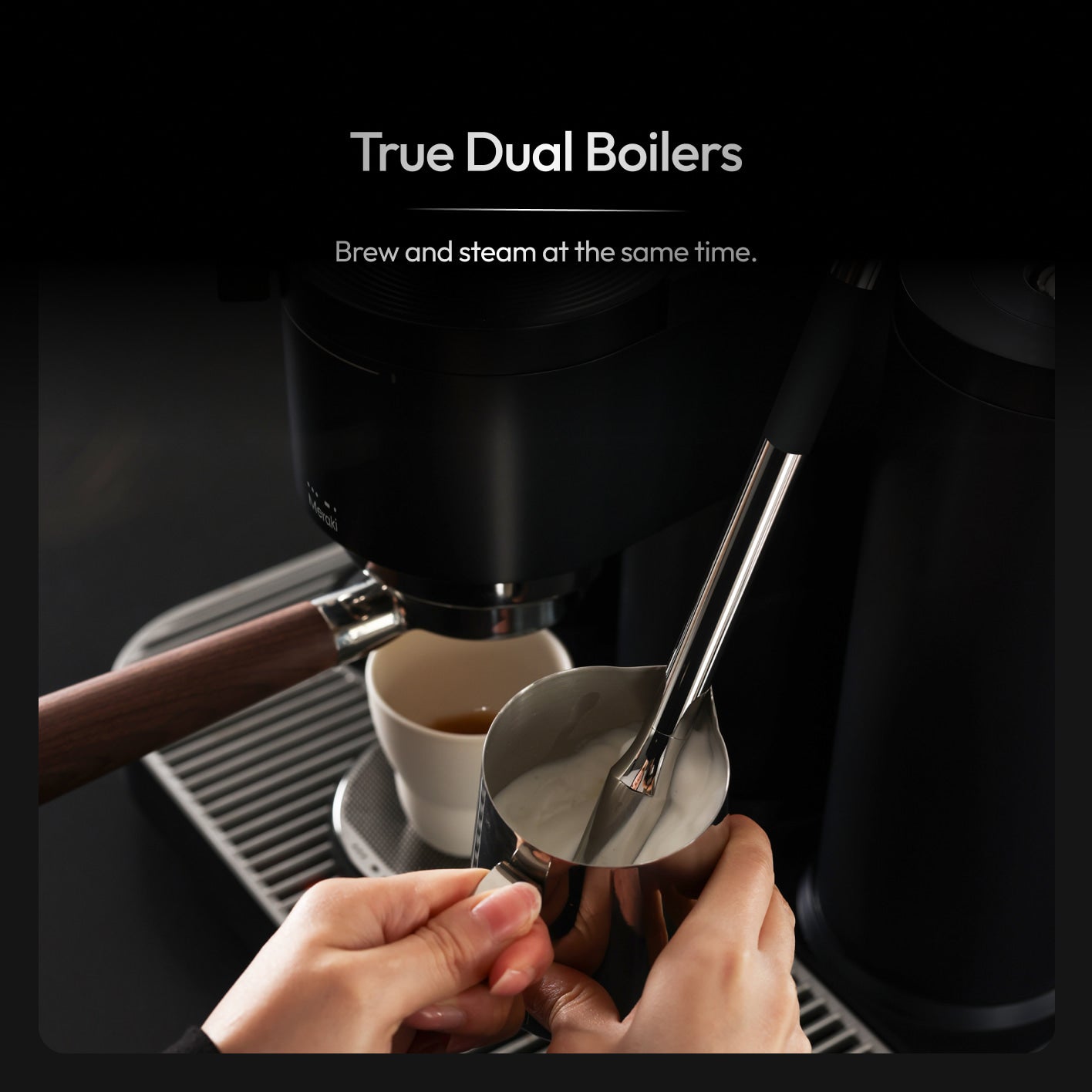
A ready light can trip on boiler sensors while group metal and portafilter mass are still climbing — claim minutes and thermal practice are related, not identical.
What “espresso machine ready in 3 minutes claims” really means for home buyers
“Espresso machine ready in 3 minutes claims” in search usually returns product badges, short-form reels, and forum arguments about whether ready lights “lie.” For a skeptical home buyer it means something narrower: When a brand prints a minute number, what milestone did they actually time — and what still needs your practice before the first weekday espresso?
In buyer language, a heat-up claim is how long until lights, screens, or marketing copy say the machine is ready. Thermally ready is whether the brew path — water plus the metal you lock into the group — is steady enough that shot one matches shot two under a locked recipe. Those moments can be close. They are not automatically the same sentence on a cart page. Category literacy from the Specialty Coffee Association and practical home reading from CoffeeGeek’s guides beat any thumbnail that treats a single minute as a flavor certificate.
Treat the keyword as claim literacy first. Meraki’s published FAQ states heat-up of about 3 minutes on 220–240V and about 4 minutes on 100–120V; the product FAQ also summarizes about 3–4 minutes. Brand framing also describes power-on to latte in about 5 minutes when workflow is tight. Those are vendor published heat-up claims, not a third-party lab graph of every kitchen — and they still need thermal practice after the light.
Who this page is for (and who should skip it)
This page is for shoppers who distrust “ready in X minutes” copy, owners whose first shot drifts from the second, and anyone who wants warming rituals and sniff-tests that beat the stopwatch alone.
Skip a professional-machine definition tour — what is a professional espresso machine. Skip general warm-up literacy — espresso machine warm-up time. Skip busy-morning “ready in 5 minutes” product filters — fast warm-up espresso machines. Skip dual-boiler clock vs shot-ready technical contracts — Meraki’s A022 heat-up guide (soft-link when live; this myth-bust is not that rewrite). Skip deep stability test protocols — how to test temperature stability at home and A034 practical-test drafts. Skip PID settings literacy — PID: what temperature stability buys and A035. Come here for claim vs practice.
Why this is claim vs practice (not another dual-boiler heat-up essay)
Search results already sell fast heat-up, argue about soak times, and mix “3 minutes” reels with pod-machine noise. Meraki’s professional-machine page owns feature definitions — weak overlap here, not rewritten. Warm-up and fast-warm-up pages own timing habits and busy-morning filters. A022 owns dual-boiler stability vs clock time.
The unique job here is the skeptical-buyer decoder: how to read “ready in 3 minutes” language, which rituals close the thermal gap, which sniff-tests catch claim theater, and what Meraki’s own minute claims honestly do — and do not — promise. Disclosure: Meraki publishes this guide and sells the Meraki Espresso Machine. We frame Meraki’s ~3–4 minute heat-up as a published heat-up claim that still needs thermal practice — not as “three minutes equals café-identical first cups forever.” No invented competitor “ready in X” charts.
The mechanism in plain language
Heat-up is staged. Water in a boiler (or thermoblock) can hit a sensor target while the group, portafilter, and basket are still colder than the water. A ready light or UI timer often tracks boiler / firmware ready, not every gram of metal in the brew path. Steam systems can sit on a separate clock. Marketing minutes usually time the sensor milestone because it is measurable, filmable, and short.
Thermal readiness asks whether enough heat has soaked into the parts that touch the coffee so shot one does not steal heat shot two already “owns.” That is why a locked portafilter during warm-up (when your manual allows), a dry basket before dosing, and a short buffer past the light often beat chasing a smaller printed number. NIST is the reminder: a minute without a defined measurement point is a claim, not metrology. Dual boilers change how brew and steam can overlap; they do not erase the claim-vs-practice gap — leave dual-boiler clock contracts to A022.
What changes in your daily cup
When you brew at claim-ready but before path heat catches up, shot one often runs differently from shot two: sharper acidity, thinner body, or a yield that drifts even when grind and dose look identical. Cold cups and fridge-cold pitchers steal more heat at the spout — serving temperature is a cousin of machine readiness, not the same problem.
When path temperature is steadier, dialing grind and yield gets quieter because heat stops impersonating a recipe change. Milk drinks still need steam readiness on its own clock: a brew light can blink while steam is soft. A fast heat-up claim that only times the brew boiler is incomplete for latte mornings. Cutting warm-up short often wastes more shots than it saves energy — see energy.gov for general home energy context.
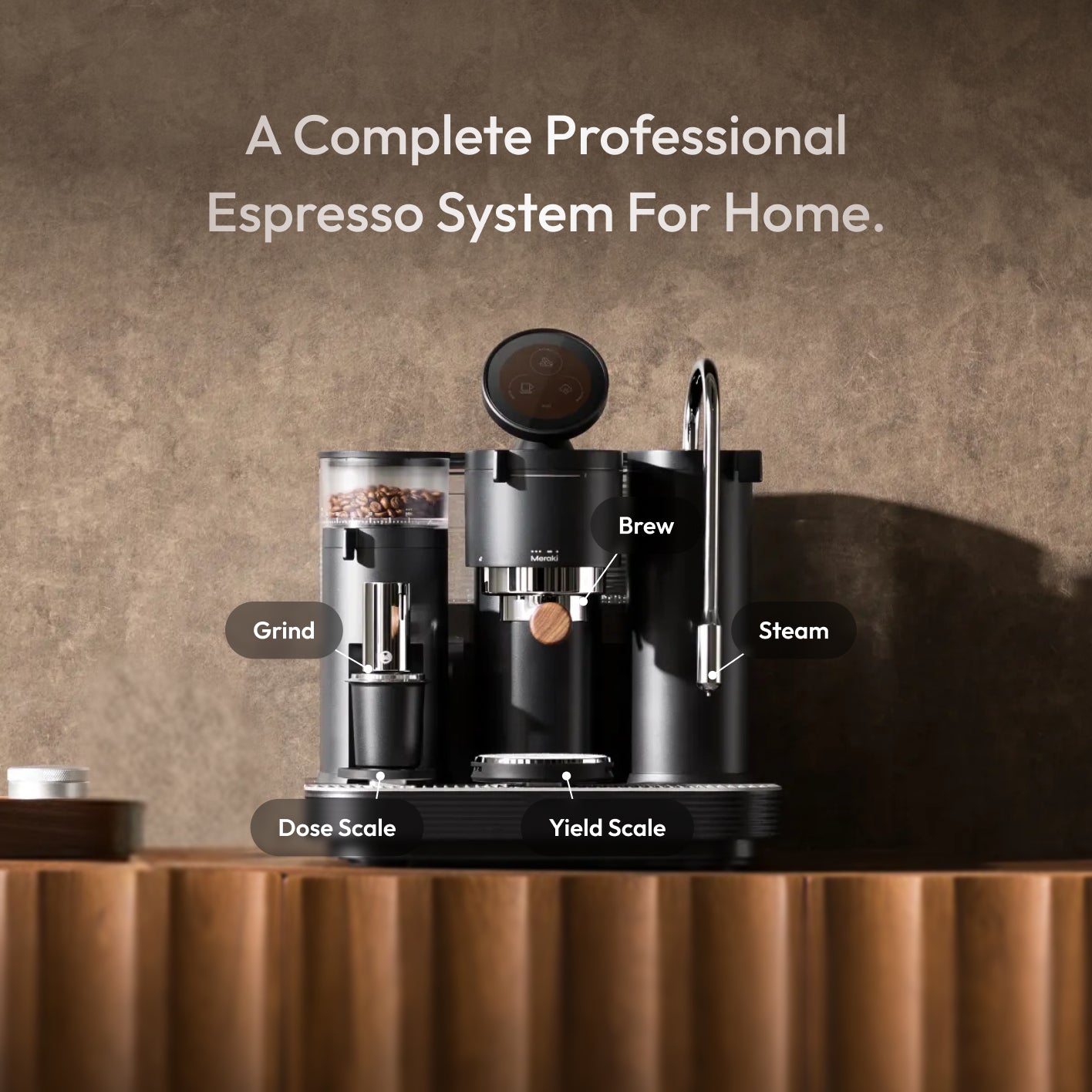
Thermally ready is a path problem — claim minutes, metal mass, cups, and recipe — not a single badge.
Home tests you can run without lab gear
You do not need a lab thermocouple array to spot claim theater. You need a phone timer, a locked recipe, and honest notes. Deep stability protocols live on Meraki’s home temperature-stability test guide. Here is the lighter sniff-test set for marketing minutes.
| Sniff-test | How to run it | What it tells you |
|---|---|---|
| Claim vs light | Time power-on to the ready light/screen; compare to the listing’s minute number | Whether the badge matches your ready signal |
| Shot 1 vs shot 2 | Same dose, grind, yield right at ready, then again 2–3 minutes later | Drift that heat may be impersonating |
| Portafilter habit | Heat with a clean portafilter locked if the manual allows; dry basket before dosing | Group/basket mass catching up with the boiler |
| Cup / pitcher | Warm cups; keep milk pitcher from fridge-cold when mornings allow | Serving heat vs brew-path heat |
| Steam sniff | Brief wand open after brew-ready; note spit vs dry steam | Separate steam clock the badge may ignore |
| Idle gap | After 10–15 idle minutes, pull again without changing grind | Recovery behavior (model-dependent) |
Keep one variable at a time. If shot 1 and shot 2 match after a short buffer past ready — but match worse at the light — your practice needs a buffer, not a louder claim. If flavor is off and flow looks wrong, fix grind, dose, and puck prep before blaming the minute badge. We will not publish invented °C charts or competitor ready-time rankings.
Settings most people should leave alone at first
Leave brew-temperature offsets, “secret flush rituals” from another brand, and aggressive always-on experiments alone until a locked recipe is stable on two mornings. Only flush when your manual asks for it — see Meraki’s warm-up time page. Leave PID menus at defaults for week one unless support walks you through a change. Leave smart-plug schedules until you know your real thermal buffer. Follow the manual and appliance safety context such as UL / CPSC rather than improvising heater workarounds. Change grind, dose, yield, and distribution first — claim literacy improves when the recipe stops moving.
Tradeoffs and limits of the feature
Fast “ready in X minutes” marketing usually optimizes time to a ready signal. Thermally consistent first cups often need path heat, a short buffer, and habit. Neither win is free.
| Claim language | What it often measures | What practice still owns |
|---|---|---|
| “Ready in 3 minutes” | Boiler sensor / UI ready state | Group, portafilter, basket still climbing |
| “Fast heat-up” | Shorter clock than a heavier design family | Not a guarantee shot 1 = shot 2 |
| “No warm-up needed” | Marketing shorthand | Physics still needs heat somewhere |
| Meraki ~3–4 min FAQ | Published heat-up by voltage / product summary | Still verify first-cup habit in your kitchen |
Limits of this page: we will not invent competitor ready-time tables, fake thermocouple rankings, or “hottest brew” brand scoreboards. Community reports that some heavy-group machines need long soaks are directional experience — label them as such, not as law for every home machine. Meraki’s design claims (dual boilers, PID + heated group head on the product page) explain why published heat-up can be short relative to long-soak traditions; they do not erase your duty to taste the first cup.
How this pairs with grinder, scales, or steam
Use claim minutes productively: grind during warm-up when it is safe and quiet enough for your home. A separate grinder adds noise and another clock; an integrated path (Meraki framing: TIMEMORE® co-developed burrs with auto-dose onto a built-in scale) can collapse station chaos. Built-in dual scales near ±0.2 g (Meraki published claim) help you see whether yield drifted from heat or from dose. Steam readiness is a second clock — do not call the machine “latte-ready” because the brew badge alone blinked. Morning timers and mise en place: smarter morning routine.
Practical takeaway checklist
Answer yes/no before you trust a ready-in-X badge or rewrite your morning:
- I am judging claim vs practice, not rewriting Meraki’s dual-boiler heat-up technical guide (A022) or the professional-machine definition page.
- I know what the listing’s minute number likely times (ready signal) — and that thermally ready can need a short buffer.
- I locked dose, grind, and yield before blaming the clock.
- I heat with a clean portafilter when the manual allows, and I dry the basket before dosing.
- I give milk drinks a steam sniff-test, not only a brew light.
- I refuse competitor “ready in X” charts that were never measured on my machine.
- For Meraki specifically, I re-check the live FAQ: ~3 min (220–240V) / ~4 min (100–120V), product summary about 3–4 minutes — framed as heat-up claim + thermal practice, not oversell.
- I know trial / return / warranty terms if first-week cups fail my expectation contract — see shipping, refund, and warranty.
Five or more clear “yes” answers usually means your claim literacy is adult: badge plus cup. Three or fewer — especially if you change grind every morning while chasing “temperature” — means stabilize the recipe first. Support: +1 833 854 9555 (Mon–Fri, 9 AM–5 PM EST) via support.
How long do I run my espresso machine?
Run it for your session — not all day by default.
Most home baristas power on for a session, pull shots, then shut down unless their manual and energy habits support scheduled idle. Leaving a machine hot shortens later waits but uses energy and may not fit apartments. There is no universal “always on” rule. Time power-on to your thermally ready buffer, brew, then power down when finished — unless you have an idle strategy you actually use. Safety context: UL.
Is there a coffee machine that does both pods and beans?
Yes — some consumer machines accept both — but that is a different purchase question.
Hybrid pod-and-bean models exist elsewhere. They answer format flexibility, not whether a “ready in 3 minutes” badge equals thermal readiness. Meraki’s hero product is a bean-to-cup all-in-one with an integrated standalone grinder — not a pod hybrid — so pods+beans is a noisy adjacent PAA, not this page’s job. Shop hybrids on their own terms; stay here for claim vs practice.
FAQ
Which coffee maker has the hottest brew temperature? There is no honest single-brand winner for “hottest,” and hotter is not automatically better for espresso. Espresso targets a useful brew-temperature band for extraction, not a kitchen boil contest. Prefer machines that document temperature control (for example PID + heated group language on Meraki’s product page) over ads that brag about maximum heat. For settings literacy, use Meraki’s PID guides; this page only flags the PAA as a distraction from claim vs practice.
Do “ready in 3 minutes” claims mean my first shot will match my second? Not automatically. Many claims time a ready signal (boiler or UI). Thermally ready for consistent shots can still need path heat, a locked portafilter habit, and a short buffer. Test shot 1 vs shot 2 under a locked recipe before you trust the badge as a flavor guarantee.
How should I read Meraki’s own heat-up minutes? Meraki’s FAQ (checked for this project’s live snapshot): about 3 minutes on 220–240V and about 4 minutes on 100–120V; the product FAQ also says about 3–4 minutes. Treat those as published heat-up claims. Still confirm first-cup habit in your kitchen — that is claim plus practice, not oversell.
What warming rituals usually beat the clock alone? Heat with a clean portafilter locked when the manual allows; dry the basket before dosing; warm cups; check steam briefly for milk drinks; give a short buffer past ready if shot 1 drifts from shot 2. Use warm-up minutes for grind and mise en place. Details: warm-up time and smarter morning routine.
When should I stop blaming the ready light? When flow and taste still fail after a buffer and a locked recipe — then grind, dose, distribution, and beans are likelier culprits than the minute badge. If hardware symptoms persist, contact Support (+1 833 854 9555, Mon–Fri, 9 AM–5 PM EST) rather than inventing flush rituals from another brand’s forum thread.
Conclusion
Ready in 3 minutes is useful when it honestly times a heat-up milestone — and misleading when you treat it as a certificate that the first cup is already thermally identical to the second. Spot the gap with claim literacy, short warming rituals, and sniff-tests; keep Meraki’s own ~3–4 minute FAQ framed as heat-up claim plus practice, not as magic.
For dual-boiler clock-vs-shot-ready technical depth, use Meraki’s A022 heat-up guide when published. For busy-morning product filters, use fast warm-up espresso machines. To see how Meraki documents dual boilers, PID + heated group head, and published heat-up minutes inside one grind–brew–steam system, open the Meraki Espresso Machine page, or call +1 833 854 9555 (Mon–Fri, 9 AM–5 PM EST) via Support.


