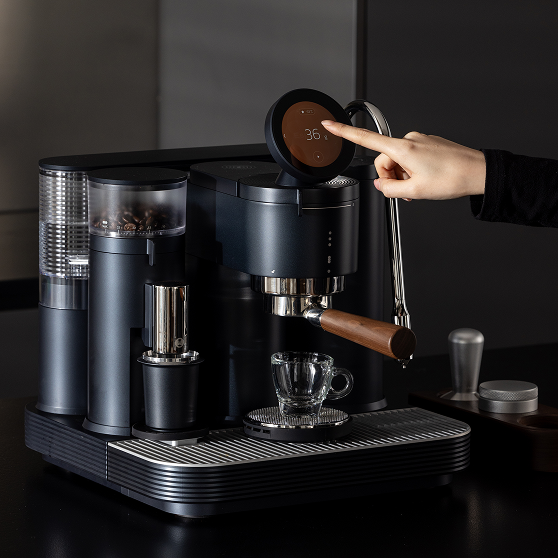
Espresso Machine with Real Time Weight Feedback

See how real-time weight feedback makes espresso yield and flow visible during extraction and helps diagnose recipe changes from shot to shot.

Follow Meraki

Facebook Instagram YouTube TikTok

Real-time weight feedback shows the espresso yield growing on the display as the shot runs, turning extraction into a visible process you can read and correct. Instead of watching a timer or guessing by eye, you watch the weight build and use that information to diagnose flow, timing, and recipe deviations. This page explains how real-time feedback works, what it reveals, and how to use it to improve your shots.

What Real-Time Weight Feedback Shows

The Meraki's brew scale measures the espresso continuously as it fills the cup, and the touchscreen displays the yield in real time. You see the shot build gram by gram: a slow start, a steady middle, and the accelerating end that signals the extraction is finishing.

That live number is information. The rate at which the weight climbs tells you the flow; the shape of the climb tells you about the bed. A steady climb indicates even extraction, while a stall or surge points to channeling or a variable shift. The display turns the shot from a timed mystery into a readable process.

Reading Flow Through the Weight

The weight curve is a flow diagnostic. In the first seconds after pre-infusion, the weight should climb slowly as the espresso begins to drip. Mid-shot, it should climb steadily; the steeper the climb, the faster the flow. Near the end, the climb accelerates as the puck degrades, which is the signal that the extraction is finishing.

If the weight stalls mid-shot, the flow has slowed, which usually means the grind is too fine or the bed is collapsing. If it surges suddenly, a channel has opened and water is rushing through one path. If it climbs unevenly, the bed is uneven. Real-time feedback makes each of these visible at the moment it happens.

The practical response: use the curve to confirm your diagnosis. A shot that climbs too fast confirms a coarse grind; one that stalls confirms a fine grind or a distribution problem. The recipe numbers, dose and yield, are already fixed, so the curve isolates the flow behavior.

Stopping at the Right Moment

Real-time feedback also informs the stop. With auto-stop, the machine ends the shot at the target yield, but you can watch the weight and stop manually when the flow looks right, such as when the stream blondens early. The display gives you the information for that judgment.

The combination is powerful: the weight shows you what is happening, and the stop lets you act on it. A shot that blondens at 32 g instead of 36 g may taste better stopped early, and the display tells you the moment is coming. Real-time feedback makes manual stopping informed rather than reactive.

Diagnosing Recipe Deviations

Weight feedback is the fastest way to spot recipe deviations. If the yield climbs faster than usual, the grind has drifted coarser or the beans have changed; if slower, finer or fresher. The deviation is visible in the first ten seconds, before the taste confirms it, saving a wasted shot.

The Meraki's system records the recipe, so a deviation stands out against the saved baseline. The display shows the current weight climbing against the expected pattern, and the diagnosis points at the grind, the beans, or the water. That is the practical value of feedback: it turns ""the shot was off"" into ""the flow was 15% faster than the saved recipe.""

The Learning Effect

The deeper value of real-time feedback is learning. Watching the weight curve while tasting the results builds a mental model of extraction: how flow relates to timing, how timing relates to taste, and how each adjustment changes the curve. Over a few weeks, you can predict a shot's character from its first ten seconds.

That skill is what separates a machine that makes espresso from a machine that teaches you to make it better. The Meraki's display puts the data in front of you, and the taste confirms what the data predicts. The feedback loop turns every shot into a lesson.

The Weight Curve as a Recipe Check

Real-time feedback is also a recipe verification tool. When a saved recipe is selected, the display shows the current yield against the expected pattern. If the weight climbs faster than the saved baseline, the grind has drifted or the beans have changed; if slower, the opposite. The deviation appears early, before the taste confirms it.

That early warning saves wasted shots and guides the adjustment. Instead of pulling a full shot and discovering it is off, you see the deviation in the first ten seconds and can stop or correct. For a household that values consistency, the curve is the daily check that the recipe is still alive.

Using Feedback to Learn a New Bean

A new bag of beans is where feedback pays off most. Pull the first shot with the saved baseline recipe and watch the curve: it tells you immediately whether the new bean flows faster or slower than the old one. Adjust the grind by feel of the curve, pull again, and confirm with taste. The dial-in is guided by data rather than trial and error.

The Meraki's display makes that guidance concrete: dose and yield are shown, the curve is visible, and the recipe records the winner. Over two or three shots, the new bean is dialed in, and the curve has taught you its character. That is the learning loop that real-time feedback creates.

Limits of Real-Time Feedback

The limits are honest. The display shows weight, not flavor, so it cannot tell you that a shot tastes sour or bitter; the taste remains your judgment. The scale depends on a clean, stable environment, so dust and movement can distort the curve. And the feedback is only useful if you act on it, which requires learning to read it.

Those limits are manageable. The Meraki's scale is integrated and protected, the workflow keeps the area clean, and the reading skill develops with practice. The trial period is the time to decide whether the feedback fits how you like to make espresso: data-driven and repeatable, or by feel and intuition.

Feedback and the Two-Drink Morning

Real-time feedback earns its place in the two-drink morning. The first shot's curve tells you the recipe is alive, and the second shot follows the same pattern, so both drinks are consistent. If the first curve deviates, you see it immediately and adjust before the second shot, saving the pair.

That consistency is what most owners notice first: the second cup tastes like the first, because the feedback caught any drift. The display is not a gimmick; it is the mechanism that keeps the morning repeatable.

Reading the Display in Practice

In practice, you read the display in a glance: the yield number climbing, the rate of the climb, and the approach to the target. A steady climb at the expected rate means the recipe is holding; a fast climb means the flow is quick; a slow one means it is restricted. The glance replaces watching the cup and guessing, freeing your attention for the milk or the cups.

The habit develops quickly. After a few sessions, you know what the curve should look like for each saved recipe, and a deviation is obvious before the taste confirms it. That is the practical skill that real-time feedback teaches, and it is the reason the feature changes more than the workflow.

The Bottom Line

Real-time weight feedback shows the yield growing during the shot, making flow, timing, and deviations visible as they happen. The Meraki's brew scale and touchscreen deliver that visibility, with auto-stop for the endpoint and manual override for judgment. Read the curve to diagnose flow, use the display to stop at the right moment, and build a mental model of extraction over time. The shot stops being a mystery and becomes a process you can read, correct, and reproduce.

Frequently Asked Questions

What does real-time weight feedback show?

The yield growing in the cup as the shot runs, displayed live. The rate of growth reveals flow behavior, and the shape of the climb reveals the bed's condition.

How does feedback help diagnose channeling?

Channeling shows as a sudden surge in the weight curve, when water rushes through a low-resistance path. The display makes that surge visible at the moment it happens.

Can I stop the shot manually with feedback?

Yes. The display shows the yield approaching your target, so you can stop the pump early when the flow blondens or let auto-stop finish at the target.

Does feedback replace tasting?

No. Feedback tells you what the machine is doing; tasting tells you whether the result is good. The two together build a complete picture of the shot.

Is real-time feedback worth the extra cost?

For anyone who wants to improve, yes. It shortens the learning curve, speeds diagnosis, and turns every shot into readable data. For a casual user, it is a nice display rather than a necessity.


Evaluate Real-Time Feedback Within the Full Machine

Live yield feedback is most useful when the grinder, brew temperature, pressure delivery, and recipe controls are also consistent. Compare the complete workflow in the professional espresso machine for home guide, then review the integrated measurement system on the Meraki Espresso Machine page.


From Live Feedback to Brew-by-Weight

Live feedback shows the shot as it develops; brew-by-weight uses that measurement to stop at a defined yield. See the complete brew-by-weight guide for the full decision framework.