


You already own a kettle, or you are about to buy one, and a product page is whispering that you can also get “espresso-style” drinks from hot water alone. The useful espresso machine vs electric kettle question is narrower than a generic coffee-maker comparison: what can a kettle actually brew, and what can it never do?
A kettle heats water for pour-over, press, and tea. An espresso machine is built to push water through a fine puck under pressure and, on most home models, to steam milk. If your mornings are filter coffee, stay with the kettle. If you want short shots and milk drinks, you need the machine.
What an electric kettle can brew well at home
A kettle is a water heater, and that is a real job.
Used well, it gives you temperature control and a clean pour for coffee that is brewed by gravity or steeping, not by pump pressure. That is enough for several complete drinks, just not for espresso.
A gooseneck electric kettle is at its best when you are brewing pour-over, French press, or AeroPress, or when you are making tea beside the coffee ritual. You can heat only the water you need, hold a target temperature, and wet the grounds in a slow, even stream. Pair it with a scale and fresh beans from a coffee bean collection and you already have a serious filter setup. The National Coffee Association’s brewing overview is a clear primer on these manual methods. What the kettle will not do is compact a fine puck or force water through it. Treat it as the heat source for a brew method you already chose, not as a shortcut to cafe shots.
What only an espresso machine is built to do
Espresso is a pressure brew, not a hotter kettle pour.
The machine exists to deliver a short, concentrated shot and, in most home kitchens, to texture milk with steam. Those two tasks are why the box is larger than a kettle and why the workflow is different.
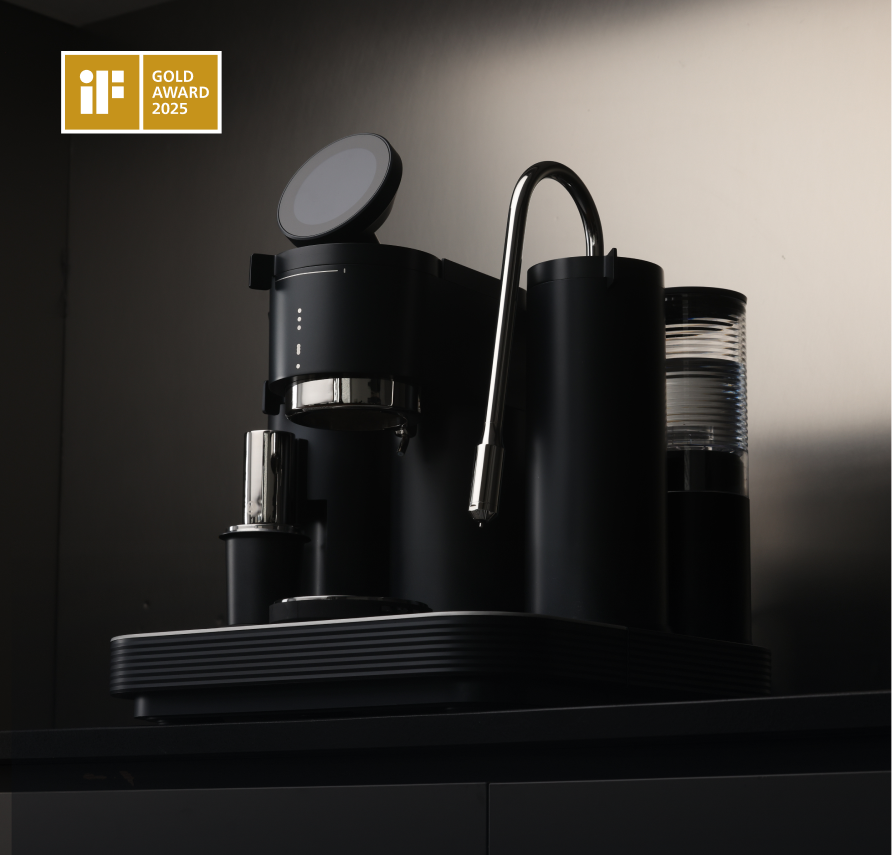
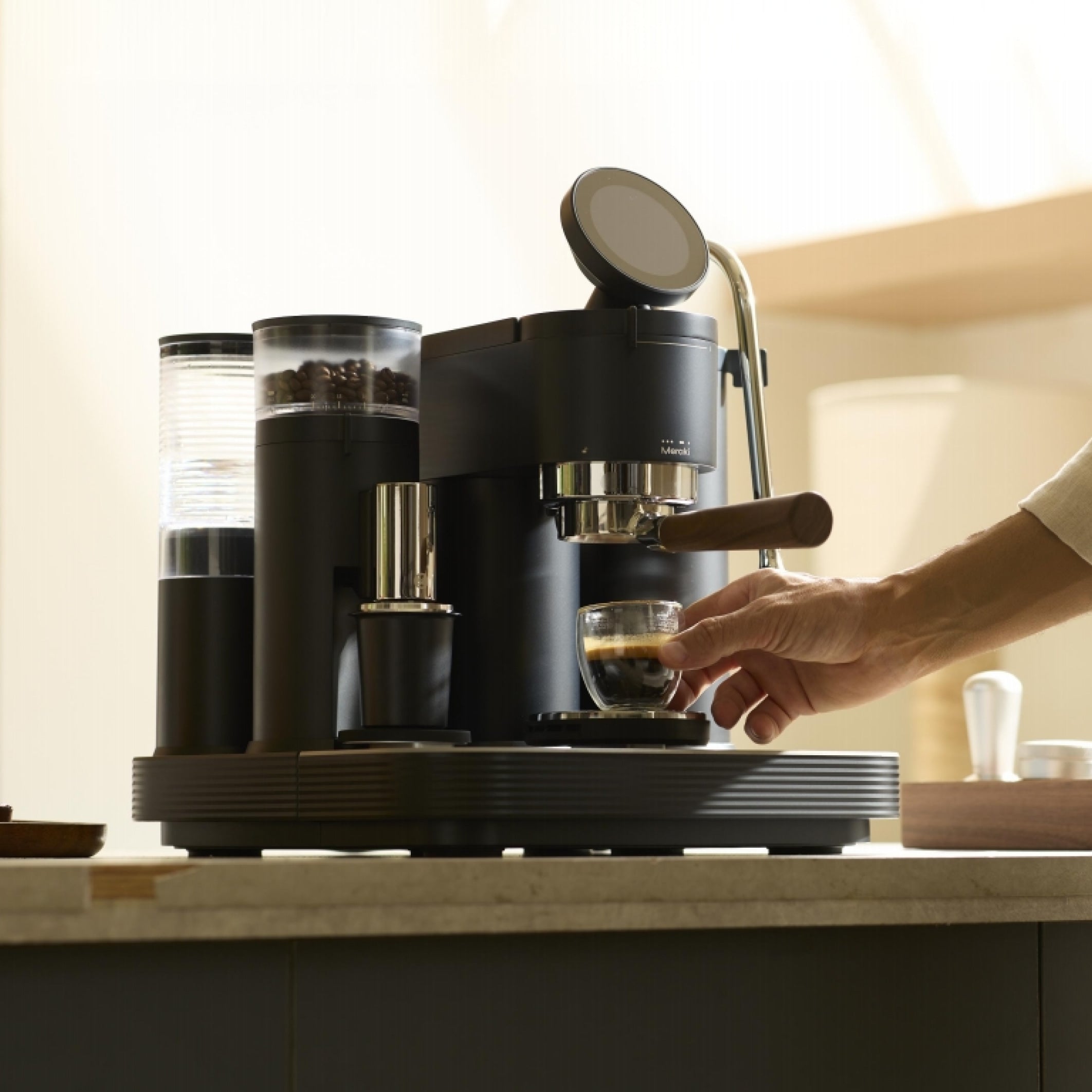
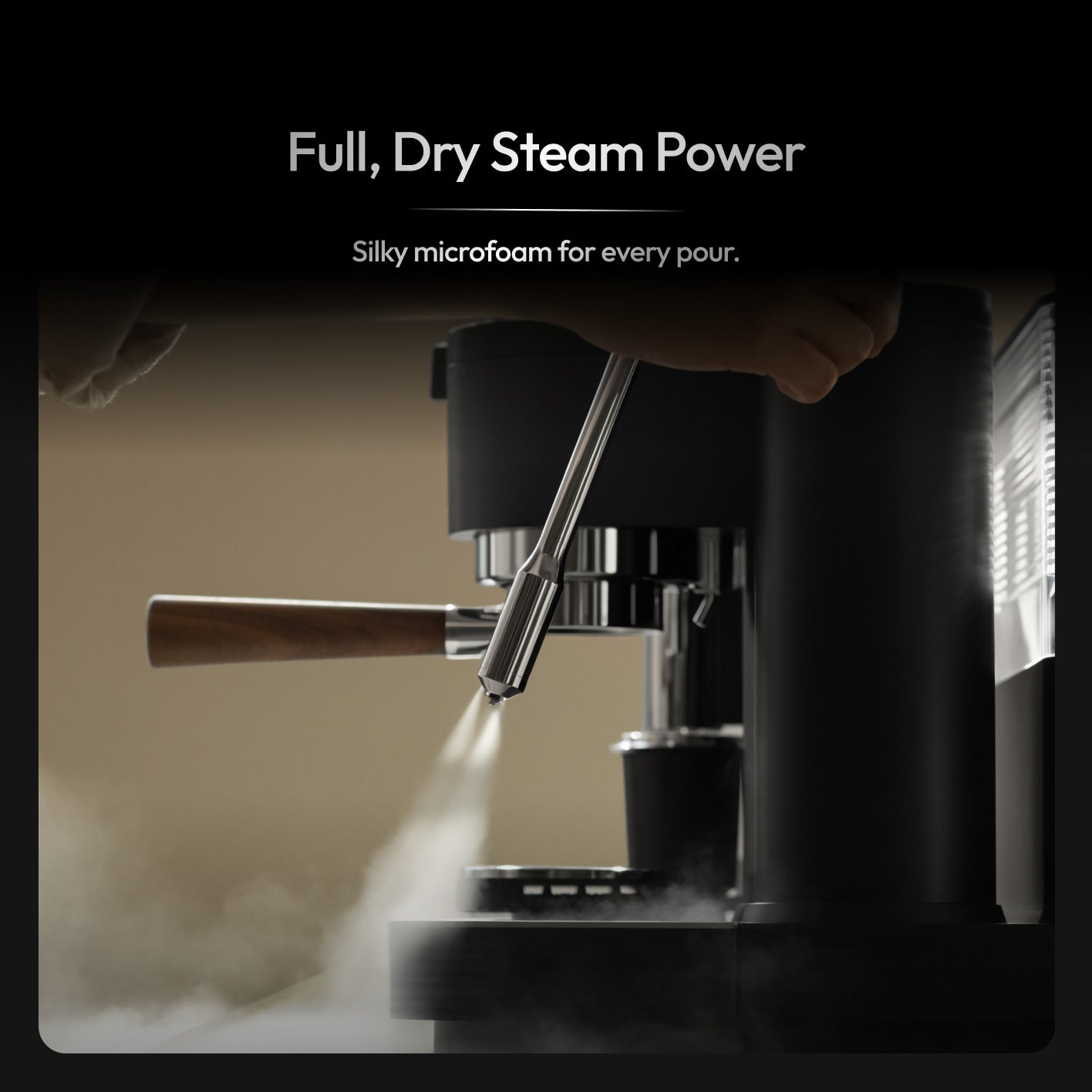
A typical espresso path starts with a fine grind, a measured dose in a portafilter, and water driven through that puck under pressure, often discussed in specialty coffee around a nine-bar brewing range rather than a marketing pump number. The result is a small, dense shot with heavier body than a pour-over of the same beans. If the machine has a steam wand, you can then stretch milk for a latte or cappuccino without boiling it in a microwave. That combination — pressure extraction plus steam — is the job a kettle is not designed for. For a category-level view of espresso as a distinct brew method, the Specialty Coffee Association education hub is a useful independent starting point. If you want to see how one guided all-in-one organizes grind, brew, and steam, look at the current Meraki espresso machine product page rather than treating any brochure number as this article’s claim.
Taste, body, and milk drinks: a practical side-by-side
The cup tells you the difference faster than the spec sheet. A kettle-brewed pour-over is usually a larger serving, with a clearer aroma and a lighter body. Espresso is a shorter, denser drink. Oils and dissolved solids are concentrated into a couple of ounces, so the same roast can taste sweeter, heavier, or more intense than it did in a dripper.
Milk changes the comparison completely. On a kettle path, “a latte” is often strong coffee plus heated or frothed milk from a separate tool. On an espresso path, steamed milk is built on a shot, which is why cafe milk drinks are named around espresso. If your household actually orders cappuccinos, flat whites, and lattes, the kettle is the wrong primary tool. If you drink black coffee and occasionally tea, the kettle is often the more honest match. Roast still matters on both sides; the NCA roast-level guide is a plain-language map when you are matching a light or dark bag to the brew method.
| Decision point | Electric kettle setup | Espresso machine |
|---|---|---|
| What it actually makes | Hot water for pour-over, press, AeroPress, tea | Pressure-extracted shots, often with steam for milk drinks |
| Texture in the cup | Larger, clearer, filter-style body | Short, dense shot with heavier body |
| Milk drinks | Possible only with a separate frother or pan | Steam wand can texture milk for lattes and cappuccinos |
| Morning pace | Heat water, pour or steep, drink | Heat the group, grind, extract, then steam if needed |
| Counter role | Small footprint; shares space with a dripper and scale | A dedicated station, plus room to work the portafilter |
Time, counter space, and morning workflow
A kettle is usually faster to put away than it is to master.
You wait for a boil or a set temperature, then you pour or steep. The active work is short, and the kettle can live in a cabinet if the counter is crowded. An espresso machine asks for a reserved patch of counter and a few more steps, especially when milk is involved.
Think in weekday minutes, not in brochure claims. A gooseneck routine can be two or three focused minutes once the water is hot. An espresso weekday includes warm-up, grinding, a shot, a wipe-down, and steam if you want a latte. Space matters too: a kettle plus dripper can share a tray, while a machine wants a stable landing zone. If a pour-over habit is already working, do not buy a machine just to fill the counter. If you already walk to a cafe for milk drinks, that footprint is the cost of moving the habit home. For idle-heat and “leave it on” habits, the ENERGY STAR site is a better official starting point than a guess about your utility bill.
Cost of ownership beyond the box price
The sticker price is the wrong place to stop. A kettle setup’s ongoing cost is mostly beans, filters, and occasional descaling. An espresso setup adds a grinder if the machine does not include an integrated standalone grinder, plus more frequent cleaning, water care, and a dairy or oat bill if you drink milk drinks.
Do not use this page as a price list; promotions change. Compare the whole station you would actually buy, then confirm current figures on the live product or retailer page. Both methods reward fresh coffee, and a stale bag will not be saved by either tool. For a food-composition reference, not marketing, USDA FoodData Central lists coffee and milk entries. The honest cost question is whether you will use the tool on weekdays, or whether it will become a weekend ornament.
When a kettle-plus-pour-over setup is the honest choice
Choose the kettle path when the drink you actually want is a filter cup.
If you enjoy blooming, pouring, and tasting origin character in a larger mug, a gooseneck and a dripper are not a compromise. They are the right tool, and buying an espresso machine would be a different hobby.
This is also the honest choice when counter space is tight, when most of the household drinks tea or press coffee, or when you do not want a daily steam-wand wipe-down. A kettle setup stores easier and fails more gently: if you rush, you still get a drinkable cup. Espresso is less forgiving of a coarse grind or a cold group. Stay with the kettle if your cafe order is rarely a latte and the only pull toward a machine is a feeling that espresso is “the next level.” A well-made filter brew is already a complete coffee life.
When a home espresso machine is the better next step
Choose the machine when the drinks you miss are shots and steamed milk.
If your regular order is a cappuccino, flat white, or espresso, a kettle cannot close that gap no matter how precise the temperature is. The next step is a real espresso workflow, not a narrower spout.
Look at your last ten cafe receipts, not at a single Saturday experiment. If milk drinks dominate, or if you want an Americano that starts from a shot, an espresso machine is the better spend. You will also want a grinder that can hold a fine, repeatable setting; some home machines include an integrated standalone grinder so the station stays in one footprint. Meraki publishes this guide and sells the all-in-one linked above; it is one option in that category. Confirm current features and terms on the product page, and read owner notes on the Meraki reviews page.
If you already own a kettle, what you still need for espresso
You can keep the kettle. You still cannot skip the espresso parts.
Hot water is only one ingredient. Espresso still needs a way to grind fine, a portafilter and basket, a pump or lever to create brewing pressure, and a plan for milk if lattes are the point.
A common mistake is to keep the gooseneck, add a mug accessory, and wonder why the drink is not espresso. You still need an espresso-capable grinder, a machine that can lock in a puck, and steam or a serious frother if milk drinks are the point. The kettle remains useful for tea, guests, and preheating cups. It does not become the espresso machine. Owning both is a two-job kitchen, not a redundancy. For brand context, see About Meraki.
How to judge ‘espresso-style’ claims on kettles and accessories
Read the method, not the adjective.
“Espresso-style” on a kettle, funnel, or cup accessory usually means a stronger or darker coffee, not a pressure-extracted shot. If the tool cannot generate brewing pressure through a fine puck, it is not an espresso machine.
Watch for three tells. First, the product heats or pours water but never mentions a portafilter, pump, or lever. Second, the serving size is a full mug described as a “shot.” Third, the pitch leans on a high bar number with no explanation of where that pressure is measured. Pump ratings and brewing pressure at the puck are not the same thing. A stovetop moka pot is also not a kettle and not an espresso machine; it is its own brew, and it still will not steam milk like a wand. If you want espresso, shop for an espresso machine. If you want better pour-over, shop for a kettle, a dripper, and better beans. The label on the box should not be allowed to blur those jobs.
A simple decision checklist
Use the drinks you already order, not a hypothetical home cafe, to choose. If the answers lean toward filter coffee, stop at the kettle. If they lean toward shots and milk, start shopping for an espresso machine and a capable grinder path.
Walk through the list once, honestly, before you add another appliance to the counter.
| Ask yourself | If you answer yes |
|---|---|
| Is my usual cup a pour-over, press, or mug of tea? | A kettle setup is likely enough. |
| Do I regularly want cappuccinos, flat whites, or straight espresso? | Look at a home espresso machine. |
| Am I hoping a gooseneck will make cafe shots? | It will not; that is a category error, not a technique gap. |
| Is my counter already full? | Keep the smaller kettle station unless milk drinks are non-negotiable. |
| Will I use the tool most weekdays, not only once? | Buy for the habit you will keep, then confirm live product details before you pay. |
Conclusion
If you want filter coffee, buy or keep an electric kettle and brew on purpose. If you want espresso and steamed-milk drinks, you need an espresso machine; the kettle can stay for pour-over and tea, but it cannot pull the shot. Choose the tool that matches the drinks you already love, then verify current features and terms on the live product page.
If a guided home espresso workflow is the next step, start with the Meraki espresso machine product page and current owner notes on Meraki reviews.
FAQ
Can I use an electric kettle for coffee?
Yes. An electric kettle is a strong tool for pour-over, French press, AeroPress, instant coffee, and tea, as long as you can heat the amount of water you actually need. It does not replace an espresso machine. True espresso is a short, concentrated shot made by pushing hot water through a finely ground, compacted puck under pressure. A kettle only supplies hot water. Use it for filter-style coffee, and choose an espresso machine when you want shots and steamed-milk drinks.
Can you make espresso with an electric kettle?
No. Heating water in an electric kettle, even a gooseneck with precise temperature control, does not create the pressure used for espresso. You can make a strong pour-over, a moka pot on a stove, or an AeroPress, but those are different brews with different body and texture. If your goal is a crema-topped shot and milk drinks built on that shot, you need a pump or lever espresso machine and a grinder that can work in the espresso range.
What is the difference between a kettle brew and an espresso machine?
A kettle brew is gravity and time: hot water meets a coarser bed of coffee and drips or steeps. An espresso machine forces a smaller dose of finely ground coffee under pressure for a short, dense shot. The kettle cup is usually larger, clearer, and more aromatically open. The espresso shot is smaller, heavier in body, and built to carry milk. Neither method is a failed version of the other; they are different jobs in the same kitchen.
Is a gooseneck electric kettle enough if I already like coffee at home?
It can be, if your daily drinks are pour-over, press, or tea, and you do not need steamed-milk drinks on demand. A good kettle plus a dripper, a scale, and fresh beans is a complete filter setup, not a half-finished espresso bar. Add an espresso machine when the drinks you actually miss are shots, Americanos from shots, or lattes and cappuccinos with real steam. Keep the kettle if you still want filter coffee; the two tools do not cancel each other.


