


You bought (or are shopping) a digital espresso machine — touchscreen, OLED strip, or a cluster of live readouts — and every shot now flashes grams, bars, seconds, and temperatures. The open question is not “does it have a screen?” It is digital espresso machine display what to watch: which numbers help dial-in and troubleshooting, which deserve a glance, and which are vanity noise.
This Meraki explainer owns metric triage for data-curious home users. Soft-link digital espresso machine interfaces that help for UX and interface design; what is a touchscreen espresso machine for the category definition; 9 bar and beyond for pressure physics; shot timers: why the 25–30 second window matters for timer-only literacy; pressure gauges: reading the needle for analog-gauge how-to; and espresso machine apps: what they actually do for phone-app feature lists. Soft-name CoffeeSense / guided-touchscreen / smart-UX drafts (A061–A069 family) when suggestion systems or first-month curricula — not readout triage — are the next click.
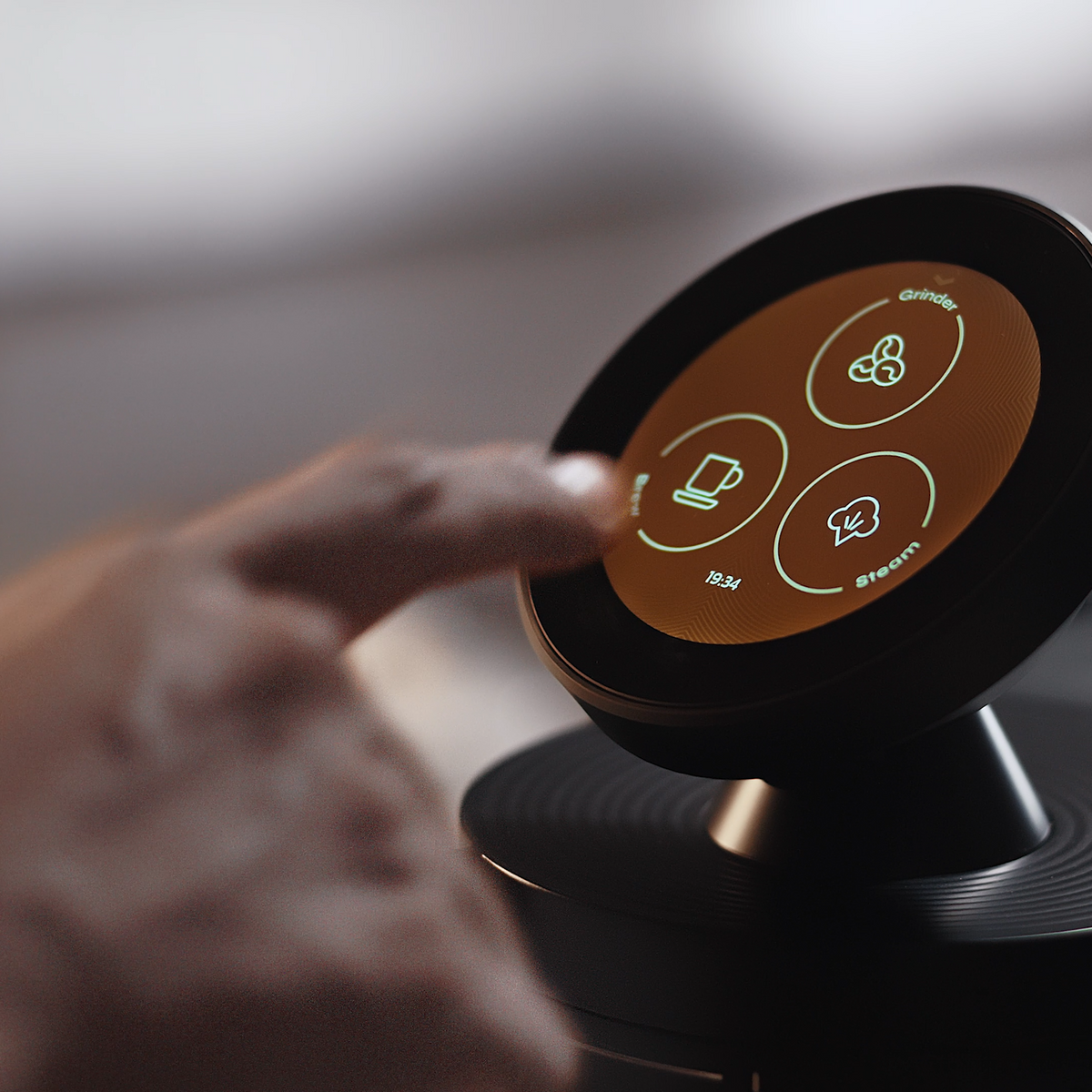
A useful display is a triage board: watch the levers that change the cup, glance at status, ignore vanity noise.
What “digital espresso machine display what to watch” really means for home buyers
Digital espresso machine display what to watch, for data-curious home users, means ranking on-screen numbers into watch / glance / ignore so dial-in and troubleshooting stay fast — not memorizing every pixel on a recipe screen.
SERP for this phrase is noisy: YouTube unboxings that pan a glowing UI, “15-bar / 20-bar” shopping cards, portable-monitor videos that share the word espresso Display, and smart-coffee posts that equate “digital” with an app. Useful shoppers already know screens exist. What they still lack is a metric triage card: which live readouts change dose, yield, time, or temperature decisions; which only confirm the machine is ready; and which look precise while saying little about the cup.
Treat the display as three layers. Layer one is action metrics (dose grams, yield grams, shot time, brew temperature target you can set). Layer two is status metrics (warm-up / ready, boiler or steam state, water-tank / maintenance prompts). Layer three is vanity or misread metrics (peak pump marketing bars, animated “power” bars, decorative graphs you never act on). Soft-link interface and touchscreen definition posts when how the UI is laid out is the question; stay here for which numbers earn attention.
Who this page is for (and who should skip it)
This page is for data-curious users — people who like numbers on a digital espresso machine display and need a calm rule for what to watch while dialing shots or fixing a sour / bitter weekday cup.
Skip interfaces that help when the open question is UX layout and button hierarchy; what is a touchscreen espresso machine when you need the category definition; 9 bar and beyond when you want pressure physics; shot timers when the only lever you care about is the 25–30 second window; pressure gauges when you need analog-needle how-to; and espresso machine apps when the phone feature list — not the chassis screen — is the topic. Soft-name CoffeeSense / guided first-30-days / family-profile drafts when suggestion systems or household recipes own the next click. Come here for: watch / glance / ignore on the display.
Why metric triage is the real display problem
This article is published by Meraki. The unique job is metric triage: sort digital display readouts into numbers that help dial-in and troubleshooting, numbers that confirm status, and vanity metrics you can safely ignore.
That is not an interface design tour, not a touchscreen definition, not a pressure-physics deep dive, not a shot-timer-only essay, not a gauge how-to, and not an app feature list. Soft-link those posts when their lane owns the next click; keep this page for which on-screen numbers matter.
Disclosure: Meraki sells the Meraki Espresso Machine — dual boilers, rotary pump framed near steady 9 bar, built-in dual scales (±0.2 g), TIMEMORE® co-developed grinder, guided touchscreen with visible brew variables. Live framing (2026-10-26/27): heat-up about 3–4 minutes; brew and steam together. Re-check the touchscreen espresso machine for home hub and product page before treating numbers as permanent. No invented German Design / Red Dot claims here.
The triage card in plain language
Metric triage is a habit, not a lab degree. Before every dial-in session, decide which readouts you will watch, which you will glance at, and which you will ignore until something tastes wrong.
| Priority | Typical readout | What it is for | What it is not |
|---|---|---|---|
| Watch | Dose (g) | Grounds in — Monday matches Tuesday | A taste score by itself |
| Watch | Yield (g) | Liquid out — ratio and stop target | Proof the shot “looks café” |
| Watch | Shot time (s) | Pace check after dose/yield are set | A hard 25–30 rule without soft-link context |
| Watch | Brew temp target (°C/°F) you can set | Heat lever for light vs dark beans | A promise the puck is exactly that temp |
| Glance | Ready / warm-up state | Start only when brew path is stable | A flavor metric |
| Glance | Steam / boiler ready | Milk timing on dual-boiler mornings | Extraction science |
| Glance | Water / empty / rinse prompts | Avoid mid-shot fails | Dial-in levers |
| Ignore (until failure) | Peak “15 / 20 bar” marketing flashes | Often pump capability theater | Steady brew pressure at the puck |
| Ignore (until failure) | Decorative power / “intensity” bars | UI chrome | Substitutes for dose, yield, time |
| Ignore (until failure) | Unlabeled graphs you never act on | Visual noise | Troubleshooting evidence |
Category literacy from the Specialty Coffee Association and CoffeeGeek guides still starts with grind, dose, yield, and taste. Soft-link 9 bar and beyond when a bar number needs physics; soft-link shot timers when time is the only lever left; stay here for the priority order on the screen.
What changes in your daily cup when you watch the right numbers
Watching the right numbers changes repeatability, not mystique. Dose and yield in grams let you keep a stable brew ratio when beans age or humidity shifts. Shot time becomes a pace check after those weights are honest — not a stopwatch religion. A settable brew temperature target gives you one heat lever when light roasts taste sour or dark roasts taste flat, without touching every other setting at once.
Ignoring vanity metrics changes mornings too. You stop chasing a peak bar flash that never matched puck pressure, and you stop “fixing” a decorative intensity bar that does not move dose or yield. Glance-only status lights keep you from pulling into a cold brew path or an empty tank — boring, high-value habits. Soft-link interfaces that help when the screen layout still hides those watch metrics; soft-name dual-scales role drafts when you need dose-vs-yield job clarity beyond triage.
NCA brewing basics and About Coffee brewing still separate method from gadgets. A digital display earns its keep when Monday’s cup can explain Tuesday’s without a new superstition.
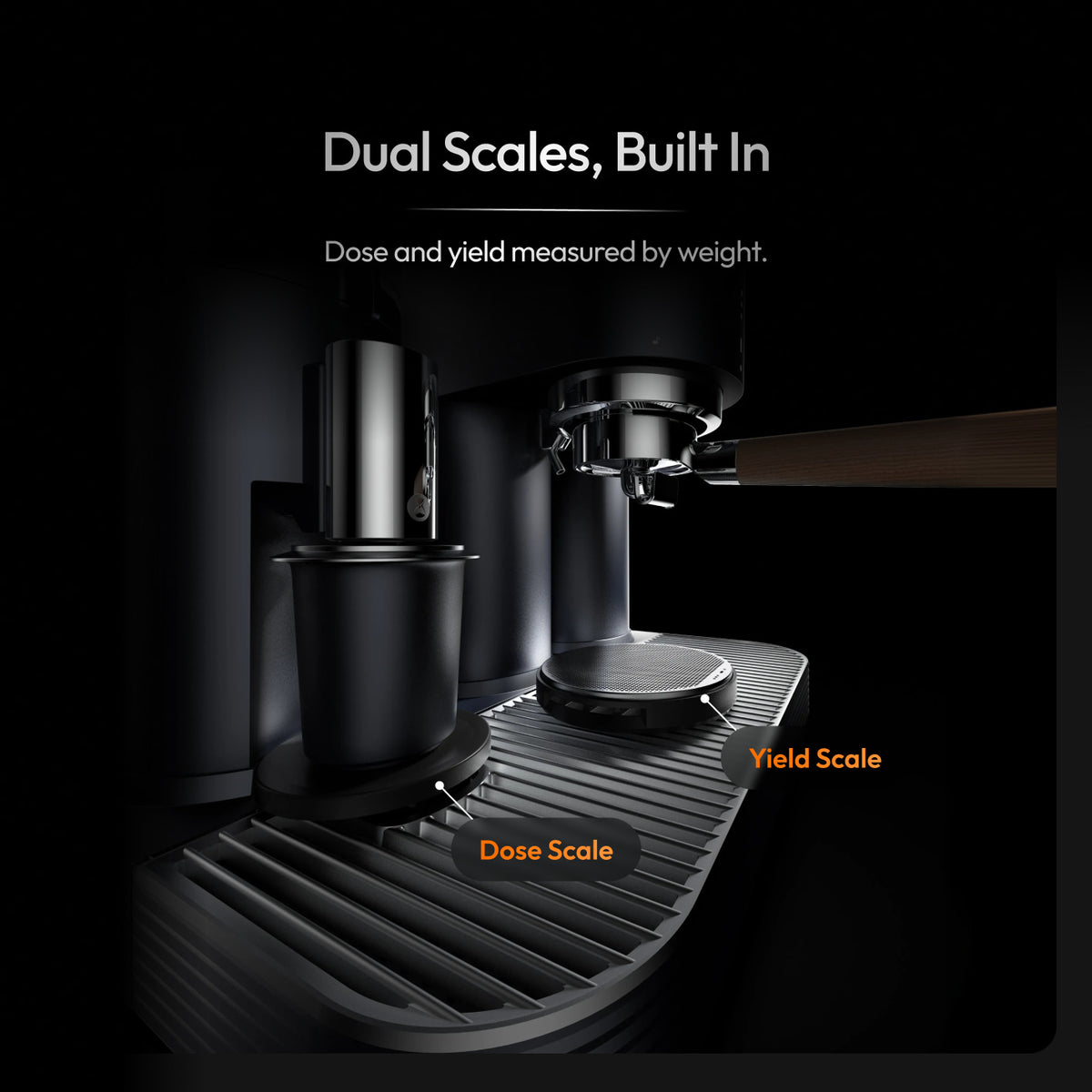
Dose grams and yield grams sit in the Watch column — they are the display numbers that usually fix a sour or bitter weekday shot first.
Home tests you can run without lab gear
You do not need a data logger. You need one controlled shot where the display is the subject — not latte art.
Step workflow — display metric triage
- Write three columns on a note: Watch / Glance / Ignore. Fill them from the table above for your screen labels before you brew.
- Pull one baseline shot. Lock dose and yield first (or a fixed basket dose + timed yield if that is all you have). Record shot time and any brew-temp target you actually set. Soft-link shot timers only after weights are honest.
- Change one Watch metric only. Example: raise yield 2–3 g, or nudge grind after dose is stable. Do not touch Ignore-column chrome in the same shot.
- Taste and log. Sour / thin / bitter / hollow — one word is enough. Barista Magazine and SCA-shaped cupping habits still beat screenshot culture.
- Promote or demote a readout. If a flashing bar never predicted taste across three shots, move it to Ignore. If a “ready” light saved a cold pull, keep it in Glance.
- Stop when the card is stable. Further pixel-chasing is anxiety, not data. Soft-name guided first-30-days drafts when curriculum — not triage — is the next habit.
NIST is a reminder that trust grows when you can re-measure the same target. Here, re-measure dose and yield before you trust a vanity flash.
Settings and readouts most people should leave alone at first
Early dial-in dies when every icon looks urgent. For digital espresso machine display triage, leave these alone until Watch metrics are boringly stable:
- Peak bar / “max pressure” celebrations. Soft-link 9 bar and beyond and pressure gauges when you truly need pressure literacy — do not treat a marketing peak as a dial-in lever.
- Nested profile editors and advanced graphs. Soft-link interfaces that help for UX; soft-name family-profile / smart-control drafts when multi-user recipes are the real need.
- App dashboards that mirror vanity chrome. Soft-link espresso machine apps before you manage the same Ignore metrics on a phone.
- Temperature micro-steps under 1 °C / 2 °F until dose, yield, and grind are repeatable.
- Every maintenance animation mid-shot. Glance after the cup, not during extraction — unless the machine forces a stop.
UL and CPSC still frame appliance safety; a busy screen is not a reason to skip water, heat, and steam common sense.
Tradeoffs and limits of on-screen metrics
Displays trade visibility for attention cost. More numbers can shorten learning — or freeze a morning while you stare at bars that never changed the cup. Built-in dual scales (±0.2 g on Meraki’s live framing) help only if you watch dose and yield as separate jobs; a precise wrong target is still wrong. Shot time without mass is a pace rumor. Temperature targets without puck prep and grind control are a heat rumor.
Limits to accept early: screens report what sensors see, not “café soul”; NFC or suggestion systems (soft-name CoffeeSense drafts) may preload parameters you still must confirm on the Watch list; apps can lag or duplicate chassis UI without adding triage. Soft-link touchscreen definition and interface posts when the blocker is finding the metric; keep this page when the blocker is ranking it.
How this pairs with grinder, scales, or steam
Metric triage sits on top of hardware jobs — it does not replace them.
Grinder: Finer / coarser still moves flow more than any decorative bar. Watch dose grams after the grind change so you do not “fix” time while mass drifts. Soft-name integrated vs separate grinder ownership when station sprawl — not display triage — is next.
Scales: Dose and yield belong in Watch whether they are built-in or a mat scale you trust. Soft-name dual-scales role-clarity drafts when “which platform weighs what” is still confusing.
Steam: Glance steam-ready on dual-boiler mornings so milk does not stall the shot log. Soft-link dry-steam or milk-texture posts when foam quality — not readout priority — is the pain. Soft-name weekday-routine drafts when clock time, not metrics, is the habit to lock.
Energy.gov is a reminder that dual-boiler heat still costs energy — another reason not to leave the machine idle while you scroll Ignore-column graphs.
Practical takeaway checklist
Use this as a fridge-door card, not a second manual.
- Primary keyword job done: you know digital espresso machine display what to watch means triage, not more pixels.
- Fill Watch / Glance / Ignore for your labels before the next dial-in.
- Change one Watch metric per test shot; taste in one word; log dose, yield, time.
- Soft-link pressure, timer, gauge, interface, touchscreen-definition, and app posts when those lanes own the deep dive — do not rebuild them here.
- Soft-name CoffeeSense / guided-UX drafts when suggestion systems or curricula are next; stay off vanity chrome.
- Stop when cups repeat; screenshots of Ignore metrics are not progress.
- Re-check live Meraki specs on the touchscreen hub before treating any number as permanent.
What is the bar rating on an espresso machine?
Often a pump or marketing figure — not puck truth. Many boxes flash 15 or 20 bar as a peak capability; espresso extraction at the puck is commonly discussed near about 9 bar of brew pressure. Soft-link 9 bar and beyond for the physics and pressure gauges for needle reading. On a digital display, treat a peak-bar celebration as Ignore until failure; watch dose, yield, and time first.
When metric triage is clear, compare Meraki’s guided touchscreen and visible brew variables on the touchscreen espresso machine for home page — then keep your own Watch list short enough for a Tuesday before caffeine.
FAQ
What do espresso machine screens actually do?
Useful screens show actionable brew variables — dose, yield, time, temperature targets — plus status prompts like ready, steam, water, and rinse. They do not replace grind, puck prep, or taste. Soft-link Meraki’s interfaces and touchscreen-definition guides for layout and category literacy; use this page to triage which numbers deserve attention during dial-in.
What are the different types of espresso machines?
Broad home classes include manual/lever, semi-automatic, automatic/volumetric, and super-automatic (bean-to-cup), with heat designs such as single boiler, heat exchanger, dual boiler, and thermoblock variants. A digital display can appear on more than one class — the screen type does not define the machine class. Soft-link Meraki machine-guides hubs when you need a class deep dive; stay here for readout triage.
Why is La Marzocco so popular?
In short, café heritage, durable dual-boiler platforms, and a strong professional reputation — popularity is not a display-metric lesson. Soft-link Meraki’s dual-boiler and pressure literacy posts when architecture or bars are the real question; this page does not rank or bash brands.
Should I trust the shot timer or the scale first?
Watch dose and yield first; use shot time as a pace check after mass is stable. Soft-link Meraki’s shot-timer explainer for the 25–30 second window in context. A perfect timer with drifting grams usually means you dialed the wrong lever.
Do I need a phone app if the machine already has a digital display?
Not for basic triage. If the chassis already shows dose, yield, time, and ready states, an app is optional convenience or remote logging — soft-link Meraki’s apps explainer for what apps actually do. Avoid managing the same vanity metrics on two screens.


