


You can purge, stretch, and still get foam that looks shiny in the pitcher — then collapses into thick blobs when you pour a heart. A dry steam espresso machine for microfoam only helps latte-art practice when dryness shows up as pourable texture targets, not as a steam-boiler brochure claim.
This Meraki guide owns microfoam focus: stretch/texture targets dry steam unlocks, the wand-drying habit that protects pourable foam, and a weekday microfoam checklist for latte-art practice starters. Soft-link why dry steam matters for dryness literacy. Soft-name powerful steam wand technique (scorch/safety) and milk temperature sensor workflow (Auto Temp Stop habits). Soft-lane upcoming practice plans, cappuccino/flat-white curricula, auto-vs-hand temperature comparisons, and skill-stage maps. Use this page for dry steam → microfoam you can pour.
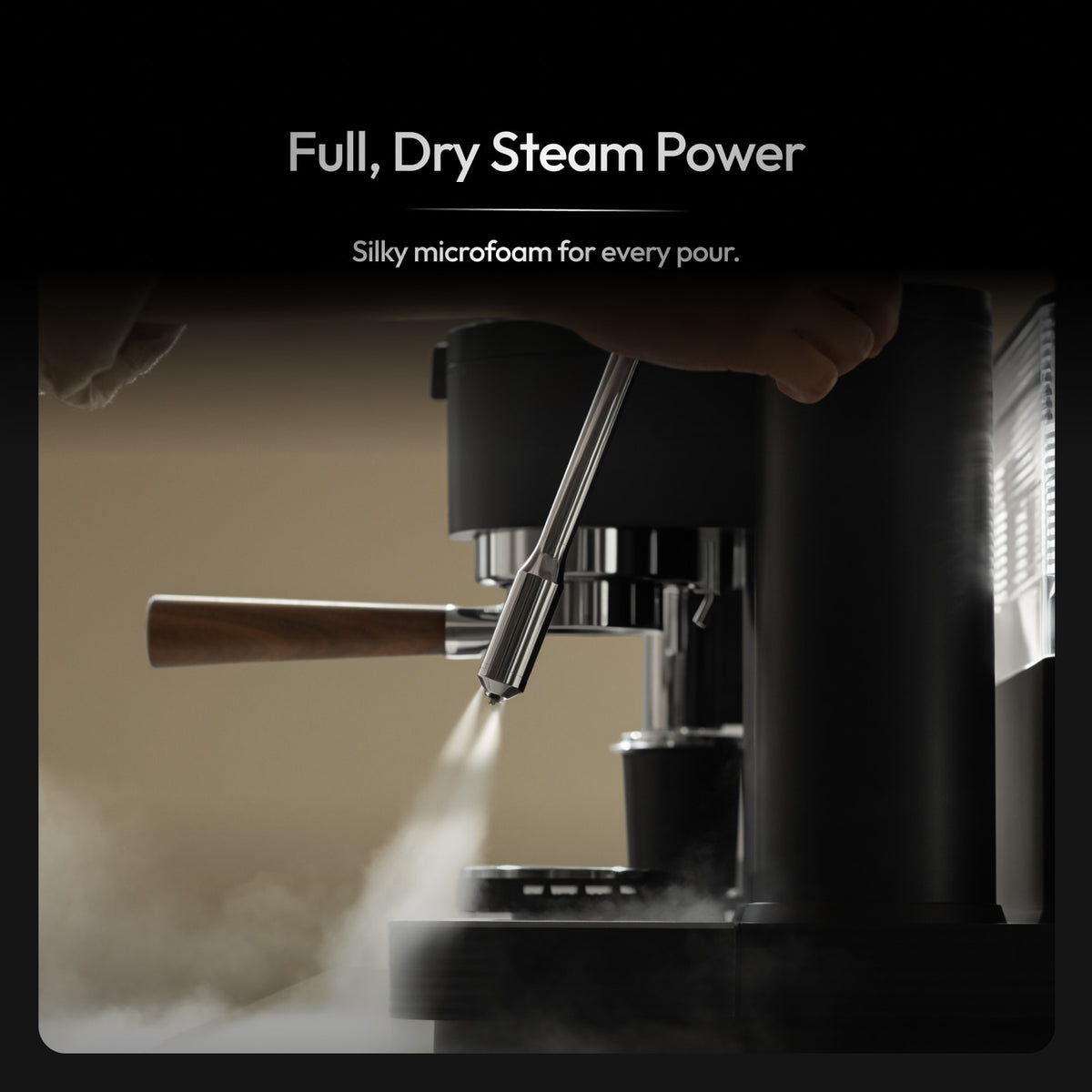
Dry steam is the vapor side of café microfoam — stretch sets volume, the roll polishes gloss, and a dry tip keeps the foam pourable.
What “dry steam espresso machine for microfoam” really means for home buyers
Dry steam espresso machine for microfoam, for home buyers, means a steam path that textures milk with mostly vapor — so stretch and roll can build glossy, paint-like foam instead of watery bubbles that refuse a clean pour.
Search is noisy: frothers without espresso, commercial 8 L steamers, “best steamer” listicles, pod chips. Those pages sell hardware. For a latte-art learner the useful meaning is narrower: home dual-boiler (or dedicated steam) dryness that supports microfoam practice — not a French-press froth hack or a café multi-group steamer.
Dry steam is mostly vapor; wet steam carries droplets that dilute milk and collapse fine foam — why dry steam matters owns that explanation. This page asks: what microfoam targets does dryness unlock, and which wand-drying habits keep them pourable on a Tuesday?
Who this page is for (and who should skip it)
This page is for latte-art learners and home milk-drink makers who care about glossy, pourable microfoam on a home espresso steam wand — especially owners (or shoppers) of dual-boiler / dry-steam machines who keep getting “almost foam” that will not pour.
Skip dryness literacy — why dry steam matters. Skip first stretch literacy — how to steam and texture milk. Skip microfoam polish and first pours — master microfoam and latte art for beginners. Soft-skip powerful steam wand technique (scorch/safety) and milk temperature sensor workflow (stop babysitting). Soft-skip steam-wand milk-drinks shopping and pitcher sizes. Soft-lane upcoming practice plans, drink ratios, and skill stages. Come here for dry steam → microfoam targets + wand drying.
Why this is microfoam focus (not another “why dryness matters” explainer)
SERP mixes Reddit frother threads, automatic frother blogs, commercial steamer cards, and “machines with steamers” roundups. Meraki already publishes a clear why dry steam matters explainer on machine-guides. What stays thin for espresso-brewing is the practice lane: stretch/texture targets, the drying-the-wand habit tied to pourable foam, and a weekday microfoam checklist for latte-art starters.
The unique job is microfoam focus — dryness as a pourability tool, not a boiler essay. Disclosure: Meraki publishes this guide and sells the Meraki Espresso Machine. Live framing (2026-10-26/27): dual boilers, dedicated 550 ml steam boiler (vendor claim), powerful dry steam with Auto Temp Stop, warm-up about 3–4 minutes, café-menu latte ~1:3 and cappuccino/flat white ~1:2 with microfoam — confirm live. No invented PSI, tip-hole counts, or lab dryness %. Channel: espresso-brewing.
Core idea in plain language
Dry steam does not pour latte art for you. It removes water that fights microfoam so your stretch and roll can produce glossy, paint-like milk that still moves when you tip the pitcher.
Three layers: Stretch adds a little air (volume rises, sound softens). Roll (whirlpool) polishes bubbles into fine foam. Dryness keeps that foam from diluting mid-steam. Skip the purge or leave milk in the tip, and foam looks busy then pours like cottage cheese. Soft-link why dry steam matters for wet-vs-dry mechanics; stay here for what pourable microfoam looks like. Literacy from the Specialty Coffee Association, CoffeeGeek, and About Coffee brewing beats any tip that skips a clean purged tip.
How it shows up in a weekday workflow
The weekday win is pourable foam before pretty shapes. Use this dry-steam → microfoam order until it feels boring.
- Warm fully, then purge. Wait for steam-side ready (Meraki: about 3–4 minutes — re-check the product page). Clear condensed water into the drip tray — the first unpurged burst sabotages microfoam.
- Stage cold milk and a matched pitcher. Fridge-cold milk; familiar fill line with stretch room. Meraki’s upgrader-kit framing includes a 14 oz milk pitcher — a practical start; see pitcher sizes when volume changes.
- Seat the tip just under the surface, slightly off-center. Soft paper-tearing stretch — not a scream. Soft-name powerful steam wand technique if strong steam and scorch risk are the real problem.
- Stretch briefly, then drop into the roll. A little stretch, then a whirlpool. Long screaming stretch still makes unpourable dry foam — even with dry steam.
- Stop for sweet milk. Hand cues and/or Auto Temp Stop (Meraki: Powerful Dry Steam. Auto Temp Stop) end heat before milk cooks. Soft-name milk temperature sensor workflow for stop-trust habits.
- Wipe immediately, then purge again — dry the wand. This drying-the-wand habit protects the next attempt; baked milk in the tip is Tuesday’s wet chaos.
- Settle, swirl, pour once. Tap, swirl, pour. Hearts wait for pour lessons — soft-lane those curricula. Today’s win is wet-paint milk on crema.
- Thirty-second reset. Empty leftover milk, rinse, clear the cloth. Follow steam wand hygiene. Keep milk cold until steaming (FDA; CDC).
Brewing and steaming on dual boilers the same morning? Keep this sequence inside your simultaneous weekday choreography — do not invent a second simultaneous-brew essay here.
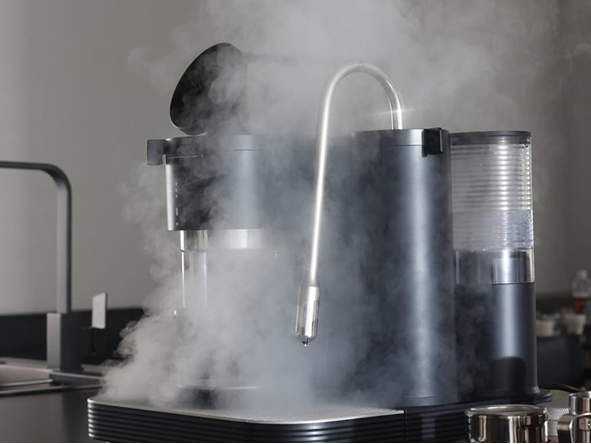
Pourable microfoam looks like glossy paint — dry steam plus short stretch, early roll, and a wiped/purged tip get you there more often than longer stretch alone.
What to verify on the machine or listing
Before you blame technique for forever-bubbly milk, verify the listing actually supports home dry steam for microfoam — not a separate frother SKU or a commercial steamer card.
Look for a dedicated steam path (dual boiler or dedicated steam boiler), a manual wand you can purge and wipe, and copy that names dry steam. Meraki pairs powerful dry steam, a 550 ml steam boiler (vendor claim), and Auto Temp Stop — confirm on the product page. Soft-link why dry steam matters for pitcher dryness tests.
Disambiguate SERP traps: countertop frothers without espresso, 8 L commercial steamers, and pod shopping chips are different jobs. Barista Magazine’s Meraki test drive shows how reviewers talk about steam — still judge your pitcher.
Tradeoffs and limits
Dry steam removes a dilution variable. It does not erase pitcher mismatch, long stretch, scorched milk, or skipped wipe/purge.
Powerful dry steam shortens the window — foam and over-stretch both arrive fast. Soft-name powerful steam wand technique for safety; soft-name milk temperature sensor workflow when Auto Temp Stop is trusted but foam still will not pour. Dual boilers overlap brew and steam; they do not dry a dirty tip.
Plant milks behave differently — treat them as separate experiments. Pour shapes need pour practice after gloss — soft-lane practice plans and skill stages. Menu ratios (latte ~1:3, cappuccino/flat white ~1:2) are cup balance, not steam physics — soft-lane drink-specific curricula. Dryness is necessary for repeatable microfoam practice, not sufficient alone.
Mistakes that waste time
Most “dry steam still won’t microfoam” complaints are habit errors, not missing boiler essays.
| Mistake | What you feel | Quick fix |
|---|---|---|
| Skipping the pre-steam purge | Sputter, big bubbles early | Purge into the drip tray every time |
| Stretching until the pitcher “looks full enough for Instagram” | Dry foam that will not pour | Short stretch → early roll; stop when volume rose a little |
| Leaving milk on/in the tip | Next drink starts sticky/wet | Wipe immediately, purge again — dry the wand |
| Blaming dryness for scorch | Cooked smell, sweet milk gone | Soft-name powerful-wand stop cues / Auto Temp Stop habits |
| Using a frother tutorial on a steam wand | Wrong muscle memory | Soft-lane first steam tutorial |
| Shopping commercial steamer cards | Wrong machine class | Home dry-steam wand, not 8 L café gear |
| Chasing hearts before gloss | Pretty fail, ugly foam | One week of pourable paint-like milk first |
| Rewriting technique every morning | No baseline | Freeze one fill line + purge/wipe ritual |
If milk still fails after purge, wipe, short stretch, and early roll feel honest, soft-link why dry steam matters for dryness testing — do not rebuild that explainer here.
A simple decision or setup checklist
Use this weekday microfoam checklist for latte-art practice starters — not a full pour curriculum.
Before steam: steam side ready; dry pitcher; cold milk; familiar fill line; damp cloth; decide today’s job is practice foam (gloss + pour), not a new pour shape.
During steam: purge first → tip just under surface → brief stretch → early whirlpool → stop for sweet heat (hand cue and/or Auto Temp Stop). Soft-name sensor workflow if stop trust is weak. Soap-suds foam? Stretch less tomorrow — do not add air mid-panic.
After steam: wipe tip → purge again (dry the wand) → tap, swirl, pour once. Blobby pour? Note “texture,” not “pour art,” as tomorrow’s single focus. Empty leftover milk; rinse; follow hygiene.
Open another page when: dryness diagnosis → why dry steam matters; scorch → soft-name powerful steam wand technique; Auto Temp Stop babysitting → soft-name milk temperature sensor workflow; pour shapes / ratios / skill stages → soft-lane those pages.
How this connects to Meraki’s dual-boiler system
Meraki’s dual boilers keep brew and steam heat independent so you can pull espresso and texture milk in one weekday sequence — steam-side dryness is what makes that milk half useful for microfoam.
Live framing (2026-10-26/27): dual boilers; 550 ml steam boiler (vendor claim); powerful dry steam with Auto Temp Stop; warm-up about 3–4 minutes; grind → brew → steam → serve; flat white ~1:2 with microfoam on the café menu — confirm on the Meraki Espresso Machine page. For this article the useful claim is simple: vapor-forward steam plus purge/wipe gives stretch and roll something clean to work with. Soft-link why dry steam matters for boiler/recovery detail; soft-name technique and sensor-workflow pages for power safety and stop trust. SCA research and Barista Magazine support judging steam by the pitcher — still verify your unit.
How to get good microfoam?
Purge, short stretch, roll, stop, wipe/purge.
That habit — dry steam, brief stretch, early whirlpool, honest heat stop, then wipe and purge the wand — bridges a dry-steam machine to pourable foam. Good microfoam looks like wet paint: fine bubbles, shiny surface, milk that still flows when you tip. Dry steam limits dilution; short stretch sets volume; the whirlpool polishes; heat stop keeps sweetness; wipe/purge keeps the next attempt dry. Soft-lane first stretch tutorials and pour lessons when those are the gaps; soft-name powerful-wand and sensor-workflow pages when power or stop trust is the blocker. Soft-link why dry steam matters if the jet still sputters after an honest purge.
Can you provide a review of the Silvercrest espresso machine?
No — this page does not review Silvercrest.
The name sometimes appears in People Also Ask beside milk-steam queries; it is a different brand and shopping job. Use this article’s checklist instead: dedicated steam / dry-steam language, a purgeable manual wand, and pitcher results you can judge at home. For Meraki’s framing, confirm dual boilers, 550 ml steam boiler, powerful dry steam, and Auto Temp Stop on the product page. Soft-link why dry steam matters for trial dryness-test language.
FAQ
Is dry steam the same thing as microfoam? No. Dry steam is the vapor quality of the jet; microfoam is the fine, glossy milk texture you build with stretch and roll. Dry steam makes microfoam easier by limiting dilution; it does not create foam without technique. Soft-link why dry steam matters for dryness literacy; use this page for pourable microfoam targets and wand-drying habits.
Why purge and wipe if the boiler is already “dry steam”? Condensed water collects in the wand between uses, and milk residue left on the tip becomes wet, sticky interference on the next drink. Purge before steaming, wipe immediately after, purge again — that is the drying-the-wand habit that protects practice foam. Soft-link steam wand hygiene for deep-clean schedules.
Do I need Auto Temp Stop to get microfoam? No. Auto Temp Stop (Meraki’s live framing with powerful dry steam) helps end heat at a preferred temperature; texture still comes from stretch and roll. Soft-name milk temperature sensor workflow if stop trust is your weekday problem. Hand cues remain useful backup literacy.
Can a milk frother without an espresso machine replace dry steam for latte art? Usually not for espresso-based latte art practice. Separate frothers can make foam for other drinks; pourable microfoam for espresso drinks is typically a steam-wand job on a machine that can brew espresso. Disambiguate shopping cards that sell frothers or commercial steamers when your intent is a home dry-steam espresso path.
Is this the same as Meraki’s “why dry steam matters” guide? No. That machine-guides explainer owns what dry steam is, how wet steam ruins milk, boiler design, testing, and misdiagnoses. This espresso-brewing page owns microfoam practice targets, wand-drying habits for pourable foam, and a weekday checklist for latte-art starters — with soft-links out to technique, sensor workflow, pour lessons, and drink-ratio curricula.
If your goal is pourable home microfoam on a dry steam espresso path, run the purge → short stretch → early roll → honest stop → wipe/purge loop above — and confirm today’s Meraki powerful dry steam, dual boilers, 550 ml steam boiler, and Auto Temp Stop framing on the Meraki Espresso Machine product page when you want the guided all-in-one path. Support: Meraki Support (+1 833 854 9555, Mon–Fri 9 AM–5 PM EST). Shipping and refunds: shipping policy, refund policy.


