


You can own a “cappuccino machine with grinder” and still serve a latte in a smaller cup — because milk volume, foam height, and espresso stop never lined up as one drink. Cappuccino machine with grinder milk ratios only become useful when they are weekday targets on a grind → brew → steam path, not another shopping card labeled Cappuccino.
This Meraki how-to owns a drink-specific lane: starting cappuccino milk:espresso ratios, foam height that still tastes like coffee, and a home brew-then-steam workflow on a grinder-equipped dual boiler. Soft-name Yield Control for Home Lattes and Cappuccinos when the espresso-out mass under milk is the chaos (auto-stop / milk-drink yields). Soft-name Dry Steam Espresso for Home Microfoam, Powerful Steam Wand Technique for Home Baristas, and Milk Temperature Sensor Workflow for Home Espresso when texture, scorch safety, or Auto Temp Stop trust is the gap. Soft-name Latte Art Practice Plan With a Home Espresso Machine when you need a pour calendar, not a cup recipe. Soft-lane upcoming flat-white steam/ratio essays and cappuccino-vs-latte feature pages. Soft-link the buyer guide espresso machine with grinder when you are still choosing integrated-grinder hardware — this page is the cappuccino drink workflow after (or beside) that decision.
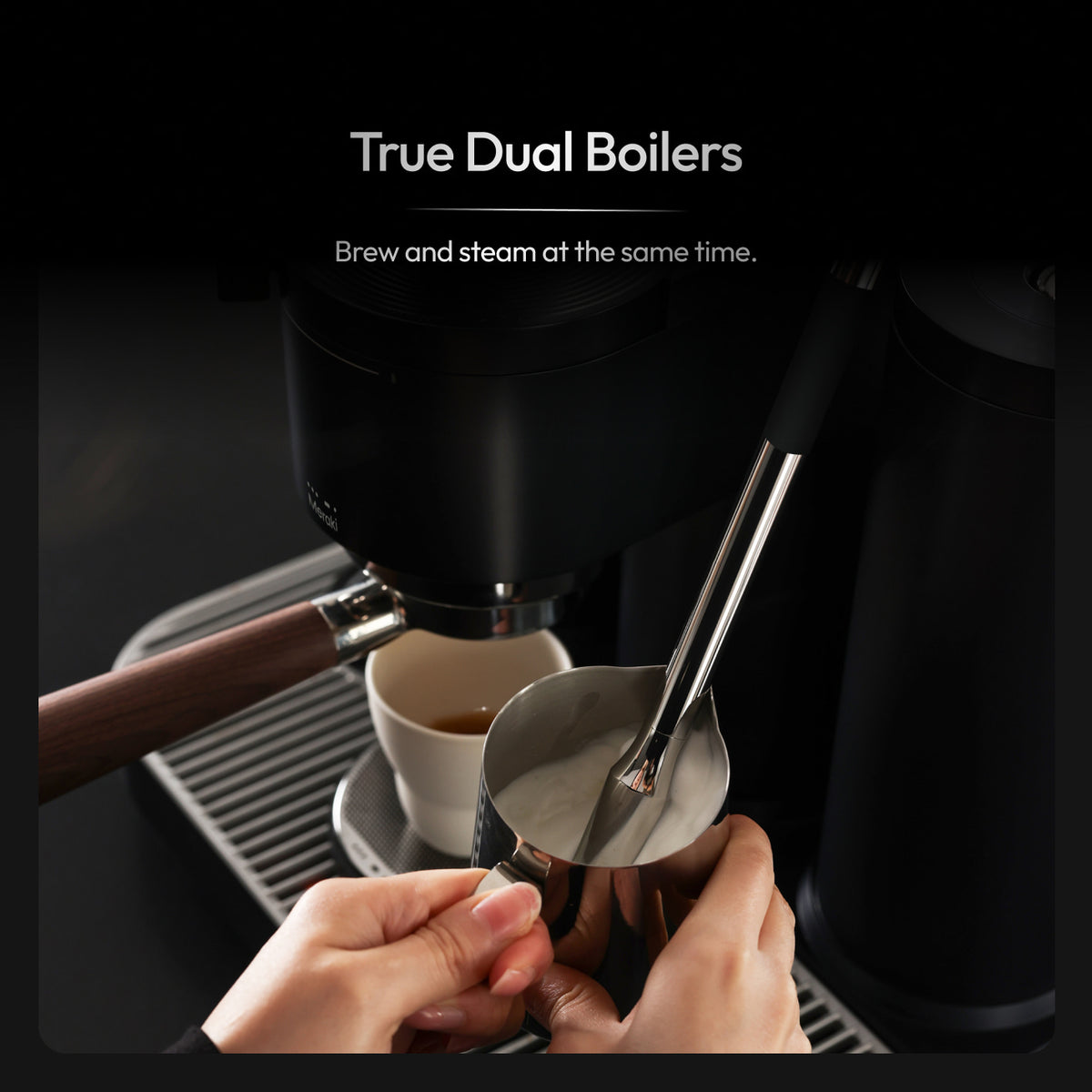
On a dual boiler, brew and steam can overlap — the weekday win is still locked ratios, not a new foam video every morning.
What “cappuccino machine with grinder milk ratios” really means for home buyers
Cappuccino machine with grinder milk ratios, for home buyers, means starting milk-to-espresso balance and foam height for a cappuccino on a machine that grinds and steams in one station — not a ranked list of “best cappuccino makers.”
Search for this phrase lands on product carousels, mid-range espresso roundups, and “best frother” pins. Those pages sell boxes. A useful espresso machine for cappuccino page answers different questions: How much milk relative to the shot? How thick should the foam be before it becomes a latte or a dry foam cup? What order do you run on a dual boiler with a built-in grinder so the espresso is not cold under pretty foam?
Café literacy from the Specialty Coffee Association, CoffeeGeek guides, and About Coffee brewing still starts with a drinkable espresso base — milk ratios sit on top of that honesty.
Who this page is for (and who should skip it)
This page is for cappuccino drinkers on a home dual boiler latte and cappuccino machine (especially with an integrated grinder) who want sticky milk:espresso starting points and a repeatable grind → brew → steam weekday path — not another frother shopping list.
Skip when you only need integrated-grinder buying criteria — soft-link espresso machine with grinder. Soft-name Yield Control for Home Lattes and Cappuccinos if espresso grams-out under foam is the loud problem. Soft-name Dry Steam Espresso for Home Microfoam / Powerful Steam Wand Technique for Home Baristas / Milk Temperature Sensor Workflow for Home Espresso for steam texture, power safety, or sensor stop habits. Soft-name Latte Art Practice Plan With a Home Espresso Machine for pour drills. Soft-lane upcoming flat-white and “cappuccino vs latte features” essays. Soft-link how to steam and texture milk for first stretch literacy. Come here for cappuccino ratios + brew-then-steam workflow.
Why this is drink-specific (not another milk-yield or frother roundup)
SERP leans shopping carousels and “best machine for frothing” answers. Meraki already covers milk-drink yield control elsewhere (soft-name that essay). Steam dryness, wand power, and temperature stop each own their lanes. What stays thin for espresso-brewing is a how-to that treats the cappuccino as the product: milk:espresso starting bands, foam that still leaves coffee in the sip, and a dual-boiler workflow that starts at the grinder — not a second yield essay and not a 4-week pour curriculum.
The unique job is drink-specific — cappuccino ratios + grind → brew → steam on an integrated-grinder dual boiler. Disclosure: Meraki publishes this guide and sells the Meraki Espresso Machine. Live framing (2026-10-26/27): dual boilers (brew and steam can overlap), an integrated standalone grinder with TIMEMORE® co-development framing, powerful dry steam with Auto Temp Stop, dedicated 550 ml steam boiler (vendor claim), warm-up about 3–4 minutes, rotary framed at steady 9 bar, dual scales (1 kg · ±0.2 g — vendor claim) — confirm live. Café-menu framing uses latte ~1:3 and cappuccino/flat white ~1:2 as drink-balance starting points — soft-lane flat-white targets. Channel: espresso-brewing.
Tools and settings to prepare first
Cappuccino mornings fail when the cup is oversized, the pitcher is a latte pitcher, and the grind is still “yesterday’s straight shot.” Stage tools while boilers warm.
You need: clean portafilter and basket, fridge-cold milk for one cappuccino, a smaller matched pitcher than a latte pour, a classic cappuccino cup (not a bowl mug), a dry wand cloth, and a sticky with two lines — espresso out-mass and milk fill for this cup.
On Meraki’s current framing, dual boilers heat in about 3–4 minutes and the guided path runs grind → brew → steam → serve — confirm on the live product page. Soft-name yield-control if you invent a new stop under foam every morning; stay here for milk balance and order. Keep milk cold until steaming (FDA safe food handling; CDC food safety). Soft-link milk pitcher sizes for latte art when volume matching is the only question.
Grinder settings that help milk drinks: start from a grind that already makes a drinkable short espresso, then hold dose — do not chase “stronger under milk” with wild day-to-day grind swings. Soft-link espresso ratio explained for brew-ratio literacy.
Step-by-step workflow (cappuccino workflow: brew then steam)
On a dual boiler with a built-in grinder, the weekday order is boring on purpose. Use this until it feels automatic.
- Warm fully — brew side and steam side. Dual boilers exist so you are not waiting for a single boiler flip. Confirm ready lights / UI before grinding “to save time.”
- Grind to a locked dose. Auto-dose onto the scale if your machine supports it (Meraki live framing: grind-to-scale). Same dose grams as yesterday’s successful cappuccino base. Soft-name yield-control when grams-out is the chaos; do not invent a guest lungo here.
- Distribute, tamp, and seat the portafilter. Channeling under milk tastes like bitterness you blame on “too much foam.”
- Pull the cappuccino espresso base and stop on purpose. Prefer mass stop when you have it. A common starting brew relationship under milk drinks is near 1:2 dose:yield — labeled a starting point only (see PAA below). Soft-link ratio literacy if the shot itself is the rabbit hole.
- Purge the steam wand, then steam for cappuccino foam — not latte paint. Short stretch for a thicker top layer than a flat white; stop before cooked milk. Soft-name dry-steam microfoam for pourable gloss vs wet steam; soft-name powerful-wand technique if strong steam scorches; soft-name milk-temperature sensor workflow if Auto Temp Stop trust is the weekday blocker.
- Combine with ratio intent. Espresso in the cup first (or swirl milk into espresso — pick one house method and keep it). Aim for coffee that still reads through the foam, not a milk cloud with a brown ring.
- Wipe immediately, purge again. Soft-link steam wand hygiene.
- Thirty-second reset. Knock the puck, clear the brew scale, rinse the pitcher tip. Tomorrow’s cappuccino starts with today’s clean station.
Dual boilers let brew and steam overlap on a rushed morning — a workflow gift, not a license to skip purge or lock ratios. Soft-link espresso machine with grinder only when integrated-grinder shopping is still open.
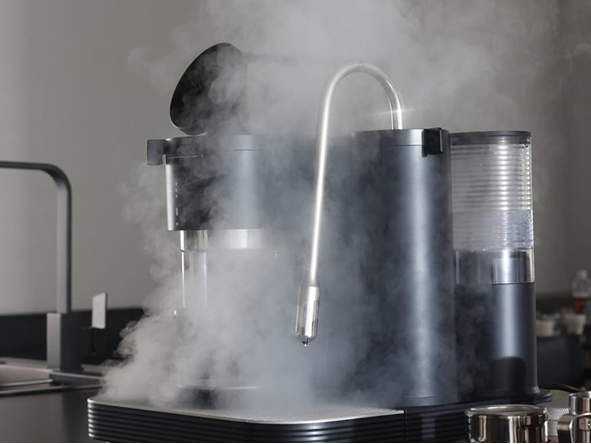
Cappuccino foam should look glossy and spoonable — still sweet milk, not dry Styrofoam or a washed-out latte bowl.
Targets and ranges that keep you out of rabbit holes
Ratios are starting points. Cup size, bean, and foam preference move them. Prefer sticky bands over café mythology.
| Target | Starting band (home cappuccino) | What “good enough” feels like | What not to chase today |
|---|---|---|---|
| Espresso brew ratio (dose:yield) | Near 1:2 starting under milk | Coffee still tastes like coffee under foam | A new guest “lungo cappuccino” every morning |
| Drink balance (milk:espresso, Meraki menu framing) | ~1:2 starting for cappuccino | Sip shows espresso + milk, not only foam | Copying latte ~1:3 into a small cup and calling it cappuccino |
| Classic volume teaching (espresso : steamed milk : foam) | Roughly 1:1:1 by volume in many café teach-ins | Distinct foam cap without drowning the shot | Measuring with a lab cylinder at 6 a.m. |
| Cup size | Classic cappuccino cup / smaller than latte bowl | Foam sits; espresso is not lost | 16 oz “cappuccino” that is a latte |
| Milk fill | Matched pitcher; finish in one drink | Soft-link pitcher-size literacy if leftover foam mountains | Reheating leftover milk |
| Foam height | Thicker top than flat white; still sweet | Soft-name microfoam / dry-steam lane for texture quality | Instagram dry peaks that taste cardboard |
| Heat stop | Sweet, not cooked | Hand cue and/or Auto Temp Stop (Meraki live framing) | Waiting for a prettier whirlpool after milk is already hot |
Meraki’s café-menu framing (cappuccino ~1:2, latte ~1:3, flat white ~1:2) is a guided drink-balance starting map — soft-lane flat-white and feature-comparison pages. SCA research and Barista Magazine’s Meraki test drive help judge steam context; your sticky still wins.
Common mistakes and quick fixes
Most “my machine can’t do cappuccino” complaints are ratio or cup-size errors, not missing frother features.
| Mistake | What you feel | Quick fix |
|---|---|---|
| Latte milk volume in a cappuccino cup | Washed-out “brown milk” | Cut milk; use a smaller pitcher/cup |
| Stretching foam forever | Dry, cardboard top; bitter sip | Shorter stretch; soft-name dry-steam microfoam |
| Changing grind and milk volume same day | No causal lesson | Lock grind; change only milk fill or foam height |
| Skipping wand purge | Wet, sputtering start | Purge → steam → wipe → purge |
| Espresso stop that wanders under foam | Different drink every morning | Soft-name yield-control for milk drinks; lock out-mass |
| Calling every milk drink a cappuccino | Soft-lane feature/compare pages later | Keep this page’s foam + volume intent |
| Practicing swan pours before the cup balances | Pretty pattern, dull drink | Soft-name latte-art practice plan after ratios stick |
How to taste and decide what to change next
Taste before you open another chart. Ask three questions once:
- Do I still taste espresso? If no — less milk, shorter foam stretch, or a clearer espresso stop (soft-name yield-control). Soft-link ratio explained if the base shot is hollow or harsh.
- Is the foam sweet or cooked? Cooked → stop heat earlier (soft-name sensor workflow / powerful-wand safety). Wet and bubbly → purge and stretch habits (soft-name dry-steam microfoam).
- Is this cup size honest? A bowl mug will always drink like a latte at cappuccino foam height — change the vessel before changing the machine.
Write one next change on a sticky: “−30 ml milk,” “lock out-mass,” or “shorter stretch.” Soft-name the latte-art practice plan only when balance is already boring and pour skill is the gap.
A one-week cappuccino habit plan
This is habit practice for drink balance, not a pour curriculum.
| Day | Focus | Pass rule | Soft-lane if stuck |
|---|---|---|---|
| 1 | Lock dose + espresso out-mass for cappuccino only | Same out-mass twice | Soft-name yield-control |
| 2 | Same shot; set milk fill line for your cup | Coffee still reads through foam | Cut milk before changing grind |
| 3 | Foam height: thicker than flat white, not dry peaks | Sweet milk; spoonable cap | Soft-name dry-steam microfoam |
| 4 | Full grind → brew → steam order without skipping purge | Station reset in ≤30 seconds | Soft-link steam-wand hygiene |
| 5 | Repeat Day 2–3 with one variable only (milk or foam) | You can name what changed | Do not also change grind |
| 6 | Optional: compare one latte-volume cup (note the difference) | You can taste why it is not a cappuccino | Soft-lane flat-white / feature essays |
| 7 | Drink two weekday cappuccinos with no new chart | Sticky has one line for next week | Soft-name practice plan only if pour is the goal |
Miss a day? Resume the locked shot and milk fill — do not “make up” with five experimental cups.
When to stop tweaking and just drink
Stop when the sticky names tomorrow’s single change, when foam collapses from re-steaming, or after two honest cappuccinos. Drink the cup — charts that never finish a drink train anxiety, not skill.
Also stop blaming the “cappuccino machine” label once cup size, milk volume, and espresso stop are honest. Soft-link support for hardware issues; soft-link espresso machine with grinder only when shopping is still open.
Is espresso always a 1:2 ratio?
No — 1:2 is a common starting point, not a law.
Many home milk drinks use a brew ratio near 1:2 (dose:yield) under foam, but beans and taste can prefer tighter or longer stops. Treat 1:2 as a labeled starting band, then change one variable after you taste. Soft-link espresso ratio explained; soft-name yield-control when locking milk-drink out-mass is the job. Do not invent a universal 30 ml / 40 ml rule as fact.
What is the best machine for frothing milk?
There isn’t one honest ranking here — match steam path and workflow to your drink.
“Best for frothing” carousels sell categories. For home cappuccinos, prioritize a purgeable steam wand, enough power for your pitcher, and a heat stop for sweet milk (manual cue and/or Auto Temp Stop on Meraki’s live framing). A dual boiler helps brew-then-steam overlap; an integrated grinder helps dose repeatability — neither replaces milk:espresso discipline. Soft-link espresso machine with grinder for shopping; soft-name powerful-wand / dry-steam / sensor-workflow pages for technique. No fake top-10 here.
FAQ
What is the ratio of milk to espresso in a cappuccino? Use starting points, not dogma. Many café teach-ins describe roughly equal volumes of espresso, steamed milk, and foam (~1:1:1 by volume). Meraki’s guided café-menu framing uses drink balance around ~1:2 milk:espresso for cappuccino as a starting map (latte often ~1:3). Cup size and foam height move both. Soft-lane upcoming flat-white and feature-comparison pages; soft-name yield-control when espresso grams-out is the real chaos.
Do I need a dual boiler for home cappuccinos? No — you need a drinkable shot, cold milk, a matched pitcher, and a purgeable wand. Dual boilers (Meraki live framing: brew + steam overlap, ~3–4 minute warm-up) make the weekday grind → brew → steam path smoother. Soft-link espresso machine with grinder when hardware class is still open; stay here for ratios and order.
How is this different from yield control for lattes and cappuccinos? That soft-named essay owns espresso-out / auto-stop targets under milk drinks. This page owns cappuccino milk:espresso balance + foam intent + brew-then-steam workflow on a grinder-equipped dual boiler. Soft-name both when useful; do not treat them as duplicates.
Should I practice latte art before locking cappuccino ratios? Usually no. Balance first, pour second. Soft-name Latte Art Practice Plan With a Home Espresso Machine when the cup already tastes right and the calendar of drills is the gap. Soft-name dry-steam / powerful-wand / sensor-workflow pages when texture or heat stop is blocking foam quality.
Is a “cappuccino machine with grinder” the same as a super-automatic one-touch cappuccino? Not necessarily. Search mixes bean-to-cup automatics, semi-autos with steam wands, and dual-boiler all-in-ones. This how-to assumes a portafilter workflow with grind → brew → steam you can see — Meraki’s guided dual-boiler path is one example on the product page. Soft-link the grinder buyer guide for category shopping; do not treat every “cappuccino” button as the same drink.
If your goal is a cappuccino machine with grinder milk ratios you can repeat on a weekday, lock a cappuccino espresso stop, set a smaller milk fill than a latte, steam a spoonable sweet foam, and run grind → brew → steam without skipping purge — then confirm today’s Meraki dual boilers, integrated standalone grinder, powerful dry steam, 550 ml steam boiler, and Auto Temp Stop framing on the Meraki Espresso Machine product page when you want the guided all-in-one path. Support: Meraki Support (+1 833 854 9555, Mon–Fri 9 AM–5 PM EST). Shipping and refunds: shipping policy, refund policy.


