


You bought a compact machine because it heats fast, then the second latte in the queue is still waiting on milk, or the grinder is still a separate project on the other side of the counter. That is the practical Meraki vs Bambino Plus problem, and it is not the same question as Meraki versus the standard, non-Plus Bambino.
The Plus is a compact Breville with automatic steam and a very short advertised heat-up. Meraki is a fuller guided all-in-one. This page focuses on auto-steam, heat-up, and whether the Plus is still an entry compact, not on repeating a generic entry-versus-prosumer essay.
How Bambino and Bambino Plus differ, in brief
The Plus is mainly about milk help, not a new espresso category.
Both machines are compact 54mm Breville boxes. The Plus adds a hands-free automatic steam wand and a slightly more assisted milk routine. The standard Bambino stays manual on steam.
Official Breville product information for the Bambino Plus (BES500), checked on November 23, 2026, also highlights a proprietary ThermoJet heating system that the company says is ready to start in three seconds, a 54mm stainless steel portafilter, and low-pressure pre-infusion followed by nine-bar extraction. Those are the Plus facts this page will use. If you are shopping the non-Plus Bambino, that is a different comparison, because manual steam and a smaller feature set change the morning math. Keep this page on the Plus so the auto-steam question does not get blurred.
Disclosure: Meraki is the all-in-one in this comparison
Meraki is the brand behind this site.
This is a disclosed brand comparison, not a scored independent lab test. We compare public, official attributes and everyday workflow, and we do not invent prices or ratings.
Breville specifications mentioned here come from the official U.S. Bambino Plus product page checked on November 23, 2026. Meraki features should be confirmed on the live Meraki espresso machine page, which is the source of record for the all-in-one side. Owner comments, not invented review counts, are on Meraki reviews. Read both, then decide from the station you would actually set up.
Heat-up time versus a fuller brewing workflow
The Plus is built to be ready almost immediately. A fuller machine is built to carry more of the session.
Official Breville copy says the Bambino Plus is ready to start in three seconds thanks to ThermoJet. That is a real weekday advantage if you want a first shot quickly. It is not the whole workflow.
You still have to grind, dose, tamp, extract, and steam. A compact thermocoil or ThermoJet box can also be less comfortable when a second drink needs brew heat and steam back to back, because the machine is still a small, fast heater rather than a dual-boiler station. Meraki’s all-in-one path is slower to describe and larger on the counter, but it is designed so grinding and a fuller brew-and-steam sequence live in one place. Do not buy the Plus only because three seconds sounds unbeatable, and do not buy Meraki only because bigger sounds more complete. Time the drinks you actually make, including the second cup. For general espresso-as-a-method context, see the Specialty Coffee Association education hub.
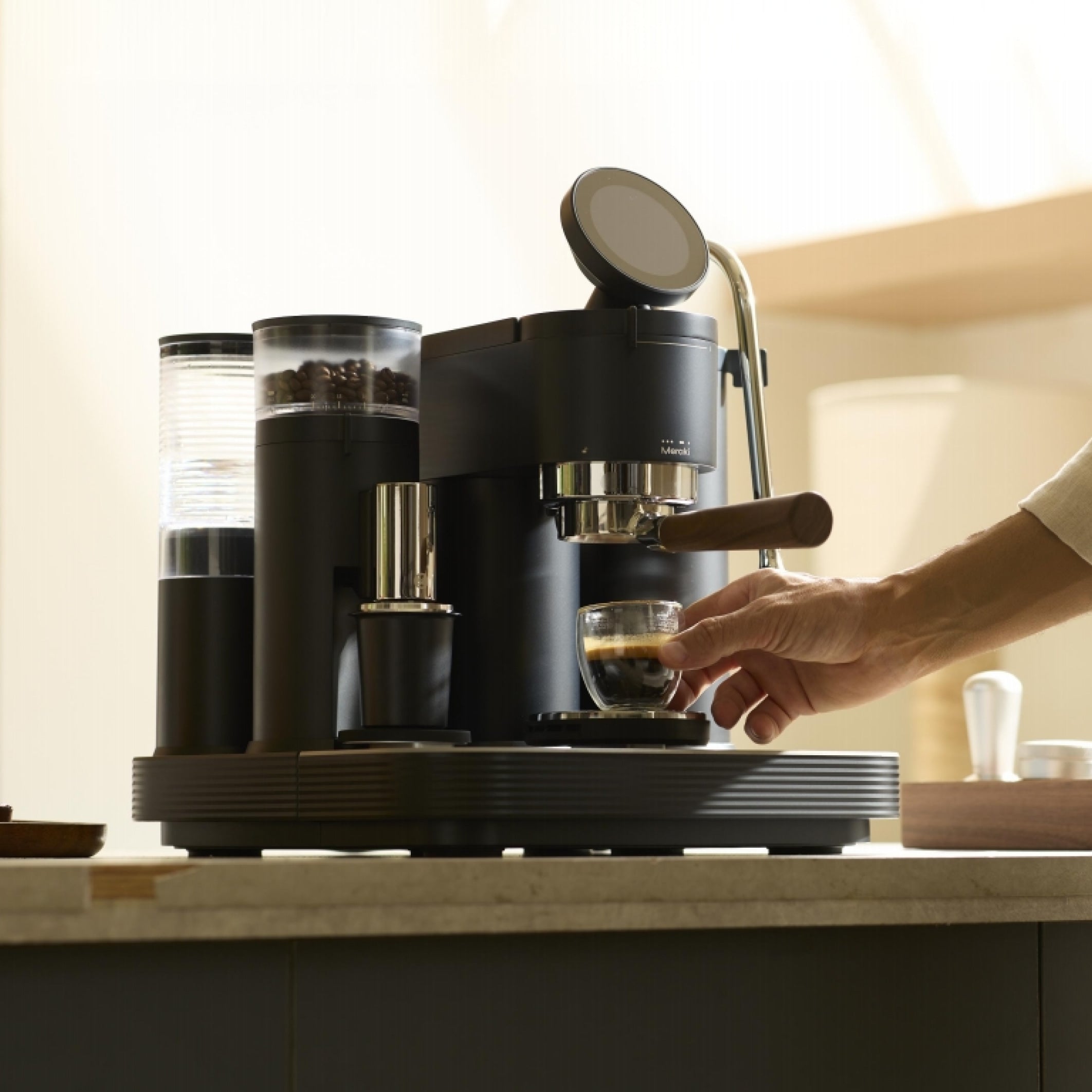
Steam: automatic vs manual control
Automatic steam is the Plus feature most people are actually paying for.
Breville’s official Plus page describes a powerful hands-free automatic steam wand for microfoam. You can still steam manually on many compact machines, but the Plus is sold as the model that will texture milk for you.
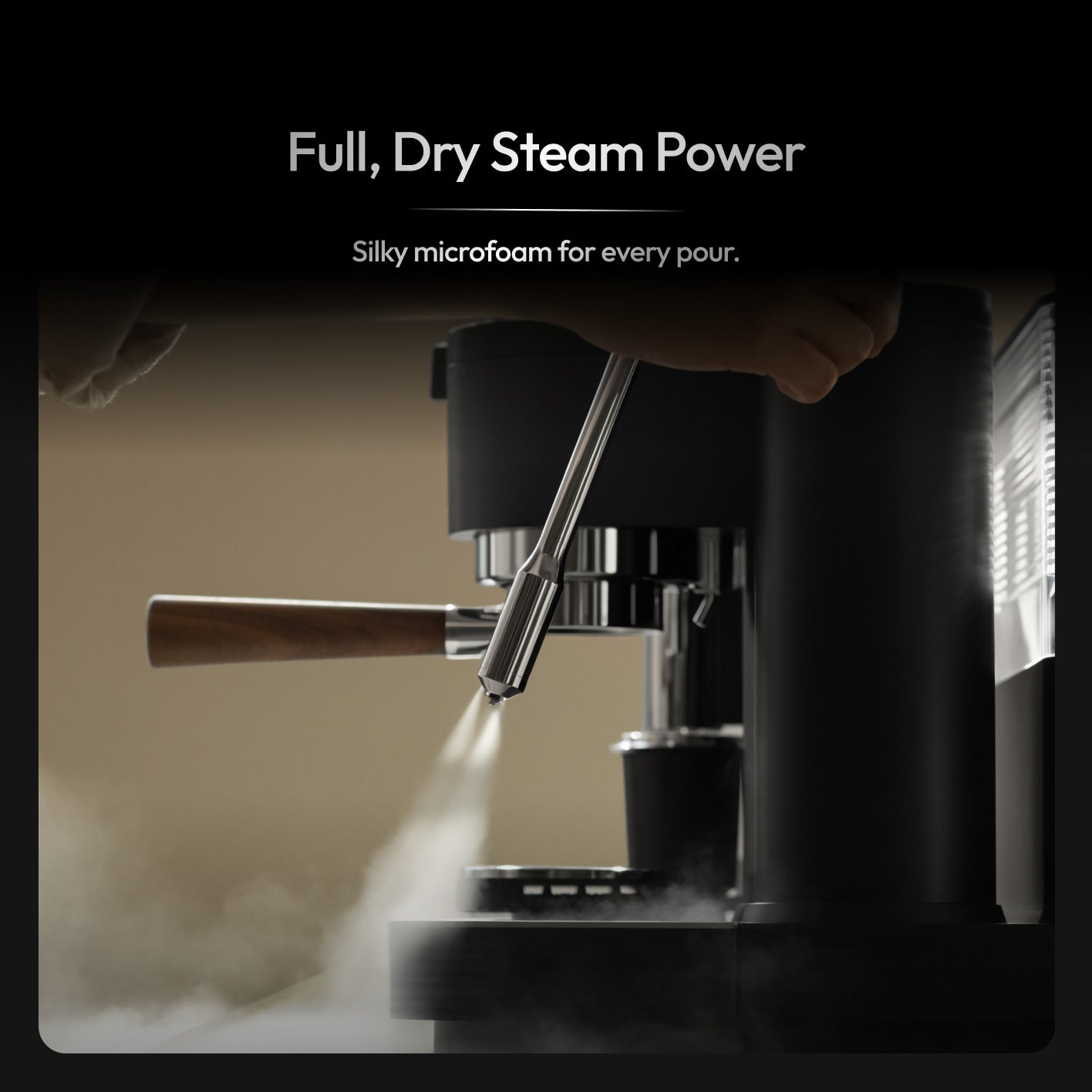
That help is genuine if you want a latte without learning a stretching technique on day one. It is less decisive if you already steam well by hand, or if you want more control over texture from drink to drink. Meraki uses a manual professional-style wand on an all-in-one station, which asks for a short skill and then rewards repetition, especially when more than one milk drink is in the queue. Automatic is not morally better. It is a different offer: less technique, in a smaller machine, with whatever limits a compact auto-wand has. If milk is not your drink, this whole section shrinks, and heat-up plus grinding become the larger issues.
Grinding: a compact machine still needs a capable grinder story
The Plus does not include a grinder. That is not a footnote.
A compact 54mm machine still needs fine, repeatable grinding, or the fast heat-up will only get you to a disappointing shot sooner. Budget and counter space for that grinder, or the Plus is not a complete station.
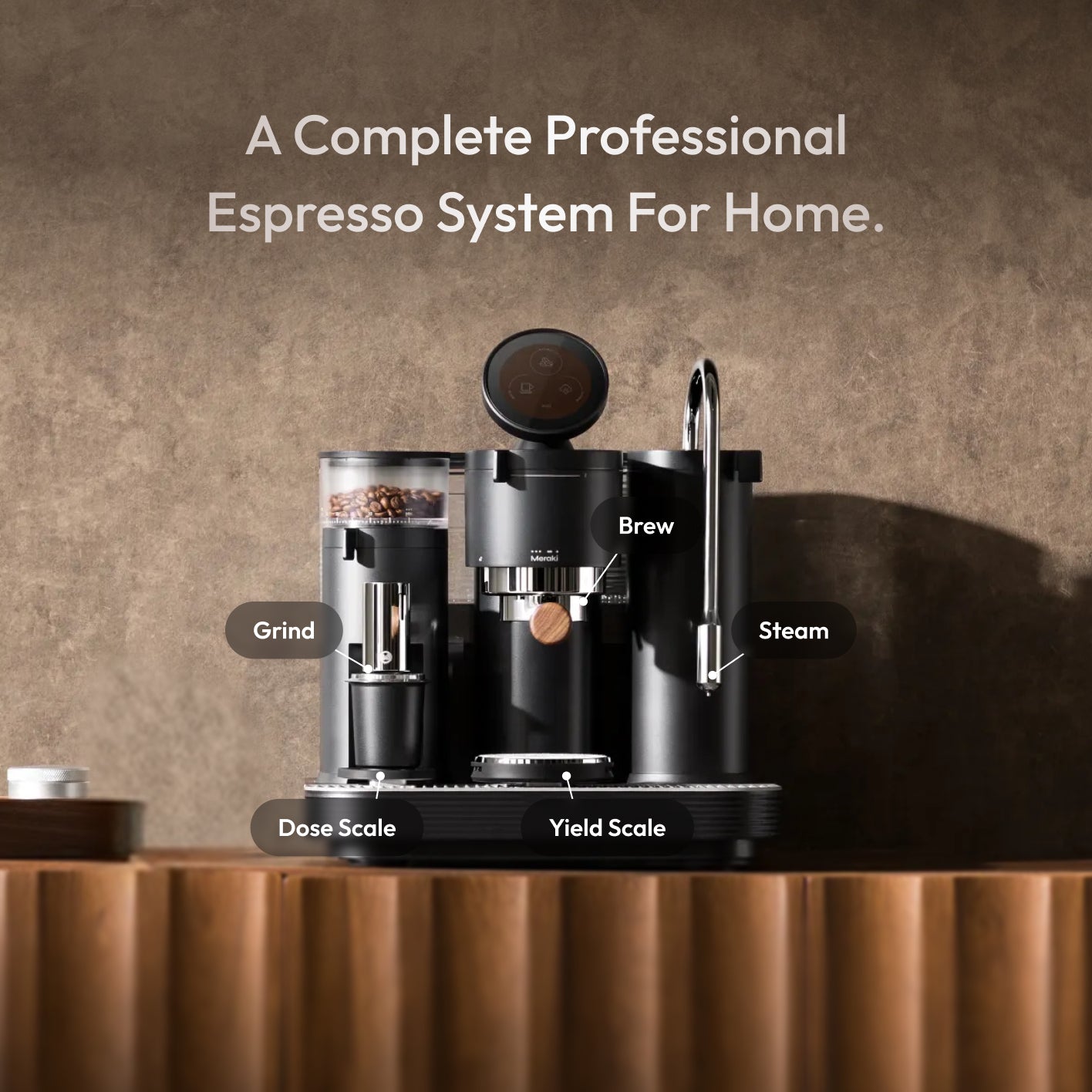
Meraki is sold with an integrated standalone grinder, so the purchase is a different kind of box: one footprint that already includes the grind step. That can be the better spend if you do not already own an espresso-capable grinder. It can be unnecessary if you do. For a deeper look at that station question, see Meraki’s guide on whether an espresso machine with an integrated standalone grinder is worth it. The article title on the site uses an older URL slug; the point of the page is the complete station, not a slogan. Confirm both official product pages before you assume a bundle.
Portafilter size, baskets, and accessory ecosystem
The Plus uses a compact 54mm portafilter, according to official Breville materials. Meraki’s accessory path is 58mm, including a bottomless portafilter and a 58mm portafilter basket.
Neither size makes espresso by itself, but it does change which tools you can grow into. A 58mm ecosystem is widely used in home and cafe kits. A 54mm compact system is often cheaper and smaller, and it can still make excellent shots if the grind and prep are right. If you already own 58mm tools, that is a practical reason to look at a 58mm machine. If you are starting from zero and you want the smallest box, 54mm is not a defect. Just buy baskets and a tamper that match the machine you chose, and do not force a 58mm accessory onto a 54mm group.
Daily capacity: one latte versus a household queue
A compact Plus is at its best making one or two drinks, quickly.
A fuller all-in-one is at its best when the queue is longer, or when you do not want to wait on a small heater to move from shot to steam to the next shot. This is a capacity question, not a status question.
If you make one cappuccino and leave, the Plus can feel like the smarter, smaller tool, especially with automatic milk. If you make two lattes and a straight shot, the limits of a compact single-station machine show up as waiting and juggling. Meraki’s dual-boiler, guided path is designed for that fuller morning, with the usual need to confirm live specifications on the product page. For energy habits if a machine is left on, see ENERGY STAR. For everyday brew-method language, the NCA brewing overview stays a clean independent reference.
Who the Bambino Plus still fits
The Plus still fits if you want a small, fast machine and you already have, or will happily buy, a separate grinder.
It also fits if automatic milk is the feature that would make home lattes actually happen. In that role, it remains an entry compact, and that is not an insult.
It is a weaker fit if you hoped the Plus would replace a grinder, a 58mm tool kit, and a dual-function weekday station all at once. Keep it in the compact column, and it is easier to like.
When a fuller home machine is the better spend
Spend more, or spend differently, when the missing piece is the rest of the station.
If you do not own a grinder, if you want 58mm accessories, or if several drinks have to happen before work, a guided all-in-one can be the cleaner purchase. Meraki is that option in this comparison, disclosed as our machine.
If you only want a faster compact and you already like your grinder, the Plus can still be the better spend. Confirm current official details, then buy the complete setup, not a lonely chassis.
Decision table
Use this as a station map. Check each official product page for the current wording and any change in features.
| Question | Breville Bambino Plus | Meraki all-in-one |
|---|---|---|
| Heat-up story | Official ThermoJet claim: ready to start in 3 seconds (U.S. product page, Nov. 23, 2026) | A fuller guided station; confirm current heat-up and workflow on the live product page |
| Steam | Hands-free automatic steam wand, plus a compact machine’s limits | Manual steam wand on the same all-in-one chassis |
| Grinder | Separate espresso grinder required | Integrated standalone grinder included in the machine |
| Portafilter path | 54mm, official Breville specification | 58mm accessory path |
| Best role | Entry compact with auto-milk, if you already have grinding covered | A single-station weekday workflow, including a household queue |
If you want a food-composition lookup rather than a tasting claim, USDA FoodData Central lists coffee and milk entries. Roast-level language is covered in the NCA roast guide.
Conclusion
If you want a compact, fast machine with automatic milk and you already have a capable grinder, the Bambino Plus still makes sense as an entry compact. If you want grinding, a 58mm path, and a fuller brew-and-steam workflow in one place, Meraki is the all-in-one in this disclosed comparison. Verify current official details, then buy the complete station you will actually use.
To review the all-in-one side, start with the Meraki espresso machine and Meraki reviews.
FAQ
How is the Bambino Plus different from the standard Bambino?
The important Plus difference is milk, not a totally different espresso engine. Official Breville materials for the Bambino Plus (BES500), checked on November 23, 2026, highlight a hands-free automatic steam wand and a compact ThermoJet heating system that the company says is ready to start in three seconds. The standard Bambino is a smaller, manual-steam sibling. Both remain compact 54mm machines that still need a capable separate grinder. If auto-steam is why you are upgrading, compare the Plus, not the non-Plus model.
Does the Bambino Plus still count as an entry compact machine?
Yes, as a compact brew-and-steam box. It is still a small 54mm machine with a fast heat-up and a short learning path, especially if you already own a grinder. Automatic milk makes it easier than a manual-only compact, but it does not turn the Plus into a full all-in-one station. You still have to grind, prep, and keep a second appliance on the counter. It is entry in footprint and role, not a claim that it cannot make good drinks.
Does the Bambino Plus include a grinder?
No. Official Breville product information for the Bambino Plus describes a compact espresso machine, not a grinder-and-machine combination. You need a separate espresso-capable grinder, and that grinder often decides the ceiling of the setup. Meraki is sold as an all-in-one with an integrated standalone grinder, which is a different counter and a different purchase. Compare complete stations, not only the chassis names.
When is a fuller home machine the better spend than the Plus?
When you want grinding, brewing, and steaming in one place, or when a household queue needs more than a compact single-heater workflow. The Plus is at its best as a fast, small machine with automatic milk. A fuller all-in-one is at its best when you do not want to assemble a second box and when you want a wider, guided daily path. Meraki publishes this comparison and is that all-in-one option here. Confirm live details on each official product page before you buy.


