


It is 7 a.m., the ice is in the glass, and the jar you set out last night is still steeping — or you never started it. That is the real espresso machine vs cold brew maker problem: one tool makes a drink now, the other makes a batch you planned yesterday.
They are not competing versions of the same appliance. A cold brew maker is a filter and a vessel for a long, cold steep. An espresso machine is a pressure brewer for short, hot shots, which you can also pour over ice. Choose the job, then choose the tool.
What a cold brew maker is actually for
A cold brew maker is a batch tool, not a shot tool.
It holds coarse grounds in cold or room-temperature water for many hours, then separates a concentrate you can keep in the fridge and dilute to taste. The work is almost all waiting.
Typical home steep times run overnight, often in the 12-to-24-hour range depending on grind, ratio, and how strong you like the concentrate. Once it is filtered, you have a pitcher for the next several breakfasts: pour over ice, lengthen with water, or add milk. Cleanup is a filter and a vessel, not a portafilter and a steam wand. That is why the maker is a good buy for households that drink tall iced coffee on a schedule and do not want to stand at a machine each morning. It is a weak buy if what you actually miss is a hot cappuccino or a single iced latte built on a fresh shot. For a general map of brew methods, the National Coffee Association’s brewing overview is a clear independent starting point.
What espresso contributes that cold brew cannot
Espresso is on-demand concentration under pressure.
In a couple of minutes after the machine is ready, you can pull a short shot and drink it hot, lengthen it into an Americano, or build a milk drink. Cold brew cannot copy that menu, even when the glass is iced.
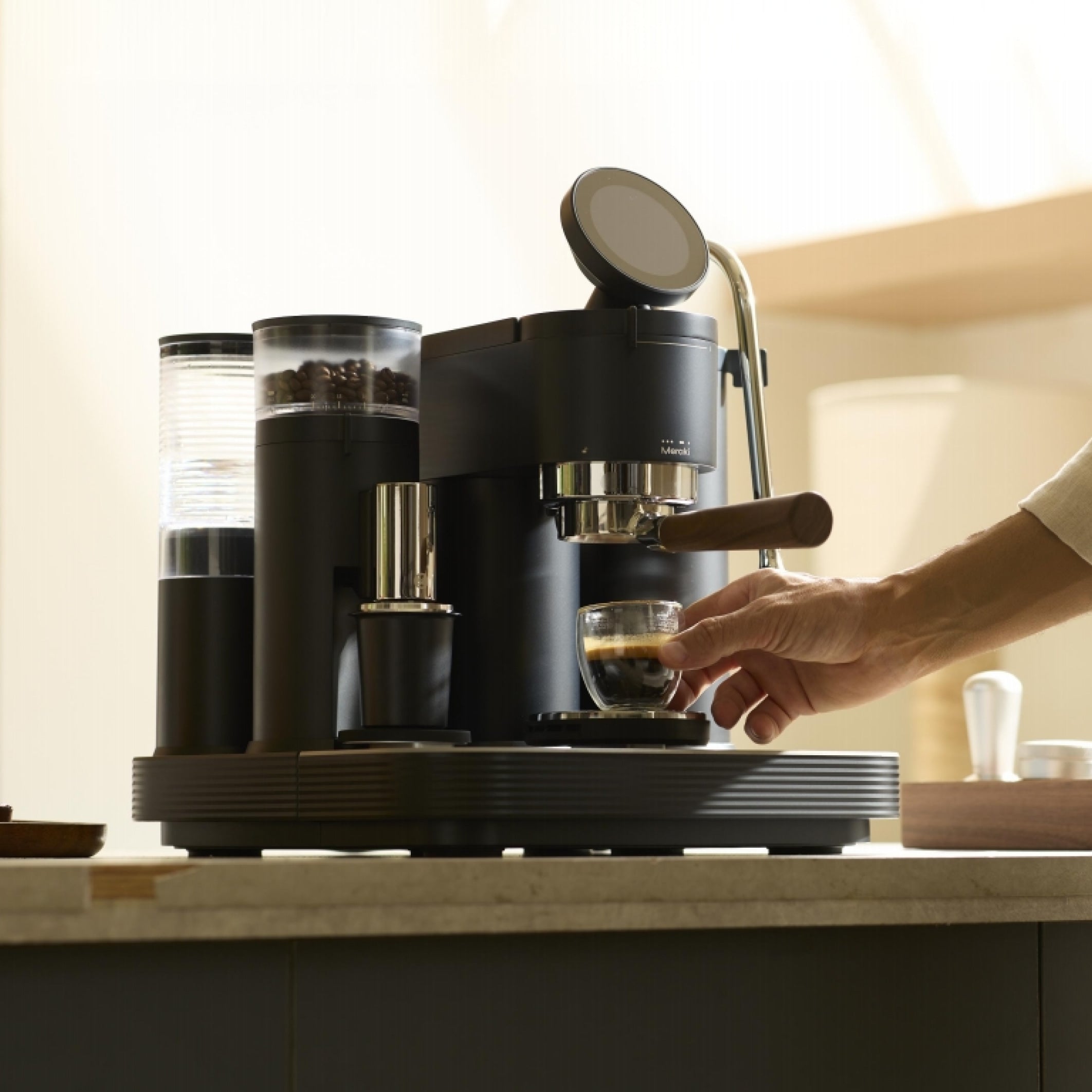
The shot is a different texture: denser, heavier, and more compact than a diluted concentrate. That density is why espresso carries milk so well, and why an iced latte tastes like a constructed drink rather than sweetened fridge coffee. You can also change the bean or the grind this morning, instead of waiting another night for a new batch. The trade is involvement: you grind, extract, and clean in real time. If that sounds like a chore you will skip, the pitcher may be the better weekday tool. If you want cafe-style milk drinks in every season, the machine is doing a job the maker was never designed to do. Meraki publishes this guide and offers a guided all-in-one option on the Meraki espresso machine page; it is one fresh-espresso path, not a cold brew device.
Iced drinks: shaken espresso, iced lattes, and cold brew
The glass of iced coffee you want should decide the base.
Cold brew is a make-ahead black or milky drink. Iced espresso drinks are built to order from a hot shot. They can look similar in a photo and still taste like different recipes.
If you like a tall, smooth, low-acidity black coffee that sits in the fridge, start the night before in a cold brew maker and keep the ratio consistent. If you like a sharper, more aromatic iced Americano, or a milk-forward iced latte, pull espresso over ice so the shot is still the center of the drink. Shaken espresso and iced lattes belong to the machine. A pitcher of concentrate belongs to the maker. This page is about those tools, not a full tasting lab for every iced recipe; for drink assembly ideas, browse Meraki coffee recipes. If you are comparing a multi-function countertop maker that also advertises cold brew and “espresso” programs, that is a different question from this one, and it is covered in Meraki’s guide to the Ninja Specialty Coffee Maker comparison.
Time: overnight steeping versus a two-minute shot
Cold brew front-loads the wait; espresso front-loads the work.
Plan the pitcher when you still have 12 hours. Plan the shot when you need a drink before you leave the house. Neither timeline is “faster” until you say which morning you mean.
A cold brew maker asks for a little setup and a long pause. Forget to start it, and you do not have a batch at 7 a.m. An espresso machine asks for heat-up, a grind, and a short extraction, then it can make the next drink. That is why people who only want iced coffee on weekends often prefer the pitcher, and why people who want a latte on a random Tuesday prefer the machine. Cleaning follows the same split: rinse a vessel after you filter, or wipe a portafilter and wand after each session. Count the time you will actually give, including the night you will forget the steep.
| Job | Cold brew maker | Espresso machine |
|---|---|---|
| What you get | A filtered concentrate to dilute later | A short, hot, pressurized shot, which you can ice |
| Clock | Hours of steeping, minutes of active work | Minutes once the machine is ready, no overnight wait |
| Best iced use | Tall, smooth, make-ahead black or milky coffee | Iced Americano, iced latte, shaken espresso |
| Hot drinks | Possible if you dilute concentrate with hot water, but that is not espresso | Espresso, Americano, and steamed-milk drinks |
| Batch size | A pitcher for several servings | One drink at a time, repeated as needed |
Caffeine and strength are not the same comparison
Strength in the mouth and caffeine in the cup are easy to mix up.
Espresso tastes stronger in a small volume. Cold brew can deliver more total caffeine in a large glass simply because you drink more of it. The brew ratio and your pour decide the rest.
A concentrate that you barely dilute will feel heavy and can pack more caffeine into a serving than a long, watery pitcher. A double shot over ice is intense in a short drink, but it is still a small volume. There is no single winner, and this is not a lab assay. Do not treat a social-media milligram chart as a personal limit. For general, non-diagnostic context, read the FDA caffeine consumer update and the Harvard T.H. Chan caffeine overview. If you want a food-composition lookup rather than a marketing claim, USDA FoodData Central lists coffee entries by item. Adjust recipe and serving size, not folklore.
Counter space, cleanup, and batch size
The pitcher wins on simplicity; the machine wins on menu range.
A cold brew maker is usually one vessel and a filter. An espresso machine is a station: water, grind, puck, and, if you steam, a wand you should wipe every time.
If you have a small fridge and a smaller counter, be honest about where the maker will live while it steeps, and where the machine will live every day. A batch tool rewards people who drink the same style for several days. A machine rewards people who change drinks from morning to morning. Neither should be bought as a decoration. If the decision you are actually making is espresso versus a drip coffee maker, that is a broader category question than this page, and it is covered in Espresso Machine vs Coffee Maker.
Can you use espresso beans in a cold brew maker?
You can; the bag name does not lock the method.
Espresso-labeled beans are often a roast or blend chosen to taste good as a shot, not a different species of coffee. In a cold steep they will still extract, but the cup may taste heavier or darker than a filter roast.
Start with a coarse grind, the same way you would for other cold brew, and expect to adjust the ratio if the pitcher tastes muddy or too intense. A light, fruity bag can also make excellent cold brew, just as a so-called espresso roast can make a fine iced pour if you like that profile. Buy beans for the flavor you want, then grind for the method you are using. Browse current options in the Meraki coffee beans collection rather than treating any roast name as a rule. For roast-level language, the NCA roast guide is a plain reference.
When owning both makes sense
Own both when you regularly want two different drinks, not when you want a fuller cabinet.
The pairing works if weekdays need a grab-and-go pitcher and weekends, or after-dinner cups, need real espresso and milk. It is a poor pairing if one tool will sit idle for months.
A practical split is cold brew for tall black iced coffee and espresso for lattes and hot shots. Share a bag of beans only when the roast can do both jobs without making you unhappy. Keep the maker if your household goes through a pitcher. Keep the machine if someone still wants a cappuccino in January. Buying the second tool is a response to a gap you can already name.
A buying path if you mainly want iced drinks
Start with the iced drink you already order, then buy the tool that makes that drink honestly. If the order is a tall, smooth black coffee you refill, a cold brew maker is the direct path. If the order is an iced latte, shaken espresso, or an iced Americano with a shot at the center, buy an espresso machine and a capable grind path, and use ice as a serving choice rather than as a reason to steep overnight.
If you still also want filter coffee on some mornings, that does not automatically mean you need a cold brew maker; it means you should not force every drink through one appliance. Confirm live product details before you purchase, and skip any claim that one box replaces every cold and hot recipe.
Conclusion
If you can plan ahead and you want a pitcher of smooth iced coffee, buy a cold brew maker. If you want on-demand shots and milk drinks, hot or iced, buy an espresso machine. Keep both only when those two jobs show up in the same week. The tools are different, and that is the point.
If on-demand espresso is the job you need, start with the current Meraki espresso machine page and browse coffee recipes for iced-drink assembly.
FAQ
Can an espresso machine make cold brew?
Not in the same way a cold brew maker does. An espresso machine extracts a short, hot, pressurized shot. You can pour that shot over ice for an iced Americano or iced latte, but that is iced espresso, not a 12-to-24-hour cold immersion. A cold brew maker steeps coarse grounds in cold water for hours, then filters a concentrate you can dilute later. Use the machine when you want a drink now; use the maker when you can start a batch the night before.
Does cold brew have more caffeine than espresso?
It depends on the recipe and the serving, not on the name of the drink. Espresso is more concentrated by volume, but a tall glass of cold brew can contain more total caffeine than a single shot because you are drinking more liquid. Ratios, steep time, and how much you dilute the concentrate all move the result. Treat any comparison as a range, not a medical limit. For general caffeine context, see the FDA consumer update and Harvard T.H. Chan’s caffeine overview, and do not use this page as advice for your personal intake.
Which is better for iced lattes, cold brew or espresso?
Choose espresso when you want a milk drink that still tastes like a shot: an iced latte or shaken espresso built to order. Choose cold brew when you want a smoother, lower-acidity base you can pour from the fridge and lengthen with milk. Households that drink both often keep a batch of concentrate for black iced coffee and pull espresso when they want a cafe-style milk drink. Taste the coffee through the milk before you decide the base is the problem.
Do I need both a cold brew maker and an espresso machine?
Only if you regularly want both jobs: a pitcher of make-ahead iced coffee and on-demand shots or milk drinks. If your summer habit is a tall black iced coffee, a cold brew maker is the simpler spend. If you want lattes, cappuccinos, or hot espresso in the same kitchen, the espresso machine does work a pitcher cannot do. Many people start with one tool, then add the second when a real gap shows up on weekday mornings, not because a comparison chart said to own everything.


