


What Is a Dosing Cup and Why Does It Matter for Espresso?
Some baristas weigh whole beans into a cup before grinding. Others grind directly into the cup and then transfer the grounds into the portafilter. The best use depends on the grinder and whether it already measures the dose accurately.
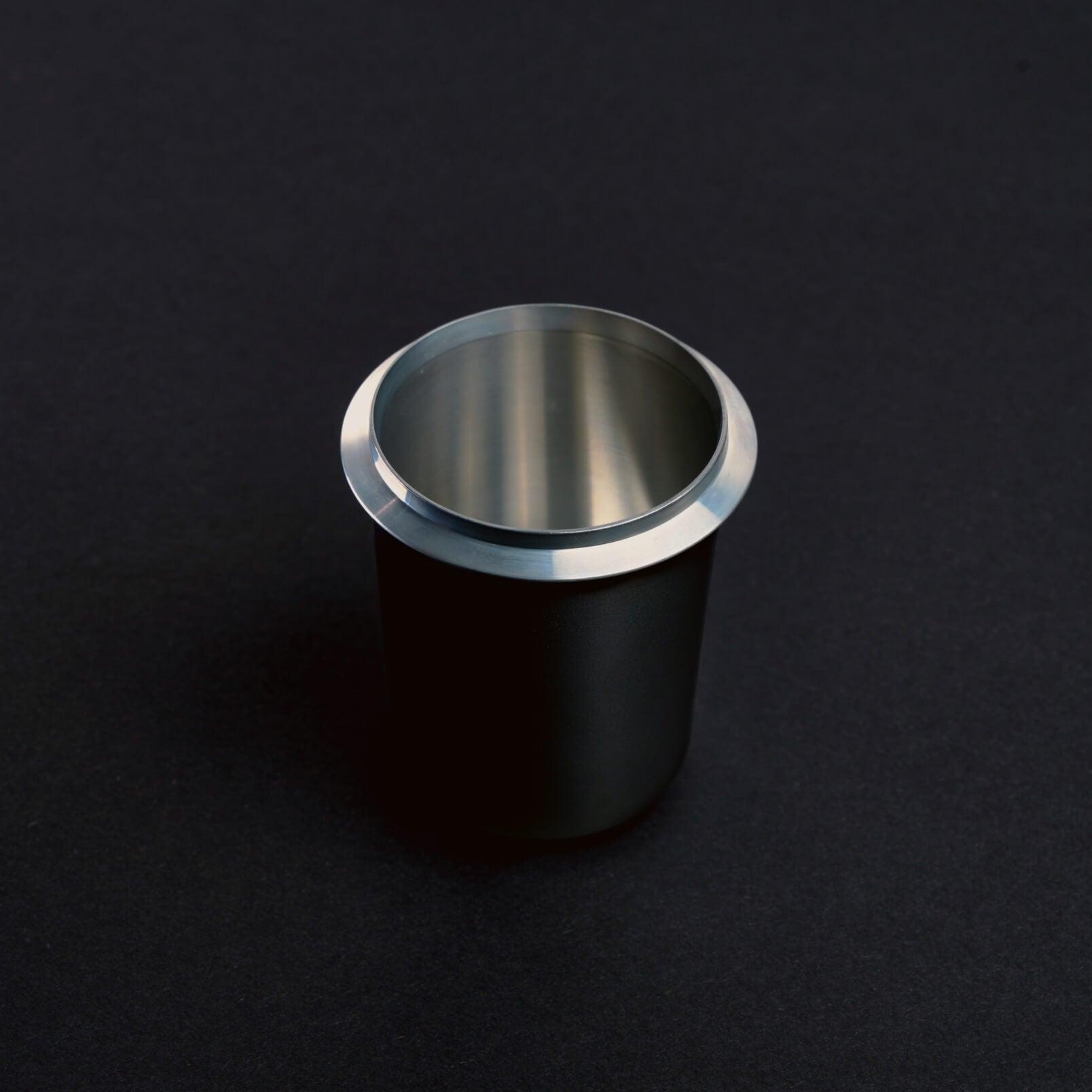
What is a dosing cup used for?
Weighing whole beans
In a single-dose grinder workflow, the cup can hold a measured portion of beans before they enter the grinder. This is useful when the grinder does not have built-in weight control or when you are comparing different coffees without storing beans in the hopper.
Catching ground coffee
A dosing cup can sit under a grinder and collect the grounds in one container. It may reduce spray and help keep the counter cleaner. The cup then transfers the grounds into the portafilter.
Checking transfer loss
If you weigh beans before grinding and grounds after grinding, the cup makes that comparison easier. A small difference does not automatically mean the grinder is defective; coffee can remain temporarily inside the grinder or cling to the cup because of static. The useful measure is whether the workflow remains consistent over repeated doses.
Dosing cup vs dosing funnel vs coffee distributor
| Tool | Main purpose | When it is used | What it does not replace |
|---|---|---|---|
| Dosing cup | Contains beans or grounds for weighing and transfer | Before grinding or between grinder and portafilter | Distribution, tamping, or brew measurement |
| Dosing funnel | Extends the portafilter rim to reduce spills | While grinding or stirring grounds in the basket | A cup when grounds need to be transported separately |
| Coffee distributor | Levels the top surface of grounds before tamping | After dosing and any internal distribution | Clump removal or the final tamp |
The tools can be combined, but a good workflow does not need every accessory. If a grinder doses cleanly into the portafilter, a cup may add an unnecessary transfer. If the grounds scatter or you frequently switch coffees, the cup may make the routine easier.
How to use a dosing cup for espresso
- Choose the role of the cup. Decide whether it will hold whole beans, catch grounds, or do both.
- Tare the scale. Place the empty, dry cup on the scale and reset the displayed weight to zero.
- Measure the dose. Add beans or collect grounds until the intended weight is reached.
- Transfer carefully. If moving grounds into a portafilter, align the cup with the basket and invert or pour without scraping the sealing rim.
- Settle without compressing. A gentle tap can help grounds leave the cup; do not use the cup as a tamper.
- Distribute and tamp. Complete the puck preparation with the method suited to the coffee and basket.
- Keep the cup dry. Coffee oils and moisture can make grounds cling, change transfer behavior, or create stale odors.
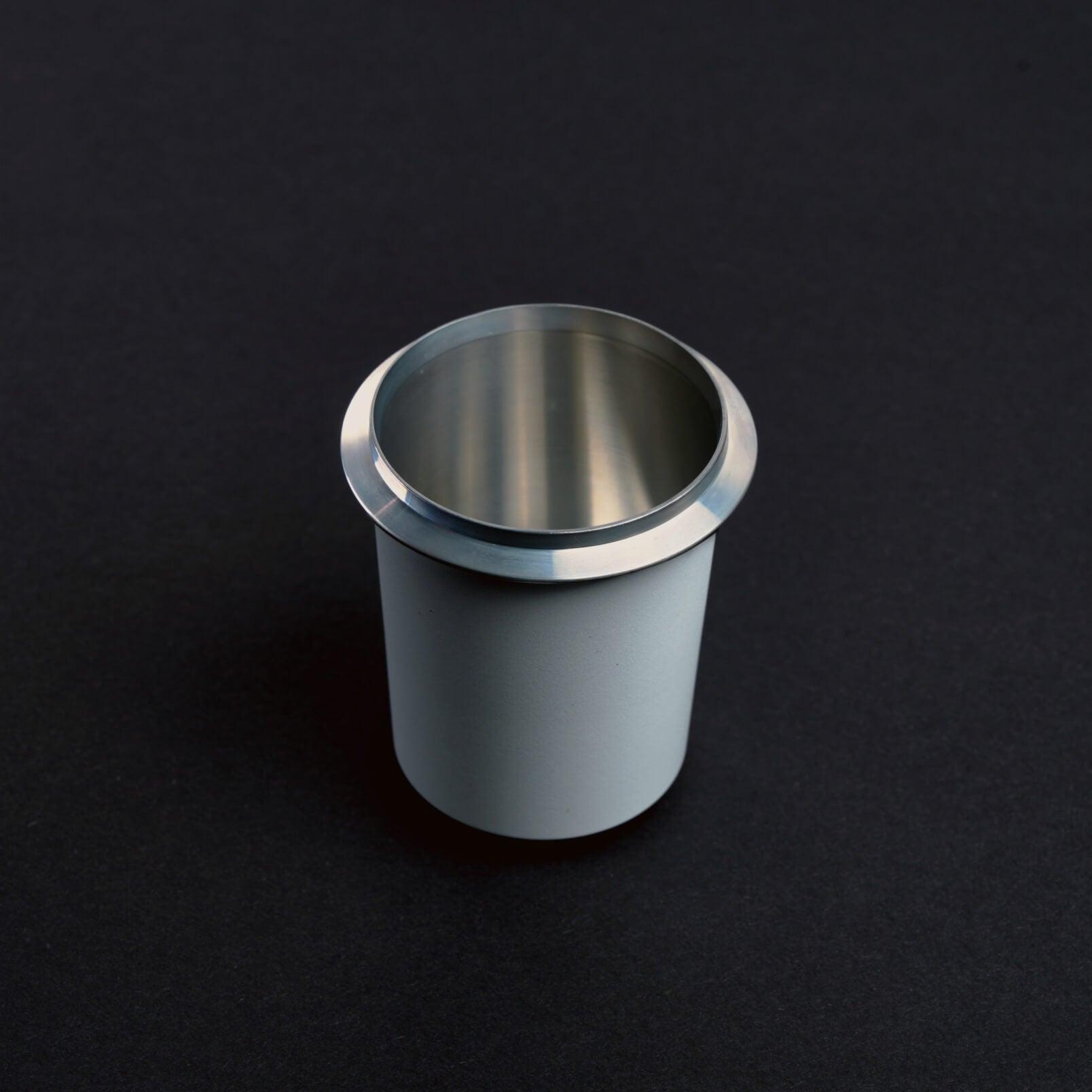
Does a dosing cup need to fit the portafilter?
Only if you plan to invert the cup directly over the basket. The outside of the cup or its transfer lip should align without damaging the basket or trapping grounds on the rim. Nominal 58mm sizing is not enough to guarantee compatibility because basket walls, cup lips, and manufacturing tolerances vary.
If you use a Meraki 58mm portafilter, the official Meraki Dosing Cup is the direct accessory option. For third-party tools, confirm the stated dimensions and return policy before purchasing. Our 58mm portafilter guide explains why nominal size is only part of compatibility.
Is a dosing cup necessary with Meraki?
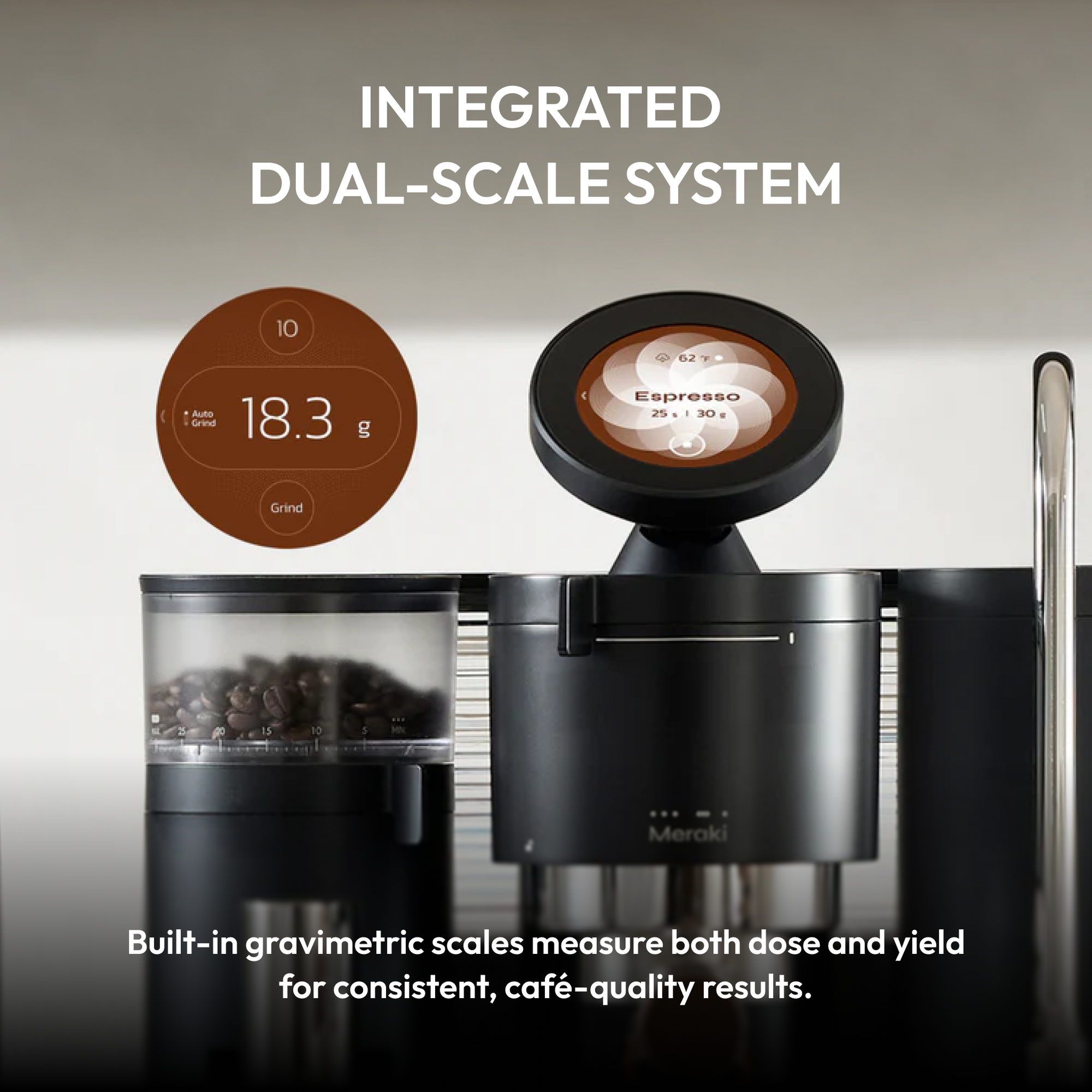
No. Meraki has an espresso-tailored grinder and built-in grind-by-weight measurement, so the machine can control the dose without requiring a separate cup and external scale. A dosing cup remains useful when you prefer to pre-weigh beans, switch coffees, collect grounds separately, or keep the counter cleaner.
The second built-in scale measures beverage yield during brewing. Together, grind by weight and brew by weight control the two amounts that define a practical espresso ratio. The cup is an optional handling tool between those measured stages, not a substitute for either scale.
How to choose a dosing cup
- Capacity: it should comfortably hold the intended bean or ground-coffee dose without spilling.
- Rim and fit: confirm that the transfer edge works with the basket if you plan to invert the cup.
- Interior shape: a smooth interior is easier to empty and wipe clean.
- Stability: the base should sit securely on the scale and under the grinder.
- Material and care: choose a food-contact material and follow the manufacturer's cleaning instructions.
- Workflow need: buy the cup to solve a specific transfer or cleanliness problem, not because it is assumed to improve extraction.
If you also use a surface leveler, read the coffee distributor guide to keep transfer, distribution, and tamping roles separate.
Frequently asked questions
What is a dosing cup for espresso?
It is a small container used to weigh, catch, and transfer coffee beans or grounds during espresso preparation.
Does a dosing cup improve espresso?
It can improve workflow consistency and cleanliness, but it does not directly improve extraction. The benefit depends on whether it makes dose handling more repeatable.
Can I grind directly into a dosing cup?
Yes, if the cup fits safely under the grinder outlet and has enough capacity. Keep it centered and dry to reduce spills and grounds clinging to the interior.
Can I use a dosing cup instead of a tamper?
No. The cup transfers coffee; it is not designed to create the final level, compressed puck.
Should I weigh beans or ground coffee?
Either can support a consistent workflow. Weighing both can help you observe transfer and grinder retention, while a grinder with built-in grind-by-weight control can reduce the need for an external weighing step.
Use a dosing cup when it makes the transfer cleaner and more repeatable.
Explore the official Meraki Dosing Cup, or see how the espresso-tailored grinder, 58mm portafilter, dual scales, dual boilers, and rotary pump work together on the Meraki Espresso Machine page.