


Friends are coming over. Someone wants a latte, someone wants a cappuccino, someone “just needs espresso,” and the kitchen suddenly feels like a café with no ticket system. A home cafe espresso hosting playbook is not a tasting clinic. It is an operations plan: a short menu, a queue, and a cleanup owner, written down before the doorbell.
(Last modified date: November 16, 2026)
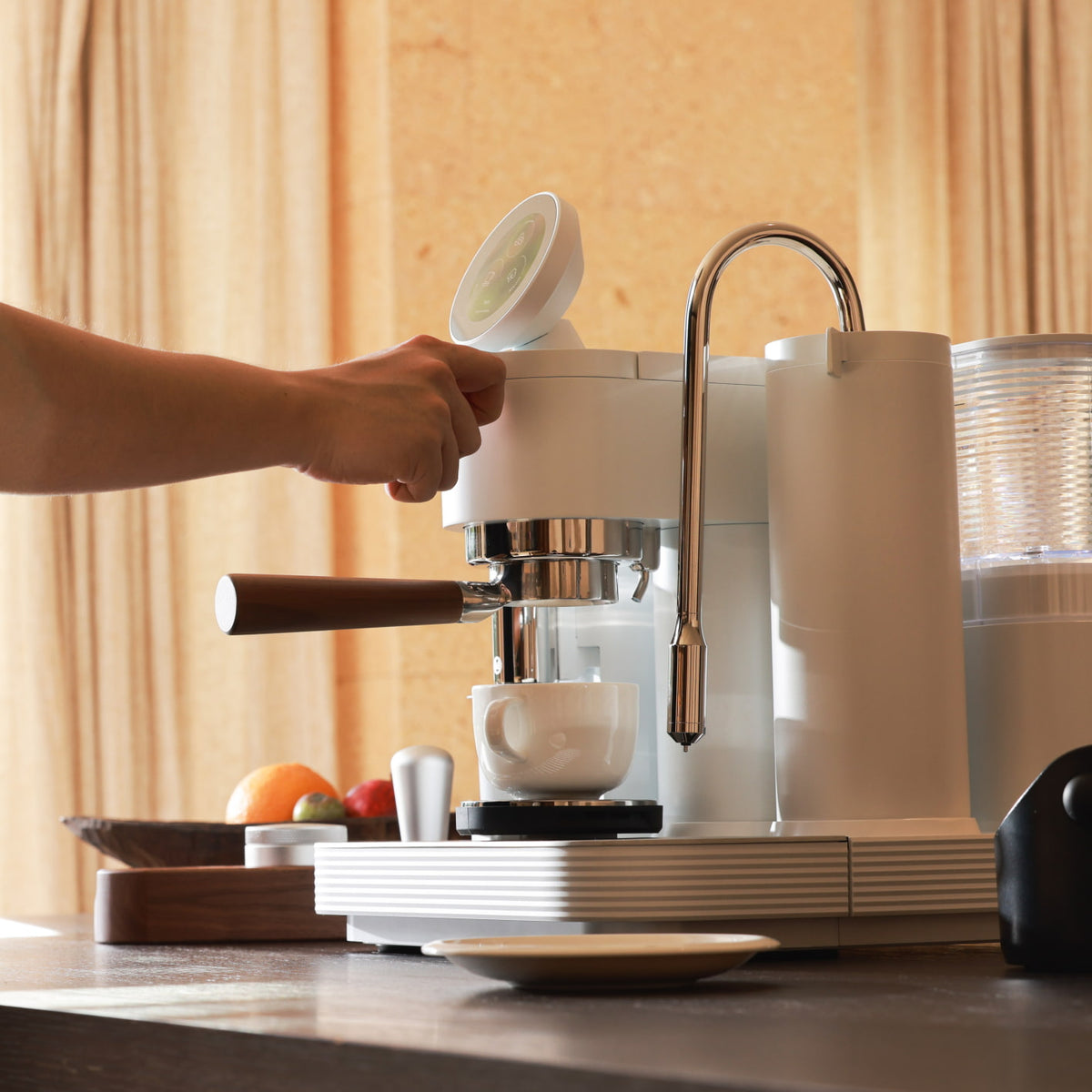
This page is the longer event version of Espresso for Guests: A Hosting Workflow Without the Stress. Keep that shorter workflow for a casual drop-in. Use this playbook when several drinks will overlap.
Prepare the station before anyone orders
Dial in one coffee you already know, and write down the dose, yield, and grind. Fill the water tank. Official Meraki FAQ advice is to fill the tank before brewing; heat-up is around four minutes on the 100–120 V Meraki Espresso Machine and around three minutes on the 220–240 V version, so turn it on before guests arrive.
Set out milk, one alternative milk at most if you will offer it, clean pitchers, cups in the sizes your menu needs, a knock box with room left in it, a wand cloth, and a place for used cups. Name a cleanup owner before service starts — you, or a helper who will actually wipe the wand. If no one owns cleanup, milk dries on the tip while you talk, and the next drink pays for it.
Meraki’s dual boilers can extract espresso and steam milk at the same time, which helps when drinks overlap. They do not invent a menu, and they do not replace a wipe-and-purge after each milk drink.
The hosting table: targets, not a café scorecard
| Variable | Hosting cue | Playbook rule | Do not |
|---|---|---|---|
| Menu length | Two to four options | Write them down before the doorbell | Offer “whatever you want” |
| Default milk drink | One ratio, latte or cappuccino | Announce it once | Relitigate foam on every cup |
| Plant milk | At most one alternative | Purge and wipe between dairy and plant milk | Share a pitcher without cleaning it |
| Queue | Names on a small list | Lock the dairy and plant order | Shout new orders over the grinder |
| Shot staging | Serve espresso promptly | Start the next grind after the cup is out | Let four shots cool on a tray |
| Latte art | Optional, and practiced earlier | A simple pour is enough | Experiment mid-block |
| Cleanup owner | Named before service | Wand, tray, and milk back in the fridge | “We’ll wipe later” |
| Taste notes | One word after the first guest sip | Adjust only if the recipe is clearly off | Hold an extraction clinic while hosting |
The composition of a calm event is mostly those rows, not a better machine. A short menu that shares one espresso recipe will outperform a long board. Change the drink around the shot: more milk or water for a gentler cup, a smaller milk drink or an extra shot for a stronger one. Do not redial the grinder for each guest.
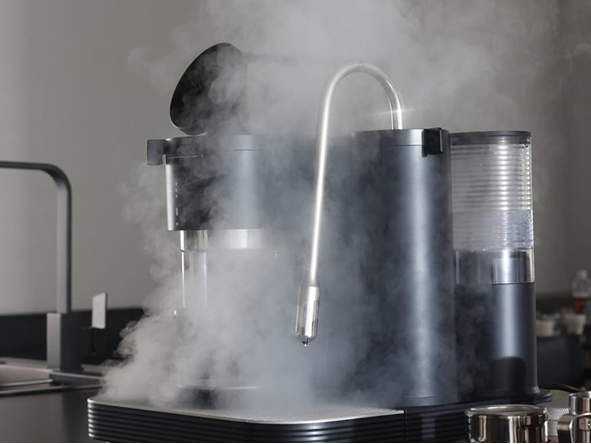
The service loop
Group similar drinks. Serve straight espresso promptly. Steam milk in small batches; a large pitcher left on the counter loses texture, and it is harder to split evenly. If you offer dairy and one plant milk, purge and wipe the wand between them. Official Meraki care copy says to wipe the steam wand and purge it after each use, and to rinse and clean the group head after each extraction. During service, do only what the next drink needs. After guests leave, return to your normal routine. Do not invent a special event descaling cycle; official descaling instructions still come from customer service and the Product Manual (MEM03).
For perishable milk handling, the U.S. FDA safe-food-handling pages are a general household reference. For texture, use How to Steam Milk for Latte Art. Drink ideas can live in Coffee Recipes; pick a few, not the whole list. Household feature fit — cappuccino-heavy versus latte-heavy — is in Cappuccino vs Latte Homes.
If the first guest sip is clearly sharp or heavy, and dose and yield were not followed, fix that one recipe and stay there. Do not chase a 30-second shot-time rule in front of company. Time can be a cue later, when you are practicing. During hosting, yield, prompt service, and a clean wand matter more.
Common hosting failures look dramatic and usually have a dull cause. An empty water tank interrupts a shot you were talking through. A wand that was not purged makes the next milk taste off. Espresso sitting on a tray goes dull before it is served. A mid-party grind change produces one sour cup and one bitter one while you try to recover. Fix the row in the table, not the entire recipe.
A one-week practice plan, if you want one: on a quiet day, run your exact guest menu twice, including the purge between milk types if you will offer two. The playbook is working when you can finish the block without opening the grind adjustments.
FAQ
What belongs in a home cafe espresso hosting playbook?
A short menu, one default milk drink, a queue, and a named cleanup owner.
Write them down before anyone arrives. The machine cannot invent the plan.
How do I keep a guest drink menu realistic?
Limit it to two to four options that share one espresso recipe.
Announce a default milk drink. Adjust strength with milk, water, or an extra shot, not with a new grind for each person.
What does cleanup after hosting actually include?
The wand, the group, the pitchers, and the milk.
During service, wipe and purge the wand and knock out pucks as you go. Afterward, finish your normal cleaning. Do not invent a special descaling event.
Should hosts chase a 30-second espresso rule?
No, not during service.
A shot-time cue can be useful in practice. While guests are waiting, serve promptly, hold the written recipe, and keep the wand clean.
Do I need a dual boiler to host well?
No, but overlap helps when drinks stack.
Meraki can brew and steam at the same time, which shortens a two-drink wait. The menu and the cleanup owner still decide whether the morning feels calm.


