


You already know both paths can make espresso. The integrated vs separate grinder espresso setup decision for most setup planners is quieter than shot-quality debates: how much counter footprint, cable clutter, noise zoning, and upgrade-path cost of ownership you want to live with for years — not which layout “wins” a tasting duel.
This Meraki comparison owns the space / cost-of-ownership lane. Soft-link which setup produces better espresso when the open question is taste and grind ceiling; the honest math when sticker price is the blocker; integrated grinder pros and cons for feature trade-offs; why buying separately isn’t always better for kit economics; what the integrated grinder buys beginners for year-one capability; and coffee machine with grinder vs espresso machine with grinder when the naming trap is the issue. Soft-name a two-drink morning stopwatch when couple leave-time sequencing (dual vs single) is the real blocker, and a ritual-burden dual-vs-HX card when flush cognition — not footprint — is the friction.
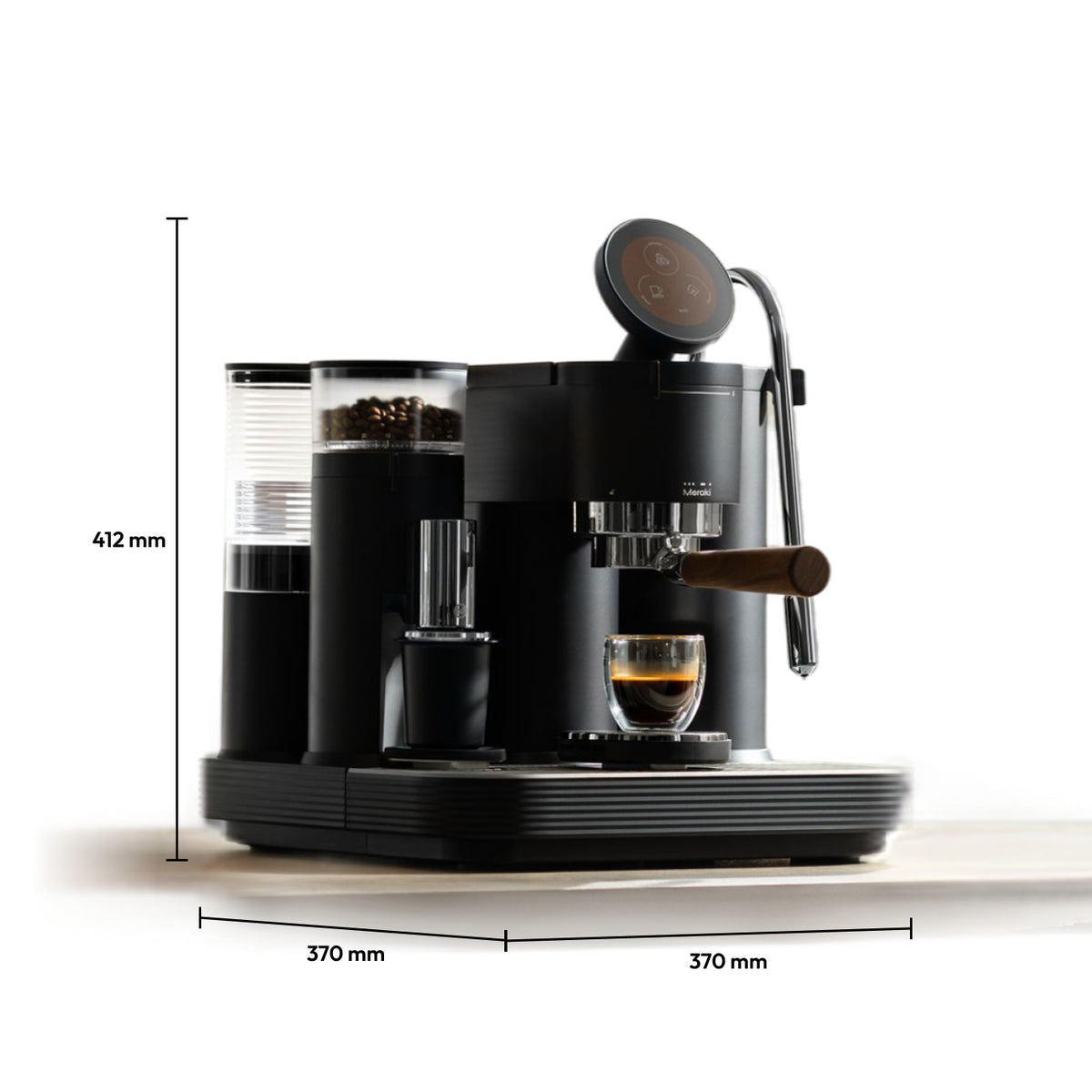
Measure one station’s width, depth, and height — then decide whether a second grinder chassis still fits your real counter, not a forum ideal.
What “integrated vs separate grinder espresso setup” really means for home buyers
Integrated vs separate grinder espresso setup, for setup planners, means choosing how many chassis, outlets, and noise zones you will own — and how expensive the next upgrade step becomes — not which layout automatically tastes better.
An espresso machine with integrated grinder puts grind, brew, and usually weighing on one footprint: one power cord (or one primary cord), one visual station, one cleaning orbit. A complete home espresso setup with a separate grinder adds a second chassis — often a better long-term grind upgrade path, and almost always more width, more cable, and a second morning noise source. SERP still fills with Reddit preference threads, “built-in vs standalone” videos, and taste-first essays. Useful shoppers already know separate grinders can climb higher; what they still lack is a kitchen-layout and ownership-economics card: footprint math, cable clutter, noise zoning, and total cost of ownership (TCO) when you upgrade in three years.
Category literacy from the Specialty Coffee Association and CoffeeGeek guides still starts with beans, dose, and method. Soft-link Meraki’s taste and honest-math posts for cup and sticker; stay here for space and ownership cost.
Who this page is for (and who should skip it)
This page is for setup planners laying out a home espresso station with grinder — renters and owners who will live with the gear daily and care whether one chassis or two fits the counter, the outlets, and the household noise map.
Skip which setup produces better espresso when the doubt is shot quality / grind ceiling; the honest math when you only need price arithmetic; integrated pros and cons for feature lists; buying separately isn’t always better for kit-vs-pieces framing; what the integrated grinder buys beginners for beginner capability essays; and the coffee vs espresso naming trap when drip-with-grinder language is the confusion. Soft-name two-drink morning sequencing when leave-time fairness for two cups is the open question, and HX flush ritual vs dual simplicity when heat architecture — not footprint — is the friction. Come here for: counter space, cables, noise zones, and upgrade-path TCO.
Why space and cost of ownership decide the setup
This article is published by Meraki. The unique job is a space / cost-of-ownership comparison: map one integrated station against a two-chassis layout on footprint, outlets, noise zoning, and what you pay (in money and counter) when the first upgrade arrives.
That is not a taste duel, not a price-only spreadsheet clone, not a beginner “what integrated buys” essay, and not a drip-vs-espresso naming post. Soft-link those pages when their lane owns the next click; keep this page for kitchen layout and ownership economics.
Disclosure: Meraki sells the Meraki Espresso Machine — dual boilers, rotary pump framed near steady 9 bar, built-in dual scales (±0.2 g), TIMEMORE® co-developed grinder, guided touchscreen. Live framing (2026-10-26/27): published dimensions about 370 × 370 × 412 mm (W × D × H); heat-up about 3–4 minutes; brew and steam together. Re-check the espresso machine with grinder page before treating numbers as permanent. No invented German Design / Red Dot claims here.
Decision criteria that change the outcome
Five criteria decide most integrated vs separate grinder espresso setup outcomes for setup planners. “Which tastes better” only helps after these are honest.
| Criterion | What to ask before you buy | Why it changes the call |
|---|---|---|
| Counter width & depth | After fridge clearance and prep zone, can one chassis or two still leave a working landing pad? | Separate grinders often win on upgrade path and lose on real inches |
| Outlets & cable clutter | How many free outlets sit within safe reach of the station? | Two chassis = two cords (or extension habits you will regret) |
| Noise zones | Will grind noise sit next to sleepers, shared walls, or a living-room open plan? | Separate grinders let you relocate grind noise; integrated keeps grind at the brew station |
| Upgrade-path TCO | In 2–3 years, will you replace the grinder, the machine, or both? | Separate: upgrade one piece; integrated: the grinder ceiling and the machine travel together |
| Scale & tool orbit | Do you already own a good scale and a clear tool drawer — or is one tidy station the priority? | Integrated scales shrink accessory sprawl; separate setups often add a scale chassis or tray real estate |
If your counter is already tight and outlets are scarce, an all-in-one espresso setup usually wins on ownership friction even when a separate grinder could climb higher later. If you have width to spare and already plan a grinder upgrade in year two, a separate path can be the cheaper long ownership story. Soft-link the honest math for sticker arithmetic; stay here for inches and upgrade TCO. NIST is a reminder that trust grows when you can re-check a measurement — here, tape-measure clearance and outlet count, not a brochure claim of “compact power.”
Side-by-side: footprint, cables, and upgrade path
Run the same kitchen card once on paper. Numbers below are illustrative planning habits, not a claim that every integrated or separate SKU matches Meraki’s published size. The point is relative ownership load.
Scenario card — Setup planner weekday station
- Goal: reliable daily espresso (optional milk) without expanding the kitchen
- Constraint: fixed counter run, limited outlets, mixed household noise tolerance
- Question: one chassis or two — and what does the next upgrade cost?
| Phase | Typical integrated path | Typical separate-grinder path | Ownership load |
|---|---|---|---|
| Counter claim | One station footprint (example Meraki live dims ~370 × 370 × 412 mm) | Machine + grinder widths stack; depth often needs a deeper landing zone | Separate: more inches |
| Power | One primary cord at the brew station | Two cords (or power strip habits) | Separate: more cable clutter |
| Morning noise map | Grind + brew noise share one zone | Grind can move farther from sleepers / shared walls | Separate: zoning flexibility |
| Dial-in tools | Built-in dual scales (±0.2 g on Meraki) reduce scale sprawl | External scale + tray often add a third “soft chassis” | Integrated: fewer loose tools |
| Year-3 upgrade | Grinder ceiling and machine share one product lifecycle | Replace grinder or machine independently | Separate: usually cleaner upgrade TCO |
| Cleaning orbit | One drip tray / one wipe zone | Two hoppers, two chutes, two bases to wipe | Separate: more daily wipe area |
On an integrated path, the honest story is one station, one orbit, shared upgrade ceiling. On a separate path, the story is layout flexibility and piece-by-piece upgrades — paid for in width, cords, and wipe surface. Soft-link which setup produces better espresso when grind quality is the next click; soft-link what integrated buys beginners when year-one capability — not footprint — is the doubt. NCA brewing basics and About Coffee brewing still assume a clean method — the ownership test asks whether the station stays short enough that brewing gets the remaining attention.
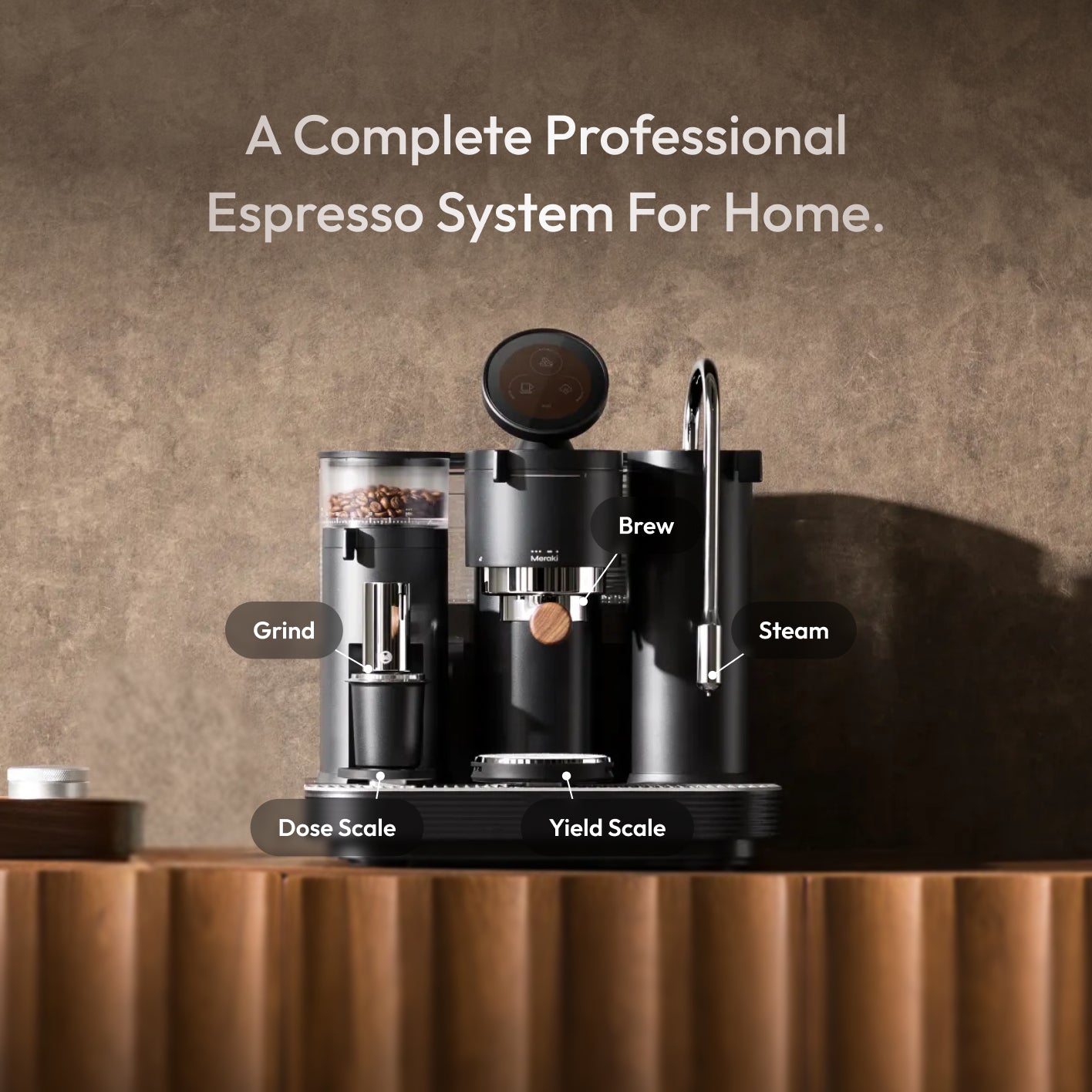
One integrated station consolidates grinder, brew, steam, and scales — fewer cables and less counter sprawl than a two-chassis layout.
Milk drinks, noise, and heat-up: daily-life differences
Milk drinks do not automatically crown integrated or separate. Steam quality follows boiler and wand design more than whether the grinder shares a chassis. Here the only milk question for ownership is whether steaming adds another tool orbit (pitcher, cloths, thermometer) on a counter that already hosts two machines.
Noise is a layout problem. Integrated grind noise sits at the brew station — fine if that zone is away from bedrooms, harder in open studios. Separate grinders can migrate to a pantry or far end of the island; that is a real apartment advantage when neighbors or sleepers matter. Soft-name apartment pump-noise decisions when pump buzz through shared walls is the issue — that is a different axis than grinder zoning.
Heat-up is separate from footprint. Meraki’s live FAQ frames dual-boiler heat-up around 3–4 minutes. Use that window for non-coffee tasks either way. Optimize time from ready to first confident drink, not time-to-first-drip. Treat marketing quietness claims as directional and judge in a trial. Barista Magazine still treats consistency under time pressure as the busy-service skill; at home that often means a station short enough that leave-time attention stays on the cup.
Space, maintenance, and learning curve
Space is the ownership tax you pay every day. Measure the exact SKUs — width, depth, height under cabinets, and the landing pad for a portafilter and pitcher. Do not assume “integrated is always smaller” (some all-in-ones are deep) or “separate is always huge” (compact grinders exist). Soft-link integrated pros and cons for feature depth; here the note is narrow: two chassis usually win upgrade freedom and lose daily inches.
Maintenance still matters on both: water quality, descaling or softener habits per the manual, burr cleaning, and group hygiene. FDA safe food handling is a useful mindset for milk gear. Separate setups add a second hopper and chute to keep clean; integrated setups concentrate wear and service into one product. Learning-curve note for planners: year-one attention often goes further when the station asks fewer layout decisions — dose and taste get the remaining bandwidth.
When Meraki is the better fit
Meraki fits when you want one measured station: dual boilers, TIMEMORE® co-developed grinding, built-in dual scales (±0.2 g), and a guided touchscreen workflow that keeps grind, brew, and weigh on a single home espresso station with grinder footprint.
Choose Meraki (or another serious all-in-one) if counter width is scarce, outlets are limited, you prefer one cleaning orbit, and you value scales built into the station rather than a third tray. Live Meraki framing (2026-10-26/27): about 370 × 370 × 412 mm, ~3–4 minutes heat-up, simultaneous brew/steam — re-check the espresso machine with grinder page. Soft-link what the integrated grinder buys beginners if year-one capability is still in doubt; soft-link the honest math when sticker price — not inches — is the blocker.
When the alternative is enough
A separate grinder is enough when you have the width, want independent upgrade timing, or need to park grind noise away from the brew zone.
Choose separate when you already own (or plan to buy) a high-ceiling espresso grinder, when your counter run can absorb two chassis without losing a prep pad, or when relocating grind noise is non-negotiable. Soft-link which setup produces better espresso for the taste/ceiling lane; soft-link buying separately isn’t always better when kit-vs-pieces economics are the next question. Separate is not “more serious by default.” It is a different ownership contract: more layout freedom, more daily inches.
A practical choose-in-10-minutes checklist
Use this once before you spend more evenings reading forums. Answer out loud; the first honest “no” usually decides integrated vs separate grinder espresso setup.
- After fridge and prep clearance, do I still have a full second chassis width left — measured, not imagined?
- Do I have two safe outlets within reach, or will I invent a power-strip habit?
- Does grind noise need to live away from sleepers, shared walls, or an open studio?
- In three years, do I want to upgrade the grinder without replacing the machine (or the reverse)?
- Do I already own a reliable scale and a clear tool drawer — or is one tidy station the priority?
- Have I measured height under cabinets for the exact SKUs, including hopper clearance?
- If taste/grind ceiling is the real doubt, did I open the soft-linked “better espresso” page instead of forcing this layout guide to be that duel?
If you answered “no” to spare width or outlets, lean integrated. If noise relocation or piece-by-piece upgrades matter more than inches, lean separate. Soft-name the two-drink morning stopwatch when couple leave-time sequencing is the real blocker, and the ritual-burden dual-vs-HX card when flush cognition — not footprint — is the friction.
Conclusion
For setup planners, integrated vs separate grinder is a space and cost-of-ownership choice. If your counter, outlets, and cleaning orbit are already tight, an espresso machine with integrated grinder usually wins daily life even when a separate path could climb higher later. If you have width to spare and want independent upgrade timing or relocated grind noise, a two-chassis complete home espresso setup remains a strong contract.
Compare Meraki’s live one-station framing on the espresso machine with grinder page when footprint and ownership simplicity are the goal — and open the soft-linked taste, math, or beginner pages only when those questions own the next click.
FAQ
Does an integrated grinder always save more counter space?
Usually yes on chassis count, but not always on depth or height. Some all-in-ones are deep; some separate grinders are compact. Measure width, depth, and under-cabinet height for the exact SKUs, plus a landing pad for the portafilter and pitcher. One station wins when outlets and wipe zones are scarce — tape-measure reality still beats “integrated = small” folklore.
Is a separate grinder cheaper over three years?
It can be, when you upgrade only one piece. Separate setups often win long-run TCO if the machine stays and the grinder climbs, or the reverse. Integrated setups concentrate spend into one product lifecycle. Soft-link Meraki’s honest-math guide for sticker arithmetic; this page scores inches, cables, and upgrade-path friction — not a full price spreadsheet.
Can I move a separate grinder to another room for noise?
Often yes, and that is one of the clearest ownership wins for separate gear in apartments and open studios. Integrated grinders keep grind noise at the brew station. Relocating a grinder still needs a safe outlet, a stable surface, and a workflow you will actually keep — carrying beans twice a day fails if the second room is inconvenient.
Do I still need a separate scale with an integrated setup?
Not always. Machines with built-in dual scales (Meraki frames ±0.2 g dose and yield) can shrink scale sprawl. Many separate setups still benefit from a dedicated brew scale. Decide based on whether your station already measures dose and yield in the workflow you will use daily — not on a generic “real baristas always use three scales” rule.
Where should I go if I care more about taste than footprint?
Use Meraki’s integrated vs separate “which setup produces better espresso” guide for the taste and grind-ceiling lane. This article stays on kitchen layout and ownership economics — counter footprint, cables, noise zones, and upgrade-path TCO — and only soft-links the taste duel so each page keeps a single job.
More on this topic: All-in-One Espresso Machine Guides.


