


You already know both can brew and steam in the same session. The dual boiler vs heat exchanger home choice is usually about something quieter: how much ritual burden you want every morning — cooling flushes, flush timing, and “is brew water ready yet?” — versus an espresso machine with independent boilers that keeps brew and steam jobs separate so learners can focus on dose, grind, and taste.
This Meraki comparison owns the ritual-burden lane for home learners. Soft-link the home dual boiler complete guide for full dual-boiler literacy; single vs thermoblock vs dual for the three-way heat map; do you actually need a dual boiler for the buyer essay; what dual boilers do and which to choose for category framing; and why brew-and-steam temperature control matters for heat architecture. Soft-link Meraki vs Rocket Appartamento: E61 HX vs dual-boiler all-in-one when you want a named HX classic versus an all-in-one dual — that page owns the brand duel; this page owns flush ritual vs simplicity. Soft-name a two-drink morning stopwatch test (dual vs single) when the open question is couple sequencing, not HX flush cognition.
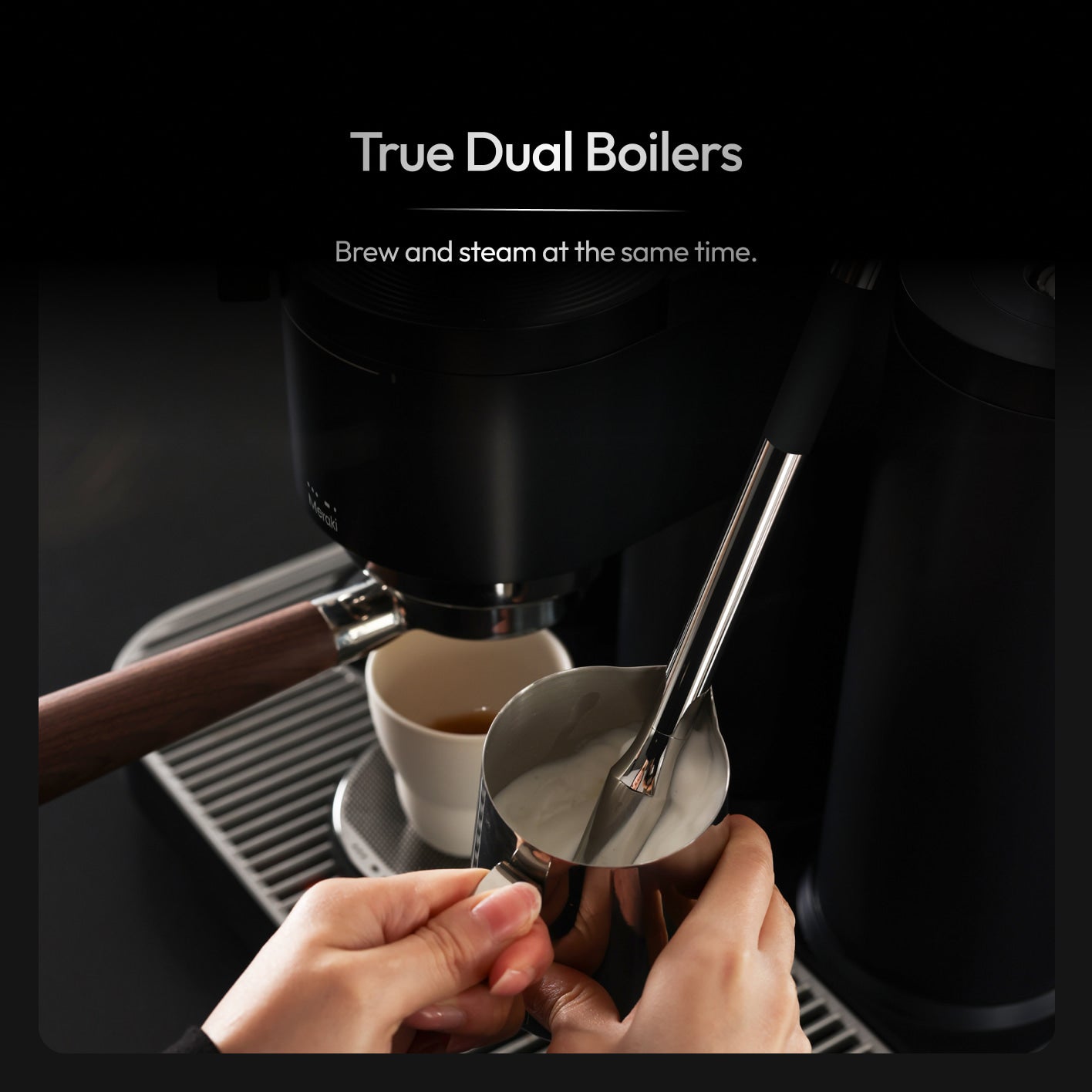
Independent boilers reduce the morning mental load — brew stays brew, steam stays steam.
What “dual boiler vs heat exchanger home choice” really means for home buyers
Dual boiler vs heat exchanger home choice, for home learners, means picking how much cooling-flush ritual and brew-water judgment you will repeat before every shot — not which architecture can steam while brewing on a brochure.
Both designs can support simultaneous brew and steam. A heat exchanger (HX) runs brew water through a tube or chamber inside a larger steam-hot boiler; idle brew water can run hot, so many home HX owners learn a cooling flush (or similar timing habit) before they lock in. A dual boiler keeps an espresso machine with a dedicated steam boiler beside a separate brew boiler, so brew temperature is managed without that flush dance. SERP still fills with Reddit preference threads, retailer feature lists, and “is dual worth it” essays. Useful shoppers already know HX can be cheaper and dual can be more precise. What they still lack is a ritual card: flush timing, cognitive load, when the ritual is fun, and when it becomes friction.
Category literacy from the Specialty Coffee Association and CoffeeGeek guides still starts with taste, dose, and grind. Soft-link Meraki’s boiler hubs for architecture; stay here for ritual burden.
Who this page is for (and who should skip it)
This page is for home learners and upgraders weighing HX flush ritual against dual-boiler simplicity — people who will make espresso most weekday mornings and care how much judgment sits between “machine ready” and “shot locked.”
Skip the home dual boiler complete guide when you need dual literacy end-to-end; do you actually need a dual boiler when the doubt is still “is dual ever worth buying”; the three-way heat map when thermoblock belongs in the shortlist; and Meraki vs Rocket Appartamento HX vs dual when you want that named E61 HX duel. Soft-name a two-drink morning stopwatch when the blocker is couple leave-time sequencing on dual vs single — not HX flush cognition. Come here for: cooling-flush ritual vs independent-boiler simplicity.
Why ritual burden is the real home choice
This article is published by Meraki. The unique job is a ritual-burden comparison: map the HX cooling-flush / idle-water habit against dual-boiler independent boilers, then decide when the ritual is a welcome craft and when it is cognitive load you do not want before work.
That is not a dual complete guide, not a thermoblock three-way, not a dual-vs-single stopwatch test, and not a Meraki-versus-Rocket duel. Soft-link those posts when their lane owns the next click; keep this page for flush timing and simplicity.
Disclosure: Meraki sells the Meraki Espresso Machine — dual boilers, rotary pump framed near steady 9 bar, built-in dual scales (±0.2 g), TIMEMORE® co-developed grinder, guided touchscreen. Live framing (2026-10-26/27): heat-up about 3–4 minutes; brew and steam together. Re-check the dual-boiler page before treating numbers as permanent. No invented German Design / Red Dot claims here.
Decision criteria that change the outcome
Five criteria decide most dual boiler vs heat exchanger home choice outcomes. Brochure “simultaneous brew and steam” only helps after these are honest.
| Criterion | What to ask before you buy | Why it changes the call |
|---|---|---|
| Flush tolerance | Do you enjoy (or at least accept) a cooling flush / idle-water habit before most shots? | HX skill lives here; dual removes most of it |
| Cognitive load | On a rushed morning, do you want one fewer temperature judgment? | Ritual burden compounds with dialing grind |
| Roast range | Mostly medium/dark milk drinks, or frequent light-roast dial-ins? | Dual’s dedicated brew boiler helps when ±1–2 °C matters more often |
| Milk volume | One pitcher most days, or guest-level steaming? | Both can steam well; HX steam tanks are often generous — dual wins on brew independence, not always on raw steam volume |
| Learning focus | Is year-one skill budget for puck prep and taste — or for machine ritual? | Learners often progress faster when the machine asks less mid-shot judgment |
If you like “reading” an HX and already flush without thinking, heat exchangers remain excellent home tools. If every extra judgment before the first sip feels like friction while you are still learning dose and grind, an espresso machine with independent boilers usually lowers ritual burden. Soft-link temperature control for PID/stability theory; stay here for will I resent the flush. NIST is a reminder that trust grows when you can re-check a result — here, brew consistency without a flush ritual, not a brochure claim of “prosumer power.”
Side-by-side: flush ritual vs independent-boiler workflow
Run the same morning card once on paper. Steps below are illustrative home habits, not a claim that every HX or dual SKU behaves identically — group-head mass, idle time, and flush style all move the needle. The point is relative ritual burden.
Scenario card — Learner weekday shot
- Goal: one espresso (optional milk after)
- Constraint: limited attention before leave time
- Question: how many temperature judgments sit between “ready” and “brew”?
| Phase | Typical HX path | Typical dual-boiler path | Ritual burden |
|---|---|---|---|
| Heat to ready | Steam boiler / HX to service temp | Brew + steam boilers to ready (~3–4 min on Meraki’s live FAQ) | Both: use heat window for non-coffee tasks |
| Idle brew water | Can run hotter than brew target after idle | Brew boiler held near brew range | HX: judgment starts here |
| Cooling flush / timing | Flush until water “feels right” or follows a known seconds habit | Usually skip flush-for-cooling (still purge group as hygiene) | HX: main ritual cost |
| Lock and brew | Brew while steam side stays hot | Brew from dedicated brew boiler | Dual: fewer mid-prep decisions |
| Steam milk | Steam from the large steam-hot boiler | Steam from dedicated steam boiler | Both can overlap with brew; HX often strong on volume |
| Next shot after idle | May need flush timing again | Brew boiler still near brew range | HX: ritual repeats; dual: simpler repeat |
On an HX, the honest story is skillful simultaneity with a temperature dance: flush, lock, brew, steam. On a dual boiler, the story is simultaneity with separation: brew and steam stay on their own boilers. Soft-link what dual boilers do for architecture; soft-link Rocket Appartamento HX vs Meraki dual for that E61 brand comparison. NCA brewing basics and About Coffee brewing still assume a clean method — the ritual-burden test asks whether machine ritual stays short enough that taste work gets the remaining attention.
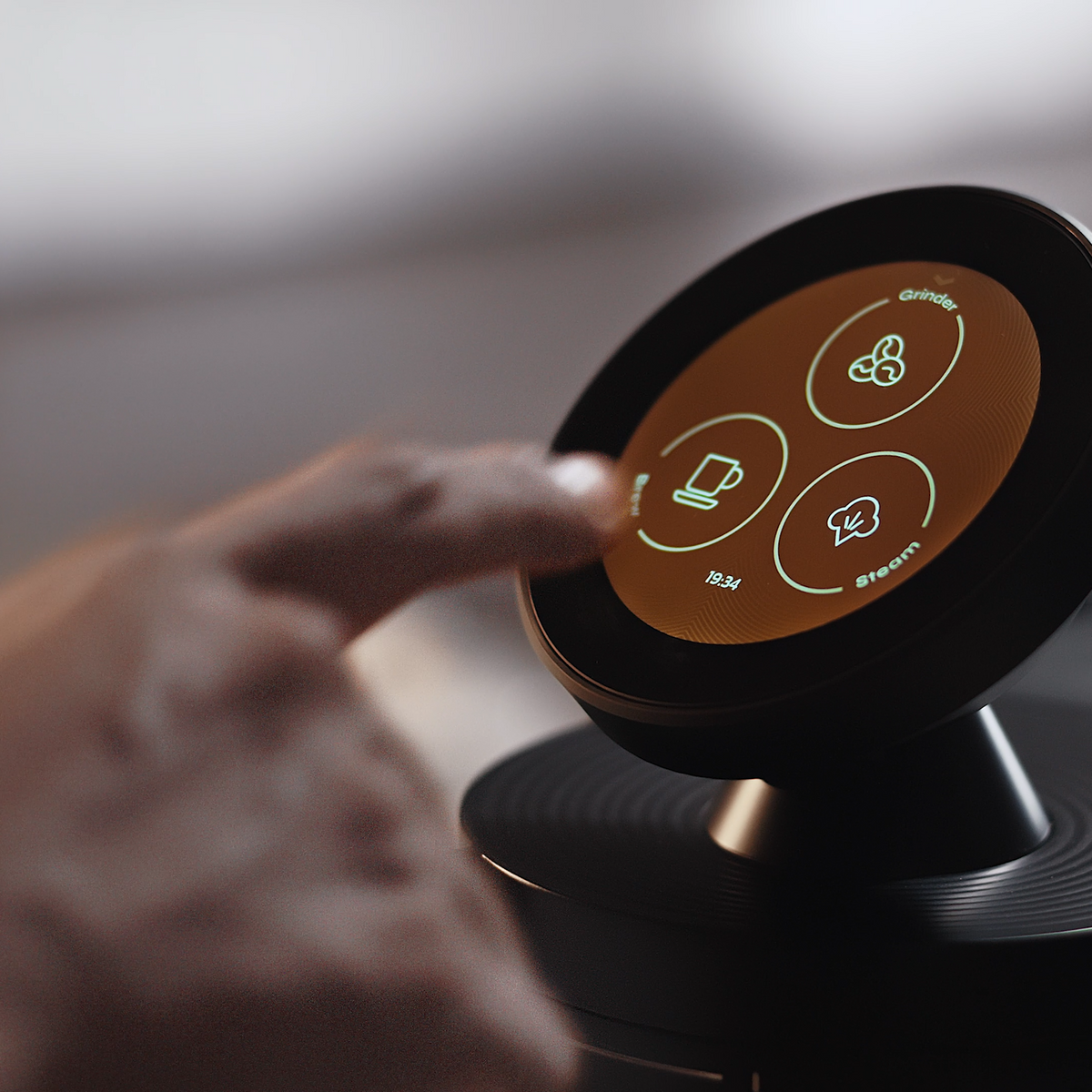
Guided dual-boiler workflow is one way home setups cut flush cognition — brew and steam jobs stay separate.
Milk drinks, noise, and heat-up: daily-life differences
Milk drinks do not automatically crown HX or dual. Many heat exchangers steam generously from a hot, large steam boiler; dual boilers win more often on brew independence while you steam, not always on raw steam volume. Here the only milk question is whether steaming adds another temperature judgment on top of an HX flush.
Heat-up is separate from ritual. Meraki’s live FAQ frames dual-boiler heat-up around 3–4 minutes. HX heat-up varies by mass — some feel ready fast, then still ask for flush timing after idle. Optimize time from ready to confident first shot, not time-to-first-drip. Noise varies by pump, steam, and grinder; treat marketing quietness claims as directional and judge in a trial. Barista Magazine still treats consistency under time pressure as the busy-service skill; at home that often means fewer mid-shot decisions before leave time.
Space, maintenance, and learning curve
Dual boilers usually mean more metal, more heaters, and often a larger footprint than a compact HX of similar class. Soft-link the home dual boiler complete guide for ownership depth; here the learning-curve note is narrow: HX teaches flush literacy; dual leaves more year-one attention for puck and taste.
Maintenance still matters on both: water quality, descaling or softener habits per the manual, and group cleaning. FDA safe food handling is a useful hygiene mindset for milk gear. Neither architecture replaces water care. If counter depth is tight, measure the exact SKU — do not assume “HX always smaller” or “dual always huge.”
When Meraki is the better fit
Meraki fits when you want dual-boiler simplicity plus a guided all-in-one path: independent brew and steam boilers, built-in dual scales (±0.2 g), TIMEMORE® co-developed grinding, and a touchscreen workflow that keeps attention on dose and yield rather than flush timing.
Choose Meraki (or another dual with clear brew/steam separation) if you dislike cooling-flush ritual, dial light roasts often, or want brew and steam ready without idle-water habits. Live Meraki framing (2026-10-26/27): about 3–4 minutes heat-up and simultaneous brew/steam — re-check the dual-boiler espresso machine page. Soft-link do you actually need a dual boiler if the premium is still in doubt; soft-link Rocket HX vs Meraki dual for that specific E61 classic.
When the alternative is enough
A heat exchanger is enough when you like the ritual — or at least do not mind it — and you want strong steaming with a usually lower entry price than many dual boilers.
Choose HX when you already flush without thinking, mostly drink medium/dark milk drinks, or prefer a classic E61-style workflow. Soft-link Meraki vs Rocket Appartamento for that named HX path; soft-link single vs thermoblock vs dual if thermoblock or single-boiler options remain. HX is not “worse dual.” It is a different ritual contract.
A practical choose-in-10-minutes checklist
Use this once before you spend more evenings reading forums. Answer out loud; the first honest “no” usually decides dual boiler vs heat exchanger home choice.
- After idle, am I willing to cool-flush (or follow a timing habit) before most shots?
- On a rushed weekday, do I want one fewer temperature judgment before I lock the portafilter?
- Will I regularly brew light roasts where brew-boiler control matters more than steam volume alone?
- Is my year-one learning budget for puck prep and taste — or for machine ritual literacy?
- Do I already love a specific HX classic enough that the ritual is part of the fun?
- Have I measured counter depth/height for the exact SKUs — not generic “HX vs dual” folklore?
- If I am comparing Meraki to a named E61 HX, did I open the dedicated brand-duel page instead of forcing this ritual guide to be that duel?
If you answered “no” to flush willingness or “yes” to fewer judgments, lean dual. If flush is fine and a classic HX workflow is the joy, lean HX. Soft-name the two-drink stopwatch when leave-time fairness for two cups is the real blocker — that is a different axis than ritual burden.
Is a heat exchanger better than a dual boiler?
No — not universally; it depends on ritual.
HX can win on steam and often on price when you accept cooling flushes. Dual usually wins when you want independent brew/steam control with less flush cognition.
Neither wins on brochure simultaneity alone — both can brew and steam in one session. Score flush ritual, roast range, and learning focus, then pick. Soft-link temperature control and the complete dual guide for deeper architecture; keep this page for the ritual call.
What are the disadvantages of heat exchangers?
Flush ritual and idle brew-water judgment.
HX also offers less independent brew-temperature control than dual boilers, and a steeper early learning curve while taste skills are still forming. Steam is often a strength — the cost is cognitive and procedural, not “HX cannot steam.”
Mitigation: learn a consistent flush, keep idle times predictable, or choose dual if you refuse the ritual. Soft-link Rocket Appartamento HX vs dual when weighing a specific HX classic against Meraki’s dual all-in-one.
Conclusion
For home learners, dual boiler vs heat exchanger is a ritual vs simplicity choice. If cooling flushes feel like craft, HX remains a strong path. If you want an espresso machine with independent boilers so weekday attention stays on dose, grind, and milk — not idle-water timing — dual-boiler simplicity usually fits better.
Compare Meraki’s live dual-boiler framing on the dual boiler espresso machine page when that simpler morning contract is the goal — and open the soft-linked HX brand duel only when a named E61 classic is already on your shortlist.
FAQ
Do I still need to flush a dual boiler espresso machine?
Usually not for cooling the way many HX owners do. You may still purge the group for hygiene or to wet the puck area, but dual boilers keep brew water on a dedicated brew boiler, so the classic cooling-flush ritual is largely removed. Always follow your machine’s manual for rinse and cleaning steps.
Can a heat exchanger brew and steam at the same time?
Yes. That is one reason HX machines stay popular at home. Simultaneous capability does not erase flush timing after idle. Score ritual burden separately from “can it do both at once” marketing — dual boilers also brew and steam together, with less brew-side flush cognition.
Is a dual boiler always more expensive than a heat exchanger?
Often, but not as a universal rule across every brand and year. Dual boilers add a second boiler and more control hardware, which commonly raises price and size. Compare the exact SKUs on your shortlist, including accessories and warranty, rather than assuming every HX undercuts every dual.
Should beginners start on HX to “learn temperature”?
Only if you enjoy that learning. Many beginners progress faster when the machine asks fewer mid-shot judgments so they can focus on grind, dose, distribution, and taste. HX flush literacy is a real skill — it is optional homework, not a required rite of passage before dual ownership.
Where should I go if I am comparing Meraki to a Rocket Appartamento-style HX?
Use Meraki’s dedicated Meraki vs Rocket Appartamento E61 HX vs dual-boiler all-in-one guide for that named duel. This article stays on ritual burden for learners — flush cognition versus independent-boiler simplicity — and only soft-links that brand comparison so each page keeps a single job.
More on this topic: Espresso Machine Boilers, Pumps & Controls.


