


A shiny badge on a product card can feel like proof — until you try to find the year, the category, and the exact machine name on the organizer’s own site. That is what most people mean when they search award winning espresso machine claims to verify. Skip another “best of” roundup. Use an evidence-hygiene workflow: check the organizer record, match year and category, confirm the product name, separate press from PDP badges, then judge weekday performance on its own terms.
This Meraki trust guide owns the verification lane for third-party award language on listings. Soft-link Temperature-Stable Espresso Machine: How to Verify It as a cousin habit for performance claims — this page does not rewrite temperature tests. Soft-link Meraki newsroom posts that show how a brand publishes awards (examples below), not as filler brag copy. Soft-link the About Us page for brand context after you finish the checklist.

A home espresso station earns trust from matched records and weekday cups — not from a logo alone.
What “award winning espresso machine claims to verify” really means for home buyers
Award winning espresso machine claims to verify, for skeptical buyers, means a short audit of any “award-winning” line on a listing — organizer, year, category, product match, badge vs press, then daily use — not a ranking of which badge is “best.”
SERP for this phrase is noisy: Facebook roundups, scam alerts, “promises vs reality” videos, and retailer “top rated” collections. Useful searchers are not hunting another medal. They want a way to tell a real third-party record from a marketing sticker. Category literacy from the Specialty Coffee Association and CoffeeGeek guides still starts with extraction, milk, and maintenance — awards sit beside that work, not above it.
Treat the keyword as a skepticism skill. You are protecting a large home purchase from vague prestige language, the same way you would verify shipping, trial, and warranty terms before checkout.
Who this page is for (and who should skip it)
This page is for skeptical home buyers comparing premium espresso machines online who keep seeing “award-winning,” Gold badges, or magazine logos and want a reusable check — whether the brand is Meraki or anyone else.
Skip if you need a temperature-stability test plan — soft-link how to verify temperature stability. Skip if you still need dual-boiler architecture basics — soft-link Meraki’s dual-boiler espresso machine page. Skip if the open question is “is Meraki worth it” as total cost of ownership — soft-link the live value breakdown. Come here for: how to verify award claims without inventing any.
Why this is evidence hygiene (not an awards brag page)
This article is published by Meraki. The unique job is evidence hygiene: teach buyers how to verify third-party award claims on any listing, and refuse to invent awards that are not on live, checkable pages.
That is not a medal gallery. It is not a rewrite of Meraki’s newsroom award announcements. Soft-link those posts only as examples of how a brand documents a claim — then send you to the organizer or publication of record. Soft-link the temperature-stability verifier for the parallel habit of testing what the cup actually does on a Tuesday morning.
Disclosure: Meraki sells the Meraki Espresso Machine. Score Meraki’s published award language with the same checklist you would use on a competitor card. We will not invent German Design, Red Dot, or other badges that are not independently confirmed for this article.
Core idea in plain language
An award claim is only as strong as a matchable public record. A logo on a Shopify banner is a prompt to verify, not a substitute for the organizer’s winner page or the magazine’s published list.
Three layers matter. First, existence: does the organizer or named publication show a winner entry you can open without relying on the seller? Second, identity: do year, category, and product name match the SKU on the cart page — including Gen 1 vs Gen 2 wording? Third, scope: what did the jury or editors judge — design, editorial gadget pick, extraction consistency under lab protocol — and what did they not judge?
Measurement culture from NIST is a useful metaphor here: trust grows when claims point to a record someone else can re-find. Safety marks from organizations such as UL answer a different question than design awards; do not treat them as interchangeable prestige.
How award claims show up in a weekday workflow
Weekday espresso does not care about a badge on a hero image. It cares whether grind, dose, yield, temperature behavior, and steam timing stay boring enough to repeat before work.
Use awards only as a pre-purchase filter for design or editorial recognition — then switch to ownership questions. Can you brew and steam in one sequence if milk drinks are your morning? Do you have a way to weigh dose and yield? Is service geography clear? Soft-link Meraki’s dual-boiler framing on the dual-boiler page when architecture is the real constraint; soft-link the temperature-stability verifier when heat recovery is the claim you doubt.
If a listing leans on awards while staying silent on trial, warranty country, voltage/region, or what ships in the box, treat the silence as the higher risk. Prestige copy is cheap; ownership terms are where money returns or does not.
What to verify on the listing (step workflow)
Work the same five steps for every “award-winning” line you see — Meraki included.
1. Name the organizer or publication. Prefer the award body’s own site or the magazine’s published awards article over a seller paraphrase. For design programs, start at organizer hubs such as iF. For editorial picks, open the magazine page that names winners — for example Esquire’s 2026 Gadget Awards when a brand cites that list.
2. Capture year and category. “Gold 2025, Kitchen Appliances” is checkable. “Award-winning design” without year or category is not. Write both down before you scroll further.
3. Match the product name to the SKU. Confirm the winner entry names the same machine family and generation you are buying. A design award for an earlier project year is not automatically a claim about every later revision unless the record says so.
4. Separate press, newsroom, and PDP badges. Brand newsroom posts show how the seller tells the story. Organizer or magazine pages show the independent record. Soft-link Meraki’s live examples of published documentation: iF Gold award newsroom, the companion iF Gold explainer, and Gen 2 Esquire Gadget Awards 2026. Use them as templates for what good citation looks like — then still open the linked organizer or Esquire page yourself.
5. Put weekday performance on a separate checklist. Design recognition is not a shot timer. Soft-link temperature-stable verification for heat claims; use taste notes, dose/yield, and milk timing for daily proof. Independent press such as Barista Magazine’s Meraki × TIMEMORE test-drive can add context — still not a substitute for your own trial rules.
| Claim type you see | What it can support | What to open next | What it does not prove |
|---|---|---|---|
| Named design award + year + category | Independent design recognition for a listed project | Organizer winner entry matching product name | Consistent espresso or milk drinks on a Tuesday |
| Magazine / editorial gadget pick | Editors used or selected the machine in a named list | The publication’s awards article URL | Lab extraction metrics or your water chemistry |
| Vague “award-winning” with no year | Almost nothing until details appear | Ask support or skip the claim | Prestige, safety, or value |
| Safety / listing marks | Electrical or safety program participation (when real) | Mark owner’s guidance (e.g. UL) | Taste quality or design jury results |
| Seller badge only on PDP | Marketing emphasis | Newsroom + organizer/publication record | Anything until the record matches |
Meraki’s live newsroom framing (checked 2026-10-27): the Meraki Espresso Machine is described as receiving an iF DESIGN AWARD 2025 Gold distinction in Kitchen Appliances, with a link out to the official iF winner entry; Meraki Gen 2 is described as named “The Best Rotary-Pump Espresso Machine” in The 2026 Esquire Gadget Awards. Treat those as published claims to verify — re-open the organizer and Esquire pages the day you buy. This article does not assert German Design Award or Red Dot.
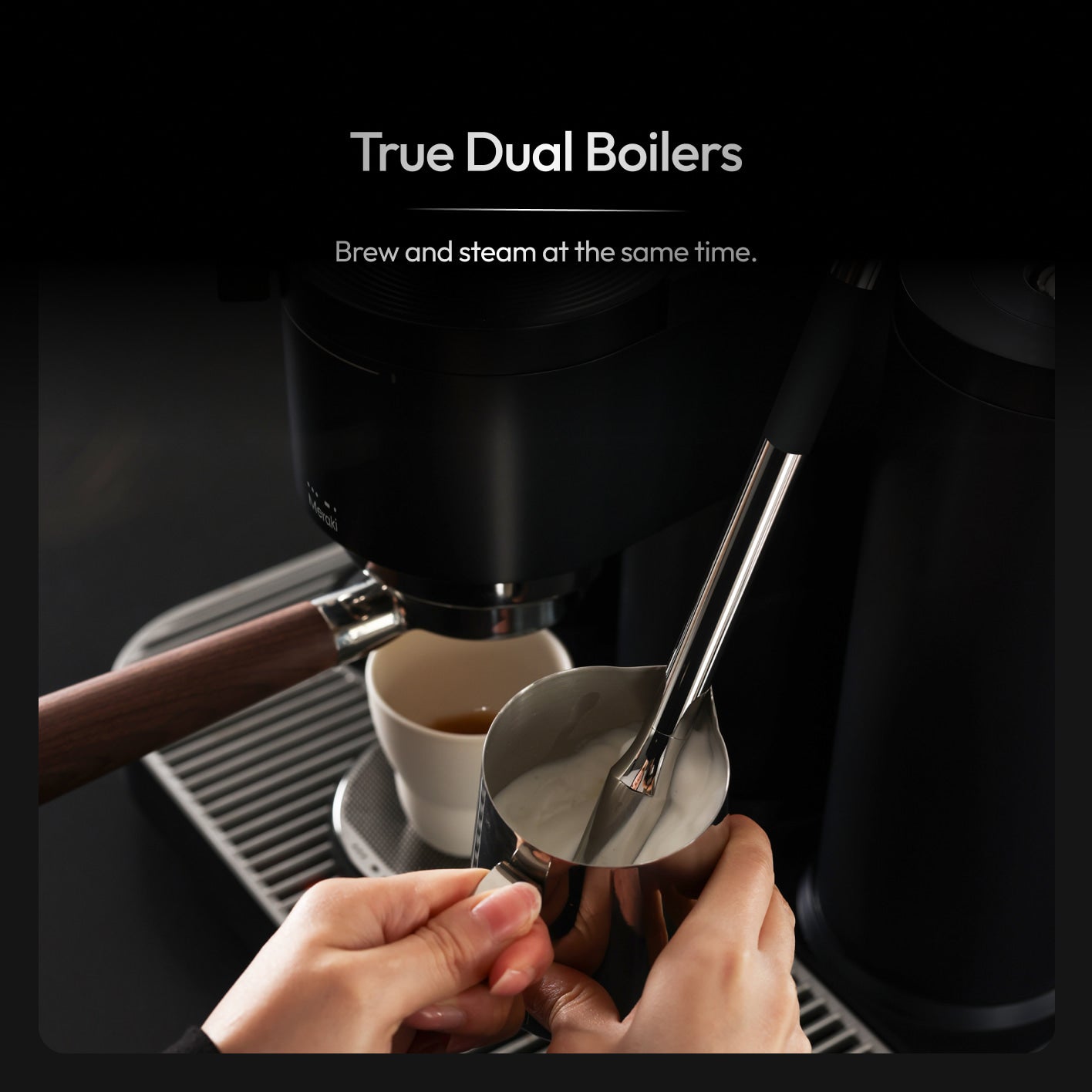
Weekday proof is brew-and-steam behavior you can repeat — keep awards on a separate verification card.
Tradeoffs and limits
Evidence hygiene has costs. Checking organizer pages takes ten quiet minutes. Some award sites are slow, region-gated, or redesign their archives. Editorial lists rotate annually; a 2026 pick does not forever define a 2028 SKU.
The tradeoff is still favorable for a four-figure machine. Ten minutes of record-matching beats months of regret over a badge that never pointed to a public entry. Limits remain honest: even a clean design award will not dial in your grind; even a glowing gadget list will not replace water care, fresh beans, or a fair trial window.
SCA research and café practice still put variables in the cup ahead of medals. Use awards as one input beside architecture, service, and return terms — never as the whole decision.
Mistakes that waste time
Most award-claim failures are process failures, not “secret” medals.
Treating a homepage sticker as proof without opening the organizer page. Confusing a design Gold with a taste championship. Mixing Gen 1 project language with a Gen 2 cart title. Quoting a brand newsroom as if it were the award body. Ignoring trial and warranty while debating logos. Inventing extra awards from memory because “premium brands always have them.” Comparing vague “award-winning” cards to complete stations with clear ownership terms.
Fix: run the five-step workflow once, screenshot the organizer or magazine page, then move on to weekday criteria. Soft-link Meraki reviews and support (+1 833 854 9555, Mon–Fri 9 AM–5 PM EST) when the open question is ownership experience, not prestige.
A simple verification checklist
Answer yes/no in your own words before you let an award claim move the purchase:
- I can name the organizer or magazine — not only the seller.
- I have year and category written down.
- The winner entry’s product name matches the SKU (and generation) in my cart.
- I opened the organizer or publication page myself, not only a brand summary.
- I know what the award judged (design, editorial pick, etc.) and what it did not.
- I am scoring weekday performance separately (temperature, milk sequence, dose/yield, service).
- I did not invent extra badges to “complete” the story.
- Ownership terms (shipping, trial, warranty geography) are still clearer than the logo.
Five or more clear “yes” answers means the award line is usable evidence. Three or fewer means park the claim — buy on architecture and terms, or wait for a matchable record.
How this connects to Meraki’s dual-boiler system
Meraki’s product story centers on a coordinated home station: dual boilers for brew and steam together, a rotary-pump path framed around steady pressure, built-in scales for dose and yield, and a guided touchscreen sequence. Soft-link the live product page and dual-boiler page for those hardware claims — verify them the same way you verify awards: against live pages, not memory.
Awards and dual boilers answer different questions. Design or editorial recognition may speak to how the system is packaged for a kitchen. Dual boilers speak to whether milk-drink mornings avoid a single-boiler wait. Soft-link temperature-stability verification when heat recovery is the doubt. Soft-link About Us when you want brand origin and mission after the checklist, not instead of it.
Does a higher price prove an “award-winning” machine?
No — price is not an award record.
The most expensive coffee machine on a search page is not automatically the one with a matchable third-party win, and a verified design or editorial pick is not a price tag. Expensive listings can still use vague “award-winning” copy with no year or category. Lower-priced machines can still publish a clean organizer link.
For home buyers, separate three columns: sticker price (re-check live), verified award identity (organizer match), and weekday capability (brew/steam, measurement, service). Soft-link Meraki’s value breakdown when the real question is total cost of ownership. Soft-link this page’s checklist when the real question is whether the badge is real.
FAQ
FAQ
How do I verify an espresso machine design award online?
Write down organizer, year, category, and product name from the listing. Open the organizer’s winner entry (or the magazine’s awards article) and confirm the same four fields. Soft-link Meraki’s iF and Esquire newsroom posts only as examples of documented claims — then check the linked organizer or Esquire page yourself. If any field is missing, treat the claim as incomplete.
Do award badges mean better espresso than a machine without them?
Not by themselves. Design and editorial awards judge design or editor experience under their rules — not your beans, water, grind, or milk timing. Use SCA and CoffeeGeek literacy for cup variables, and soft-link Meraki’s temperature-stability verifier for heat claims. Keep awards on the evidence card; keep tasting on the weekday card.
What Meraki award claims appear on live Meraki pages?
As of the 2026-10-27 check of Meraki newsroom posts: iF DESIGN AWARD 2025 Gold in Kitchen Appliances for the Meraki Espresso Machine, and Esquire Gadget Awards 2026 “Best Rotary-Pump Espresso Machine” for Meraki Gen 2. Re-verify on the organizer and Esquire pages before purchase. This article does not assert German Design or Red Dot.
Is a 15 bar espresso machine “better” because the number is higher?
No. Peak bar marketing is not the same as a stable brew path near classic espresso pressure, and it is not an award. Soft-link Meraki’s dual-boiler and product pages for pump and boiler framing, then judge shot time, taste, and milk sequence. Treat vanity pressure numbers the same way you treat vague award stickers: ask for the mechanism, not the boast.
Where should I go after I finish this checklist?
Open Meraki’s About Us page for brand context, the product page for live specs and offers, and the temperature-stability verifier if heat claims remain open. For ownership questions, use support (+1 833 854 9555, Mon–Fri 9 AM–5 PM EST). Awards verification ends when the record matches — then decide on architecture and terms.
Next step: verify the brand story, then the machine
If the award line now points to a matchable record — or you correctly parked a vague claim — move to ownership. Read About Us for Meraki’s story and mission, then confirm today’s configuration on the Meraki Espresso Machine page. Keep soft-linking temperature-stable verification whenever a performance sentence needs the same evidence hygiene you just used on awards.
More on this topic: Espresso Machine Types & Upgrades.


