


You have a dose, a finished shot weight, and a TDS reading, but do they describe better extraction? An espresso extraction yield calculator turns those measurements into a comparison; trustworthy inputs matter more than easy arithmetic.
An espresso extraction yield calculator needs dose, beverage mass, and TDS. Entering those values correctly can help you compare controlled recipes. It cannot show whether every part of the puck extracted evenly, and it should never overrule a clear taste result.
What is the espresso extraction yield formula?
Multiply beverage mass by TDS, then divide by dose.
Use the dry coffee dose and finished beverage mass in the same unit. Convert the TDS percentage to a decimal unless your calculator explicitly accepts percentages.
For an 18 g dose, a 36 g beverage, and 9.5% TDS, calculate 36 × 0.095 ÷ 18. The result is 0.19, or 19% extraction yield. The Barista Hustle coffee algebra sheet presents the same relationship as extraction × dose = TDS × beverage mass.
A peer-reviewed analysis of espresso flow also defines the practical calculation as beverage yield multiplied by TDS and divided by dose. The paper is available through PubMed Central, which also explains why an average yield cannot describe local differences within the puck.
Which inputs belong in an espresso extraction yield calculator?
Enter dose, beverage mass, and measured TDS.
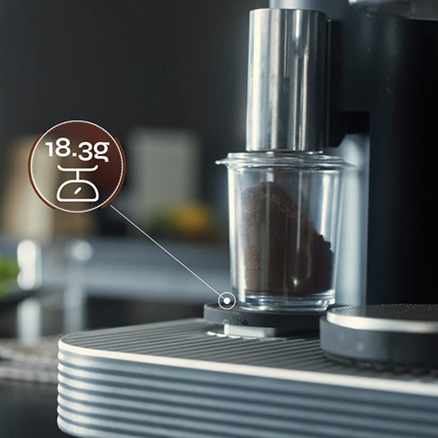
Dose is the dry ground coffee in the basket. Beverage mass is everything collected in the cup. TDS is the concentration measured from a prepared espresso sample.
| Input | Example | How to collect it | Common error |
|---|---|---|---|
| Dose | 18.0 g | Weigh the dry basket dose | Using the grinder timer instead of actual mass |
| Beverage mass | 36.0 g | Tare the cup, then weigh the complete espresso | Entering milliliters as if they were grams |
| TDS | 9.5% | Use a calibrated coffee refractometer and consistent sample method | Entering 9.5 where the tool expects 0.095 |
Shot time, temperature, pressure, and grind setting belong in your brew log, but they are not direct inputs to this formula. They help explain why the result changed. Keeping the distinction clear prevents a recipe log from becoming a calculator filled with unrelated numbers.
How do you calculate three common espresso examples?
Work in decimals first, then convert to a percentage.
The calculation differs from beverage strength: a longer drink can have lower TDS and still extract more material from the dose, provided you measure all three inputs.
| Style | Dose | Beverage | TDS | Calculation | Estimated yield |
|---|---|---|---|---|---|
| Short and concentrated | 18 g | 27 g | 11.0% | 27 × 0.110 ÷ 18 | 16.5% |
| Balanced starting point | 18 g | 36 g | 9.5% | 36 × 0.095 ÷ 18 | 19.0% |
| Longer and less concentrated | 18 g | 45 g | 8.2% | 45 × 0.082 ÷ 18 | 20.5% |
These examples demonstrate arithmetic, not ideal recipes. The longer shot has the highest estimated extraction but the lowest concentration. Whether it tastes clearer and sweeter or thinner and drier depends on the coffee and extraction uniformity. Research in Matter on systematic espresso improvement highlights the complex interaction among grind, flow, and extraction rather than treating one percentage as a universal goal.
How accurate are home extraction calculations?
They are estimates built from three imperfect measurements.
Scale resolution, dose retention, sample preparation, meter accuracy, temperature, evaporation, gas, oils, and suspended fines contribute uncertainty; repeat measurements before interpreting a small change as recipe progress.
Small errors matter because espresso doses and beverage masses are small. If the scale misses one gram on a 36 g beverage, the calculated result can move enough to look like a recipe change. A TDS reading taken from unstirred crema may differ from a representative sample. Repeating a measurement is more informative than adding extra decimal places.
For more rigorous work, follow the exact protocol for the meter. ATAGO publishes range, resolution, accuracy, temperature, and sample requirements for its coffee refractometers; other models can differ.
Why can the formula hide channeling?
The calculator reports an average for the collected cup.
It cannot show whether one region of the puck extracted heavily while another received little useful flow, because the collected liquid mixes before you measure sample concentration.
Imagine water creating a fast pathway along one side. Material from that channel and the rest of the puck mixes in the cup, producing one TDS reading and one average yield. A plausible 19% result can therefore come from an uneven extraction that tastes both sour and dry.
Mathematical modeling of porous coffee beds studies this local variation because average extraction alone is incomplete. The research on fines in espresso extraction dynamics shows how particle distribution and bed behavior influence flow. At home, pair the calculated result with bottomless-portafilter observation, puck preparation notes, shot repeatability, and taste.

How should you use the result to adjust a shot?
Compare controlled shots and keep the better-tasting one.
Use extraction yield to explain a sensory change after adjusting one variable, not as a reason to move every coffee recipe toward the same numerical target.
If a shot tastes sharply sour and the estimated yield is lower than your sweeter comparison shot, a finer grind, longer beverage, higher temperature, or improved puck preparation may help. Change only one factor. If a shot becomes dry while the yield rises, back away from the change or investigate uneven flow.
Barista Hustle’s DIY extraction tasting exercise emphasizes controlled tasting across extraction levels. That is more useful than entering one shot into a calculator and judging it against a chart. A chart supplies orientation; a controlled series shows how your coffee responds.
What should an extraction-yield brew log contain?
Keep the inputs, result, and decision on one line.
Record coffee, dose, beverage mass, time, grind, temperature, TDS, calculated yield, and taste, while keeping the meter and sampling protocol consistent across every shot in the comparison.
Write comparative notes such as “sweeter than the previous shot” or “higher yield but drier finish.” Avoid long flavor narratives when the experiment asks a simple question. Mark obvious channeling and exclude that shot from the comparison rather than allowing a bad puck to define the recipe.
The internal espresso drink calculator can support ratio planning, while the Espresso Lab is the natural hub for controlled brewing experiments. For machine-specific behavior, use the Meraki support page rather than diagnosing hardware from extraction yield alone.
When is the calculator worth using?
Use it when a percentage answers a real comparison.
Use it to compare grind, basket, preparation, or recipe changes across repeatable shots; check a new calculator against the worked example before trusting its percentage-entry convention.
Skip it when the shot visibly channels, inputs are inconsistent, or the taste answer is already obvious. Extraction yield is not necessary for a satisfying morning espresso. It becomes worthwhile when you want to learn why two controlled espresso shots differ and preserve the better tasting result.
The formula is simple enough to calculate by hand, so the quality of the process depends on the measurements and question around it. Keep the experiment narrow, repeat readings, and let taste decide whether the number represents progress.
FAQ
Can you calculate extraction yield without a refractometer?
Not accurately from dose and beverage weight alone. Those measurements give you the brew ratio, but extraction yield also needs an estimate of beverage concentration. A coffee refractometer supplies the TDS input. Without it, use taste, flow, time, and recipe consistency rather than presenting a guessed extraction percentage. A ratio of 1:2 alone does not establish extraction: two shots with identical masses can have different TDS readings. Keep unknown concentration values blank instead of reverse-engineering a desirable result.
Should crema be included in espresso beverage weight?
Yes. Weigh the complete beverage collected in the cup, including the liquid and crema, because the scale measures their combined mass. For the TDS sample, stir the espresso and follow the refractometer protocol so gas, suspended fines, temperature, and uneven sampling do not distort the concentration reading. Do not use the thickness or volume of crema to estimate beverage mass. Weigh first, then prepare the separate sample according to the meter instructions, without changing the recorded cup weight.
Why does an extraction yield calculator show an impossible result?
Check percentage entry first: some calculators expect 9.5 while others expect 0.095. Then confirm that dose and beverage mass use the same unit, the scale was tared, the sample was prepared correctly, and the refractometer was calibrated. A decimal or unit mistake can multiply the answer dramatically. Test the calculator with a known example before entering your own measurements. An 18 g dose, 36 g beverage, and 9.5% TDS should produce 19%, regardless of the interface format.
Is 18% to 22% extraction always the goal for espresso?
No. That range is a familiar reference, not a universal taste law. Modern grinders, coffees, and recipes can taste good outside it, and an average extraction value cannot prove uniformity. Use the range for orientation, then choose the repeatable recipe that tastes sweetest and most balanced to you. Compare that reference with your own consistent measurements, not with another person's instrument reading alone. Record the sampling method so a changed procedure does not masquerade as better extraction.
Use the calculator to make a controlled experiment easier to interpret. If the result and the cup disagree, investigate the process—and trust the cup.


