


The cart is open, the forums disagree, and every “complete home espresso setup” page either sells a giant bundle or tells you to buy a scale before you have chosen a machine. The useful decision is the path: one coordinated system, or a station built from separate boxes. After that, the shopping order is surprisingly calm — machine path, water and measurement, milk tools if you need them, then a short week-one list.
(Last modified date: November 16, 2026)
The counterintuitive rule is that sequence beats a bigger cart. Buying a bottomless portafilter before you can repeat a dose does not create a complete setup. Neither does a precision kit you will not use in week one. This page is a shopping order, not a space-planning guide and not an upgrade ladder; for “which part to replace first” in a setup you already own, use Should You Upgrade Your Espresso Machine or Grinder First?.
Choose the path before you compare prices
Write the drink menu first: espresso only, or milk drinks most days? Then choose the path.
An all-in-one path puts the machine, an integrated standalone grinder, and — on some models — dose and yield measurement in one chassis. A separate path means you choose the machine, the grinder, and the scale as independent tools. Neither path is automatically cheaper, and this page will not invent a bundle price, a gift total, or a “typical” add-on cost. Compare live prices, and count the same parts on both sides.
| Buy step | All-in-one path | Separate path |
|---|---|---|
| 1. Core path | One machine that can grind and brew in a coordinated workflow | An espresso machine plus a separate espresso-capable grinder |
| 2. Water and measurement | Use the official water guidance; built-in scales may already cover dose and yield | Buy a clear, readable scale early if the machine has none |
| 3. Milk tools | A pitcher sized to your main drink, if milk is on the menu | The same, only if you steam milk |
| 4. Week-one accessories | Only what the package does not already include: often a knock path, a cloth, and a brush | The same essentials, plus a tamper if one is not included |
| 5. Nice-to-haves | Bottomless portafilter, extra baskets, mirrors, precision kits — after the routine works | The same, and not before |
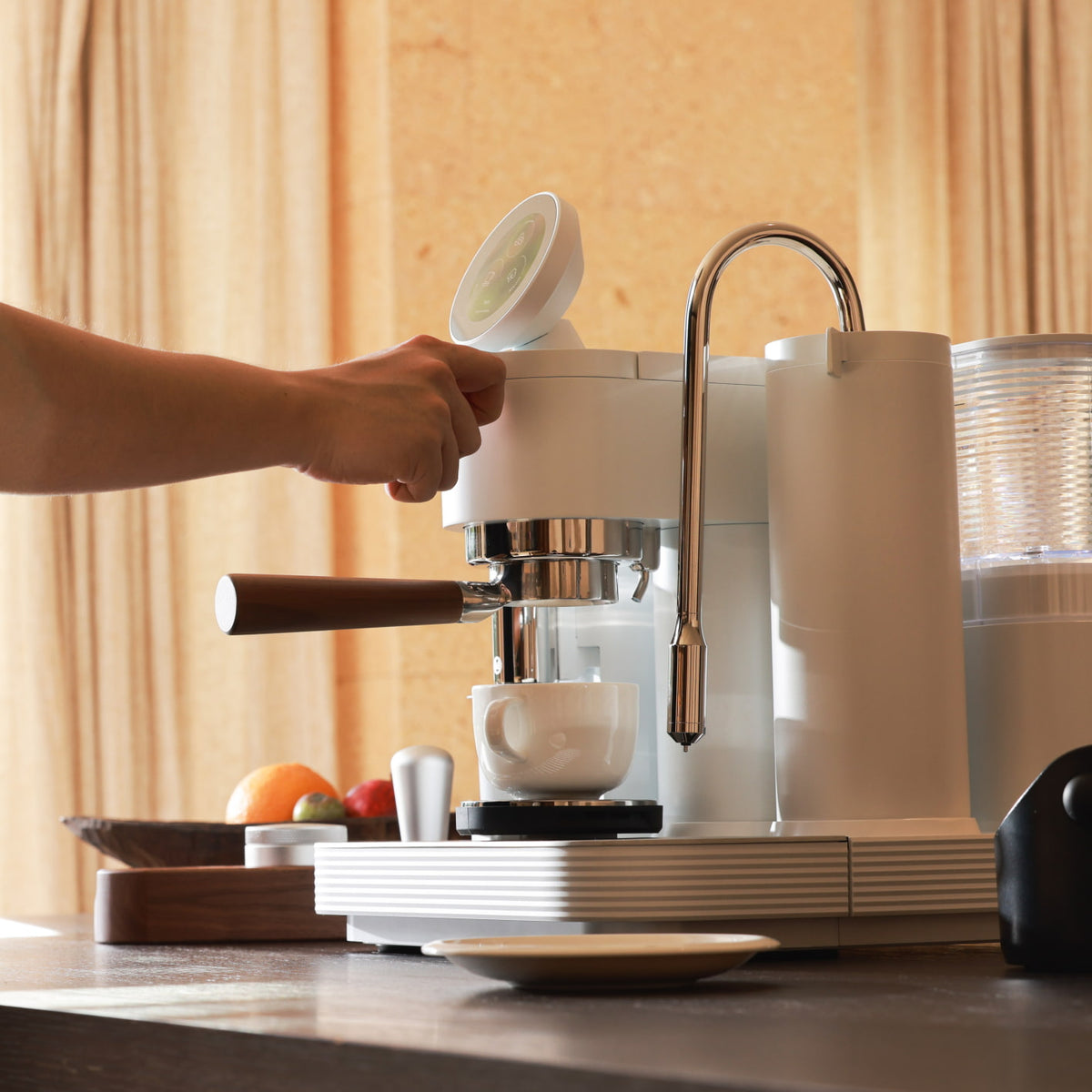
Meraki is one example of the integrated path. Official FAQ language is that the Meraki Espresso Machine brings the grinder, the espresso machine, and two scales together in one system. You can grind to a target dose, brew to a target yield, and extract espresso and steam milk at the same time. No separate scale is required for that dose-and-yield loop. Included tools typically include a portafilter, tamper, milk pitcher, dosing cup, coffee distributor, and cleaning tools; check the exact list for the package you are buying on the product page.
This page will not invent a pump-pressure figure, a scale resolution, a burr-collaboration claim, or a firmware story that official documents do not publish. Judge hardware on official specifications, then add only the tools the workflow still lacks.
Water, measurement, and milk tools, in that order
Water is not a decoration. Meraki’s FAQ advises filtered water with hardness below 60 PPM or TDS below 200, and notes that untreated tap water can introduce microorganisms, cause odors, and make cleaning harder. Get the water plan in place before you buy a third accessory. Espresso Machine Water Quality is the longer guide.
Measurement comes next because dose and yield are how you tell whether the setup works. On a separate path, a scale you will actually place under the cup is more useful in week one than a second basket. On Meraki, the two built-in scales can stop grinding and brewing at the targets you set; a separate scale can still help with other tasks, such as weighing beans into the hopper.
Milk tools come after that, and only if milk drinks are on the menu. Match the pitcher to the drink you repeat, and keep a clean cloth for the wand. Official Meraki care copy says to wipe the steam wand and purge it after each use. Do not start with latte-art tools before you can repeat a plain milk drink.
A week-one list — and what can wait
Buy with the machine, or immediately after:
- Fresh beans you already like, with a recent roast date. You do not have to buy them from Meraki; the official FAQ says you may use any beans you prefer.
- A knock box or a clear knock path, if one is not already in the package.
- A cloth and a group brush, if they are not included.
- A pitcher sized to your main milk drink, if you steam milk and the included pitcher is the wrong size.
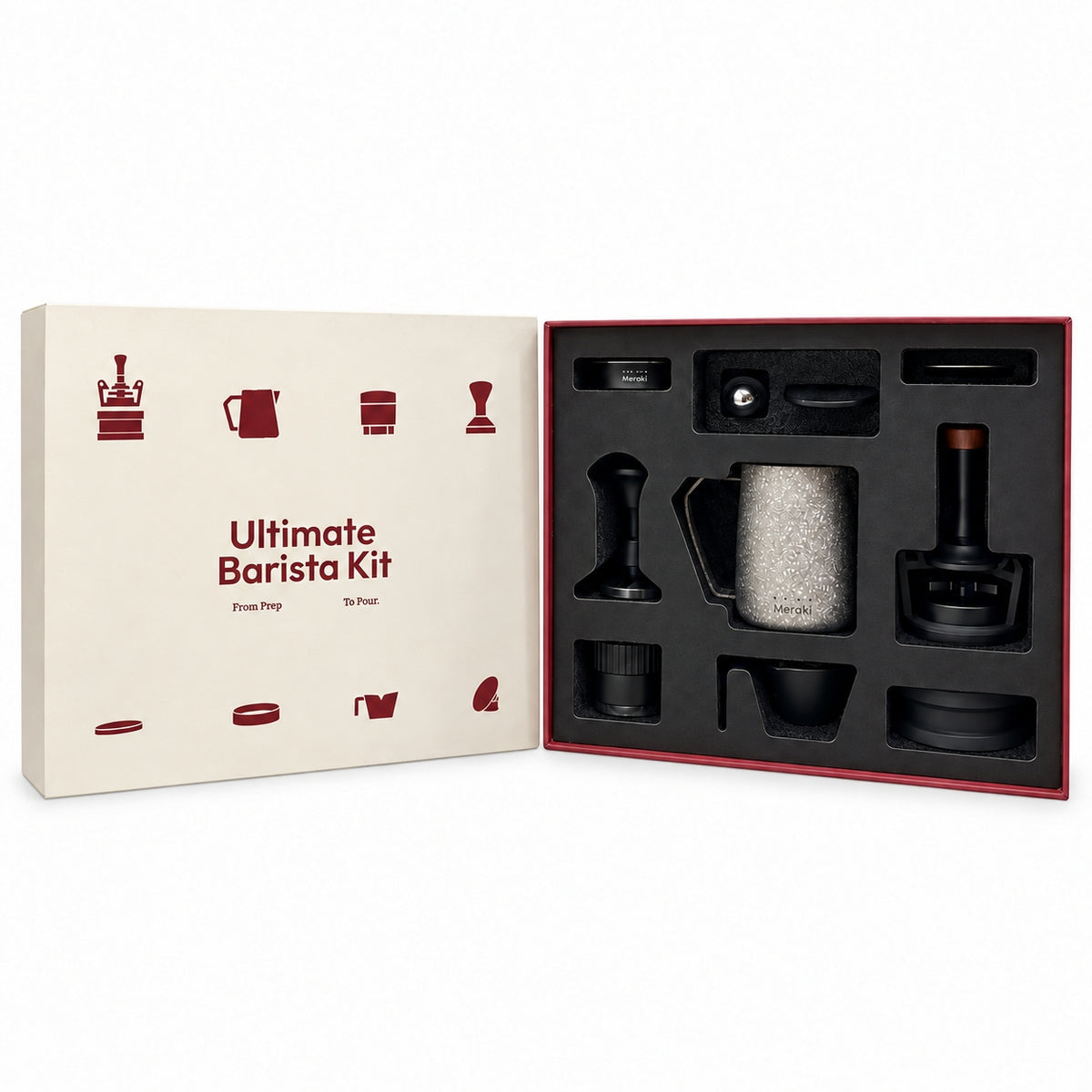
A barista kit is not required on day one if the machine already includes the core tools. The Ultimate Barista Kit is one optional bundle; confirm its current contents on the product page, and use Ultimate Barista Kit: What to Use First if you already have it. Broader accessory context is in Your First Espresso Accessories: What to Buy First and the accessories collection.
What can wait: a bottomless portafilter, a shot mirror, extra baskets, and precision kits. They are useful later, when a repeatable recipe exists to diagnose.
Questions to ask before checkout
Confirm voltage and destination. Meraki is not dual-voltage; it is configured for the shipping destination. Official heat-up time is around four minutes on the 100–120 V version and around three minutes on the 220–240 V version. The packed carton is listed as 500 mm × 500 mm × 470 mm and 20 kg; measure the counter anyway.
Read the current shipping policy, warranty policy, and refund policy. Meraki’s official warranty is two years, with coverage for eligible parts and repair shipping subject to that policy. This page will not invent a home-trial term that the official FAQ does not publish. If a listing is vague about what is included, or treats a roadmap feature as if it already exists, leave that item out of the price you are willing to pay.
FAQ
Do I buy the grinder before the espresso machine?
Not as a universal rule.
On a separate path, you need both, and the grinder must be capable of espresso. On an integrated path, the machine already includes an integrated standalone grinder. Choose the path first, then buy in the order above.
What should I buy with an all-in-one machine versus separately?
Buy only what the package does not already do.
An all-in-one may already cover grinding and, on Meraki, dose and yield. A separate path needs those tools as their own purchases. Water, beans, and a knock path belong on both lists.
What belongs on a week-one accessory starter list?
Beans, a knock path, a cloth, and milk tools if you steam.
Everything else can wait until a recipe repeats. A longer nice-to-have list is not a week-one list.
Is a barista kit required on day one?
No, if the machine already includes the core tools.
Check the included-accessories list for the package you are buying. A kit is optional, not a test of seriousness.
Should I start with the most precise accessories I can find?
No. Sequence beats a bigger cart.
A scale you will use, or built-in dose and yield control, will teach you more in week one than a tool you cannot yet interpret.


