


“Where is the Meraki espresso machine made?” is a trust question, not a flavor note. Buyers ask it because they want to know who stands behind the hardware, where a factory might be, and whether “who makes it” means the brand, a partner, or a plant. The honest answer starts with what official Meraki pages actually say today — and with what they do not say.
This page is a verification guide. It does not invent a factory address, a country-of-origin label, or a certification that is not on the official site.
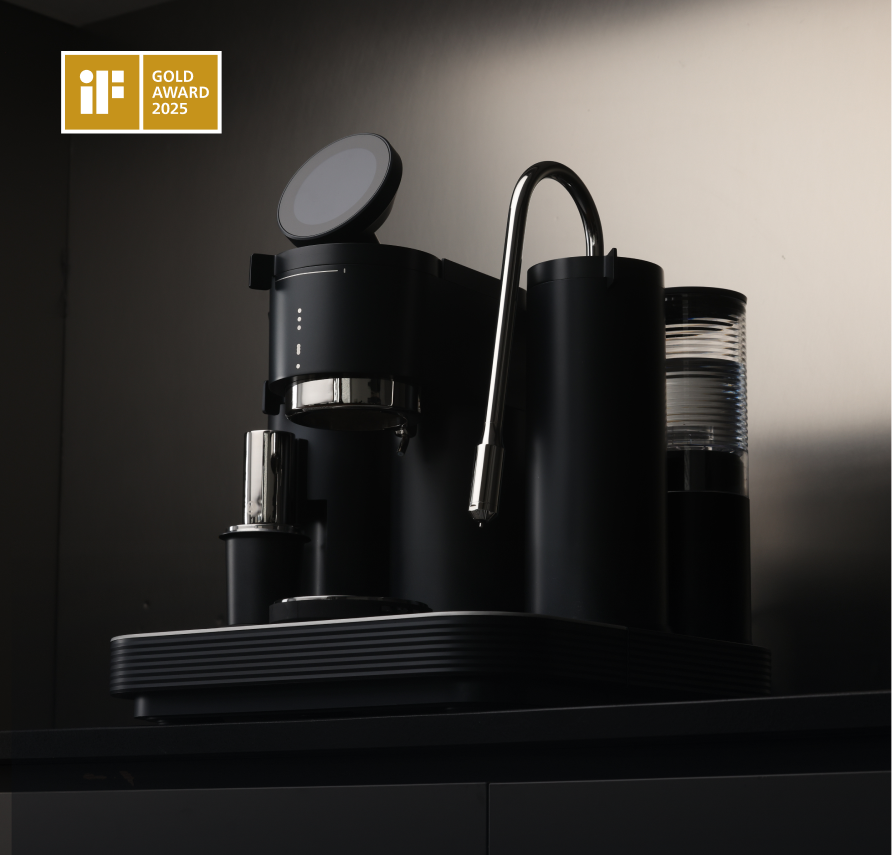
Meraki’s live About / brand-story pages describe founding and product architecture; they do not currently publish a factory country.
The short answer — and what still needs confirmation
Official Meraki About and brand-story pages, fetched on 11 November 2026, do not state a country of manufacture. They say Dennis Chen founded Meraki in 2022 and describe the machine’s architecture. If you need a current origin statement, ask support; do not treat older marketing copy or third-party articles as a factory label.
That is a thinner official record than many buyers expect, and it is better to say so than to fill the gap. Company history, shipping destinations, and “who the brand is” are related questions. They are not the same as “where was this unit made?”
How to read “where is it made” vs “where is the company based”
“Made in” and “based in” often get collapsed into one sentence. They should not be. A brand can be founded in one place, sell from a US website, ship from a regional warehouse, and assemble or manufacture in another location. Consumer-protection guidance on origin claims — see the FTC’s Made in USA standard for how strongly worded origin claims are treated in the United States — is a reminder that the phrase is a legal and factual claim, not a mood.
When a listing says “US company,” it may only mean the storefront or the seller of record. When a forum post says “Chinese machine,” it may be guessing from a founder story or a rumor. Neither sentence, on its own, is a country-of-origin declaration for the unit on your counter.
Ask two separate questions: Where is the company registered or described as being founded? And where does the manufacturer say this product was made? Official Meraki pages currently answer more of the first than the second.
What the Meraki about/brand-story pages actually say
The live About and brand story pages, checked on 11 November 2026, were effectively the same story document. They state that Dennis Chen founded Meraki in 2022, drawing on more than a decade of engineering experience in premium home appliances — including time at Dyson — and that he was also a practicing home barista.
The same pages publish a timeline: founded in September 2022; four rounds of engineering prototypes completed in February 2024; a Kickstarter launch in August 2024, described as raising nearly US$2 million from more than 1,000 supporters; first deliveries in December 2024; an iF DESIGN AWARD Gold listed for March 2025; Meraki Gen 2 introduced in March 2026; and a site claim, dated September 2026 on the timeline, of over 20,000 machines sold across 40+ countries.
What those pages do not say, in the text fetched on that date, is “made in China,” “made in Italy,” or any other factory country. They also do not currently state offices in Shenzhen, Hong Kong, the UK, or the US. Older secondary descriptions of that office list should not be presented as a live official origin line. If Meraki updates the story pages, the live text wins.
The product page describes the machine as a home dual-boiler espresso system with a built-in grinder. It does not add a country-of-origin field in the specification table fetched on the same day.
Who makes the machine: brand, partners, and what “who” means
“Who makes Meraki?” can mean the brand that sells it, the engineers who designed it, a component partner, or the factory that built the unit in your box. Official pages identify Meraki (Merakitech) as the seller of the Meraki Espresso Machine. Warranty claims, according to the warranty policy, require a receipt from Merakitech Limited.
Some older press and review headlines, including Barista Magazine’s test-drive wording, refer to “Meraki Tech x TIMEMORE.” The live US product page and About pages fetched on 11 November 2026 did not use a TIMEMORE co-development line in the main text. That absence matters. A third-party headline is not the same as a current official partner statement, and a grinder collaboration — even when it is accurately described elsewhere — is still not a country-of-origin label for the whole machine.
If you need to know who manufactured a specific serial-numbered unit, the clear path is to ask support with the model and, if you already own it, the serial information, rather than stitching together reviews.
A checklist for origin claims on any home espresso brand
Use the same questions for Meraki and for any other home machine you are considering.
| Claim you see | What to ask | What Meraki’s official pages showed on 11 November 2026 |
|---|---|---|
| “Made in [country]” | Is that on the official product, packaging, or a signed support statement? | No factory country was stated on the live About, brand-story, or product spec table |
| “Founded in / based in” | Is this company history, or is it being used as a factory claim? | Founded in 2022 by Dennis Chen; no live office-country line on those pages |
| “Designed with [partner]” | Is the partner named on an official page today? | No TIMEMORE line on the fetched product or About text |
| “US stock / US warranty” | Does that describe shipping and service, or manufacture? | Official US store, destination voltage, warranty in the country of purchase |
| A forum origin guess | Can you find a matching official sentence? | Treat as unverified until official pages or support confirm it |
The US Customs and Border Protection overview of country of origin is a useful reminder that origin is a formal product fact in trade, not a vibe. You do not need to become a customs lawyer. You do need to notice when a marketing sentence is doing the work of a label.
Why “made in Italy” is a different question
“Made in Italy” is a buyer shortcut with a long history in espresso. It is also a specific origin claim. Some shoppers use it as a proxy for parts, design tradition, or service culture. None of those proxies are a substitute for a current official statement about Meraki, and Meraki’s live About pages do not make an Italy origin claim.
If you are comparing Meraki with a machine whose manufacturer does claim Italian production, compare the actual sentences: origin, warranty geography, and service path. A general Meraki vs other espresso machines overview can help with workflow contrasts, but it does not fill in a missing factory line. “Italian espresso” as a drink style is yet another question, and it does not tell you where a chassis was built.
What origin does and does not tell you about service in the US
Origin does not, by itself, tell you whether you can get a machine serviced in the United States. Service depends on the official warranty, the purchase channel, and the authorized process.
Meraki’s warranty runs two years from delivery and is valid only in the country of original purchase. Only receipts from Merakitech Limited are accepted. Official shipping covers the United States among other listed destinations, and the machine is configured to destination voltage rather than being dual-voltage. Those are service and electrical facts. They are not a substitute for a “made in” line, and a “made in” line would not replace them.
If origin is a deal-breaker for you, get a current written statement from support before you buy, and keep it with your order confirmation.
How to ask support for a clear, current statement
Write to after-sales or pre-sales with a precise question. Use Contact Us: hello@merakitech.com before a purchase, service@merakitech.com after one, or +1 833 854 9555 (Monday–Friday, 9 AM–5 PM EST). Ask where the Meraki Espresso Machine is manufactured or assembled, and whether that statement applies to the current Gen 2 US-market unit.
A useful request is short: model name, market (United States), and whether you need the answer for a purchase decision or for a unit you already own. Ask for a reply you can keep. If the answer is more detailed than the public About page, treat the dated support email as the current statement, and check the public pages again if you buy later.
Do not rely on a screenshot of an old blog post if support and the live About page now say something narrower — or say less.
FAQ on country of origin and manufacturer questions
Is the Meraki espresso machine Chinese?
Official About and brand-story pages fetched on 11 November 2026 do not state a factory country, including China. They describe a 2022 founding and the product architecture. If you need a yes-or-no origin statement, ask support and keep the reply. Guesswork from older articles is not a substitute.
Who makes the Meraki espresso machine?
Meraki (Merakitech) is the brand that sells the machine and, per the warranty policy, the company whose receipts are required for warranty claims. That identifies the seller of record. It does not, on the live About pages, identify a factory country.
Is Meraki coffee good?
That question is about beans, not manufacture. Meraki also lists roaster-collaboration coffees, which is a separate buying decision from the machine’s origin. Taste the coffee on its own terms, and do not use a bean review as a factory claim.
Where are other home brands made?
Competitor origin lines belong on those brands’ official pages, not as a rumor about Meraki. If a Gaggia or Breville origin question sent you here, compare each manufacturer’s current official wording, then return to Meraki’s live About page and, if needed, support.
If origin is part of your purchase test, start with the About page, then ask Contact Us for a current, dated statement before you check out.


