


You did not change the beans. You changed when you stopped the pour. That shorter decision is the whole idea behind a ristretto—and it is where home baristas either find a sweeter shot or accidentally pull a sour thimble of coffee.
This page defines what is a ristretto, puts numbers on yield versus espresso and lungo, and shows a home dialing path. For a Meraki how-to already on the site, differentiate with this ratio-first explainer and still link how to make a ristretto.
What is a ristretto shot?
A ristretto is a shorter espresso from a similar dose.
You grind and dose like espresso, then stop the shot at a lower yield—often near 1:1 to 1:1.5—so the cup is smaller and denser.
The Italian idea is “restricted.” You are not inventing a new machine setting so much as choosing an earlier finish line. Specialty references from the Specialty Coffee Association and Coffee Review support espresso fundamentals that ristretto still depends on.
Ristretto vs espresso vs lungo
Same dose family, different yields and drink lengths.
Espresso sits in the middle; ristretto shortens; lungo lengthens and can taste thinner or more bitter if over-extracted.
| Shot | Typical ratio (guide) | Example (18 g dose) | Sensory tendency |
|---|---|---|---|
| Ristretto | ~1:1–1:1.5 | ~18–27 g out | Dense, often sweeter |
| Espresso | ~1:2 | ~36 g out | Balanced baseline |
| Lungo / long shot | ~1:3+ | ~54 g+ out | Longer, easier to dry/bitter |
Time often shortens with ristretto if grind stays equal, but many baristas grind slightly finer and still target a controlled pour. Weigh output; do not trust volume marks alone. Coffee literacy from the NCA and Coffee & Health helps separate extraction talk from health talk.
Taste, body, and caffeine
Body rises as yield falls—sip size shrinks, intensity climbs. Sweetness often improves when you avoid late-stage bitterness, but underextraction tastes sharp. Caffeine is not a prize for shortness; a full espresso may deliver as much or more. Use Harvard caffeine and NCA caffeine pages for general ranges. Roast still matters; see the NCA roast guide when matching light or dark beans to short shots.
How to pull a ristretto at home
Match dose, shorten yield, taste, then adjust grind.
Start from your normal espresso dose, stop near 1:1.2, and only then decide whether finer grind or a second or two more time helps.
Workflow: dose 18 g (or your basket’s normal load); distribute and tamp evenly; start the shot; stop at your target grams; note time as a secondary clue. If sour, grind finer or allow a touch more yield. If ashy, coarsen or stop sooner. Milk drinks built on ristretto (some flat whites, some piccolos) inherit that denser base—browse classic builds in espresso menu classics and the wider espresso brewing hub.
Common misconceptions
Ristretto is not automatically more caffeinated. It is not a different bean. Chain “ristretto shots” may simply be a shorter programmed volume. Lungo is not “more espresso”; it is a longer shot that can over-extract. A short, blond, watery pour is underextracted espresso—not a successful ristretto.
Meraki all-in-one angle
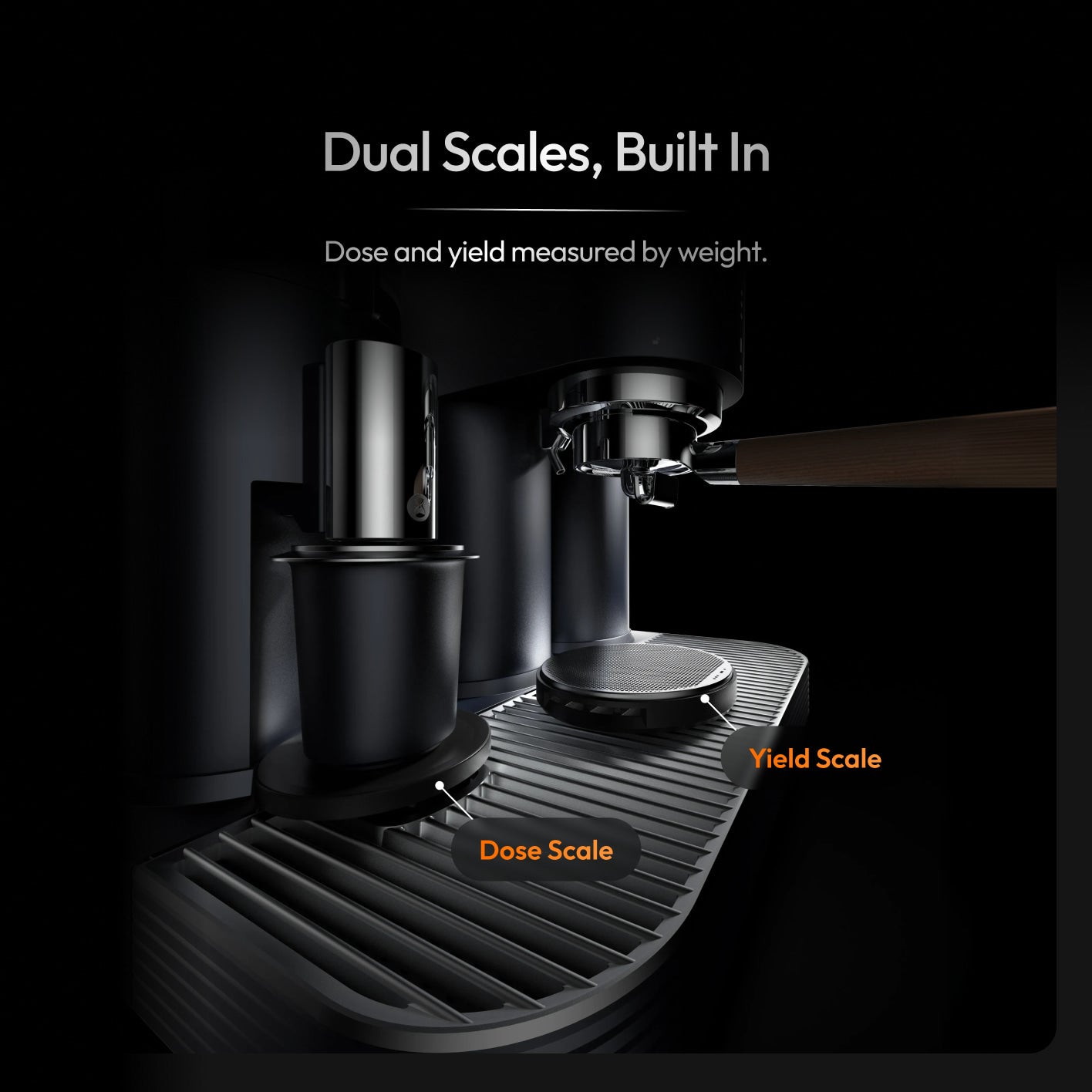
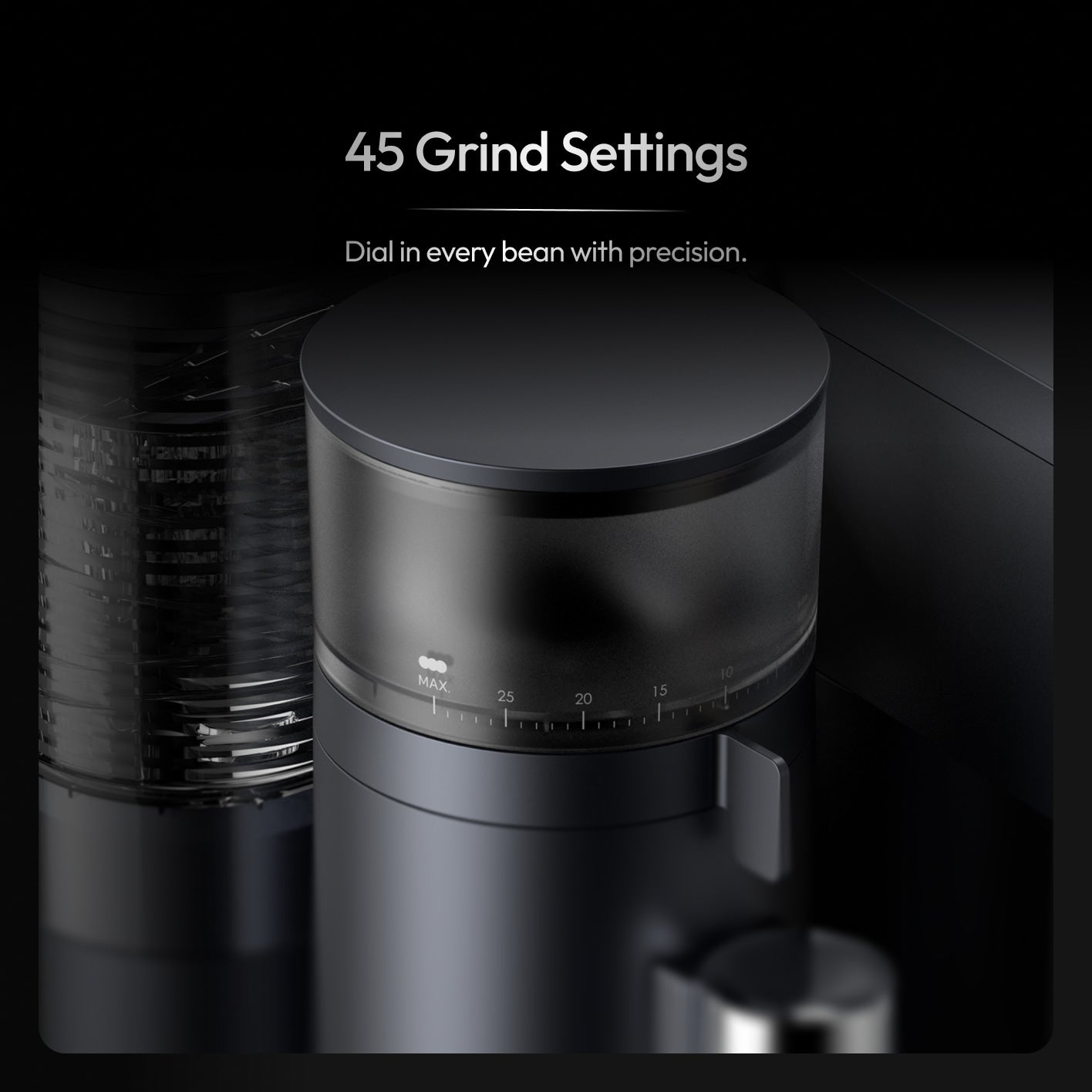
Short shots punish channeling and unstable pressure. A steady pump path, visible temperature cues, and built-in scales make ristretto a measured stop instead of a guess. Dual boilers keep milk drinks ready if your ristretto is destined for a small flat white. Explore the Meraki espresso machine when you want that workflow on one chassis, and keep puck tools from the accessories collection nearby.
Why short shots reward puck prep
Ristretto leaves less liquid to hide channeling. If water finds a fast path through the puck, that path dominates a short yield and the cup tastes sharp or hollow. Distribution tools, careful leveling, and a level tamp are not theater—they are how short shots stay sweet. A bottomless portafilter makes sprays visible so you fix prep before you blame the roast.
Freshness still matters. Very fresh light roasts can bloom aggressively and spit; slightly rested espresso-friendly beans often behave better for ristretto practice. If your short shot turns blond immediately, check grind and prep before shortening further. If it crawls and tastes muddy, coarsen a notch or reduce dose within your basket’s comfort zone.
Milk drinks built on ristretto inherit denser espresso. A piccolo or flat white can taste candy-sweet with a good short base—or sour if the ristretto was underextracted. Decide the shot first, then steam. That sequence keeps you from “fixing” a bad short shot with syrup. When you change beans, re-map yield rather than copying yesterday’s gram target blindly; solubility shifts with roast and origin.
Ordering language helps when you are not at home: ask for a ristretto shot or a drink built on ristretto, and if the barista looks unsure, ask them to stop the shot early by weight or a familiar short program. Chain buttons may approximate the idea without matching your home 1:1.2 experiment—treat them as cousins, not clones.
Conclusion
Treat ristretto as a shorter yield on a familiar dose—about 1:1 to 1:1.5—and judge success by sweetness and density, not by caffeine myths. Use espresso as your baseline and lungo when you truly want a longer shot.
Weigh shorter shots on the Meraki espresso machine, or follow the hands-on ristretto how-to.
FAQ
Does ristretto have more caffeine?
Not reliably. You use a similar dose of coffee but stop the shot earlier, so you may extract slightly less caffeine than a full espresso. Taste intensity is not the same as milligrams. Compare shot recipes, not folklore.
Ristretto vs espresso—what is the ratio?
Espresso often targets about 1:2 (for example 18 g in to ~36 g out). Ristretto commonly lands near 1:1 to 1:1.5 with the same dose. Exact numbers vary by cafe and bean; weigh both sides when you practice at home.
Is ristretto sweeter or more bitter?
Many drinkers find ristretto sweeter and denser because you emphasize earlier-extracting solubles and skip some later bitterness. A poorly ground ristretto can still taste sour or hollow—short is not automatically better.
How do I order ristretto at Starbucks vs a specialty cafe?
At many specialty bars, ask for a ristretto shot or a drink built on ristretto. At large chains, “ristretto shots” is a button that shortens the shot for milk drinks. Definitions differ—confirm if you care about true yield ratios.
Can any machine make ristretto?
Any espresso machine that lets you stop the shot by time, weight, or button can approximate ristretto. Consistency improves with a scale and stable pressure. Capsule machines with a ristretto size are a different, fixed-volume approach.


